Showing posts with label advertisement. Show all posts

Saturday, 5 November 2022

Assignment 205: Cultural Studies

 Popular Culture


Name – Jheel Barad

Roll No.: 12

Enrollment No.: 4069206420210003

Paper no: 205 (A)

Paper code: 22410

Paper name: Cultural Studies

Sem.: 3 (Batch 2021- 2023)

Submitted to: Smt S.B. Gardi Department of English, M.K. Bhavnagar University

E-mail- jheelbarad@gmail.com


There was a time before the 1960s when popular culture was  not studied by academics- when it was, well, just popular culture. But within American Studies programs at first and then later in many disciplines, including semiotics, rhetoric, literary criticism, film studies, anthropology, history, women's studies, ethnic studies, and psychoanalytic approaches, critics examine such cultural media as pulp fiction, comic books, television, film, advertising, popular music, and computer cyberculture. They assess how such factors as ethnicity, race, gender, class, age, region, and sexuality are shaped by and reshaped in popular culture.


Popular culture accounts for the taste of the common people. Often called low culture, the popular culture defines itself through the blatant disregard of the Elite class. popular culture is commonly associated with television, internet and comic books. In addition to the elite culture, popular culture is generally considered the antithesis of folk culture and working- class culture. The centerpiece of popular culture is the middle class which constitutes the maturity of society. popular culture is considered the mainstream culture of a society at any given point of time. it is amalgamation of the trends of that particular time period. Movies, music, and video games play a vital role in creating and propagating popular culture. It is generally considered more accessible for common people and suit their taste


The popular culture has origins in 19th Century England when it was considered the inferior culture of the common folk as opposed to the official culture of the common folk of the educated elite. After the rise of industrialization, the common people became more educated and spent more money on entertainment. This resulted in the emergence of entertainment that satisfied the needs of these newly formed middle class. With the education afford to the middle class being markedly different from that of the elite, the forms of entertainment of the middle class was also different. instead of complex plays and poems the educated middle class were much more interested in the newly emerged entertainment mode cinema. through popular music, cinema and comic books the popular culture became a platform of mass consumption.


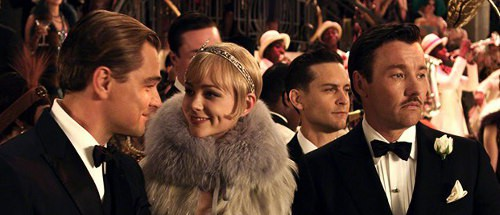
We can take an example of Fitzgerald's Novel ‘The Great Gatsby’ to understand the difference between the elite class and new working class and their growing culture. Jay Gatsby in the novel is a new rich person and so everything for him is new and he follows a popular culture like he throws parties and follows Jazz music which is not liked by the elite class society.

The advent of popular culture has paved the way to the rise of popular culture studies. At the core of what we know as popular culture studies today is the work of Scholars associated with or influenced by the Birmingham Center of Contemporary Cultural Studies. popular culture itself and intellectual interest in its risks and possibilities, however, long predate this moment. Earlier in the 20th century, members of the Frankfurt School took an active interest in what was then referred to as ‘mass culture’ or the culture industry.


Semiotics, emerging in the latter half of twentieth century as an exciting new methodology of cultural analysis, turned to popular culture for many of its objects as it redefined textuality, reading, and meaning. The works of Roland Barthes and Umberto Eco are exemplary in this regard. 


There have been many subsequent approaches to popular culture studies. important among these are feminist approaches to popular culture exemplified by work on Hollywood cinema and women's melodrama in particular, the study of images and representations through a Mass Communication approach , and ethnographic studies of readers of popular romances and television audiences. a minor, theoretically weak tradition of popular cultural studies initiated by Ray Browne parallelly in the United States may also be mentioned. More recently Slavojzizek has introduced new ways of drawing popular cultural text into philosophical debates. If all these can be taken together as constituting what is generally referred to as popular cultural studies today, it is still limited to the 20th century.

Popular culture has always faced fierce criticism from supporters of traditional, upper-class culture. in Britain Matthew Arnold and in his wake F.R. Leavis Ada undertook this task as they sought to insulate ‘the best of what was thought and said’ - essentially the upper class culture from the debasing influence of the commercial press and mass culture in general. but the history of popular culture as an object of Investigation and social concern goes further back still to the 19th and 18th centuries, the period of the rise and spread of mass literature, boosted by the rise of working class readership.


 Aside from precursors such as Umberto Eco and R. Barthes, popular culture studies as we know them today were developed in the late 70s and 80s. The first influential works were generally politically left wing and rejected the aristocratic view. However, they also criticized the pessimism of the Frankfurt School: contemporary studies on mass culture accept that popular culture forms do respond to widespread needs of the public. They also emphasize the capacity of the consumers to resist indoctrination and passive reception. Finally, they avoid any monolithic concept of mass culture. Instead they tried to describe culture as whole as a complex formation of discourses which correspond to particular interests, and which can be dominated by specific groups, but which also always are dialectically related to the producers and consumers.


An example of this tendency is Andrew Ross’s ‘No respect: Intellectual and Popular Culture (1989).  His chapter on the history of Jazz, Blues and rock does not present a linear narrative opposing the authentic popular music to the commercial record industry, but shows how popular music in the US from the twenties until today, evolved out of complexity.


There are four main types of popular culture analyses: 

  1. production analysis, 

  2. textual analysis, 

  3. audience analysis, and 

  4. historical analysis. 

These analyses seek to get beneath the surface (denotative) meanings and examine more implicit (connotative) social meanings. These approaches view culture as a narrative or story-telling process in which particular texts or cultural artifacts (i.e., a hit song or a television program) consciously or unconsciously link themselves to larger stories at play in the society. A key here is how texts create subject positions or identities for those who use them. 


Postmodernists tend to speak more of subject positions rather than the humanist notion of independent individuals. 

Production analysis asks the following kinds of questions: Who owns the media? Who creates texts and why? Under what constraints? How democratic or elitist is the production of popular culture? What about works written only for money? 

Textual analysis examines how specific works of popular culture create meanings. 

Audience analysis asks how different groups of popular culture consumers, or users, make similar or different sense of the same texts. 

Historical analysis investigates how these other three dimensions change over time.


Chetan Bhagat (born 22 April 1974) is an Indian author, columnist and youtuber. He was included in Time magazine's list of World’s 100 Most Influential People in 2010. Chetan Bhagat writes in very Indian language, it has no great quality like the professional writer who wins the booker prize etc. but he is read a lot by many people and loved too. But he is trolled for writing in the local language by many readers. He plays a great role in Popular culture and its reading. 


Popular culture is the totality of distinct memes, ideas, perspectives, and attitudes that are deemed preferred per an informal consensus within the mainstream of a given culture. heavily influenced by mass media and perpetuated by that culture’s vernacular language, this collection of Ideas permeates the everyday lives of the society. Popular culture is often viewed as being trivial  and dumped down in order to find consensual acceptance throughout the mainstream. as a result of this perception, it comes under heavy criticism from various scientific and non main- stream sources which deem it superficial, consumerist, sensationalist and corrupted


 It is manifested in preference and acceptance or rejection by features in such various subjects as cooking, clothing, consumption, and the many facets of entertainment such as sports, film, music and literature.


Popular culture is what we have made out of products and practices of mass produced culture. popular culture is an expensive content that is produced and consumed. It is light entertainment that is delivered through the channels of mass media and finally absorbed voluntarily, to be observed by the individual who receives it. Popular culture consists of the many facets of music, fashion, slang, and entertainment and the newer forms of media like the internet.


Advertising promotes more than a product in our popular culture. images used in advertising are often idolized; they eventually set the standard which we in turn feel we must live up to. Advertisements serve to show us that the ideal image is, and further  tell us how to obtain it. Advertisers essentially have the power to promote positive images or negative messages. This in turn affects our culture.
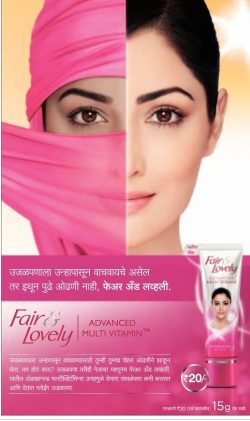


For example the cosmetics and fashion Industries keep telling people that they will improve their self image with their cosmetics for fashion.

Works Cited

What Is Pop Culture? | Mr. Pop Culture, https://mrpopculture.com/what-is-pop-culture/. Accessed 5 November 2022.

gowda, sukesh, and Nadeem Siddiqui. “Advertising and culture.” SlideShare, 27 April 2011, https://www.slideshare.net/sukeshgowda/advertising-and-culture. Accessed 5 November 2022.

Hayes, E. Bruce. Rabelais's Radical Farce: Late Medieval Comic Theater and Its Function in Rabelais. Taylor & Francis, 2016. Accessed 5 November 2022.

Kaushal, Sweta. “Chetan Bhagat, please stop writing books, concentrate on Bollywood instead.” Hindustan Times, 2014, https://www.hindustantimes.com/books/chetan-bhagat-please-stop-writing-books-concentrate-on-bollywood-instead/story-WQG3VzHs9oFjSXwLVQ5X8H.html.

“Popular Culture & Globalization: Teacher Candidates' Attitudes & Perceptions of Cultural & Ethnic Stereotypes.” ERIC, https://files.eric.ed.gov/fulltext/EJ1090398.pdf. Accessed 5 November 2022.

Venugopal, Rajitha, et al. What about theory? Bodhi Tree Books, 2019.

Friday, 9 September 2022

Theories: Marxist, Ecocritical, Feminist and Queer Criticism

Hello! This blog is assigned by Dr. Dilip Barad sir. It deals with various literary theories like Feminism, queer study, eco-criticism, and Marxism. This blog deals with Feminism, other blogs which deal with other theories are hyperlinked in the end.
 
Feminist criticism

What is feminism? It is an advocacy of women's rights on the grounds of the equality of the sexes. Equality on political, social, personal and economic grounds. The fight for feminism is not for having more value than men/ male gender in society but for having equal value in society. Feminism emerged as a socio-political movement before a literary movement.


Feminism is seen in waves. The first 19th and early 20th centuries comprised women's suffrage movements of the 19th and early 20th centuries, promoting women's right to vote. The second wave Mid-20th century, the women’s liberation movement, began in the 1960s and campaigned for legal and social equality for women. In or around 1992, a third wave Late 20th and early 21st centuries was identified, characterized by a focus on individuality and diversity. Additionally, some have argued for the existence of a fourth wave, starting around 2012, which has used social media to combat sexual harassments, violence against women and rape culture, and it is best known for the me too movement.

Feminism as a socio-political movement inspired literature to look for the women in itself. The books that played an important role in bringing and looking for feminism in literature are-

Mary Wollstonecraft’s A Vindication of the Rights of Woman (1792),
John Stuart Mill’s The Subjection of Women (1869), and
The American Margaret Fuller’s Woman in the Nineteenth Century (1845).

The very important precursor of feminism in literature is Virginia Woolf, who, in addition to her fiction, wrote A Room of One’s Own (1929) and numerous other essays on women authors and on the cultural, economic, and educational disabilities within what she called a “patriarchal” society, dominated by men, that have hindered or prevented women from realizing their productive and creative possibilities. Other important writers in this field are Simone de Beauvoir’s The Second Sex (1949), Mary Elman's Thinking about Women (1968), and Kate Millett’s Sexual Politics.

There is a long detailed Wikipedia page on this theory. CLICK HERE


The question also arises about the fundamental concerns in feminism. (M.H. Abrams)
The basic view is that Western civilization is pervasively patriarchal

It is widely held that while one’s sex as a man or woman is determined by anatomy, the prevailing concepts of gender

The further claim is that this patriarchal (or “masculinist,” or “androcentric”) ideology pervades those writings that have been traditionally considered great literature gynocritics—that is, a criticism that concerns itself with developing a specifically female framework for dealing with works written by women, in all aspects of their production, motivation, analysis, and interpretation, and in all literary forms, including journals and letters.

One concern of gynocritics is to identify distinctively feminine subject matters in literature written by women—the world of domesticity, for example, or the special experiences of gestation, giving birth, and nurturing, or mother-daughter and woman-woman relations—in which personal and affectional issues, and not external activism, are the primary interest.

Another concern is to uncover in literary history a female tradition, incorporated in subcommunities of women writers who were aware of, emulated, and found support in earlier women writers, and who in turn provide models and emotional support to their own readers and successors.

A third undertaking is to show that there is a distinctive feminine mode of experience, or “subjectivity,” in thinking, feeling, valuing, and perceiving oneself and the outer world. Related to this is the attempt (thus far, without much agreement about details) to specify the traits of a “woman’s language,” or distinctively feminine style of speech and writing, in sentence structure, types of relations between the elements of discourse, and characteristic figures of speech and imagery.

Often we realize or get questioned that this is only a patriarchal society that is trying to pull the leg of the female society. And we see no, women are majorly not even supported by women. For a glance if we just take an example of our TV shows/ Television series where women are always planning and plotting against other women. We rarely find women supporting women. Television plays an important role in shaping society.

Patriarchy is not only male society dominating women or females but it has turned to be an ideology. We see the old-age women are the agency of patriarchy. In the family grandmother or in movies the old character will always give morals on how women should and take care of the family. Women are created to take care of male society. Adichie Ngozi in her speech on feminism said- we/ society always try to create a boy hard/ tough man which gives them a fragile ego and we train girls to cater to that ego and shrink them.

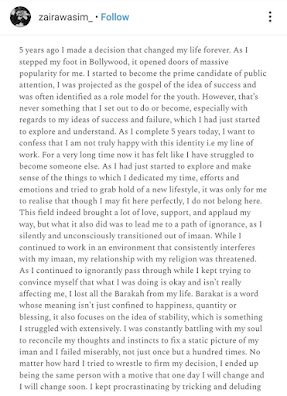
Religion has always tried to tie women. Religion gave an idea of women doing fast for their family and children. It gives stories where women are doing only household work. बेटी तो पराया धन होती है। is a strong concern from religion. It plays an important role in shaping women as Indian ideal wife material. Still today we see that women are more in to follow the religious path, in spite it forcing them to shrink. One of the examples is Zaira Wasim. She played a role in the Bollywood movie Dangal in a young age but suddenly later she dropped Bollywood and went close to her religion, the Islamic religion. For walking on the path of religion she dropped her whole career despite being a talented actress. Here is her FB post. A recent example of how women can't grow. The whole society in one or another way traps and stops, it becomes necessary to come out of all this construction.


When we read literature, we connect ourselves in it. We find ourselves in that that suggests closely the relation of novels in our everyday ;life. Today the world is digitizing. Cinema is taking the place of literature and stories. Cinema plays an important role as a mirror of society and it also shapes society. As we discussed above women, and aged women like grandmothers/ aged women are the agencies of patriarchy. Women try to tie their daughters or daughters-in-law in the frame of ideal women.

The bollywood movie Thappad directed by Anubhav Sinha is a movie in which a woman fights back and stands for herself only for one slap and asks for a divorce. In this mainstream story, we also see minor stories of a maid and a lawyer. Protagonist Amruta has a point about how her husband cannot slap her in any situation. During the emotional and mental breakdown of Amruta, we find her mother and mother-in-law saying

बस यही सुनना बाकी रह गया था कि बेटी डीवोर्स करेगी|
जाने दे बेटा, थोड़ा बर्दाश्त करना सीखना चाहिए औरतों को.”
This is an example of how women shape women in order to cater male ego, how women are the agency of patriarchy.


Women are always permitted. They don’t have to do anything without permission. We find many people who think they are superior for letting women grow, work and earn. They boast that they are open minded to let their daughter- in- law work and earn. Such characters are represented in various Bollywood movies also. Here is Rahul Bose and Manav in Dil Dhadakne do (2015) directed by Zoya Akhtar.


Pink is a 2016 Bollywood movie directed by Aniruddhsinh Chowdhary. A patriarchal male-dominated mindset is represented in a movie by the character of Rajveer Singh. How the minds of men are conditioned. They feel their rights of women and how women are expected to shrink themselves to safeguard their dignity and chastity is aptly shown in these women.


In the contemporary period, we feel we are growing. Women are getting their places, they are having their domination. But if one woman is earning and free or independent doesn't mean everyone is. Till every woman or majority of don't get their place, independence we can never say that women are not under control anymore. One TVC telecom tried to show a woman out of her traditional conventional work, in a way to show progress

But here in this TVC, we see that the ad fails to show women's progress. Even after she is the boss in the office. She has to cook food for her husband after office work and invites her husband for food. Despite being a boss. This in a way reflects the mindset of the society which boasts about letting their wife and daughter- in law work. Society is trying to show off its ‘independent mindset’.


Moving towards feminist criticism is locating women in the literature. The issues they face in society and how they lose their identity. Today we are living in the 21st century but still, the most loved Bollywood movies are movies in which heroines feel themselves complete after the hero enters their life.


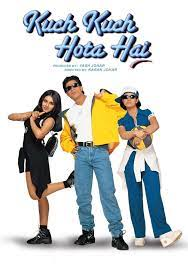
These are a few examples of movies where female protagonists are independent and bold but they feel complete in their life when they find a man in their life.

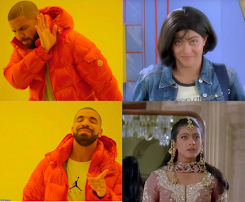
Here is also a meme of Anjali of Kuch Kuch hota hai. She was an independent blog sports girl but wasn't loved by Rahul. In the second part of the movie, she is an ideal wife material. Girl with long hair and so-called beauty and Rahul falls in love with her. This is a real cringe. Bollywood gives a frame of what type of girls are loved and to boys, whom to love.


Recently the #wokyaboli is also trending by BBC News. One must check out it on the Instagram page of BBC news and on Twitter also.


We must not forget that feminism is for equal rights. Women are physically and biologically not as strong and hard as men adding to it they have soft and emotional conditioning of mind. And to have equality firstly equity is necessary in society. Slowly and steadily ideologies will change and the world will change. This change cannot be brought in a day or year.

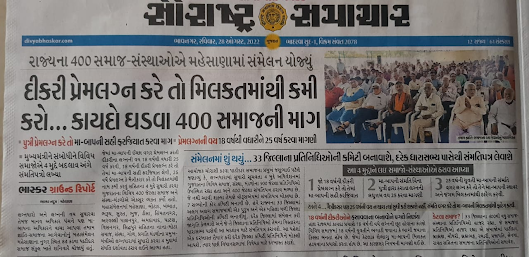
Looking over contemporary times we realize even today society is not ready to accept girl’s freedom. They are not ready to give part of their property to their daughters if they don't follow them. દીકરી ને ગાય દોરે ત્યાં જાય. Girls are expected to follow and not to question.


I hope this blog is useful. Thanks for visiting.

My Learnings from the National Workshop on Academic Writing (2026)

The National Workshop on Academic Writing  I recently had the opportunity to participate in the National Workshop on Academic Writing (2026)...