Popular Culture
Name – Jheel Barad
Roll No.: 12
Enrollment No.: 4069206420210003
Paper no: 205 (A)
Paper code: 22410
Paper name: Cultural Studies
Sem.: 3 (Batch 2021- 2023)
Submitted to: Smt S.B. Gardi Department of English, M.K. Bhavnagar University
E-mail- jheelbarad@gmail.com
There was a time before the 1960s when popular culture was not studied by academics- when it was, well, just popular culture. But within American Studies programs at first and then later in many disciplines, including semiotics, rhetoric, literary criticism, film studies, anthropology, history, women's studies, ethnic studies, and psychoanalytic approaches, critics examine such cultural media as pulp fiction, comic books, television, film, advertising, popular music, and computer cyberculture. They assess how such factors as ethnicity, race, gender, class, age, region, and sexuality are shaped by and reshaped in popular culture.
Popular culture accounts for the taste of the common people. Often called low culture, the popular culture defines itself through the blatant disregard of the Elite class. popular culture is commonly associated with television, internet and comic books. In addition to the elite culture, popular culture is generally considered the antithesis of folk culture and working- class culture. The centerpiece of popular culture is the middle class which constitutes the maturity of society. popular culture is considered the mainstream culture of a society at any given point of time. it is amalgamation of the trends of that particular time period. Movies, music, and video games play a vital role in creating and propagating popular culture. It is generally considered more accessible for common people and suit their taste
The popular culture has origins in 19th Century England when it was considered the inferior culture of the common folk as opposed to the official culture of the common folk of the educated elite. After the rise of industrialization, the common people became more educated and spent more money on entertainment. This resulted in the emergence of entertainment that satisfied the needs of these newly formed middle class. With the education afford to the middle class being markedly different from that of the elite, the forms of entertainment of the middle class was also different. instead of complex plays and poems the educated middle class were much more interested in the newly emerged entertainment mode cinema. through popular music, cinema and comic books the popular culture became a platform of mass consumption.
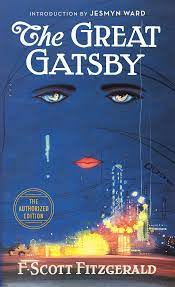
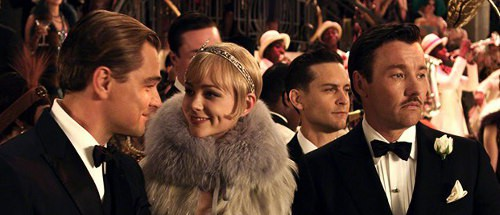
We can take an example of Fitzgerald's Novel ‘The Great Gatsby’ to understand the difference between the elite class and new working class and their growing culture. Jay Gatsby in the novel is a new rich person and so everything for him is new and he follows a popular culture like he throws parties and follows Jazz music which is not liked by the elite class society.
The advent of popular culture has paved the way to the rise of popular culture studies. At the core of what we know as popular culture studies today is the work of Scholars associated with or influenced by the Birmingham Center of Contemporary Cultural Studies. popular culture itself and intellectual interest in its risks and possibilities, however, long predate this moment. Earlier in the 20th century, members of the Frankfurt School took an active interest in what was then referred to as ‘mass culture’ or the culture industry.
Semiotics, emerging in the latter half of twentieth century as an exciting new methodology of cultural analysis, turned to popular culture for many of its objects as it redefined textuality, reading, and meaning. The works of Roland Barthes and Umberto Eco are exemplary in this regard.
There have been many subsequent approaches to popular culture studies. important among these are feminist approaches to popular culture exemplified by work on Hollywood cinema and women's melodrama in particular, the study of images and representations through a Mass Communication approach , and ethnographic studies of readers of popular romances and television audiences. a minor, theoretically weak tradition of popular cultural studies initiated by Ray Browne parallelly in the United States may also be mentioned. More recently Slavojzizek has introduced new ways of drawing popular cultural text into philosophical debates. If all these can be taken together as constituting what is generally referred to as popular cultural studies today, it is still limited to the 20th century.
Popular culture has always faced fierce criticism from supporters of traditional, upper-class culture. in Britain Matthew Arnold and in his wake F.R. Leavis Ada undertook this task as they sought to insulate ‘the best of what was thought and said’ - essentially the upper class culture from the debasing influence of the commercial press and mass culture in general. but the history of popular culture as an object of Investigation and social concern goes further back still to the 19th and 18th centuries, the period of the rise and spread of mass literature, boosted by the rise of working class readership.
Aside from precursors such as Umberto Eco and R. Barthes, popular culture studies as we know them today were developed in the late 70s and 80s. The first influential works were generally politically left wing and rejected the aristocratic view. However, they also criticized the pessimism of the Frankfurt School: contemporary studies on mass culture accept that popular culture forms do respond to widespread needs of the public. They also emphasize the capacity of the consumers to resist indoctrination and passive reception. Finally, they avoid any monolithic concept of mass culture. Instead they tried to describe culture as whole as a complex formation of discourses which correspond to particular interests, and which can be dominated by specific groups, but which also always are dialectically related to the producers and consumers.
An example of this tendency is Andrew Ross’s ‘No respect: Intellectual and Popular Culture (1989). His chapter on the history of Jazz, Blues and rock does not present a linear narrative opposing the authentic popular music to the commercial record industry, but shows how popular music in the US from the twenties until today, evolved out of complexity.
There are four main types of popular culture analyses:
production analysis,
textual analysis,
audience analysis, and
historical analysis.
These analyses seek to get beneath the surface (denotative) meanings and examine more implicit (connotative) social meanings. These approaches view culture as a narrative or story-telling process in which particular texts or cultural artifacts (i.e., a hit song or a television program) consciously or unconsciously link themselves to larger stories at play in the society. A key here is how texts create subject positions or identities for those who use them.
Postmodernists tend to speak more of subject positions rather than the humanist notion of independent individuals.
Production analysis asks the following kinds of questions: Who owns the media? Who creates texts and why? Under what constraints? How democratic or elitist is the production of popular culture? What about works written only for money?
Textual analysis examines how specific works of popular culture create meanings.
Audience analysis asks how different groups of popular culture consumers, or users, make similar or different sense of the same texts.
Historical analysis investigates how these other three dimensions change over time.
Chetan Bhagat (born 22 April 1974) is an Indian author, columnist and youtuber. He was included in Time magazine's list of World’s 100 Most Influential People in 2010. Chetan Bhagat writes in very Indian language, it has no great quality like the professional writer who wins the booker prize etc. but he is read a lot by many people and loved too. But he is trolled for writing in the local language by many readers. He plays a great role in Popular culture and its reading.

Popular culture is the totality of distinct memes, ideas, perspectives, and attitudes that are deemed preferred per an informal consensus within the mainstream of a given culture. heavily influenced by mass media and perpetuated by that culture’s vernacular language, this collection of Ideas permeates the everyday lives of the society. Popular culture is often viewed as being trivial and dumped down in order to find consensual acceptance throughout the mainstream. as a result of this perception, it comes under heavy criticism from various scientific and non main- stream sources which deem it superficial, consumerist, sensationalist and corrupted
It is manifested in preference and acceptance or rejection by features in such various subjects as cooking, clothing, consumption, and the many facets of entertainment such as sports, film, music and literature.
Popular culture is what we have made out of products and practices of mass produced culture. popular culture is an expensive content that is produced and consumed. It is light entertainment that is delivered through the channels of mass media and finally absorbed voluntarily, to be observed by the individual who receives it. Popular culture consists of the many facets of music, fashion, slang, and entertainment and the newer forms of media like the internet.
Advertising promotes more than a product in our popular culture. images used in advertising are often idolized; they eventually set the standard which we in turn feel we must live up to. Advertisements serve to show us that the ideal image is, and further tell us how to obtain it. Advertisers essentially have the power to promote positive images or negative messages. This in turn affects our culture.
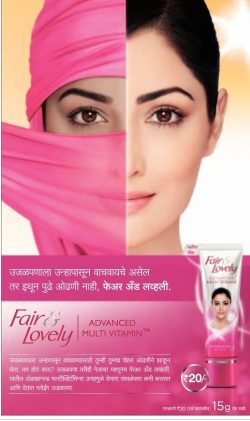
For example the cosmetics and fashion Industries keep telling people that they will improve their self image with their cosmetics for fashion.
Works Cited
What Is Pop Culture? | Mr. Pop Culture, https://mrpopculture.com/what-is-pop-culture/. Accessed 5 November 2022.
gowda, sukesh, and Nadeem Siddiqui. “Advertising and culture.” SlideShare, 27 April 2011, https://www.slideshare.net/sukeshgowda/advertising-and-culture. Accessed 5 November 2022.
Hayes, E. Bruce. Rabelais's Radical Farce: Late Medieval Comic Theater and Its Function in Rabelais. Taylor & Francis, 2016. Accessed 5 November 2022.
Kaushal, Sweta. “Chetan Bhagat, please stop writing books, concentrate on Bollywood instead.” Hindustan Times, 2014, https://www.hindustantimes.com/books/chetan-bhagat-please-stop-writing-books-concentrate-on-bollywood-instead/story-WQG3VzHs9oFjSXwLVQ5X8H.html.
“Popular Culture & Globalization: Teacher Candidates' Attitudes & Perceptions of Cultural & Ethnic Stereotypes.” ERIC, https://files.eric.ed.gov/fulltext/EJ1090398.pdf. Accessed 5 November 2022.
Venugopal, Rajitha, et al. What about theory? Bodhi Tree Books, 2019.