Showing posts with label feminism. Show all posts

Thursday, 22 December 2022

The Joys Of Motherhood- Neofeminism

Yesha Bhatt, a ma'am, has been given the task of this blog. I'm responding to the allotted question related to Neo-feminism in Buchi Emecheta's book The Joys of Motherhood.

The Joys Of Motherhood
Buchi Emecheta


Florence Onyebuchi Emecheta, known as Buchi Emecheta (1944- 2017), was a Nigerian-born novelist, based in the UK. She belonged to an Igbo community and is also known as an Igbo writer. Her novels deal largely with the difficult and unequal role of women in both immigrant and African societies and explore the tension between tradition and modernity. She wrote plays, and autobiographies as well as work for children. She has written more than 20 books and her famous works are The Second Citizen, The Bride prize, The Slave Girl, and The Joys of Motherhood. Emecheta's themes of child slavery, motherhood, female independence, and freedom through education gained recognition from critics and honors. She has been characterized as "the first successful black woman novelist living in Britain after 1948".

She once described her stories as
"stories of the world, where women face the universal
problems of poverty and oppression, and the longer 
they stay, no matter where they have come from 
originally, the more the problems become identical."


About Book ‘The Joys of Motherhood’

The novel was first published in 1979. The basis of the novel is the ‘necessity for a woman to be fertile, and above all give birth to sons.’ The genre of the novel is Bildungsroman (a class of novel that depicts and explores the manner in which the protagonist develops morally and psychologically). It is set in the early twentieth century (1909) to 1950s (opens in Lagos in 1934) in Ogboli, the village of Ibuza; Lagos, and Nigeria. The narrator is anonymous. The narrator narrates mostly in the third person point of view focusing mostly on the action of the protagonist, Nnu Ego, and sometimes in objective. However, the narration becomes omniscient. The novel shifts 25 years back after presenting the present scenarios in the life of the protagonist.

The Joys of Motherhood is the story of Nnu Ego, a Nigerian woman struggling in a patriarchal society. Unable to conceive in her first marriage, Nnu is banished to Lagos where she succeeds in becoming a mother. Then, against the backdrop of World War II, Nnu must fiercely protect herself and her children when she is abandoned by her husband and her people. Emecheta “writes with subtlety, power, and abundant compassion”

Characters

This image includes the main characters of the novel.


Title
The title of the novel The Joys of Motherhood is taken from Flora Nwapa's pioneering novel Efuru (1966). The closing sentences of Nwapa's book raise a paradox about the much-consulted childless river goddess, Uhamiri:

“She had never experienced the joy of motherhood. 
Why then did the women worship her?” (Efuru, 221).

The Joys of Motherhood is Emecheta's hauntingly ironic elaboration on those venerated, so-called joys


The irony of the title of the novel is that she did achieve the joys of motherhood, but could never entirely live up to social ideals and had never expected the selflessness of giving all to her children to demand such great cost and reap so little reward.


The reviewer in West Africa wrote:

"Buchi Emecheta has a way of making readable 
and interesting ordinary events. 
She looks at things without flinching 
and without feeling the need to distort or exaggerate. 
It is a remarkable talent.... this is, in my opinion, the 
best novel Buchi Emecheta has yet written."

The basic narrative lends itself toward neo-feminism. The main female characters struggle to shed the conditioning which forces them to act out roles that bring little fulfillment. With reference to this, study The Joys of Motherhood by applying a feminist theory.


Neo- feminism

Neo- feminism praises a womanly essence over claims to equality with men, and neo-feminism portrays a developing image of women as being empowered through the celebration of traits thought to be traditionally feminine. In other words, this concept depicts a growing perspective of women as becoming empowered through the celebration of traits believed to be traditionally feminine. It elevates the womanly essence above claims for equality with men. It is also called Lipstick feminism.

Lipstick feminism is a subset of feminism that aims to embrace both conventional conceptions of feminism and traditional concepts of femininity, such as the sexual power of women. The idea first appeared in the third wave as a reaction to earlier movements' ideas, which led women to believe they couldn't be feminists and also be feminine.

The first wave of feminism focused on women's suffrage, or the right to vote. Activists during this time period fought for women to have the same political rights as men.
The second wave of feminism, also known as the women's liberation movement, sought to address a broader range of issues, including reproductive rights, equal pay, and ending discrimination and violence against women.
The third wave of feminism was characterized by a focus on intersectionality or the idea that different forms of oppression, such as racism, classism, and homophobia, intersect and compound one another. This wave also saw the rise of feminist activism on the internet and the use of social media to mobilize and organize.
The fourth wave of feminism, also known as intersectional feminism, continues to build on the principles of the third wave and emphasizes the importance of inclusivity and diversity within the feminist movement. This wave has also seen the rise of the #MeToo movement, which aims to expose and challenge sexual harassment and assault.

Connecting to the last two waves of feminism which gave a new perspective to feminism, neo-feminism emerged in the 21st century. Feminism basically seeks to advance the rights and status of women. Feminism advocates for the equality of women and men and challenges systems of patriarchy, which are social and political structures that prioritize the interests of men and perpetuate male domination and discrimination against women. While Neo-Feminism, This idea or movement of feminism promotes feminine abilities and demands to stand up in a society with those abilities without any source of comparison, it honors women and their abilities in itself without comparing or asking for equality with men.

Buchi Emechaeta in her novel ‘The Joys of Motherhood’ brings forward the traditional Igbo Culture and conditions of women in Igbo society. Women were considered the source of reproduction. This novel rejects the feminist code and associates it with motherhood. The woman who is fertile is honored in society and adding to it if she is the mother of sons she is respected in society. The novel revolves around the life of protagonist Nnu Ego who is the daughter of Ono and Agbadi.


Ono, when died, urged Agbadi to let her daughter live a life of her own that is detached from the feelings and expectations of her husband and father. But perhaps Agbadi didn't understand the intention of this request. Nnu Ego was married to Amtokwo. Nnu Ego was also inspired by the grandmother of the village, Mama Abbey, and dreamt to earn respect like her by accepting and celebrating motherhood. Unfortunately, Nnu Ego was barren and couldn't be a mother, Amatokwo brought a new wife (polygamy in African culture) and she gave birth to a baby. Once he saw Nnu Ego was breastfeeding a baby and he insulted Nnu Ego and so she returned to his father.

She believed that her Chi (angel, god of creation) was a slave who was forcibly killed in the death ceremony of Agbadi’s senior wife death ceremony and her revenge is causing all the suffering in her life. Later she married Nnaife and had to go to Lagos after marriage into a new culture. She got pregnant and gave birth to a boy but he died in infancy. The death of a child caused her to have suicide but was saved. In her lifetime she gave birth to 9 children.

The purpose of Nnu's ego’s life was not to achieve liberation or self-knowledge but to be the mother of healthy sons, which was what a typical Igbo culture wished for. Nnaife was inherited from the wives of his elder brother, among four wives Adaku, the young and prettiest, joined him in Lagos. Nnu Ego and Adaku used to have a rivalry, Nnaife was sent to war and they started having a financial crisis.

Nnu Ego with her children returned to her native and worked hard to feed and educate her children. When she asked for the money from Nnaife, he refused and asked her to work for her children on her own. Marriage and motherhood are constructed as allegories of slavery.

“She was a prison, imprisoned by her love for her children”

Nnu Ego hoped for the reward of all her struggles for her children but she never gained it. Her children went to foreign countries for the betterment of their life. The reward for Nnu Ego was the funeral ceremony by her children. Nnu Ego died in the streets and there was no one around her, her children were not there to help her in her struggles. Which brings the image of illusory motherhood. He was so busy celebrating her mother that she never looked above her children. She earned respect for being a mother but lost her own identity and didn't even earn the reward of motherhood.

“no child to hold her hand and no friend 
to talk to her”, she had “never really made 
many friends, so busy had she been 
building up her joys as a mother”

On the other hand, Nnaife married a new young girl, Opko. Adaku was the complete opposite of Nnu Ego, she could give birth to a boy child but she knew the importance of education and educated her daughter. Adaku joined prostitution for her earnings and decided to be an independent woman. While Nnu Ego was afraid of losing her respect in society and so she refused prostitution and worked in the fields to enjoy her motherhood.

The title of the novel The Joys of Motherhood is the irony by which the novelist tries to present the oppression, suffering, and loneliness which African mothers experience within a patriarchal society. Nnu Ego and Adaku present a dichotomy of motherhood. Adaku aptly presents neo-feminism, to be empowered through the feminine powers while Nnu Ego loses herself in a path of empowering herself as a mother. Nnu's ego’s character throws light on the dehumanizing of women as a means of reproduction.


Here are some detailed readings on feminism reading in The Joys of Motherhood

I hope this blog is useful. Thanks for visiting.

[Words- 1750
Images- 4
Videos- 2 ]

Monday, 10 October 2022

Presentation 14- Paper no.: 204- Contemporary Western Theories and Film Studies

Reading of Gauri Shinde's Film 'English Vinglish'


This is my presentation on paper no. 204 Contemporary Western Theories and Film Studies


This is my video of presentation on paper no. 204 Contemporary Western Theories and Film Studies

Thank you for visiting I hope my this presentation and video recording are useful to you.

Friday, 9 September 2022

Theories: Marxist, Ecocritical, Feminist and Queer Criticism

Hello! This blog is assigned by Dr. Dilip Barad sir. It deals with various literary theories like Feminism, queer study, eco-criticism, and Marxism. This blog deals with Feminism, other blogs which deal with other theories are hyperlinked in the end.
 
Feminist criticism

What is feminism? It is an advocacy of women's rights on the grounds of the equality of the sexes. Equality on political, social, personal and economic grounds. The fight for feminism is not for having more value than men/ male gender in society but for having equal value in society. Feminism emerged as a socio-political movement before a literary movement.


Feminism is seen in waves. The first 19th and early 20th centuries comprised women's suffrage movements of the 19th and early 20th centuries, promoting women's right to vote. The second wave Mid-20th century, the women’s liberation movement, began in the 1960s and campaigned for legal and social equality for women. In or around 1992, a third wave Late 20th and early 21st centuries was identified, characterized by a focus on individuality and diversity. Additionally, some have argued for the existence of a fourth wave, starting around 2012, which has used social media to combat sexual harassments, violence against women and rape culture, and it is best known for the me too movement.

Feminism as a socio-political movement inspired literature to look for the women in itself. The books that played an important role in bringing and looking for feminism in literature are-

Mary Wollstonecraft’s A Vindication of the Rights of Woman (1792),
John Stuart Mill’s The Subjection of Women (1869), and
The American Margaret Fuller’s Woman in the Nineteenth Century (1845).

The very important precursor of feminism in literature is Virginia Woolf, who, in addition to her fiction, wrote A Room of One’s Own (1929) and numerous other essays on women authors and on the cultural, economic, and educational disabilities within what she called a “patriarchal” society, dominated by men, that have hindered or prevented women from realizing their productive and creative possibilities. Other important writers in this field are Simone de Beauvoir’s The Second Sex (1949), Mary Elman's Thinking about Women (1968), and Kate Millett’s Sexual Politics.

There is a long detailed Wikipedia page on this theory. CLICK HERE


The question also arises about the fundamental concerns in feminism. (M.H. Abrams)
The basic view is that Western civilization is pervasively patriarchal

It is widely held that while one’s sex as a man or woman is determined by anatomy, the prevailing concepts of gender

The further claim is that this patriarchal (or “masculinist,” or “androcentric”) ideology pervades those writings that have been traditionally considered great literature gynocritics—that is, a criticism that concerns itself with developing a specifically female framework for dealing with works written by women, in all aspects of their production, motivation, analysis, and interpretation, and in all literary forms, including journals and letters.

One concern of gynocritics is to identify distinctively feminine subject matters in literature written by women—the world of domesticity, for example, or the special experiences of gestation, giving birth, and nurturing, or mother-daughter and woman-woman relations—in which personal and affectional issues, and not external activism, are the primary interest.

Another concern is to uncover in literary history a female tradition, incorporated in subcommunities of women writers who were aware of, emulated, and found support in earlier women writers, and who in turn provide models and emotional support to their own readers and successors.

A third undertaking is to show that there is a distinctive feminine mode of experience, or “subjectivity,” in thinking, feeling, valuing, and perceiving oneself and the outer world. Related to this is the attempt (thus far, without much agreement about details) to specify the traits of a “woman’s language,” or distinctively feminine style of speech and writing, in sentence structure, types of relations between the elements of discourse, and characteristic figures of speech and imagery.

Often we realize or get questioned that this is only a patriarchal society that is trying to pull the leg of the female society. And we see no, women are majorly not even supported by women. For a glance if we just take an example of our TV shows/ Television series where women are always planning and plotting against other women. We rarely find women supporting women. Television plays an important role in shaping society.

Patriarchy is not only male society dominating women or females but it has turned to be an ideology. We see the old-age women are the agency of patriarchy. In the family grandmother or in movies the old character will always give morals on how women should and take care of the family. Women are created to take care of male society. Adichie Ngozi in her speech on feminism said- we/ society always try to create a boy hard/ tough man which gives them a fragile ego and we train girls to cater to that ego and shrink them.

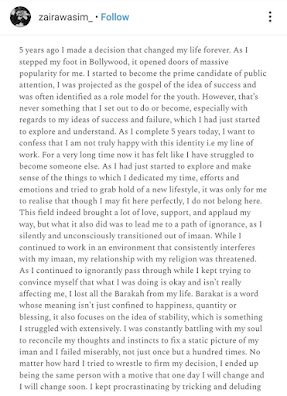
Religion has always tried to tie women. Religion gave an idea of women doing fast for their family and children. It gives stories where women are doing only household work. बेटी तो पराया धन होती है। is a strong concern from religion. It plays an important role in shaping women as Indian ideal wife material. Still today we see that women are more in to follow the religious path, in spite it forcing them to shrink. One of the examples is Zaira Wasim. She played a role in the Bollywood movie Dangal in a young age but suddenly later she dropped Bollywood and went close to her religion, the Islamic religion. For walking on the path of religion she dropped her whole career despite being a talented actress. Here is her FB post. A recent example of how women can't grow. The whole society in one or another way traps and stops, it becomes necessary to come out of all this construction.


When we read literature, we connect ourselves in it. We find ourselves in that that suggests closely the relation of novels in our everyday ;life. Today the world is digitizing. Cinema is taking the place of literature and stories. Cinema plays an important role as a mirror of society and it also shapes society. As we discussed above women, and aged women like grandmothers/ aged women are the agencies of patriarchy. Women try to tie their daughters or daughters-in-law in the frame of ideal women.

The bollywood movie Thappad directed by Anubhav Sinha is a movie in which a woman fights back and stands for herself only for one slap and asks for a divorce. In this mainstream story, we also see minor stories of a maid and a lawyer. Protagonist Amruta has a point about how her husband cannot slap her in any situation. During the emotional and mental breakdown of Amruta, we find her mother and mother-in-law saying

बस यही सुनना बाकी रह गया था कि बेटी डीवोर्स करेगी|
जाने दे बेटा, थोड़ा बर्दाश्त करना सीखना चाहिए औरतों को.”
This is an example of how women shape women in order to cater male ego, how women are the agency of patriarchy.


Women are always permitted. They don’t have to do anything without permission. We find many people who think they are superior for letting women grow, work and earn. They boast that they are open minded to let their daughter- in- law work and earn. Such characters are represented in various Bollywood movies also. Here is Rahul Bose and Manav in Dil Dhadakne do (2015) directed by Zoya Akhtar.


Pink is a 2016 Bollywood movie directed by Aniruddhsinh Chowdhary. A patriarchal male-dominated mindset is represented in a movie by the character of Rajveer Singh. How the minds of men are conditioned. They feel their rights of women and how women are expected to shrink themselves to safeguard their dignity and chastity is aptly shown in these women.


In the contemporary period, we feel we are growing. Women are getting their places, they are having their domination. But if one woman is earning and free or independent doesn't mean everyone is. Till every woman or majority of don't get their place, independence we can never say that women are not under control anymore. One TVC telecom tried to show a woman out of her traditional conventional work, in a way to show progress

But here in this TVC, we see that the ad fails to show women's progress. Even after she is the boss in the office. She has to cook food for her husband after office work and invites her husband for food. Despite being a boss. This in a way reflects the mindset of the society which boasts about letting their wife and daughter- in law work. Society is trying to show off its ‘independent mindset’.


Moving towards feminist criticism is locating women in the literature. The issues they face in society and how they lose their identity. Today we are living in the 21st century but still, the most loved Bollywood movies are movies in which heroines feel themselves complete after the hero enters their life.


These are a few examples of movies where female protagonists are independent and bold but they feel complete in their life when they find a man in their life.

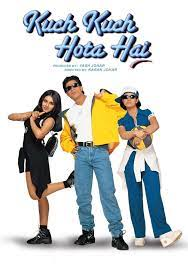
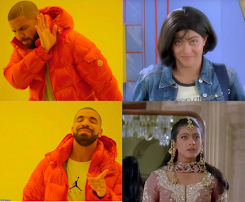
Here is also a meme of Anjali of Kuch Kuch hota hai. She was an independent blog sports girl but wasn't loved by Rahul. In the second part of the movie, she is an ideal wife material. Girl with long hair and so-called beauty and Rahul falls in love with her. This is a real cringe. Bollywood gives a frame of what type of girls are loved and to boys, whom to love.


Recently the #wokyaboli is also trending by BBC News. One must check out it on the Instagram page of BBC news and on Twitter also.


We must not forget that feminism is for equal rights. Women are physically and biologically not as strong and hard as men adding to it they have soft and emotional conditioning of mind. And to have equality firstly equity is necessary in society. Slowly and steadily ideologies will change and the world will change. This change cannot be brought in a day or year.

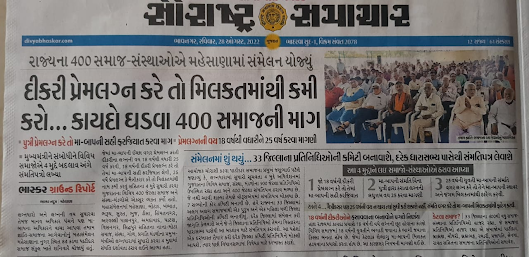
Looking over contemporary times we realize even today society is not ready to accept girl’s freedom. They are not ready to give part of their property to their daughters if they don't follow them. દીકરી ને ગાય દોરે ત્યાં જાય. Girls are expected to follow and not to question.


I hope this blog is useful. Thanks for visiting.

Monday, 22 August 2022

Sunday Reading: Talks by Chimamanda Ngozi- Learning Outcome

Hello! While reading the future of Post- Colonial Studies we came across the prominent Nigerian Writer, Chimamanda Ngozi Adichie. So we are assigned a task to listen her ideas about singles story, Feminists and Importance of truth in Post- Truth Era. In this blog, I am sharing my learning outcome after watching her videos.

Talks by Chimamanda Ngozi Adichie


Chimamanda Ngozi Adichie


Chimamanda Ngozi Adichie is known for her books that use the history of the Nigerian civil war to create stories that tell people the tales of war, pain, love, and happiness. Amanda Ngozi Adichie, born 15 September 1977) is a Nigerian writer whose works include novels, short stories and nonfiction. Through her hard-work, dedication and passion, she managed to redefine how feminism is viewed in society, and wrote novels that portrayed what it was like to be and stay African in a very westernized world.


Dangers of single story
Chimamanda Ngozi Adichie's "The Danger of a Single Story" Ted Talk, in July 2009, explores the negative influences of a “single story”. By sharing her personal experience of being a trap of single story she pressures on having more than one perspective for looking towards the world. She grew up reading American literature and later her works also had blue- eyed characters and later when she went to white land for education she realized the single story of Americans towards Africans.

This idea can be or must be experienced by everyone, in a fight between two when we hear a story of only one we start making prejudices for the opposite person and without having any personal grudges we start hating them.

Taking an example of literature. Jane Eyre (1847) by Charlotte Brontë hasn't grown a character of Bertha Mason and so we feel like what's happening with her is to happen because she is made. But then Jean Rhys's Wide Sargasso sea (1966) gave readers a new perspective. It broke the prejudices towards Bertha and her single story got new perspectives.

Reading characters is the novel or meeting people from different communities, groups, schools, streams etc . We have a habit of generalizing a single person for the whole group/ community/ or nation.


Adichie also tackles the effect of political and cultural power on stories. Power controls “how [stories] are told, who tells them, when they're told, [and] how many stories are told”.

In 20112 when petrol prices were hiked, various Bollywood actors tweeted about it, following the orders of political power. At present, when the same political power is ruling and prices are increasing, touching 100 they are deleting their tweets. This is how stories and told and controlled by power.


Read in detail- CLICK HERE

Citing Palestentine poet Mourid Barghoti’s quote “if you want to dispossess people the simplest way to do it is to tell their story and to start with secondly. Begin with arrows of native Americans and not the British; start with failure of the African state.`` She gives us a mantra to look at things in a new way, a path to look at things with a new perspective.


She ended her speech with a wonderful line “When we reject a single story, we regain a kind of paradise”. Grow various perspectives to see the world.

We should all be feminists


The second video I watched of Chimamanda Ngozi is on Feminists. She has shared wonderful ideas which are sarcastic to patriarchal society. She stated that a words Feminists comes with baggage, heavy and negative baggage, u hate men, bras, African culture that sort of things. And the worst is that men or society don't know what women are facing or going through for them “सब चंगा सी|”. On a personal level also I have experienced the answers on sharing any experience. It's normal that everyone is falling, we can't do anything about it, women are blessed with endurance. Blessed with endurance ! So should they keep on suffering?

Not only in society but also in the workplace men have occupied more positions of power and prestige and on the other hand men are paid more than women for the same work, dedication and talent. Adding to it she also said that today we don't need physical strength but attributes like more creativity, innovation and intelligence and this are not on hormones, it's equal for both genders.

Society plays a significant role, humans are its by-product, it is inherited that men are to be respected, women are below them. Boys are molded to be hard- men subsequently a fragile England women are molded to cater that ego, taught to shrink and feel inferior, emasculated. Marriage turns out perhaps the right of a specific man or respective women. Women a trophy, a property. Marriage seems like a social idea favoring men and patriarchal society. For a peaceful marriage men will have to give up bad habits while women will give up her whole life and career, dreams and hobbies. A Bollywood movie ‘Thappad’ by Anubhav Sinha very significantly plants the idea of a girl giving up her passion after marriage. Girls are taught to be good wife material.


Women would be hesitant in looking to masculine and vice- versa; women are to cook food for the family while the high [position of chef is occupied by men; virginity in women is praised. We evolved but ideas of gender had not evolved.

Even our cinema shapes the mindset that women are incomplete without men and to be perfect they need to be feminine and have a men supporter. E.g: Kajol from Kuch kuch Hota hai, Jab we met, kabhi alvida na kehna, etc

Ngozi’s idea which i loved the most is


In this world gender communication is difficult. The simple answer we get is it was and is meant to be like this. women are considered subordinate to men culture and culture keeps changing. People make culture, culture doesn't make people.


Chimamanda Ngozi Adichie addresses Harvard's Class of 2018

In 2018 Ngozi was invited as a guest speaker in Harvard University and she gave a speech to the batch of 2018 for their further life outside the Harvard. The main idea/ aim/ message is be courageous to say the truth in this post- truth era. Be the change you want to see in the world. Tell the truth. Here I am writing some of her ideas which attracted me the most.

It's always difficult to acknowledge our own lies and tell the truth. We should not lie because it's good manners but because telling the truth will give us a good sleep. “We lie because we don't have the courage to embrace truth.” stay truthful not only to others but to oneself also. “it's hard to tell ourselves the truth, our failures, fragilities, uncertainties. It's hard to tell that we haven't done our best, which we could have.”

“There is a difference between malice and mistake, outrage but always remember the context and never disregard intent.”

Whether you are a leader or a led urge to bend towards the truth, to err on the side of truth. Live a life where humans are at center not abstractions. If you can't take support of literature which always says- we humans are flawed, all of us are flawed. We don't need to be perfect, we need to be right and just. Be courageous to recognize the things which come in your path of telling the truth.

Telling the truth is an act of courage, be courageous. Never silence yourself from fear. Always listen to the other side whether the person is in position or not.

Be courageous to admit what you don't know. If you feel dissatisfaction, nurture that dissatisfaction. Get into the system you want to change.

When the fear of failure holds you back, the truth to overcome is easy to forget, forget your failure. In life nothing is a waste of time, everything is an experience and experience is all we need in life. We cannot make or do without self- doubt and self- belief.

If you fail in life, think of literature and literary writers who bloomed early and who bloomed late. The experimenting literature which broke all the rules of traditional writing. They were not known in their time but are classics today.

Life is all about being truthful and courageous.

Thursday, 18 August 2022

Thinking Activity- selected Poems- An Introduction- Kamala Das

Hello readers! This blog is a response to a task assigned by Yesha Bhatt ma’am based on the poem ‘An Introduction” by Kamala Das. The assignment is to Pick any one line/ word/ phrase/ thought/ idea from the poem, Writing our own version of it in the form of poetry, excerpt, paragraph (prose), story, or any literary piece.

AN INTRODUCTION
Kamala Das

Feminism is a range of socio-political movements and ideologies that aim to define and establish the political, economic, personal, and social equality of the sexes. Feminism incorporates the position that society prioritizes the male point of view and that women are treated unjustly in these societies. Efforts to change this include fighting against gender stereotypes and establishing educational, professional, and interpersonal opportunities and outcomes for women that are equal to those for men.

“I hate to hear you talk about all women as if they were fine ladies instead of rational creatures. None of us want to be in calm waters all our lives.”
― Jane Austen, Persuasion


About Kamala Das


Kamala Surayya is an Indian Author from Kerala, born on 31 March 1934 and died on 31 May 2009. She was popularly known by her one-time pen name Madhavikutty and married name Kamala Das. She is an Indian poet in English as well as an author in Malayalam, India. At the age of 15, she married bank officer Madhav Das, who encouraged her writing interests, and she started writing and publishing both in English and in Malayalam.

She has wrote a Novel Alphabet of Lust (1976); Autobiography My Story (1976); Short stories A Doll for the Child Prostitute (1977), Padmavati the Harlot and Other Stories (1992) in English and various poems in English and Malayalam.


About the poem ‘ An Introduction’


"An Introduction" is a very bold poem, published in Calcutta in 1965, in which Das expresses her femininity, individuality, and true feelings about men. This autobiographical poem is written in the colloquial style. She presents her feelings and thoughts in a bold manner. She realizes her identity and understands that it is the need of every woman to raise a voice in this male-dominated society. The poet longs for love that is the result of her loneliness and frustration.

The Poem ‘An Introduction’ is written in two stanzas, 37 and 22 lines respectively and in total it is 59 lines. Das explores powerful themes of feminism/equal rights, freedom, and marriage in 'An Introduction'. This poem is a very clear feminist statement that advocates for free choice for all women. The major theme of most of her poems are the quest for love and her failure to find fulfillment of love in life.

In the poem Kamala Das is sharing her personal life and her time when the world was all about patriarchy. The poem is a mixture of history and memory. She begins with how politics and positions were decided. She personally was not interested in politics but she knew all the politicians who ruled in sequence beginning with Nehru. Symbolically she presented the place of women in this patriarchal world. Even after independence women were/ are not independent as men were/ are. Absence of women politicians in the history of India till the time of Kamala Das.

Further, in the poem Das talks about her multi-linguistic . Das already had to face various oppositions being a female writer but above all she also had to justify her language of writing. Society forced her to write in her mother tongue and to leave English. But she claimed that whichever language she/ one uses turns to be one's own. Its distortions are not its flaw but its uniqueness.

Das was married at a very early age. She was always forced to ‘fit-in’ in the womanliness of the society and perform her duties in the patriarchal world. But yet in all this she fights and finds her own way and writes this wonderful poem which inspires other women also to be what they are and to search for self.

Das brings the poem to an end on the exact same notes that the beginning and the center of her poem explicitly stress, i.e., “I.” The struggle between herself and the world at large heightens towards the end, eventually blurring the lines between where her original self begins and ends.


I would like to quote Simon de Beauvoir's statement from The Second Sex-

"Man is defined as a human being and woman as a female – whenever she behaves as a human being she is said to imitate the male." "One is not born, but rather becomes a woman."


This is a prose– poem of my own version from this poem. This is the first time I am trying my hands on creative writing. I apologize for the mistakes or any incompleteness found in it. I might make corrections or add in the poem later. The line I chose from the poem is Who are you, I ask each and everyone, The answer is, it is I.

Who are you, I ask each and everyone,
The answer is, it is I.
Who are you, I was asked by each and everyone,
The answer is, it is I.
I, trying to paint my world
I, trying to read the unsaid
I, trying to play with books;
Growing to what are you from who are you.
What are you? A woman, a girl
Made to play with kitchen set
Dressing Barbies, broom and mop;
No, a disordered girl
No more domicile as Sita
But fiery as Draupadi,
Escaping Austen’s world
Getting in Woolf’s world;
Growing to what are you from who are you.

Explanation of my poem
The above poem is my first experiment of creative writing. Borrowing the first line from Das’s poem ‘An Introduction’ I have tried to write a few lines continuing it. In this poem I have explained ‘I’, who is ‘I’ and what is ‘I’ which is used for self- identity. ‘I’ is the one who is building her own world and trying to change the question from who are you to what are you. Which means not asking who you are but how come you did this what are you? What is answered as you can be simply a woman who is always taught to be a girl. But now women will not be domicile or controllable as Sita but will fight challenges and be fierce like mythical character Draupadi. Today women is/ will try to escape Jane Austen’s world, world of marriage and womanliness and is/ will enter the world of Virginia Woolf, where women stood for themselves, fought for their place in the patriarchal society.


I have painted this painting based on a few lines of the poetry. Lines of the poetry are also written below.


I speak three languages, write in
Two, dream in one.


It is half English, halfIndian, funny perhaps, but it is honest,


Then … I wore a shirt and my
Brother's trousers, cut my hair short and ignored
My womanliness. Dress in sarees, be girl
Be wife, they said. Be embroiderer, be cook,
Be a quarreller with servants. Fit in.


There is also a Hindi feminist song ‘Rupaiyya’ from Album ‘Super 8 womaniya Special’ released in 2017 by Sona Mohapatra. It was presented on ‘Satyamev Jayate’ Star Plus program on Women’s Day special program.


As in ‘An Introduction’ in this song a girl is requesting her parents that she is not a burden for anyone so they do not sell her. Sell her in the sense not to make her marriage and pay dowry for it. She will and can fight with all the troubles of life and society, she cannot be contemplated with money. She leant walking with fathers support and will turn to his father’s support. She is also a part of the family not a ‘paraya dhan’ she will definitely bring food, earnings to the family. This song strongly suggests the answer ‘No’. A girl has a right on herself, on the family she is born in. She can make her own decisions. 

Here we see the poem was published in 1965 yet there is no great change in society which can be easily read from the very recent Hindi song released in 2017. Perhaps women have to start their own new world, new life, new language to get free from this patriarchal society. As we have a short story ‘Sultana’s Dream’ by Begum Rokeya. The land of women, first published in 1905 in a Madras English newspaper, is a witty feminist utopia—a tale of reverse purdah that posits a world in which men are confined indoors and women have taken over the public sphere, ending a war nonviolently and restoring health and beauty to the world.

I hope my blog is useful to you. Thanks for visiting.

My Learnings from the National Workshop on Academic Writing (2026)

The National Workshop on Academic Writing  I recently had the opportunity to participate in the National Workshop on Academic Writing (2026)...