Friday, 28 September 2018

Poem: La Belle Dame sans Merci

LA BELLA DAM SANS MERCI

What are poems?
Poems are the best form of literature. It is a piece of writing arranged in short lines in a musical manner and rhythm. Poems comprise of few lines, few lines of poem give great moral of life. poems express one's thoughts and feeling in the best expressive way and are the best way to convey emotion or ideas to the reader's or listener's mind. We get three words Poesy (the creation), poet (the creator), and poem ( the created) from the Greek verbs. Different forms of poetry are Ballads, sonnets, Doha, and rhyming completely. Poems are the oldest, ancient form of literature.

Through poems, the hearts can be won soon. Fredric P. Saboteur said, " I have won many female relations with this valid resource."

The great poets of English literature are William Shakespeare, William Wordsworth, John Keats, Emily Dickinson, D.H. Lawrence, Rabindranath Tagore, Henry Longfellow, and many more.

About the poet of the poem LA BELLE DAME SANS MERCI.
John Keats - Romantic poet
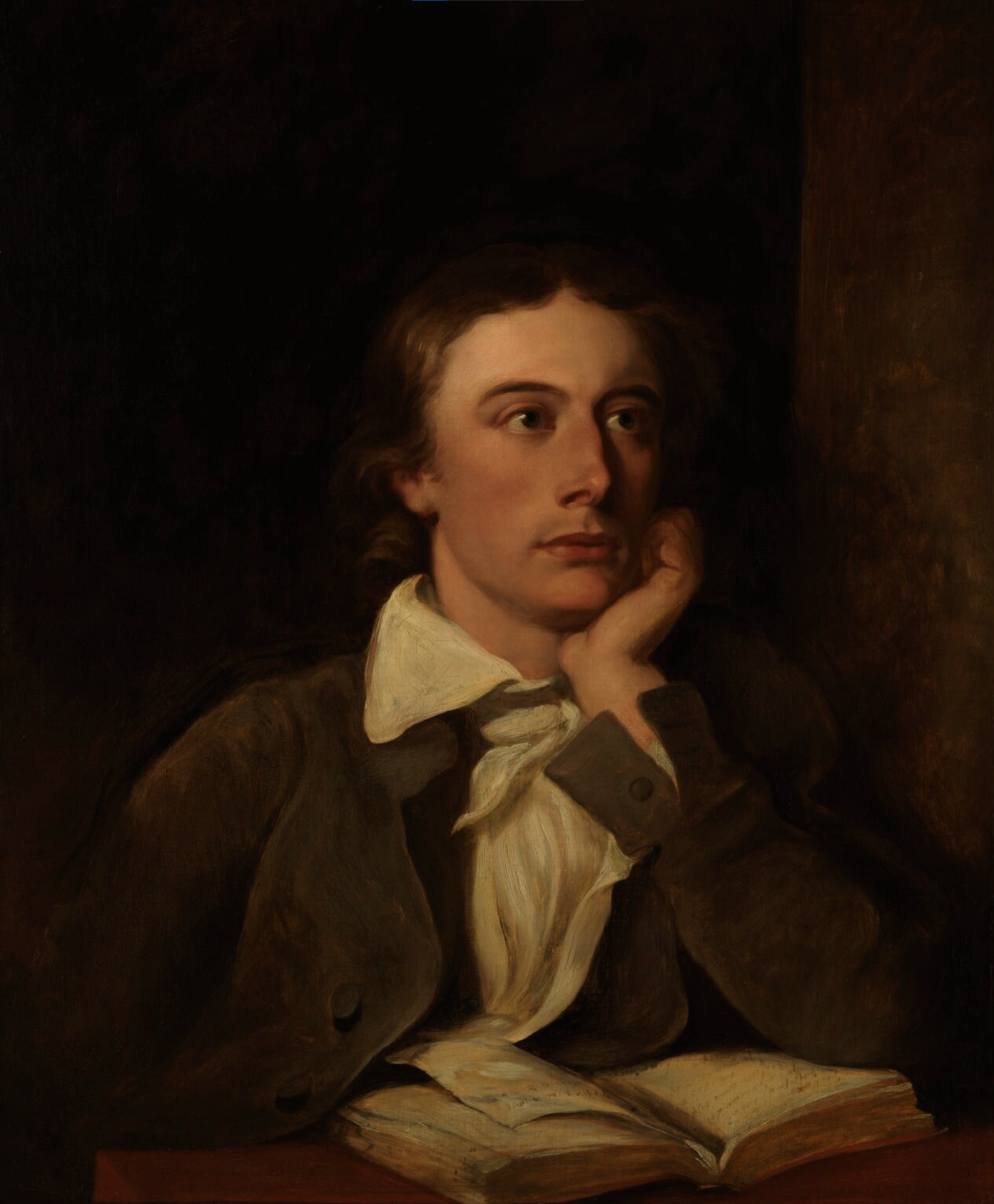

John Keats was born on 31 October 1795 in London he was an English Romantic poet. He was one of the main figures of the second generation of Romantic poets, despite his works having been in publication for only four years before his death. He died at the young age of 25 suffering from tuberculosis on 23 February 1821 in Rome.

Although his poems were not generally well received by critics during his lifetime, his reputation grew after his death, and by the end of the 19th century, he had become one of the most beloved of all English poets. The poetry of Keats is characterized by sensual imagery, most notably in the series of odes. This is typical of romantic poets, as they aimed to accentuate extreme emotion through an emphasis on natural imagery. Today his poems and letters are some of the most popular and most analyzed in English literature.

Some of the most acclaimed works by Keats are “Ode to a Nightingale”, "Sleep and Poetry", and the famous sonnet "On First Looking into Chapman's Homer".

About the poem LA BELLE DAME SANS MERCI.

Summary:
The speaker of the poem comes across a "knight at arms" alone, and apparently dying, in a field somewhere. He asks him what's going on, and the knight's answer takes up the rest of the poem. The knight says that he met a beautiful fairy lady in the fields. He started hanging out with her, making flower garlands for her, letting her ride on his horse, and generally flirting like knights do. Finally, she invited him back to her fairy cave. Sweet, thought the knight. But after they were through smooching, she "lulled" him to sleep, and he had a nightmare about all the knights and kings and princes that the woman had previously seduced – they were all dead. And then he woke up, alone, on the side of a hill somewhere.

O what can ail thee, knight-at-arms,
Alone and palely loitering?
The sedge has withered from the lake,
And no birds sing.

In the first stanza, the speaker questions the knight who is 'alone and palely loitering.' What's the pain to the knight that he looks ill. The edge of the lake is withered and there are no birds singing this indicates it is the time of evening or autumn or the early winter that birds are migrated.

O what can ail thee, knight-at-arms,
So haggard and so woe-begone?
The squirrel’s granary is full,
And the harvest’s done.

The knight at arm doesn't answer the question immediately, in the second stanza poet repeats the question. The second stanza gives two more adjectives to knight in pain 'haggard', and 'woe-begone'.
Last two lines of the stanza the squirrel's granary is full and the harvesting in the field is complete shows that it is sure late autumn.

I see a lily on thy brow,
With anguish moist and fever-dew,
And on thy cheeks a fading rose
Fast withereth too.

The third stanza is giving the physical appearance of a knight in pain. The speaker in the third stanza is still addressing the knight, 'lily of thy brow' signifies the knight is depressed or is in tension. his face is as pale as a lily. The words 'moist' and the 'fever drops' obviously prove that the knight is sick. In the last two lines of the stanza the face of the knight is compared with the fading rose it says how the color of the knight is fading away due to pain and depression.


I met a lady in the meads,
Full beautiful—a faery’s child,
Her hair was long, her foot was light,
And her eyes were wild.

Suddenly in stanza four, the knight answers the unnamed speaker. He reports that he met a beautiful lady in the meadows, she was a fairy- 'faery's child' princess from heaven. He describes the physical appearance of the lady he met. She had beautiful long hair, the knight described his graceful movement and her eyes were wild. she attracted the knight and made him fall for her.


I made a garland for her head,
And bracelets too, and fragrant zone;
She looked at me as she did love,
And made sweet moan

The fifth stanza shows the love moments between the knight and the lady. The knight makes the 'garland'- a flower wreath for the lady's head and 'bracelets' too which enhances the natural perfume. Lady with love in her eyes and moaning showed that she was feeling in love with the knight with every passing movement.


I set her on my pacing steed,
And nothing else saw all day long,
For sidelong would she bend, and sing
A faery’s song.

Stanza sixth is a continuation of stanza fifth the knight takes the fairy lady for a a ride on his horse -'pacing steed' doing nothing whole day. they enjoy each other's company and the fairy lady sings the fairy song for knight.

She found me roots of relish sweet,
And honey wild, and manna-dew,
And sure in language strange she said—
‘I love thee true’.

Fairy lady to show up her love for knight brought him some relish sweets - 'honey wild and manna dew.' The fairy lady tells the knight that she loves him, but she says it "in language strange." He doesn't say what language it is, or how he's able to understand her. Maybe he's just hearing what he wants to hear, or maybe her magical influence has enabled him to understand her "language strange."

She took me to her Elfin grot,
And there she wept and sighed full sore,
And there I shut her wild wild eyes
With kisses four.

In the eighth stanza the fairy lady takes the knight to her 'Elfin grot' a sort of magical place knight associates with fairy creatures such as elves. Suddenly reaching the cave the fairy lady bursts into tears cries out loud- 'sighed full sore'. The knight tries to soothe with his kisses that shut her “wild wild eyes”—words that suggest he has fallen in love with a creature that he cannot possess.


And there she lullèd me asleep,
And there I dreamed—Ah! woe betide!—
The latest dream I ever dreamt
On the cold hill side.

By the ninth stanza the knight comes to the present duration he further describes his horrible dream which made him loitering alone on the sedge. the fairy lady 'lulled' him to sleep and he dreamt, the memory of dream exclaimed him 'ah! woe betide!' which explained lot grief and sorrow. It was the last and the latest dream he dreamt on the cold hillside.

I saw pale kings and princes too,
Pale warriors, death-pale were they all;
They cried—‘La Belle Dame sans Merci
Thee hath in thrall!’

In the tenth stanza of poem the knight describes his dreams, the knight sees kings, princes and warriors they all were in 'death pale' the fact is the word pale is repeated thrice in the the stanza. The pale warriors, kings and princes were crying out loud ' LA BELLE DAME SANS MERCI.' Finally we reach to the title of the poem in tenth stanza; the title is in french translating it it is " a beautiful lady without mercy (pity). kings, warriors and princess cried out 'in thrall' with power.

I saw their starved lips in the gloam,
With horrid warning gapèd wide,
And I awoke and found me here,
On the cold hill’s side.

The knight continues to describe the pale warriors from his dream – in the 'gloam,' or dusk, all he can make out are their 'lips.' Their mouths are 'starved' and hungry-looking, and their mouths are all open as they cry out their warning to the knight. suddenly, the kinght wakes up from the dream finds himself on the cold hillside, feeling the deathlike cold of his dream and looking like the sad figure.

And this is why I sojourn here,
Alone and palely loitering,
Though the sedge is withered from the lake,
And no birds sing.

In stanza twelve, the knight notes that his experience with the lady is why he remains in this bleak (bare) setting, alone and feeling that he has lost the love of this beautiful figure that haunts and blights not only his life but also the world in which he finds himself. And the first stanza of the poem is repeated with the answer.

This deceptively simple tale written in a ballad style, featuring short lines and romantic longings, evokes the human yearning for an eternal, imperishable love, a bond that outlasts death and that conquers mortality. To lose the lady is tantamount to a kind of death for the knight. Thus, John Keats uses the medieval setting as a kind of allegory, a symbolic representation of what love represents. To the lover, the beloved is a fairy creature usually associated with perfection and with the desire to do good and to protect the loved one.


Meanings:
ail- pain
thee- you
pale- without energy
sedge- a grass- like plant
haggard- looking exhausted and unwell
woe begone- sad or miserable in appearance
anguish- mental or physical pain
withereth- become dry
meads- meadows
garland- a wreath of flowers and leaves, worn on the head or hung as a decoration
pacing steed- horse
elfin- having to do with elves
grot- cave
lulled- calm or send to sleep
hath- have
thrall- power
gloam- dusk
gaped- become wide open
sojourn- a temporary stay

Wednesday, 11 May 2016

Night out on bhavnagar beaches

NIGHT OUT AT BHAVNAGAR BEACHES.....

Our life is all about new experience and recently i had a new, adventurous and beautiful experience. I visited a night camp, it was on the beaches of  Bhavnagar. It was organised by sun adventures organisation. we often visit to beach with friends or family or relatives but this was something different, I got new experience of spending whole night with nothing but only just water all sides.

This night camp was organised on 23rd April 2016 night. Firstly we  had to gather at B.M.Commerce school ground at Ghogha circle, Bhavnagar at 6:30 PM. We had to take light bedding and dinner with us. I was so much excited for this camp that every passing minute was hard to wait. The best part of this camp was now, for what camp gave us thriller experience, that was we were going to beach in a truck, which many of us have never experienced at all. I enjoyed that truck ride it was amazing. we went in three trucks.

We started with the beach of Ghogha, Bhavnagar. We were having approximately 7 volunteers and 2 sir for our safety. After reaching there were were given guidance about not to go near beach in dark, to walk in single line and all. Then we all had dinner, we were many friends together and made  few new friends. It was like 32 types of pakwans in dinner. Different different taste with everyone.

Now, we were going to start walking. But before that we were shown few stars and constellations. We everyday look at sky, many of us all have little knowledge about universe. We studied in science that  we can see Jupiter planet with naked eyes. But gazing at sky we never tried to notice that? Even i m one of them. We were shown shaptrishi constellation, kite shaped constellation etc. We were also shown Jupiter planet  and Dhruv star.

Then we started walking form Ghogha. I was feeling that it would be the first time i was feeling to nature. It was amazing walking on sand in the moonlight admiring beautiful stars. Walking walking walking we reached to Kuda beach. We had rest there for half hour. Then again we started walking towards our destination which was Koliyak beach.

In starting we were full of energy so walking was just enjoyed but after leaving Kuda legs started paining and were tired. Then to we enjoyed a lot.

Then finally we reached Koliyak Bhavnagar beach. Koliyak is famous for temple Nishkalank in the ocean.

At Koliyak we reached near 2:00 AM. there was a temple, at terrace of that temple we were given rest whole night. We were asked to sleep if one wishes but my friends and me were awake whole night and had fun whole night.

It was wonderful to hear voice of waves of oceans colliding with land, it was as if waves are giggling. At early morning sweet chirping of birds, rising sun with orange sky it was the feeling as if i was in the lap of nature.

At 6:00 AM in the Sunday morning we were at the edge to complete our camp we all got collected at beach. We had a group photo and then again went to our thriller ride, truck. To return back to Bhavnagar. 

While coming we all were not able to control our eyes from getting close. During that time only had a aim to awake. We were divided in three trucks. At this time it was a battle going on between trucks. When trucks were over attacking each other all threw water on each other but slowly when shortage of water started we started throwing buttermilk and curd on each-other. It was so enjoyable.

I enjoyed a lot and am excitedly waiting for next years camp.    


Friday, 11 October 2013

WHAT EDUCATION ACTUAL MEAN?

                                    WHAT EDUCATION MEANS???????


                        It is usually that children are forced to study by teachers and parents it is because they want children at good place they want them to become something in their life and make them feel proud. But,  children of new age don't understood their feeling and start telling bad thing to them which hurt them and now children don't have any respect for teachers they just make their fun. Children feel education is all about studying and getting good marks they study (ratta) give exam and forgets what they wrote get good marks if they are asked same question next year no one knows answer. Yes, it is true that now a days all companies for job only sees their marks, no marks no job marks is everything no one sees their power of work, their comman sense like this company losses the most intelligent person in in company and gets the person with full marks dullest person. 
                     
                       Education is not all about studying and getting good marks. It is really a means to discover new things which we don't know about and increase our knowledge. Education is rope that carry us to greatness. Without education you cant earn money can't live your livelihood. It is not that all children are perfect in studies if everyone will be perfect who will a sportsman, artist. We can also take a example of farmer is farmer studied? No, then also we can't live without them. It is not that all famous people are well qualified good at studies or come from good families. Take example of Thomas Alva Edison was from poor family but today because of him we have lights. We can also take example of present, Sachin Tendulkar he has only completed studies till 10th but today he is known as 'god of cricket.'  

                               What is education?? Education is an important human activity, is an essential human virtue, is necessary for society, teaches what man lives and struggles for, is a sign of superiority, is a sign of freedom,  is an essential basis of good life.
                                 
                                It doesn't mean that you don't have to study, you have to study for yourself not only studying for 1 year what  you study you should remember your whole life.  Study with your whole strength. Never do ratta mar.

                                Education today, more than ever before, must see clearly the dual objective: education for living and educating for making a living.


Please give more if you think i should enter in this!!
                               

Sunday, 25 August 2013

MAIN LANGUAGES SPOKEN IN WORLD

In whole world more than 30,000 languages are spoken. But in world total population 2/3 part people's main languages is as follow:


             LANGUAGES                                                     MAIN PLACES


                Chinese                                          Chin
                 English                                          U.K., U.S.,Canada, Ireland, Australia, 

                                                                        NewZealand etc
                 Hindi                                             India
                 Spanish                                         Spain, Latin America
                 Russian                                         U.S.S.R. 'S Parted countries
                 Arabic                                           Middle- East countries
                 Bengali                                          West-Bengal(India) , Bangladesh
                 Portuguese                                     Portugal, Brazil
                 Malay-Indonesia                            Malaysia - Indonesia
                 Japanese                                        Japan
                 German                                         Germany, Australia, Switzerland
                 French                                           France, Belgium, Canada, Switzerland
                 Urdu                                              India, Pakistan
                 Italian                                             Italy
                 Turkish                                          Turkey 
                 Vietnamese                                    Vietnam
                 Nepali                                            Nepal, Bhutan
                 Swahili                                           East Africa  
                 Polish                                             Poland
                 Romanian                                       Romania
                 Pushtu                                            Afghanistan, Pakistan
                 Amharic                                          Ethiopia 


IF U THINK ANY OTHER LANGUAGE WHICH IS LEFT TO WRITE PLEASE COMMENT


Monday, 17 December 2012

MAHATMA GANDHI

 The period from 1920 to 1947 had been described as the Gandhian Era in Indian Politics. During the period, Gandhi spoke the final word on behalf of the Indian National Congress in negotiating with the British Government for constitutional reforms, and for chalking out a programme for the national movement.Mahatma Gandhi led the national freedom struggle against the British rule. The most unique thing about this struggle was that it was completely nonviolent.Mohan Das Karamchand Gandhi was born on 2nd October, 1869 at Porbandar in Gujarat. After finishing his early education in India, he sailed to England in 1891 and qualified as Barrister. In 1894, Gandhi went to South Africa in connection with a law suit.The political career of Gandhi  started in South Africa where he launched a Civil Disobedience Movement against the maltreatment meted out to Asian settlers. In 1916, he returned to India and took up the leadership of National Freedom Struggle.After the death of freedom fighter and congress leader Bal Gangadhar Tilak on August, 1920, Gandhi became virtually the sole navigator of the ship of the congress. Gandhi had whole heartedly supported the British during the 1st World War (1914-1919). The end of war, however, did not bring the promised freedom for India. So Gandhiji launched many movements to force the British to concede India its Independence. The well known being: Non Co-operation Movement (1920), Civil Disobedience Movement (1930) and Quit India Movement (1942).The British passed the Rowlett Act in 1919 to deal with the revolutionaries. Gandhi made the Rowlett Act an issue and appealed to the people to observe peaceful demonstration on April 6, 1919. Gandhi's call for peaceful demonstration met with tremendous response. It led to mass demonstrations in Punjab and Delhi. The Jallianwala Massacre (1919) was a sequel of this agitation. The Indian people were shocked by the way the British conducted themselves. Gandhi them launched a non-co operation in 1920 against the British rule. On 12th March 1930, Gandhi started his Civil Disobedience with his famous 'Dandi March' to break the salt laws. Many leaders and persons courted arrest. Then followed the Gandhi-Irwin Pact for the participation of the congress in the Second Round Table Conference in 1931. On March 1942, Sir Stafford Cripps came to India with his proposals which were rejected by all political parties. The failure of the Cripps Mission led to unprecedented disturbances. Disillusioned and disappointed, the congress passed at Bombay the Quit India Resolution (August 8, 1942). The British were asked to leave India forthwith. The moving spirit behind the resolution was Gandhiji. The Quit India Movement was the greatest challenge to the British empire.Gandhi was a great leader, a saint and a great social reformer. He was pious, truthful and religious. He believed in simple living and high thinking. Every body who came in contact with him were so deeply influenced by his personality. He was a Champion of democracy and was deadly opposed to dictatorial rule. Gandhi showed India and the World the path of truth and non-violence. He believed that it was truth alone that prevailed in the end. Gandhi believed that real India lived in more than five lakhs villages uplift. According to him India's real emancipation depended on Swadeshi i.e. boycott of foreign goods, use of khadi encouragement to village and cottage industries.Gandhi began to work day and night for the freedom of his country. He and his brave followers went to jail again and again, and suffered terrible hardships. Thousands of them were starved, beaten, ill treated and killed, but they remained true to their master. At last his noble efforts bore fruit and on August 15,1947, India became free and independent. Gandhi defeated the mighty British empire not with swords or guns , but by means of strange and utterly new weapons of truth and Ahimsa. He worked all through his life for Hindu- Muslim Unity and the abolition of untouchability. Gandhi worked hard for the upliftment of the Harijans, the name given by him to the untouchables. Gandhi declared untouchability a sin against God and Man.Gandhi wrote his famous autobiography under the title 'My Experiments with Truth'. Gandhi always stood for communal harmony, but he himself was shot dead by a religious fanatic Nathuram Godse on 30th January, 1948. The whole World mourned his death.Concluding Remarks: Some one had quipped: "If they had not thrown Gandhi out of the train in South Africa, the English would not have too much trouble from him." Gandhi, the young Attorney, vowed to oppose such unfair treatment- through non-co operation and other nonviolent means.Gandhi's ultimate search was for righteous conduct. The means are more important than the end, he maintained; with the right means, desired ends will follow. In time, he was proven right- almost always. His struggles and actions were but external manifestations of his struggle to evolve his own value system. Mahatma Gandhi better known as the father of Nation because it was he who got freedom for us. He was the maker of Modern India.Mahatma Gandhi led the national freedom struggle against the British rule. The most unique thing about this struggle was that it was completely nonviolent.Mohan Das Karamchand Gandhi was born on 2nd October, 1869 at Porbandar in Gujarat. After finishing his early education in India, he sailed to England in 1891 and qualified as Barrister. In 1894, Gandhi went to South Africa in connection with a law suit.The political career of Gandhi  started in South Africa where he launched a Civil Disobedience Movement against the maltreatment meted out to Asian settlers. In 1916, he returned to India and took up the leadership of National Freedom Struggle.After the death of freedom fighter and congress leader Bal Gangadhar Tilak on August, 1920, Gandhi became virtually the sole navigator of the ship of the congress. Gandhi had whole heartedly supported the British during the 1st World War (1914-1919). The end of war, however, did not bring the promised freedom for India. So Gandhiji launched many movements to force the British to concede India its Independence. The well known being: Non Co-operation Movement (1920), Civil Disobedience Movement (1930) and Quit India Movement (1942).The British passed the Rowlett Act in 1919 to deal with the revolutionaries. Gandhi made the Rowlett Act an issue and appealed to the people to observe peaceful demonstration on April 6, 1919. Gandhi's call for peaceful demonstration met with tremendous response. It led to mass demonstrations in Punjab and Delhi. The Jallianwala Massacre (1919) was a sequel of this agitation. The Indian people were shocked by the way the British conducted themselves. Gandhi them launched a non-co operation in 1920 against the British rule. On 12th March 1930, Gandhi started his Civil Disobedience with his famous 'Dandi March' to break the salt laws. Many leaders and persons courted arrest. Then followed the Gandhi-Irwin Pact for the participation of the congress in the Second Round Table Conference in 1931. On March 1942, Sir Stafford Cripps came to India with his proposals which were rejected by all political parties. The failure of the Cripps Mission led to unprecedented disturbances. Disillusioned and disappointed, the congress passed at Bombay the Quit India Resolution (August 8, 1942). The British were asked to leave India forthwith. The moving spirit behind the resolution was Gandhiji. The Quit India Movement was the greatest challenge to the British empire.Gandhi was a great leader, a saint and a great social reformer. He was pious, truthful and religious. He believed in simple living and high thinking. Every body who came in contact with him were so deeply influenced by his personality. He was a Champion of democracy and was deadly opposed to dictatorial rule. Gandhi showed India and the World the path of truth and non-violence. He believed that it was truth alone that prevailed in the end. Gandhi believed that real India lived in more than five lakhs villages uplift. According to him India's real emancipation depended on Swadeshi i.e. boycott of foreign goods, use of khadi encouragement to village and cottage industries.Gandhi began to work day and night for the freedom of his country. He and his brave followers went to jail again and again, and suffered terrible hardships. Thousands of them were starved, beaten, ill treated and killed, but they remained true to their master. At last his noble efforts bore fruit and on August 15,1947, India became free and independent. Gandhi defeated the mighty British empire not with swords or guns , but by means of strange and utterly new weapons of truth and Ahimsa. He worked all through his life for Hindu- Muslim Unity and the abolition of untouchability. Gandhi worked hard for the upliftment of the Harijans, the name given by him to the untouchables. Gandhi declared untouchability a sin against God and Man.Gandhi wrote his famous autobiography under the title 'My Experiments with Truth'. Gandhi always stood for communal harmony, but he himself was shot dead by a religious fanatic Nathuram Godse on 30th January, 1948. The whole World mourned his death.Concluding Remarks: Some one had quipped: "If they had not thrown Gandhi out of the train in South Africa, the English would not have too much trouble from him." Gandhi, the young Attorney, vowed to oppose such unfair treatment- through non-co operation and other nonviolent means.Gandhi's ultimate search was for righteous conduct. The means are more important than the end, he maintained; with the right means, desired ends will follow. In time, he was proven right- almost always. His struggles and actions were but external manifestations of his struggle to evolve his own value system. Mahatma Gandhi better known as the father of Nation because it was he who got freedom for us. He was the maker of Modern India.

Sunday, 16 December 2012

Does Earth and other planets revolve around the Sun?


                   It is normally believed that the movement of the earth around the sun is called Revolution. Due to the revolution of the earth, just like a year, seasons also takes place. Besides revolution, the bent of the axis of the earth also plays an important role in the occurring of seasons. 

                   This fact is believed to be the universal truth. But now, the new scientific revelation (conspiracy theory) tries to prove that this is not a complete truth. They base their argument on the fact that - The Sun is not static in the universe but it travels. It travels at an estimated  speed of about 225 km per second. 

                 The speaker in the following video speaks about different movement to make it a point that all the planets swim in the universe along with the Sun like shoal of fish in the ocean.


Please give your comments on this.   

Sunday, 9 December 2012

TYPES OF WATER BODIES

1. Ocean:        An ocean is large water mass covering maximum area of water surface on the earth.


2. Sea:
   A small water mass separated from ocean is called sea.


3. Bay:
   When the water of ocean is separated and is surrounded by nearby land mass, it is called a bay.


4.Gulf:
   A small, tapering water mass formed by the ocean massater, upto the coast is called a gulf.


5. Strait:
    A long, narrow belt of ocean water connecting tow large water masses is called strait.


6. River:
    A river is a natural flow of freshwater from the slopes of higher areas towards lower areas.


7.  Lake:
     A water mass accumulated in a lower (depression) area on the surface of the earth is called lake.


8. Wells:
    Wells are there where there is abundant water in the interior of the earth.


9. Artesian wells:
   Artesian wells are there where the base of the water is deep.


10. Ground water:
      Rain water is accumulated in the pervious rocks through joints, holes, fissures, or cracks in the rock strata, below the surface of earth. This water is called ground water.


My Learnings from the National Workshop on Academic Writing (2026)

The National Workshop on Academic Writing  I recently had the opportunity to participate in the National Workshop on Academic Writing (2026)...