Showing posts with label nature. Show all posts

Thursday, 8 December 2022

The Piano And The Drums- GABRIEL OKARA

This blog is in response to a task assigned by Yesha ma’am based on Gabriel Okara’s African poem ‘The Piano and The Drums’. This blog deals with an assigned class activity to write any one theme in class based on our understanding and the same is published in a blog under the title of class activity. Also this blog carries the detailed information, summary and analysis of the poem.

THE PIANO AND THE DRUMS BY GABRIEL OKARA

About Gabriel Okara-
Gabriel Imomotimi Okara (24 April 1921 – 25 March 2019) was a Nigerian poet and novelist who was born in Bumoundi in Nigeria. The first Modernist poet of Anglophone Africa, he is best known for his early experimental novel, The Voice (1964). In his poems and his prose, Okara drew on African thought, religion, folklore and imagery and he has been called "the Nigerian Negritudism". He was awarded the Commonwealth Poetry Prize in 1979 for The Fisherman's Invocation.


One of Okara's most famous poems is "Piano and Drums". Another popular poem, "You Laughed and Laughed and Laughed", is a frequent feature of anthologies. Okara was very concerned with what happens when the ancient culture of Africa is faced with modern Western Culture, as in his poem "Once Upon a Time".

Title/ Symbols in poem-

The poet uses two musical instruments Piano and Drums to symbolize two different cultures. It evokes cultural dichotomy in the poem and it forms the tiles of the poem also. The poet uses the "piano" to symbolize the western culture, and the drums to symbolize African culture. The poem is basically a postcolonial poem which exhibits the dilemma in the citizens of the colonized region when the new, opposite and complex culture is imposed upon them.

Background of the Poem:
This poem brings out the post- Independence attitude of elites who instead of going back to their traditions and cultures get stuck to the western civilization and begin the period of neo- colonialism. Which results in a collapse of African culture. Poet uses drums, a symbol of African culture which is lost by Piano, symbol of western/ white- masters culture. In African cultures drums play an important role, it begins their traditional ceremonies. These drums are called ‘djembe’ which means to stay true to the history. READ MORE ABOUT THE CONNECTION OF DRUMS AND AFRICA.

Wole Soyinka and D. O Fagunwa in 
“The Forest of a Thousand Daemons” 
page seven say “like the sonorous proverb 
do we drum agidigbo (drum), it is the 
wise who dance to it, and the learned 
who understand its language.”

Structure of the poem-
The poem is divided into Four stanzas of 29 lines. It is written in simple, visual and intelligible language. It has no consistent rhyming scheme, hence one can say that it is mainly a free verse. The mood of the poem is dilemma, mixed feeling and confusion; it had a sober tone of lamentation.

Stanza 1

African nature/ climate/ environment and occupation

Stanza 2

Reminiscent of childhood, the rawness of Africa, Satire to white world.

Stanza 3

Piano/ White Culture and its complexities, Lost African traditional culture

Stanza 4

Dilemma/ Confusion/ lost between two different or hybrid cultures in Africa in the Postcolonial period.  


About the Poem-
The poem ‘The Piano and The Drums’ was published in ‘Collected Poems (edited and with an introduction by Brenda Marie Osbey)’ in 2016 in Part I: Early poems. The setting of the poem appears to be the poet's village and it is a typical African countryside as the poet refers to ‘riverside’.

The poem begins with a speaker sitting on the riverside at dawn. He hears ‘jungle drums’ which have ‘mystic rhythm’, some supernatural strength, and are raw which connect the speaker to the nature and culture of pre- colonial Africa. He describes the hunting occupation of African people. The traditional drums and its beating gives strength and power to Africans to hunt and fight with wild animals like leopards and panthers.

In the second stanza the poet is nostalgic about his infancy when he used to suckle in her mother’s lap. Which can be read as his connection with his motherland. He describes the rawness and connection of Africa with nature through ‘paths with no innovation’, he walked on the paths which were not tarred as in western culture, satire of their materialistic and civilized life.

In the third stanza poet/ speaker is hearing ‘wailing piano’, emergence or beginning of colonization. Through the use of complex musical technical words like ‘concerto’, ‘diminuendo’, ‘counterpoint’, ‘crescendo’, he is exhibiting the complexity of western civilization and culture. He deploys them to emphasize the difficulty in understanding this new sound.

During the last stanza of the poem, the speaker laments on the level of confusion the new sound brings when it mixes with the drums. The speaker finds himself lost between the amalgamation to two completely opposite cultures.

Glossary:
  • Telegraphing- send (someone) a message by telegraph.
  • Pounce- spring or swoop suddenly so as to catch prey by animal
  • Spears- a weapon 
  • Torrent-a strong and fast-moving stream of water or other liquid.
  • Topples- overbalance or cause to overbalance and fall.
  • Suckling- baby who feeds through breast
  • Wailing- crying
  • Coaxing- persistent gentle
  • Diminuendo- a decrease in loudness in a piece of music.
  • Counterpoint-the technique of setting, writing, or playing a melody or melodies in conjunction with another, according to fixed rules
  • Crescendo- the loudest point reached in a gradually increasing sound.
  • Labyrinth- a complicated irregular network of passages or paths in which it is difficult to find one's way; a maze.
  • Dagger-point- The point or tip of a dagger.

Poem Analysis-
The poem brings the difference between the normal lifestyle of Africans and that of the modern world. The central theme of the poem talks on the effect of foreign culture on Africans.

In the very first stanza poets describe the jungle drums sending ‘urgent’ and ‘raw’ messages to remind the speaker about his culture and tradition, the natural and rustic African environment where he lived his youth days before the effect of western civilization. It's a message to a son of Africa who has lost his own identity to get connected or in remembrance of his native land which is scared by Western world. The rhythms of these jungle drums raises his memories of hunters with spears stalking leopards and panthers.

With the rhythms of drums and memories of youth days, the speaker gets nostalgic about his childhood days, as a baby sucking her mother’s breast in the comfortable lap, playing in the streets of mother land. He recollects his walk on the raw ‘paths with no innovation’, simple African life. With the same recollection it seems like Poet is being satiric to the western world for their innovations and development. As Africa is using ‘rugged and untarred path which is surrounded by nature.

In the third stanza poets use the imagery of ‘wailing piano’. The piano is a musical instrument which is played individually which suggests isolation. And the use of complex terms like ‘diminuendo’, ‘crescendo’ suggests the complexities of the western civilization and the world. With the musical imagery of a concerto, the poet- speaker paints a culture that is in disarray (disorganization) despite its advancement. The piano (western world) silently tries to blend in counterpoint with the rhythm of the drums (Africans) to create a sweet melody but this attempt ends up producing discordant music, which symbolizes the impossibility of living two diverse cultures together. The "coaxing" blend of the conflicting melodies results in a dissonant tune whereby the speaker becomes lost in its "complexities".

The last stanza of the poem brings the dilemma in the speaker/ poet. The amalgamation of the two cultures has confused Africa as well as poets which culture to be adapted, there is no one in its fullest. In the end of the poem also the speaker is on the same spot ‘riverside', lost in the ‘mist’ of the two incompatible cultures. So, the poet-speaker is caught in a tangled in between his African roots and past, and his exposure to modern civilization through education.

The end of the poem has no end to the confusion of the poet/ speaker of the citizens of this tangled culture. They aren't able to balance between the two opposite cultures. They struggle to cope up with the hybridity.


Themes of Poem:
  • Celebration Of nature
  • no place like motherland/ home
  • living a double standard lifestyle
  • acculturation
  • Inferiority
  • cultural obliteration
  • cultural conflict
  • Innocent
  • Neo colonialism
  • cultural orientation
  • Nature
  • loss of Identity laws of Africa's perfect state dependence
  • dilemma

Class Activity: Motherland in the poem ‘The piano and The Drums’ by Gabriel Okara.
As the blog discusses the whole poem, it will talk briefly about the importance of mother land.
Motherland: one’s native country; mother country.

We also have a Sanskrit shloka which suggests the importance of Ramayana about mother and motherland.

“जननी जन्मभूमिश्च स्वर्गादपि गरीयसी|”
Translation- One’s mother and motherland are superior to the highest heavens.

In the first two stanzas of the poem we see the speaker poet being nostalgic about his youthful period and his childhood in the raw of Africa before the white/ western world started encroaching on their region. Sitting riverside in nature he recollects the origin, tradition, culture and occupation of Africa.

‘jungle drums’, ‘mystic rhythm’, ‘hunters crouch with spears poised’, ‘paths with no innovations’, ‘naked warmth of hurrying feet’, ‘green leaves and wild flowers pulsing’,
are the phrases from the poem which suggests the speaker/ poet's memory for his motherland and love for his nation.


Currently (in poem) African culture is affected or overpowered by the western culture which is destroying the serenity, beauty and harmony of the African environment. Poet is also lured by the western culture and the ‘jungle drums’ that is his root culture/ motherland is calling him through ‘telegraphing’.

Celia wren, wrote in Washington post- 
‘Their colonial education taught them to see Britain as the motherland.’

Which can also be read in present time, that is in post- colonial period and is applicable to all the one-time colonized countries.


Some useful reading material.

I hope this blog is useful. Thanks for visiting.
[Words- 1635
Images- 7
Videos- 1]

Saturday, 5 November 2022

Assignment 201: Indian English Literature (Pre- Independence)

 Sri Aurobindo:  Way of Writing and Poem ‘To a Hero- Worshipper’ 


Name – Jheel Barad

Roll No.: 12

Enrollment No.: 4069206420210003

Paper no: 201

Paper code: 22406

Paper name: Indian English Literature (Pre- Independence)

Sem.: 3 (Batch 2021- 2023)

Submitted to: Smt S.B. Gardi Department of English, M.K. Bhavnagar University

E-mail- jheelbarad@gmail.com


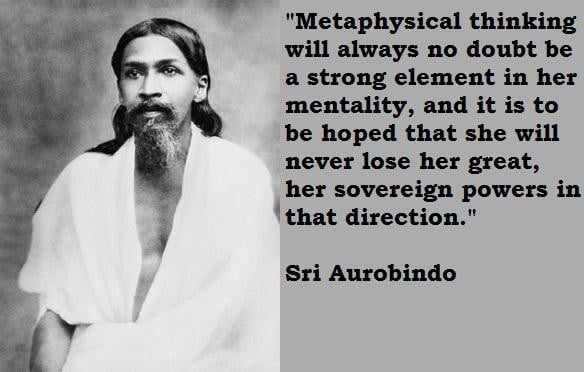
Sri Aurobindo

Of all the Anglo- Anglican poets, Sri Aurobindo alone has the distinction of being a major poet critic- writing poetry and writing on poetry. He has a significant body of criticism on the nature of poetry which is strikingly original, profound and even provocative. The hallmarks of his poetic genius are inspiration, sublimity, mastery of both, the lyric and epic forms, profound thought, symbolism and spiritualism and commendable technical devices.


Aurobindo’s Poetic Career

Sri Aurobindo's poetic career covers a period of sixty years from 1890- 1950. His early id romantic, decadent and lyrica whereas his later poetry is imaginatively bold, mystical and original. His early poetry is represented by ‘Songs to Myrtilla’ (1859). ‘More Death’ (1895), ‘Urvaaie’ (1896), 'Love and Death’' (1921) and ‘Other Poems’ (1950) and ‘Baji Prabhon’ (1922) etc. The later poetry includes ‘Poems’ (1947), ‘Poems: Past and Present’ (1946), ‘Savitri: A Legend and a Symbol' (1950-51) and ‘Last Poems’.  His Savithri represents the peak of his poetic development and achievement, and the basis of his reputation as a poet.


Sri Aurobindo About Poetry

According to Sri Aurobindo, the function of poetry is neither to teach truth, nor to pursue knowledge, but to have a life of its own to embody beauty and give delight. the future poetry, therefore, should be directed towards the forthcoming of the self of men and the large self of the universe. poetry should enable one to enjoy and realize the ‘Life divine’. He claimed that poetry is the ‘Mantra of the Real’ and considered the poem as the ‘Rose of God’.


Sri Aurobindo thinks that there is a popular misconception about the essence of poetry. Both the ordinary reader and the intellectual critic are guilty of this error. The ordinary thinks that poetry is just an aesthetic pleasure for imagination, a sort of elevated pass time. but these pleasing appeals to the imagination and the senses is only the first element. Great poetry is aesthetically satisfying, but at the same time it goes far beyond the senses, imagination and intellect. These three elements are only channels or instruments. 


“The true creator and true hearer of poetry is the soul” 


The intellectual pretty on the other hand takes the view that poetry is a matter of Exquisite technique technique is important and is the first step toward Perfection but there are so many other steps as well even perfect the craftsmanship does not constitute a great poetry for in the mysterious chemistry of poetry form and technique have ever indispensable and Northern determining factors in fact poetry determines its own phone is not imposed on a couple it comes spontaneously aborted inspiration takes hold of the soul and seeks its own utterance.


Great poetry, in Sri Aurobindo’s view, is vibrant, incantatory and rhythmic speech which rises from the heart of the seer when it is inspired by the Infinite. it is or should be the Mantra of the real. poetry as Mantra is possible only with three highest intensities of poetic speech meet and become indissolubly one. These three elements are: 

  1. The highest intensity of rhythmic movement.

  2. The highest intensity of style achieved by the integration of verbal-form and thought substance. 

  3. The highest intensity of the souls vision of truth


Rhythm is of primary importance in poetic utterance, but it is not a really metrical rhythm. Meter, of course, is important to poetry both as an artistic device and as a truth of psychology. The metrical rhythm invests the poetic material with beauty. It is also an aid to memory. That was why in ancient India all kinds of knowledge were rendered in poetry. Yet, mere metrical rhythm is only a job-trot Pegasus. in great poetry, there is a deeper and more subtle music, a rhythmical soul-movement, entering the metrical form and even over flooding it. 


Metrical rhythm is only the physical basis of the soul returns and it is the latter that matters. The conductor of this orchestral movement is this soul itself, coming forward to get its work done by its own higher non analytic methods. The reason is something as near to wordless music as word music can get. and at its highest, this soul rhythm is in harmony with the cosmic meters which is the vedic view sustaining the galactic movement of the universe itself.


 The highest intensity of style is another Hallmark of poetry as Mantra. in this connection, Sri Aurobindo distinguishes between the aims of prose style and poetic style. prose style aims at intellectual comprehension while poetic style caters to the imaginative or spiritual comprehension. at its highest, the latter makes one see not only one see by the imagination but by the soul. This superior, higher style is achieved by tapping the soul-value of words. In poetry, words have a life of their own. They have a sound-value and a thought-value. it is the artistic and spiritual integration of these values that confers soul-value to words 


The style of such poetry corresponds to its substance. between the word and vision, there are certain equations. various kinds of style- the vital, the emotional, the intellectual and the imaginative are ways of working out these equations. but none of these, Rises to the level of poetry as Mantra. Yet each of these can rise to this intensity if it can achieve the integration of the verbal form and thought substance and make us see. 


Vision is the characteristic power of the poet. The ‘Kavi’ is the seer and revealer of truth. Great poets have done those who have had a powerful interpretative and intuitive vision of life and rendered that vision a revelatory utterance. but of late, thought appears to dominate our vision as we call upon the poets to offer an intellectual explanation to the enigma of modern life. but thought is no substitute for vision. In poetry as Mantra, it is vision which pours itself into thought images. The mantra is not in its substance. nor does it form poetic enunciations of philosophical truths. It is the rhythmic revelation of the souls' sight of God, nature and man.


This vision is a soul-view. It comes from the poet. He creates it out himself and not out of what he sees outwardly. The outward seeing only serves to excite the inner vision to its task. In fact any object may trigger that vision. The only thing is that the poet should be able to go beyond the object and get it to the light of that which it has the power to reveal. The object is then submerged by the light in a similar way when at the highest level the personality to the seer is lost in the eternity of the vision. The spirit alone remains.


Sri Aurobindo’s Poem

Sri Aurobindo’s poetry is not only full of grandeur but also rich in form. He did not attempt a meter that he did not make his, by a sovereign right. with a great English measure, blank verse, he is of the supreme class. He has also succeeded in adapting the epic hexameter and other classical meters and showing the possibility of a really quantitative English poetry. 


To a Hero- Worshipper

Sri Aurobindo has spent his early life in England (Victorian Era) and so we find impacts of Keats in his arousing inspiration of nature and Shelley for his usage of natural objects as inspiration. 


The very first stanza uses a lot  of imagery in the poem. ‘Song.. Idle wind’. ‘Woven wealth of rhyme’. In the very first stanza we find a tone of sadness and we can also read it as a criticism of romanticism, 'harsh figure… harsh music’, ‘uncouth voice


Mysticism

Aurobindo is a philosopher, yogi and maharishi, mysticism plays an important role in his role and writing. Mysticism is popularly known as any kind of ecstasy or altered state of consciousness which is given a spiritual or religious meaning, but may refer to becoming one god to the absolute. The words like ‘magical rod’, ‘Oracular’, ‘Swart’, 'Ominous star’, ‘Sinai thunder voicing God’. In the very second stanza brings in light the mysticism in the poem. 


Indianness

The trend of Indian romanticism ushered in by three great forces, influenced the destiny of modern Indian Literature. 

Sri Aurobindo: search for the Divine man

R. tagore: beauty in nature and man

M.K, Gandhi: Experiments of truth and non violence.


In the very next stanza use of ‘Oaten Pipe’. And Byron is used to symbolize satire; Wordsworth for Nature and man and Shelley for atheism, nature and sorrow.

Spirituality

In the second part of  the poem, poets claim to have studied nature where humans crave for meaning but he couldn't find meaning in nature. ‘Moral… murmuring wind’, ‘message… snows’.


Nature

There are various references to Nature, flowers like Daisy, Crocus, Narcissus, cowslips, Lilies; Sun, moonlight vale and a russet nightingale which shows Aurobindo love for nature.


Conclusion:

Through the example of this poem we do see Sri Aurobindo’s  poetic genius are inspiration, sublimity, mastery of both, the lyric and epic forms, profound thought, symbolism and spiritualism and commendable technical devices. And we find a significant body of criticism on the nature of poetry which is strikingly original, profound and even provocative. And a rhythmic revelation of the souls' sight of God, nature and man.


Works Cited

Aurobindo, Sri. “Sri Aurobindo. To a Hero-Worshipper.” AuroMaa, https://auromaa.org/sri-aurobindo-ru/workings/sa/37_02/0024_e.htm. Accessed 5 November 2022.

Chaama, Sridhar. “Remembering a guru.” The Hindu, 16 August 2012, https://www.thehindu.com/features/friday-review/history-and-culture/remembering-a-guru/article3779469.ece. Accessed 5 November 2022.

Srinivasa Iyengar, K. R. Indian Writing in English. Sterling Publishers, 1987. Accessed 5 November 2022.

Vallath, Kalyani, editor. Indian Writing in English. Bodhi Tree Books, 2015.

Monday, 7 March 2022

TRANSCENDENTALISM: Pre- learning task

This blog is a pre-learning task and self-reading of transcendentalism assigned by Vaidehi Hariyani ma’am. In this blog I have written a brief understanding of Transcendentalism and assigned answers.


What is Transcendental Movement or Transcendentalism?

Lets begin with Literal meaning of the word;

Transcendent means beyond or above the range of normal or physical human experience.

In reference to philosophy Transcendence means climbing or going beyond

Transcendental means relating to a spiritual realm

Transcendentalism:
It is an idealistic philosophical and social movement which developed in New England around 1836 in reaction to rationalism. Influenced by romanticism, Platonism, and Kantian philosophy, it taught that divinity pervades all nature and humanity, and its members held progressive views on feminism and communal living. Ralph Waldo Emerson and Henry David Thoreau were central figures.

There are two positions in pillars of transcendentalism: a General position or specific position also known as New England transcendentalism or American Transcend transcendentalism here that discuss a General position of Science and intelligence.

Majorly transcendentalism is the belief in entities that transcend senses/ experience, in other words things, which in principle cannot be experienced by the senses. While there is General agreement on this broad definition of transcendental there is some disagreement as to which entities can be classified as transcendental.

For Example: Gods are often taken as an example of something that someone might believe exist without senses/ experience of it. If you believe that at least one God exists but it is impossible to sense then you are transcendentalist about God. However if you believe in religious experience; people are able to see or hear your God whether Prophet or religious leader you are not a transcendentalist about Gods.

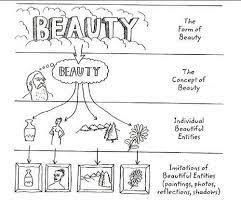
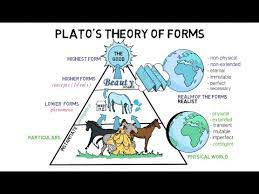
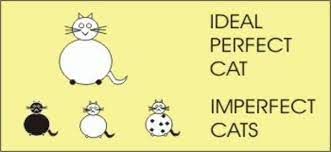
Plato’s forms are a relatively- non controversial transcendental entity. They are perfect abstract and changing concepts which are outside of our space and time. therefore they cannot be experience directly so believe in the form is a kind of transcendentalism


The objection of transcendentalism-
Transcendentalists have the challenge of demonstrating why a particular sense experience provides justification for believing in something which cannot be observed. Given that the object itself cannot be observed, we are under determined as to what the actual underlying cause of the sense experience is. Skeptics use such functions to doubt the existence of all ranges of objects as we do not experience them directly and there is no way for us to determine if that standing experience is being caused by an object or by a simulation.


The major three characteristics of Transcendentalist is:
  1. Individualism,
  2. Idealism and 
  3. The divinity of nature.

Transcendentalists have great appreciation and gratitude for nature. We see that the transcendental movement began in the 19th century, the period in which industrialisation increased and the people started being capitalist. Charles Dickens' novel ‘The hard times: for these Times’ clearly suggests the ideology of the people, emotions have no place. the Imaginary town Coketowm whether there was smoke all around and water canal with ill- smell and purple in colour. So the core Idea of transcendentalism was to conserve this disturb nature.

In ‘Summer on the Lakes’ 1843, Margaret Fuller noted that "the noble trees are gone already from this island to feed this caldron" and In Walden, 1854 Thoreau regards the trains which are beginning to spread across America's landscape as a "winged horse or fiery dragon" that "sprinkle[s] all the restless men and floating merchandise in the country for seed"


Transcendentalists talk about individuals' relation with Nature. What is Nature for you? Share your views. [This is our first assigned Question]

Nature is peace, inner happiness to me. Nature has two sides: creative (beautiful) and destructive. Whenever I look at neutral elements like sky, flowers or even an insect it provides me a soothing effect. It draws me out of all my restlessness. It gives no stress, no thoughts it just attracts through its beauty and brings a barely noticeable smile. And the other side of nature brings great surprise,the water we drink to live is killing us! The star we love to stare is falling to destroy us! This amazement too helps me a lot to come out of personal feelings. Watching a lake water's movement while enjoying the breeze helps me to meet myself. So in short for me nature is a helper to bring me out to stressful and busy life and help me to meet myself.


Transcendentalism is an American Philosophy that influenced American Literature at length. Can you find any Indian/Regional literature or Philosophy that came up with such similar thoughts?

First of all we will see what was the ideology and understanding of the transcendentalists to start this movement. They believed in the philosophy of unity of all creation and goodness of humanity. Everything is a reflection of god, Physical world is a doorway to the spiritual world. People can use intuition to see God in nature and their souls. A person is their own best authority, Feeling and intuition are superior to reason and intellect.

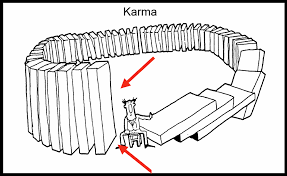
The idea like goodness of humanity, physical world doorway to spiritual world, person itself a best authority connects us directly to the Indian Philosophy of ‘Karma’- One reaps what one sows. This theory takes us to an idea of being true and good to everyone and everything in nature which gives birth to human goodness and if one is true and ethical he’ she can feel the spiritual clean world on the earth itself because they haven't done anything wrong nothing wrong will happen to them.


We also have an Indian philosophy of ‘Paramatma is present in every object’. God is present everywhere, it is omnipresent which can be connected to the idea that everything is connected with god.


It was a little tough to combine transcendentalism with Indian Philosophy. If you find any Philosophy connection to transcendentalism please comment below.

Thank you for reading. I hope it was helpful to you.
[Words- 900]

Wednesday, 9 February 2022

Nature is our greatest teacher

BOB DYLAN AND ROBERT FROST

Hello readers! This blog is a response to an assigned blog by Vaidehi Haryani m’am. This blog is connected to the study of Bob Dylan and Robert Frost, two American icons who have won hearts through their songs/ poems.

Bob Dylan and Robert Frost use the nature elements as a metaphor to give the philosophy of life in the same way. In this task we have uploaded a video in our YouTube channel in which we have merged self-clicked shots from nature and in this blog will try to bring out our philosophy of life through this video.


“BY ALL MEANS LEARN BEYOND THE CLASSROOM, IN THE END, THAT'S ALL THAT WILL MATTER.”
-Gossy Ukanwoke

Learning is effective only in the four walls of the classroom is unjustified. For this task we visited the lake side, ‘Bortalav’ in Bhavnagar where nature can be adored the best.


Bob Dylan:


Bob Dylan whose born name was Robert Allen Zimmerman he was born on the 24th may 1947 and is still alive with age of yours 18 Years 80 he is regarded as one of the greatest songwriters of all the time he is American singer and songwriter and a major figure of popular culture.

He has won a Nobel Prize in Literature in 2016 with citation, “for having created new poetic expressions within the great American song tradition." He is the first one who won the Nobel Prize for writing songs. He was also awarded Pulitzer in 2018 with special citation, “for his profound impact on popular music and American culture marked by lyrical composition of extraordinary poetic power.” He has won various awards including ‘Presidential Medal of Freedom’, ‘Ten Grammy Awards’, ‘a Golden Globe award’ and ‘an Academy Award.’

His most famous songs are of the 1960s. His songs like ‘blowin’ in the wind’ (1963) and ‘The times they are a changin’ (1964) are considered to be the anthems for the Civil rights and Anti-war movement.

Lets just go through his few songs:

Blowin’ in the Wind (1962)
Listen and read the lyrics of the song. (hyperlinked)

This song has been described as a protest song, self-expressing and showing reality. It possesses a series of rhetorical questions to mankind regarding their conscious ignorance of inhuman activities, racism, discrimination, peace, war and freedom, brutal cruelties of the 20th century. ‘ The answer my friend is blowing in the wind’ Through this line Dylan suggests that the solution is simply staring us in the face.

All along the Watchtower (1968)
Listen and read the lyrics of the song.

This song initially appeared on his 1967 album John Wesley Harding and it has been included on most of Dylan's subsequent greatest hits compilation. Think this song is raising the voice against corruption and privilege. He has described the characters through ‘The Thief’ and ‘The Joker’ and it seems that the Joker is wiser as he is able to see the truth of the world.

Like A Rolling Stone (1965)
Listen and Read the lyrics of the song.

This song is considered to be a Revolutionary song. It is about the loss of Innocence and the harshness of experience. The title of the song The Rolling Stones is taken from the proverb ‘a rolling stone gathers no moss’. This song suggests the benefits of moving on. Moving on is the only solution to safeguard oneself from being destroyed by society and their taunts.


Robert Frost:


Robert Lee Frost was an American poet. His lifespan is from 1874 to 1963. His works are known for the depictions of rural life and his command of American colloquial speech. He wrote about the setting from rural New England in the early 20th century and the themes in his work were social and philosophical. Robert Frost mostly used the theme of nature for giving philosophical and social messages.

He has received four Pulitzer prizes for poetry and was honored during his lifetime. Robert Frost was a poet Laureate of Vermont in 1961 and was also nominated for the Nobel Prize Prize in Literature 31 times.

Let us go through his few poems for understanding Robert Frost’s work

Stopping by Woods on a Snowy Evening (1922)
This poem is well known with name ‘Miles to go Before I sleep’.This poem reflects the thought of a driver who is the narrator who paused in the Woods to watch a snowfall and end reminding himself that despite he loved that view he had many promises to keep and miles to go before he sleeps. The theme in this poem is about affirming a path of life and fulfilling the promises.

True meaning of this poem is about the importance of our choices. It doesn't matter whether the choice is big or small since they shape our journey of life. This poem also deals with making the right decisions at the right time which offers the profound perception of decision-making. In this poem we can conclude that taking the Less traveled by suggested if you choose the path which is less traveled it has a great risk.


The poem “Fire and Ice” by Robert Frost is a metaphor for human perceptions of desires and hatred. The two elements force of Fire is representation of an emotion of Desire and eyes with hate it is the Frost for best-known and most anthologized poem. This poem tells about the end of the world. Its theme is revolving around that the human emotions are destructive.

Here we saw that the natural elements like Woods, Road, fire and ice are used as a metaphor to give the philosophical and social messages of the life.

This is my video prepared by merging some of the nature photos of nature and the shots. I have given a sequence to the shots in this video, I am Presenting my interpretation over this video's numerically.


1. Through my first shot I would like to interpret that the water evaporates in summer and it rises in the monsoon but when none of the process happens it is steady in its place still the waves on the surface of the water continue. It suggests whether in a life we are Rising or we are facing a fall or we are steady. We should continue our work. We should not be changeless, we should keep trying to change our position and work hard.

2. In the second shot of my video we see that a tree has grown in the bricks. It is the back part of the room that very strongly suggests that if one wants to grow in their life and wants to achieve anything there is nothing which can stop them.

3. In the third part the camera is viewing water and sky in the same frame which is of the same shade and in the between we see a small line of buildings or world. Through this I interpret that the beginning and the ending of a life are the same. There is a small period in which we get a chance to prove ourselves. we should work hard to achieve our goals in this small period of life where the beginning and the ending of the life is similar.

4. The fourth frame shows the motto of NCC institution working in our nation which is unity and discipline it seems like human needs and institution which teaches them about the unity and discipline, through immediate next two photos we see nature, so disciplined that Woods grow itself in a specific manner the river floors in the same path put together by it. So more than an institution, nature can teach us discipline and unity in a better way.

5. Through the fifth short I would like to interpret that nature is beautiful and calm and we are the ones who are spoiling the place around it. Similarly we are the only ones to be blamed for destroying our life. Nature provided water for us and we are spoiling it similarly this is our life and we are the one responsible for any deed.

6. And the last frame of the video shows the clean water. Through this I would like to pass a message to stay pure inside and out. One should not have any grudges for anyone forgive and forget is the best mantra to live life happily.


The lyrics I have used in my video is as below:

I'm just glad to be here, happy to be alive
And it don't matter if you're by my side
I'm satisfied
Well, it's alright, even if you're old and grey
Well, it's alright,


These lyrics put forward the idea of being happy in every situation one is in. it doesn't matter where one is, he/ she should be glad, happy and satisfied. ‘It's alright”. The whole song is End of the Line by Traveling Wilburys. But I have selected these lyrics from it.

I find these lyrics selected by me relatable to the poem of Robert Frost ‘Road not taken’ poem. The traveler chooses the road which is less traveled and when one tries to do something new or goes on the path which is rarely chosen by others it seems to be risky so the one who is trying to do something new moving over the path which is less traveled this lyrics are relatable to him that he must be glad for where he is, happy that he is alive even after choosing the road which is less traveled and is risky for him and should be satisfied with the choice he has made whether the choice done by him is old but it's alright cause it's his own personal choice not influenced by others.


Thanks for reading. I hope you enjoyed reading this blog. This blog is a complete self-interpretation. If you find anything to add or have any queries please comment below.

[words- 1657]

My Learnings from the National Workshop on Academic Writing (2026)

The National Workshop on Academic Writing  I recently had the opportunity to participate in the National Workshop on Academic Writing (2026)...