Showing posts with label poetry. Show all posts

Saturday, 5 November 2022

Assignment 201: Indian English Literature (Pre- Independence)

 Sri Aurobindo:  Way of Writing and Poem ‘To a Hero- Worshipper’ 


Name – Jheel Barad

Roll No.: 12

Enrollment No.: 4069206420210003

Paper no: 201

Paper code: 22406

Paper name: Indian English Literature (Pre- Independence)

Sem.: 3 (Batch 2021- 2023)

Submitted to: Smt S.B. Gardi Department of English, M.K. Bhavnagar University

E-mail- jheelbarad@gmail.com


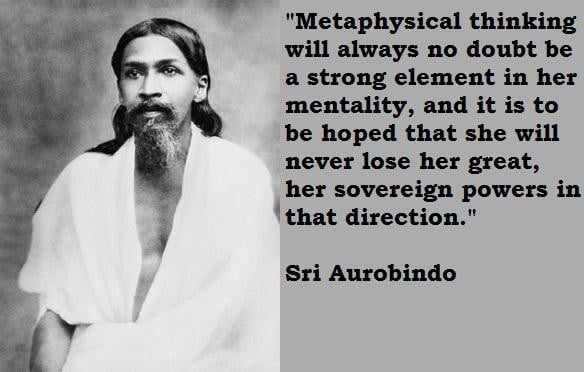
Sri Aurobindo

Of all the Anglo- Anglican poets, Sri Aurobindo alone has the distinction of being a major poet critic- writing poetry and writing on poetry. He has a significant body of criticism on the nature of poetry which is strikingly original, profound and even provocative. The hallmarks of his poetic genius are inspiration, sublimity, mastery of both, the lyric and epic forms, profound thought, symbolism and spiritualism and commendable technical devices.


Aurobindo’s Poetic Career

Sri Aurobindo's poetic career covers a period of sixty years from 1890- 1950. His early id romantic, decadent and lyrica whereas his later poetry is imaginatively bold, mystical and original. His early poetry is represented by ‘Songs to Myrtilla’ (1859). ‘More Death’ (1895), ‘Urvaaie’ (1896), 'Love and Death’' (1921) and ‘Other Poems’ (1950) and ‘Baji Prabhon’ (1922) etc. The later poetry includes ‘Poems’ (1947), ‘Poems: Past and Present’ (1946), ‘Savitri: A Legend and a Symbol' (1950-51) and ‘Last Poems’.  His Savithri represents the peak of his poetic development and achievement, and the basis of his reputation as a poet.


Sri Aurobindo About Poetry

According to Sri Aurobindo, the function of poetry is neither to teach truth, nor to pursue knowledge, but to have a life of its own to embody beauty and give delight. the future poetry, therefore, should be directed towards the forthcoming of the self of men and the large self of the universe. poetry should enable one to enjoy and realize the ‘Life divine’. He claimed that poetry is the ‘Mantra of the Real’ and considered the poem as the ‘Rose of God’.


Sri Aurobindo thinks that there is a popular misconception about the essence of poetry. Both the ordinary reader and the intellectual critic are guilty of this error. The ordinary thinks that poetry is just an aesthetic pleasure for imagination, a sort of elevated pass time. but these pleasing appeals to the imagination and the senses is only the first element. Great poetry is aesthetically satisfying, but at the same time it goes far beyond the senses, imagination and intellect. These three elements are only channels or instruments. 


“The true creator and true hearer of poetry is the soul” 


The intellectual pretty on the other hand takes the view that poetry is a matter of Exquisite technique technique is important and is the first step toward Perfection but there are so many other steps as well even perfect the craftsmanship does not constitute a great poetry for in the mysterious chemistry of poetry form and technique have ever indispensable and Northern determining factors in fact poetry determines its own phone is not imposed on a couple it comes spontaneously aborted inspiration takes hold of the soul and seeks its own utterance.

Great poetry, in Sri Aurobindo’s view, is vibrant, incantatory and rhythmic speech which rises from the heart of the seer when it is inspired by the Infinite. it is or should be the Mantra of the real. poetry as Mantra is possible only with three highest intensities of poetic speech meet and become indissolubly one. These three elements are: 

  1. The highest intensity of rhythmic movement.

  2. The highest intensity of style achieved by the integration of verbal-form and thought substance. 

  3. The highest intensity of the souls vision of truth


Rhythm is of primary importance in poetic utterance, but it is not a really metrical rhythm. Meter, of course, is important to poetry both as an artistic device and as a truth of psychology. The metrical rhythm invests the poetic material with beauty. It is also an aid to memory. That was why in ancient India all kinds of knowledge were rendered in poetry. Yet, mere metrical rhythm is only a job-trot Pegasus. in great poetry, there is a deeper and more subtle music, a rhythmical soul-movement, entering the metrical form and even over flooding it. 


Metrical rhythm is only the physical basis of the soul returns and it is the latter that matters. The conductor of this orchestral movement is this soul itself, coming forward to get its work done by its own higher non analytic methods. The reason is something as near to wordless music as word music can get. and at its highest, this soul rhythm is in harmony with the cosmic meters which is the vedic view sustaining the galactic movement of the universe itself.


 The highest intensity of style is another Hallmark of poetry as Mantra. in this connection, Sri Aurobindo distinguishes between the aims of prose style and poetic style. prose style aims at intellectual comprehension while poetic style caters to the imaginative or spiritual comprehension. at its highest, the latter makes one see not only one see by the imagination but by the soul. This superior, higher style is achieved by tapping the soul-value of words. In poetry, words have a life of their own. They have a sound-value and a thought-value. it is the artistic and spiritual integration of these values that confers soul-value to words 


The style of such poetry corresponds to its substance. between the word and vision, there are certain equations. various kinds of style- the vital, the emotional, the intellectual and the imaginative are ways of working out these equations. but none of these, Rises to the level of poetry as Mantra. Yet each of these can rise to this intensity if it can achieve the integration of the verbal form and thought substance and make us see. 


Vision is the characteristic power of the poet. The ‘Kavi’ is the seer and revealer of truth. Great poets have done those who have had a powerful interpretative and intuitive vision of life and rendered that vision a revelatory utterance. but of late, thought appears to dominate our vision as we call upon the poets to offer an intellectual explanation to the enigma of modern life. but thought is no substitute for vision. In poetry as Mantra, it is vision which pours itself into thought images. The mantra is not in its substance. nor does it form poetic enunciations of philosophical truths. It is the rhythmic revelation of the souls' sight of God, nature and man.


This vision is a soul-view. It comes from the poet. He creates it out himself and not out of what he sees outwardly. The outward seeing only serves to excite the inner vision to its task. In fact any object may trigger that vision. The only thing is that the poet should be able to go beyond the object and get it to the light of that which it has the power to reveal. The object is then submerged by the light in a similar way when at the highest level the personality to the seer is lost in the eternity of the vision. The spirit alone remains.


Sri Aurobindo’s Poem

Sri Aurobindo’s poetry is not only full of grandeur but also rich in form. He did not attempt a meter that he did not make his, by a sovereign right. with a great English measure, blank verse, he is of the supreme class. He has also succeeded in adapting the epic hexameter and other classical meters and showing the possibility of a really quantitative English poetry. 


To a Hero- Worshipper

Sri Aurobindo has spent his early life in England (Victorian Era) and so we find impacts of Keats in his arousing inspiration of nature and Shelley for his usage of natural objects as inspiration. 


The very first stanza uses a lot  of imagery in the poem. ‘Song.. Idle wind’. ‘Woven wealth of rhyme’. In the very first stanza we find a tone of sadness and we can also read it as a criticism of romanticism, 'harsh figure… harsh music’, ‘uncouth voice


Mysticism

Aurobindo is a philosopher, yogi and maharishi, mysticism plays an important role in his role and writing. Mysticism is popularly known as any kind of ecstasy or altered state of consciousness which is given a spiritual or religious meaning, but may refer to becoming one god to the absolute. The words like ‘magical rod’, ‘Oracular’, ‘Swart’, 'Ominous star’, ‘Sinai thunder voicing God’. In the very second stanza brings in light the mysticism in the poem. 

Indianness

The trend of Indian romanticism ushered in by three great forces, influenced the destiny of modern Indian Literature. 

Sri Aurobindo: search for the Divine man

R. tagore: beauty in nature and man

M.K, Gandhi: Experiments of truth and non violence.


In the very next stanza use of ‘Oaten Pipe’. And Byron is used to symbolize satire; Wordsworth for Nature and man and Shelley for atheism, nature and sorrow.
Spirituality

In the second part of  the poem, poets claim to have studied nature where humans crave for meaning but he couldn't find meaning in nature. ‘Moral… murmuring wind’, ‘message… snows’.


Nature

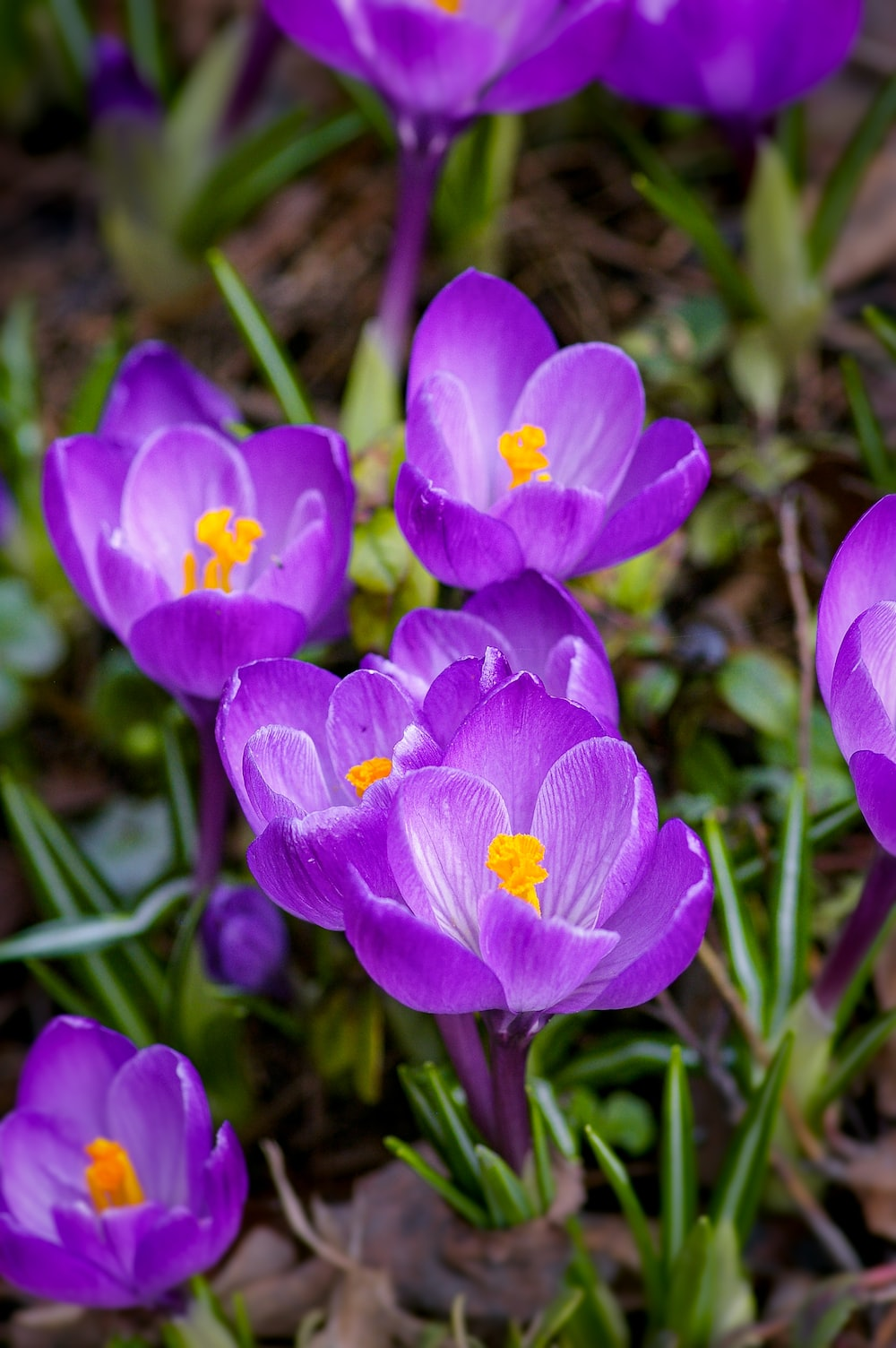
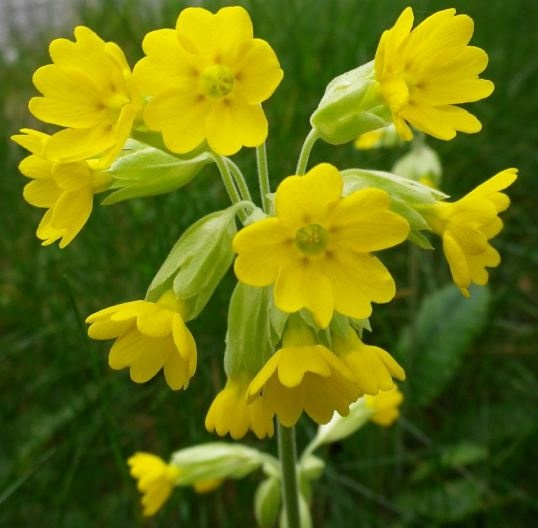
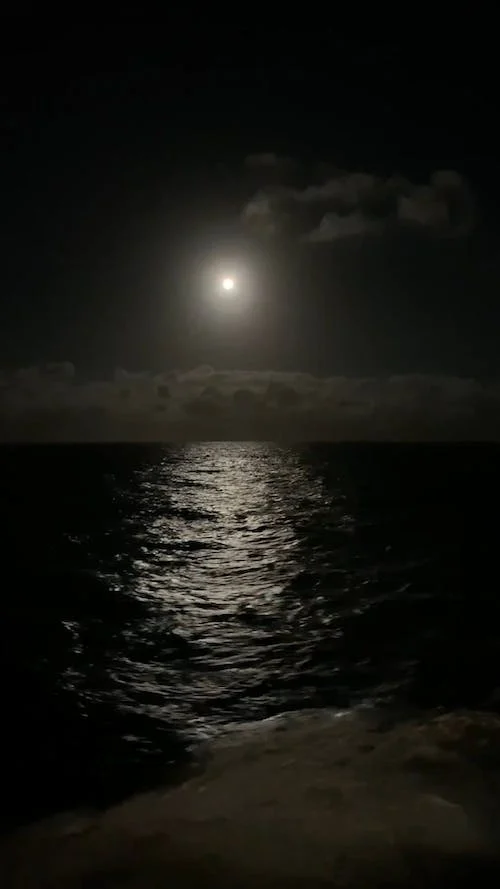
There are various references to Nature, flowers like Daisy, Crocus, Narcissus, cowslips, Lilies; Sun, moonlight vale and a russet nightingale which shows Aurobindo love for nature.

Conclusion:

Through the example of this poem we do see Sri Aurobindo’s  poetic genius are inspiration, sublimity, mastery of both, the lyric and epic forms, profound thought, symbolism and spiritualism and commendable technical devices. And we find a significant body of criticism on the nature of poetry which is strikingly original, profound and even provocative. And a rhythmic revelation of the souls' sight of God, nature and man.


Works Cited

Aurobindo, Sri. “Sri Aurobindo. To a Hero-Worshipper.” AuroMaa, https://auromaa.org/sri-aurobindo-ru/workings/sa/37_02/0024_e.htm. Accessed 5 November 2022.

Chaama, Sridhar. “Remembering a guru.” The Hindu, 16 August 2012, https://www.thehindu.com/features/friday-review/history-and-culture/remembering-a-guru/article3779469.ece. Accessed 5 November 2022.

Srinivasa Iyengar, K. R. Indian Writing in English. Sterling Publishers, 1987. Accessed 5 November 2022.

Vallath, Kalyani, editor. Indian Writing in English. Bodhi Tree Books, 2015.

Sunday, 21 November 2021

Metaphysical poets

Metaphysical Poetry


Flipped learning is a new learning approach in which the learners are instructed in their work and they complete their learning in their own individual learning space. In the same way we were also instructed in our google classroom to attend the video lectures of Dr. R.K. Mandaliya Sir which recorded in and online mode last year and were published as a playlist of 6 videos in Dilip Barad sir’s YouTube channel. Along with , we were instructed to write a blog on it and to get a handwritten answer dictated by Mandaliya sir. It was my first flipped learning experience. In flip learning we get a chance of learning in our comfortable zone. As the lectures were previously recorded it became easier to learn. We can pause, re-listen, and understand along with a personal and comfortable place. It was a new and great experience.


Metaphysical poetry- It is a group of poems that share a common characteristic; They are highly intellectualized, use rather strange imagery, use frequent paradoxes and contain extremely complicated thought.
The word metaphysical in a combination of two words. i.e., meta + physical. The prefix 'meta' means ‘after’ and the whole phrase metaphysical means ‘after physical.’

John Donne is a Pioneer of Metaphysical Poetry and the followers of Donne are known as his school. George Herbert, Andrew Marvel and Richard Crashaw are the members of this school. Henry Vaughan, Thomas Treharne and Abraham Cowley are also important metaphysical poets. Their work has considerably influenced the poetry of the 20th century.


The term metaphysical poetry was coined by Samuel Johnson in his biographical work with the title ‘Lives of the most Eminent English Poets’ (1779-81) while writing the biography of Abraham Cowley. Dr. Johnson passed a remarkable comment that, ‘The poetry of the Metaphysical poets stood a trial of their finger but failed in the trail of the ears.’ In the biography Johnson wrote About metaphysical poems and poets in a derogatory sense but with passing of time the same term became the term of appraisal.

Metaphysical poetry emerged in the latter half of the 16th century. It was a conscious attempt by this group of poets to differ from the writing style of predecessors and an attempt for a unique identity. It was not that Metaphysical poets wrote poetry on new, different or complex topics. They wrote poems of the Same topics like religion and love but to bring a uniqueness in their work they used complex metaphors. Predecessors used the images or metaphors from the fields which were related to poetry while metaphysical poets made an attempt to use completely odd metaphors or images, they used far-fetched metaphors which had no direct connection with the field of the poem. They were also from different fields of education like biology, architecture, mechanical engineering, math etc. 
For example, while writing a love poem the previous poets used the metaphor like rose, honey bee etc. In its place metaphysical poet; John Donne used the flea (an insect) as a metaphor in his love poem.

They made an attempt to write differently from their predecessors because if they would have written in the same form and style people might get fed-up of reading the same type of poetry and no one will mark their contribution in English literature.

“No tradition remains for long time” 
-Mathew Arnold

Also, the standard of education, intellectuality, and literacy increased in the Elizabethan age so the poets tried to be intellectual in the writing of their poetry. Critic Helen C. White mentions-

“It was a demand of time for the metaphysical poets to differ from the poets of previous age. Had they continued writing poetry in the same manner, just like the former poets they would have been rejected by the readers.”


General characteristics of metaphysical poetry-
  • The Metaphysical poets try to find a connection between the abstract and the concrete, the remote and the near in describing his experience of emotional reality.
  • Metaphysical poetry is spiritual & has often religious themes. Moreover, it focuses on love, as the union of souls.
  • The most important characteristic of metaphysical poetry is “undissociated sensibility” - the combination of feeling and thoughts.
  • Metaphysical poetry displays a fine interspersing of emotions, sensibilities, memories and reasons.
  • The metaphysical poets introduced the concept of conceits - A conceit is the bringing together of very unlikely ideas to produce a new idea.
  • Metaphysical poets create wild conceits. The poets steal all fields of knowledge, science as well as nature for comparisons. They try to yoke contradictory things together. They link two different areas of experience.
  • The Metaphysical poets combine dissimilar ideas without attempting to unite them. The real obstacle in understanding metaphysical poetry is its novelty. They use private symbolism, which the reader finds difficult to understand.
  • They used informal language to bring about dramatic realism.
  • Metaphysical poets were the men of learning and they wanted to show it through their poetry. 
  • Dr. Johnson says- “ no man could be born a metaphysical poet.”
  • Using wit has been a prominent feature of Metaphysical poets. In the context of Metaphysical Poetry, the excessive use of intellectual ideas is referred to as wit.
  • These poems usually start off from certain events or actions. E.g.; Mark but this flea, and mark in this…. The Flea by John Donne.
  • The language used in metaphysical poetry is simple and easy to understand, lacking elevated and ornate speech, which is found in classical writings.
  • Metaphysical poetry is considered to be brief & concise. Every line conveys a lot of meanings in a few words.
  • Platonic love is one of the prominent features of metaphysical poetry. Platonic love - means spiritual love, which is free from elements of physical love.

Here I am talking briefly about a few metaphysical poems.
You can read original poems by clicking on title.

Holy Sonnet X is written by John Donne, Holy sonnets are famous by its first line and it is well-known with title ‘Death be not Proud.’ ‘Holy sonnets are the sonnets which specifically refers to something related to spirituality, god almighty, sins and repentance.’ This sonnet is addressed to death. The aim of the poet behind writing this sonnet is to nullify the fear of death. The poet says that death is a slave of fate, chance, kings and desperate men and it dwells in poison, sickness and war.

If the poet is asked to draw a picture of death he would draw a picture of a man enjoying sound sleep. The poet also finds the remarkable difference between how death causes sleep and sleep caused by mother.

"One short sleep past, we wake eternally"

This line suggests that John Donne believes in the theory of re- birth. This is how he ends the poem by convincing all that there will be no fear of death and death itself will die because nobody will be afraid of it.


As we saw in general characteristics of metaphysical poetry, the poet steals metaphors from different fields of education. Here in this poem the poet John Donne has used the insect Flea- a biological term to express the love of a lover to his beloved. The poem is addressed to a beloved. Flea is an insect which sucks the blood.

"And in this flea our two bloods mingled be;
Thou know’st that this cannot be said
A sin, nor shame, nor loss of maidenhead,"

Here in the poem the lover explains to his beloved that for whatever she denied to her lover has already happened. The flea has sucked the blood of the lover and is now sucking the blood of his beloved. In the flea their blood has already become one and it hasn't caused any sin or shame, has not even caused the loss of honor or maidenhood. The insect swells after sucking their blood which shows that it is happy and if she allows him to advance their happiness will advance. Listening to this argument beloved attempts to kill an insect. The lover refuses and explains that it would be a sin of killing three lives; as it has their mingles love so they two and an insect. But still my beloved kills insects. The lover explains to her that all her ears are false, if she accepts the proposal there won't be any harm to her honor, instead accepting him as a soulmate would increase her honor. In the poem with the help of the image of The Flea the poet remains successful in the expression of the theme of love.


‘The Sun Rising’ is another poem by John Donne. The poem is addressed by the lover to the rising sun. Here the rising sun is used as a metaphysical image to deal with the theme of love. Generally the rising sun symbolizes new hope and optimism but here it is a symbol of love. In the poem the lover is criticizing the sun rise by saying ‘Busy old fool, unruly sun’. He calls him unruly as he peeps through the windows and curtains into the bedroom of his and his beloved and makes it clear to the rising sun that it cannot regulate or control them through its movement. Going ahead the lover tries to suppress the sunrays by saying that he can cause an eclipse with a moment by closing his eyes but he cannot afford to lose sight of his beloved. Extending the address he informs sunrise that his beloved is the center of the universe. Also says that the sun is not half happy as they both are.

"Shine here to us, and thou art everywhere;
This bed thy center is, these walls, thy sphere."

And at the end he says to the sun that if it shines there to give light and warmth to his beloved it would be equal to giving it to the whole world and his beloved is the center of the universe. ‘The Sun Rising’ is treated as a negative tone to sharpen the theme of love.


‘To His Coy Mistress’ is written by one of the members of the Donne’s school. Andrew Marvell has made a use of an image from an agricultural field.it is also a love poem, addressed to beloved by his lover. In this poem the beloved is very coy- shy and the lover tries to convince her that they do not have enough time so she should not waste time by being shy. They have a limited time of youth. Lover says that if they had enough time and space he would have spent more time praising her and planning a trip with her. The lover explains that if they had enough time he would have spent ten hundred years praising her even if she would object to his proposal. He would have spent hundred years praising her eyes and two hundred years in praising her breast and thirty thousand years in praising the rest of the body because she. Her beloved deserves this kind of honor.

"But at my back I always hear
Time’s wingèd chariot hurrying near;
And yonder all before us lie
Deserts of vast eternity."

But the winged chariot of death is behind them. Also the grave is a private and peaceful place to meet but there they won't be able to express or respond to their love. He compares the span of youth with the morning dew drop on the flower petal. The poem ends with the request of the lover that both should make their time a quality time by responding to each other's love. The last lines are-

"Thus, though we cannot make our sun
Stand still, yet we will make him run."


The collar poem is written by George Herbert. Here the title The Collar is suggesting the yoke towards the religion. This Poem shows his serving towards Christianity. The poem is addressed by the sinner and the two selves of the sinner are at the war with each other. The poem sounds like a monologue. Sinner comes across the board and alters which inspires him to leave the life of material pleasure. He feels himself free to take a path of his consciousness, his desire to restore himself in the heart of almighty.

"On double pleasures: leave thy cold dispute
Of what is fit and not. Forsake thy cage,
Thy rope of sands,"

While the heart, the free will of Sinner is not ready to get bound by anything. The free will warms sinners to forget the cold war of what is good and what is not good and instigates by saying ‘ Be thy law’. But the sinner is firm on his decision and decides to listen to his lord, conscience and not his free will.

"Methought I heard one calling, Child!
And I replied My Lord."

In the end of the poem the sinner hears someone calling him “child!” and he parts with the world of material pleasure.


This is my understanding of metaphysical poets, poems and its characteristics. I have very briefly explained the poems here. I hope this blog is easily understandable and helpful. For queries please comment. Thanks for visiting.

[words- 2227]

Monday, 11 October 2021

Literature of Puritan age

 Literature of the Puritan Age - Poetry

In the literature of the puritan Age the common themes literature included were religious and political idealism. There were no fixed literary standards, imitations of older poets and exaggeration of the poets replaced the original, dignified and highly imaginative compositions of the Elizabethan writers. The literature produced in this age was not of higher order so this period is also known as gloomy age


The poetry writers of the puritan age can be divided into four parts:

  1. Transition poets

  2. Spenserian  Poets

  3. Metaphysical poets

  4. Cavalier Poets


Transition Poets

James Thomson (1700-1748)

Thomas Gray (1716-71)

William Collins (1721-1759)

Oliver Goldsmith (1728-1774)

William Cowper (1731-1800)

Spenserian Poets

Samuel Daniel (1562- 1619)

Giles Fletcher (1588- 1623)

George Wither (1588-1667)

Metaphysical Poets

John Donne (1573- 1631)

George Herbert (1593- 1633)

Cavalier Poets

Thomas Carew (1589? - 1639?)

Robert Herrick (1591- 1674)

Sir john Suckling (1609-1642)

Sir Richard Lovelace (1618- 1658)

John Milton (1608- 1674)


The Transition Poets:

Starting with the literal meaning of transition, transition means the process or a period of changing from one state or condition to another.

At the beginning of bewildering confusion of ideals expressed in literature, we note a few writers who are generally known as Jacobean poets, but whom we have called the Transition poets because, with the later dramatists, they show clearly the changing standards of the age.There were few 18th century poets who showed some elements of Romanticism while not completely ignored the old conventions. These poets were caught in the middle of neoclassical writing and the Romantic Age, are known as the Transitional poets.


Characteristics of transitional poets:
  • Transitional Poets were tired of Neoclassical ideals of Reason and Wit.

  • These transitional Poets find a midway, they dropped conventional poetic diction and forms in favour of freer forms and bolder language.

  • They preached a Return to Nature.

  • The poets returned to real Nature and not to the bookish nature of the artificial pastoral.

  • The age of Transition was an era of innovation and varied experiment. The poets of this time believed in individual poetic inspiration.

  • Passion, Emotion and Imagination was valued by them.

  • Their poetry is no longer ‘Drawing Room Poetry.’ They don’t limit their attention to urban life and manners.

  • Their poetry became much more subjective.

  • There was a strong revolt against the heroic couplet as the only eligible verse unit.

  • They show a much greater interest in the middle ages that Dryden and Pope had neglected. 


Spenserian Poets:

The poets whose works relate to the Spenserian poets in terms of style or characteristics are known as Spenserian Poets. Spenserian poets Giles Fletcher and George Wither are worth Reading.

Giles Fletcher (1588?-1623)- Fletcher was the younger son of Giles Fletcher the Elder (Ambassador to Russia of Elizabeth I). His principal work has the full title 'Christ's Victore and Triumph', in Heaven, in Earth, over and after Death, and consists of four cantos. The first canto, Christ's Victory in Heaven, represents a dispute in heaven between justice and mercy, using the facts of Christ's life on earth; the second, Christ's Victory on Earth, deals with an allegorical account of Christ's Temptation; the third, Christ's Triumph over Death, covers the Passion; and the fourth, Christ's Triumph after Death, covering the Resurrection and Ascension, ends with an affectionate eulogy of his brother Phineas as Thyrsis's. The meter is an eight-line stanza in the style of Spenser; the first five lines have the rhyme Scheme ABABB, and the stanza concludes with a rhyming triplet.


George Wither (1588-1667)- The life of George Wither  covers the whole period of English history from Elizabeth to the Restoration, and the enormous volume of his work covers every phase of the literature of two great ages. Students of this period find him interesting as an epitome of the whole age in which he lived; but the average reader is more inclined to note with interest that he published in 1623 Hymns and Songs of the Church, the first hymn book that ever appeared in the English language. 


Metaphysical Poets:

The metaphysical poets followed the lead of Donne. He imitated Horace by writing, like him, satires, elegies, epistles and complimentary verses. But though his verse possess classical dignity and good sense, it does not have its grace and ease Highly intellectualized poetry marked by bold and ingenious conceits (figure of speech), incongruous (not in harmony, inappropriate) imagery, complexity and subtlety of thought, frequent use of paradox (puzzle), and often by deliberate harshness or rigidity of expression. The term Metaphysical poets was coined by the critic Samuel Johnson to describe a loose group of 17th-century English poets whose work was characterised by the inventive use of conceits, and by a greater emphasis on the spoken rather than lyrical quality of their verse. 


Samuel Daniel (1562- 1619)- Daniel, who is often classed with the first Metaphysical poets, is interesting to us for two reasons,--for his use of the artificial sonnet, and for his literary desertion of Spenser as a model for poets. His Delia, a cycle of sonnets modeled, perhaps, after Sidney's Astrophel and Stella, helped to fix the custom of celebrating love or friendship by a series of sonnets, to which some pastoral pseudonym was affixed. Daniel's poetry, which was forgotten soon after his death, has received probably more homage than it deserves in the praises of Wordsworth, Southey, Lamb, and Coleridge. The style and language are just such as any pure and manly writer of the present day would use. It seems quite modern in comparison with the style of Shakespeare. 
We can consider here only Donne and Herbert, who in different ways are the types of revolt against earlier forms and standards of poetry. In feeling and imagery both are poets of a high order, but in style and expression they are the leaders of the fantastic school whose influence largely dominated poetry during the half century of the Puritan period.

John Donne (1573-1631)- The metaphysical poets were eclipsed in the eighteenth and nineteenth centuries by romantic and Victorian poets, but twentieth-century readers and scholars, seeing in the metaphysicals an attempt to understand pressing political and scientific upheavals, engaged them with renewed interest. Another important theme in Donne's poetry is the idea of true religion, something that he spent much time considering and about which he often theorised. He wrote secular poems as well as erotic and love poems. He is particularly famous for his mastery of metaphysical conceits. Donne threw style and all literary standards to the winds; and precisely for this reason he is forgotten, though his great intellect and his genius had marked him as one of those who should do things "worthy to be remembered." 


George Herbert (1593-1633)- George Herbert is known as the metaphysical poet by virtue of his faith in God and religion. His poetry is a record of strivings, failures and victories in the practice of the Christian life.  Professor Palmer, calls Herbert the first in English poetry who spoke face to face with God. That may be true; but it is interesting to note that not a poet of the first half of the seventeenth century, not even the gayest of the Cavaliers, but has written some noble verse of prayer or aspiration, which expresses the underlying Puritan spirit of his age. Herbert is the greatest, the most consistent of them all. In all the others the Puritan struggles against the Cavalier, or the Cavalier breaks loose from the restraining Puritan; but in Herbert the struggle is past and peace has come. Those who seek for faults, for strained imagery and fantastic verse forms in Herbert's poetry, will find them in abundance; but it will better repay the reader to look for the deep thought and fine feeling that are hidden in these wonderful religious lyrics, even in those that appear most artificial. The fact that Herbert's reputation was greater, at times, than Milton's, and that his poems when published after his death had a large sale and influence, shows certainly that he appealed to the men of his age; and his poems will probably be read and appreciated, if only by the few, just so long as men are strong enough to understand the Puritan's spiritual convictions.

Herbert's chief work, The Temple, consists of over one hundred and fifty short poems suggested by the Church, her holidays and ceremonials, and the experiences of the Christian life. The first poem, "The Church Porch," is the longest.Among the remaining poems of The Temple one of the most suggestive is "The Pilgrimage.”


Cavalier Poets:


Cavalier is a supporter of King Charles I in the English Civil War/ Royalist. The cavalier poets was a school of English poets of the 17th century that came from the classes that supported King Charles I during the English Civil War (1642–1651).The cavalier poets followed Ben Jonson. Like the ‘metaphysical’, the label ‘Cavalier’ is not correct, because a ‘Cavalier’ means a royalist—one who fought on the side of the king during the Civil War. All the followers of Ben Jonson were not all royalists, but this label once used has stuck to them. Poets of both the schools, of course, turned away from the long, Old-fashioned works of the Spenserians, and concentrated their efforts on short poems and lyrics dealing with the themes of love of woman and the love or fear of God. The Cavalier poets normally wrote about trivial subjects, while the Metaphysical poets wrote generally about serious subjects.Charles, an expert judge of the fine arts, supported poets who created the art he craved. These poets in turn grouped themselves with the King and his service, thus becoming Cavalier Poets.Some of the most prominent Cavalier poets were Thomas Carew, Richard Lovelace, Robert Herrick, and John Suckling. They emulated Ben Jonson, a contemporary of Shakespeare. These poets opposed metaphysical poetry, such as that of John Donne.

While poets like John Donne wrote with a spiritual, scientific, and moral focus, the Cavalier poets concentrated on the pleasures of the moment. Metaphysical poets also wrote in figurative, lofty language, while the Cavaliers were simple, being more apt to say what they meant in clear terms. The Cavalier poet wrote short, refined verses, and the tone of Cavalier poetry was generally easy-going.

  • The Cavalier poets wrote short lyrical poems but did not like sonnets.

  • Cavalier lyricists did not write as professionals for publicity. They wrote carelessly and their poetry was immature.

  • They avoided the subject of religion, apart from making one or two graceful speeches.

  • They avoided discovering the depths of the soul.

  • Cavalier poetry’s main thematic concern is pleasure. Many poems favour living in moments and are often erotic in nature. Moreover, as Cavalier poets were aristocrats, Cavalier poetry focuses on the cultural life that aristocrats led.

  • The tone of Cavalier poetry is light. It focuses on eroticism and matters of culture. Cavalier poetry is often written from the perspective of a military or aristocratic person, giving it a graceful flair.


Thomas Carew (1598?- 1639?):  Carew may be called the inventor of Cavalier love poetry due the peculiar combination of the sensual and the religious which marked most of the minor poets of the seventeenth century. His poetry is the Spenserian pastoral stripped of its refinement of feeling and made direct, coarse, vigorous. His poems, published in 1640, are like his life, trivial or sensual. His two volumes of poems are “Noble Numbers” & “Hesperides”. Both are collections of short poems.


Robert Herbrick (1591- 1674): Herrick is the true Cavalier, With admirable good nature, Herrick made the best of these uncongenial surroundings. He watched with sympathy the country life about him and caught its spirit in many lyrics, a few of which, like "Corinna's Maying," "Gather ye rosebuds while ye may," and "To Daffodils," are among the best known in our language.He was a reputed wit of his times. He was known as the courtly & polished love poet. Only the best of his poems should be read,The rest, since they reflect something of the coarseness of his audience, may be passed over in silence.


John Suckling (1609- 1642): He was one of the most brilliant wits of the court of Charles I, who wrote poetry as he exercised a horse or fought a duel, because it was considered a gentleman's accomplishment in those days. His poems, "struck from his wild life like sparks from his rapier," are utterly trivial, and, even in his best known "Ballad Upon a Wedding," rarely rise above mere doggerel. He ruined himself in the royalist cause. He was rich, brilliant & witty. His best-known poem is “Why so pale & wan fond lover?


Sir Richard Lovelace (1618 -1658): Like Suckling, he was also rich & brilliant & ruined himself in the royalist cause. The two are often classed together as perfect representatives of the followers of King Charles. Lovelace's Lucasta, a volume of love lyrics, is generally on a higher plane than Suckling's work; and a few of the poems like "To Lucasta," and "To Althea, from Prison," 


It is a youtube video explaining the same topic hope it might be helpful.


[Words count- 2167]

Here I have tried to simplify the understanding of 4 different classes of poetry, if you  find any corrections or changes please write in the comment box.


My Learnings from the National Workshop on Academic Writing (2026)

The National Workshop on Academic Writing  I recently had the opportunity to participate in the National Workshop on Academic Writing (2026)...