Showing posts with label conclusion. Show all posts

Friday, 10 March 2023

Assignment 210(A): Research project Writing (Dissertation Writing)

Conclusion of my dissertation titled 
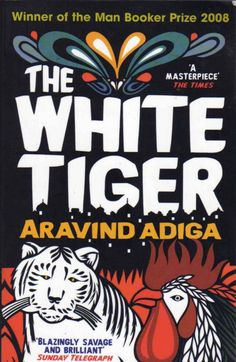
Through the Lens: A Critical Examination of the Cinematic Adaptation of Midnight's Children and The White Tiger

Name: Jheel Barad
Roll No.: 12
Enrollment No.: 4069206420210003
Paper no: 210 (A)
Paper code: 22417
Paper name: Research project Writing (Dissertation Writing)
Sem.: 4 (Batch 2021- 2023)
Submitted to: Smt S.B. Gardi Department of English, M.K. Bhavnagar University



Adaptation is an age-old practice that has been prevalent in both life and art since time immemorial. As the famous adage goes, "change is the law of nature," and adaptation is an essential process that facilitates change and evolution. From ancient Greek plays to Shakespeare's works, numerous examples abound in history where stories have been adapted to different mediums to cater to new audiences and gain creative and economic benefits. The process of adapting a story to a new medium involves a delicate balance of preserving the essence of the original while creating an independent form of art that can stand on its own. Creative satisfaction is a significant driving force behind the adaptation, as artists strive to retell stories that they find interesting and engaging. However, economic reasons cannot be overlooked, as production houses seek to capitalize on the popularity of famous and well-received stories to attract viewers and generate revenue.



It is essential to understand that when a work of art is adapted into a different medium, it becomes an independent entity, with its own unique qualities and characteristics. The original text and its adapted counterpart are rarely equivalent, and each must be evaluated on its own merits. The interdependence of the two forms is inevitable, and researchers must approach their work with a nuanced understanding of the differences that set them apart. Adapting a novel into a film, for instance, requires a different set of skills and techniques than writing a book. The cinematic medium demands specific narrative techniques, performances, and visual elements that can shape the way a text is presented. To adapt a story successfully, the artist must navigate these demands while staying true to the original story's spirit. By adapting stories to different mediums, artists can create new forms of art that cater to different audiences and capture the imagination of people across generations. However, it is vital to recognize that each adaptation is an independent entity with its own unique qualities and characteristics, and must be evaluated on its own merits. Ultimately, it is through adaptation that art can continue to evolve and thrive, reflecting the ever-changing world around us.

The topic of cinematic adaptations of novels has long been a subject of scrutiny and debate, owing to the widespread popularity of film as a medium across the globe. Transforming a novel into a film is a challenging process, given the distinct structures of these two art forms. Filmmakers often look to literature as a source of inspiration for their stories, with novels providing rich and complex source material for cinematic adaptations. However, the fidelity of these adaptations to the original source material has been a point of contention and discussion among scholars and critics. Many critics have argued that film adaptations are inferior to the literary texts they are based on. They have pointed out that the changes and omissions that are sometimes necessary in order to adapt a novel to the screen have been criticized by some as errors or shortcomings. The visual nature of the film has also been criticized for robbing a novel of its charm, leaving too much open-ended for viewers. The literary complexity of a novel can be a powerful tool for readers to imagine characters, objects, and places in their own way, which can be lost in the translation to film.

However, the debate around cinematic adaptations has recently shifted to a discussion of intertextuality. It has been acknowledged that a work of adaptation does not have to blend all the elements of a novel into a film in order to be successful. Adaptation is a work of art in its own right, and filmmakers have the freedom to create an independent interpretation of the original source material. Ultimately, the success of a film adaptation depends on its ability to capture the essence of the novel it is based on. The screenplay is not simply a reproduction of the original novel, but rather a new rendition of it that may include deviations, changes, omissions, and additions. While some viewers may have different perceptions of how characters, objects, and places should look, a good adaptation should still resonate with the original source material and evoke its key themes and ideas. As such, the relationship between literature and film adaptations remains a complex and ongoing subject of debate and analysis.

The world of literature is a realm of infinite possibilities, where words come to life and take on their own meaning. When an author crafts a novel, they pour their heart and soul into it, weaving their style and perspective into the piece of art. The result is a literary work that can be a pleasure to read, transport the reader to different worlds, and stimulate their imagination. A good novel has the potential to create a vivid imagination that can be a highly overwhelming yet a senses calming experience. The way elements are perceived in the minds of the readers may vary, leading them into areas unexplored before. The beauty of literature lies in its ability to evoke different interpretations and emotions in different readers, each experience unique to the individual. Words are fascinating, nimble, delicate, and yet very powerful. They can create vivid imagery that can be both overwhelming and calming. The process of reading a literary work can be a highly emotional experience that can leave a lasting impact on the reader. A work of literature can lead one into a world completely unknown, and the meanings and inferences that arise from it can be multitudinous.

The text may describe a lot, but there is often much left for the reader to interpret and discover on their own. The gaps in the author's description leave room for the reader's imagination to fill in the blanks, creating a personal interpretation of the text. This personal interpretation is what makes literature unique and allows it to transcend time and space. It is this universal quality of literature that makes it a powerful tool for communication and understanding. When a literary work is adapted to another medium, such as a movie or TV show, it provides an opportunity to see how the creative mind of a filmmaker interprets the author's work. The process of adaptation offers a unique opportunity for artistic collaboration, where two creative minds from different disciplines can merge to create a new form of art. It is fascinating to witness how gaps in imagination are filled by the filmmaker's vision and to observe how cinema fans respond to such adaptations. A film adaptation is a unique and dynamic product that results from the convergence of multiple authors, cultures, and audiences. It can be viewed as a hybrid creation that blends the original literary work with the filmmaker's creative vision, as well as the cultural and social contexts in which it is produced and consumed. This interactive process between the various elements involved results in a distinct and vibrant adaptation that is distinct from its source material.

Despite the shift in medium, the adapted work remains independent, yet interconnected with the original literary work. The essence of the original work remains intact, but it is transformed into a new form of art that can be appreciated in its own right. The adaptation process can bring the literary work to a wider audience, exposing new readers to the author's unique perspective and style. One of the most interesting aspects of literary adaptation is the different interpretations that can arise from the same work. A film adaptation of a novel can bring to life the characters and settings in a way that the written word cannot, but it also provides an opportunity for the filmmaker to inject their own interpretation of the text. This can lead to a divergence in interpretation between the original work and the adaptation, creating a new layer of meaning for the audience to discover.


According to critics, faithfully preserving the complexity and individuality of literary works in movie adaptations is a challenging task. This is because transforming literature into cinema is not a straightforward process, given the vast differences in dimensions and techniques between these two art forms. Adapting a literary work into a film is a complex task that involves a range of factors, from selecting the appropriate novel to adapt, to capturing the right milieu, casting the perfect actors, and staying true to the essence of the original work. Despite the difficulties involved, successful adaptations can result in a new and compelling interpretation of the source material that engages audiences in exciting new ways.

This research work, The study of film adaptations of Midnight's Children and The White Tiger challenged the assumption that transferring a novel to film is a simple process. It was observed that while the adaptations stayed true to the original text, they also made necessary changes to suit the visual medium. Such changes both enhanced and detracted from the themes and messages of the novels, and the adaptations effectively utilized visual storytelling techniques to convey the narrative and character development. By infusing the stories with unique techniques of the cinematic medium, the film adaptations transformed the texts into new, visually compelling experiences. This analysis underscores the complexity involved in adapting a novel to film and highlights the importance of careful consideration and creativity to bring the essence of the original text to life on the screen.

The film Midnight’s Children by Deepa Mehta is a loose adaptation of Salman Rushdie's novel of the same name. While the film does contain many of the major themes and events of the novel, Mehta takes significant liberties with the source material in terms of characterization, plot, and structure. For example, Mehta condenses and rearranges some of the novel's major events, changes the personalities and motivations of some of the characters and adds some new elements that are not present in the book. "Midnight's Children" takes significant liberties with the source material, it remains a powerful and compelling adaptation that captures the essence of Rushdie's novel while also exploring new themes and ideas.

"The White Tiger" is a film by Ramin Baharani, an adaptation of the novel of the same name by Aravind Adiga. In terms of how faithful the adaptation is to the source material, it can be classified as a loose adaptation. While the film captures the essence of the novel and follows the main plot points, there are some notable differences between the two. For example, the film omits several scenes and characters from the book, and some of the events are presented differently. Additionally, the film makes some changes to the character's personalities and motivations, which can be seen as departures from the source material. Therefore, it can be said that "The White Tiger" is a loose adaptation that balances fidelity to the source material with creative changes that make it a compelling film in its own right.

When considering the form of a text, whether it be a novel or a film, it becomes evident that the change in medium does not diminish the inherent meaning of the original text. However, it is important to note that adapting a text to a new form does require some alterations to be made.

While a text can be easily reproduced in a new medium, it is important to recognize that the medium itself brings its own unique set of tools and elements to the table. For instance, a film director relies on visual and auditory elements such as lighting, music, and sound effects to enhance the storytelling. These elements, in turn, contribute their own meanings and nuances to the final product. Rather than viewing the limitations of a new form in adapting a source text, it is crucial to consider how the new form can offer a fresh perspective on the text. The new medium can be seen as an arrangement of elements that provide the potential for interpreting the text in a new and exciting way. In short, the form of a medium should not be seen as a hindrance in adapting a source text, but rather as an opportunity for exploration and interpretation. By embracing the unique qualities of a new medium, one can uncover new layers of meaning in a text and create a work of art that stands on its own.

When Midnight’s Children is Adapted into a film by Deepa Mehta. The novel and the film have some similarities in terms of their form, but also some differences. Both share a nonlinear narrative structure and magical realism, blending fantasy and real-world events. However, the novel is narrated in first-person by Saleem Sinai, allowing for a deeper exploration of his thoughts and feelings, while the film uses a third-person perspective that creates more distance between the audience and the characters. Additionally, the novel describes characters in detail, exploring their motivations and emotions, whereas the film relies more on visual cues to convey personality and motivation. These differences in form impact the audience's experience and understanding of the story. Despite these variations, both the novel and film of "Midnight's Children" offer a captivating story that blends history, fantasy, and human experience.

"The White Tiger" film adaptation by Ramin Baharani shares similarities and differences with the novel in terms of narrative structure and style. While both versions follow Balram Halwai's rise from servant to entrepreneur, the film uses a frame story of Balram writing emails to his former employer, offering a more contemporary form of storytelling. Nevertheless, both versions offer commentary on social inequalities and corruption in India. The film and novel share common themes of class struggle, social mobility, and corruption. Both versions have well-developed and complex characters, including Balram and his employers, who offer insights into the nature of power and corruption. The film introduces unique symbols and adapts certain events in a non-chronological order, commenting on the fragmented nature of modern life. The lighting and camera work captures the tone and mood of the novel, adding an extra layer of meaning. Overall, the film adaptation offers a unique interpretation that is faithful to the original work, reflecting contemporary Indian society. It offers a fresh perspective on the novel's themes and issues, making it an important contribution to Indian literature and film.


Narration is a fundamental element of storytelling, whether it is in a novel or a film. Although the forms of these media are distinct, they both revolve around the art of narration. When a filmmaker adapts a novel into a film, they often seek to differentiate themselves from the original text by employing different narrative techniques. The resulting change in the narrative style can offer a fresh perspective on the story, but it may also be met with resistance from fans of the original text. Narrative techniques are essential in conveying meaning to an audience. Filmmakers and novelists both use these techniques to create a narrative that resonates with their audience. However, filmmaking as a visual medium requires a different set of tools and techniques to create meaning compared to novel writing. As such, a filmmaker may choose to use different techniques to convey the same message as a novelist.

The point of view is an important aspect of the narrative technique. Filmmakers or novelists must decide how they want to convey their message to their audience, whether it be through a first-person, second-person, omniscient narrator, or an interior monologue. Each point of view has its own qualities, and the choice of point of view can fundamentally alter the angle of the story. Furthermore, the lighting, color, sound, and music of a film all contribute to the narrative. These elements can emphasize the emotions, the atmosphere, and the overall tone of the story. They can also influence the audience's understanding of the narrative and create a particular mood or feeling. Michael Ryan states in his book, An Introduction to Criticism Literature/ Film/ Culture, "Narrative filmmakers tell stories with meaning, much as novel writers do. But filmmaking is different because it is a visual medium that requires very different tools and techniques for creating meaning."

Narration is a powerful tool in fiction, and its strength can make or break a story. If the narrative of the original text is compelling, a filmmaker may choose to implement the same technique or use another technique of equal strength. Social, historical, and cultural contexts also influence the way a narrative is conveyed, adding another layer of complexity to the art of storytelling. The narrative technique is a vital component of storytelling, whether it is in a novel or a film. It is the tool that creators use to tell stories and convey meaning to their audience. While different media have distinct tools and techniques, the fundamental importance of narration remains the same.

One of the most significant changes in narrative style between the novel and the film, Midnight’s Children, is the use of voiceover narration. In the novel, the story is told entirely from Saleem's point of view, and his voice is the only one that we hear. This allows Rushdie to create a rich and complex inner world for Saleem, and to explore his thoughts, feelings, and memories in great detail. In the film, however, Mehta uses a variety of different narrative techniques to tell Saleem's story. While there is still some voiceover narration from Saleem i.e. Third person Omniscient narration, the film also includes scenes that are entirely visual, as well as dialogue between characters that are not directly related to Saleem's inner life. The novel uses a nonlinear narrative structure, jumping back and forth in time to create a more impressionistic and dreamlike atmosphere. In the film, however, Saleem's story is told chronologically, with occasional digressions into his memories of the past.

A notable change in the narrative style of The White Tiger, between the novel and the film, is the use of a framing device. In the novel, Balram tells his story in a series of letters addressed to the Chinese Premier, who is visiting India. In the film, this framing device is removed, and Balram's story is told in a more straightforward manner. Another significant change is the use of voiceover narration. In the novel, Balram's voice is the only one we hear, and he tells his story in a confessional and introspective tone. In the film, Balram's voiceover narration is more sparse, and other characters are given more dialogue and screen time to express their own perspectives.

Time is an essential characteristic of any literary text, and it can take on many different forms. In a novel, time can be one-dimensional, poly-dimensional, dynamic, or static. It can also be compressed or prolonged within the text, allowing the author to manipulate the narrative flow as desired. Unlike real-time, which flows linearly, literary time can be changed and manipulated by the narrator. This can be accomplished through techniques such as foreshadowing and flashbacks, which allow the narrator to move back and forth in time to tell the story. One of the key features of literary time is its temporal orientation. In a novel, time can change course, and events can be described in the past or present tense. Foreshadowing can also be used to give readers a glimpse of what is to come, adding an element of suspense and anticipation to the story. In many cases, the use of these techniques can create a sense of timelessness in the narrative, as events seem to occur simultaneously or out of order.

Continuation and direction are two essential features of literary time. The idea of before and after is central to our understanding of time, and these concepts are often used by authors to structure their narratives. By moving back and forth in time, or by compressing years of events into a few lines, authors can create a sense of continuity and direction that drives the story forward. In films, time and space are handled differently than in novels. Filmic time and space are recorded on celluloid and edited together to create a coherent narrative. Special effects and editing software can be used to manipulate time and space in ways that are impossible in a novel. However, the basic categories of philosophy, aesthetics, psychology, linguistics, and art still apply to both mediums. Ultimately, the manipulation of time and space is a key element of both literature and film. By controlling the pace of the narrative and creating a sense of continuity, authors and filmmakers can craft stories that are engaging and compelling. Whether compressing years of events into a few lines or using flashbacks to reveal important details, the manipulation of time is an essential tool in the writer's toolbox.

In both time and space between the novel "Midnight's Children" by Salman Rushdie and the film adaptation directed by Deepa Mehta, there are some changes. In terms of time, the novel covers a span of several decades, from Kashmir 1915 capturing the family background of protagonist Saleen Sinai the story of his grandparents to 14th August 1977. Hoevotably follows the same time in the novel but definitely neglects some of the events and focuses on a period of Saleem's life, primarily the events leading up to and following India's independence in 1977. Similarly, in terms of space, the novel and film both take place primarily in India, with significant portions set in Pakistan and Bangladesh.

When comparing the novel "The White Tiger" with its film adaptation, it is evident that there are some differences in the representation of time and space. In the novel, there is no specific time frame other than the year 2010 when Balram Halwai achieved success as an entrepreneur. However, Balram provides time references at the beginning or end of his letters, giving a sense of the passing of time. On the other hand, the film adaptation opens with a clear indication of time and place - "Delhi 2007" - providing a specific point of reference for the audience. Unlike the novel, the time references in the letters are not included in the film, which instead relies on visual cues to convey the passage of time. Regarding space, both the novel and film are set primarily in India, with Balram's journey from his rural village to the city of Delhi forming a significant part of the story. The film remains faithful to the novel in its depiction of India, with its bustling streets, crowded markets, and stark class divisions. Bahrani's film captures the essence of India's culture, traditions, and societal inequalities, much like Adiga's novel.


Thursday, 10 November 2022

Conclusion: Globalization and the Future of Postcolonial Studies

Hello! This blog is a response to the task assigned by Dr. Dilip Barad. In this blog I am going to summarize two articles from Ania Loomba's book "Colonialism and Postcolonialism" about postcolonial studies, Conclusion: Globalization and the future of postcolonial studies and Conclusion: The future of postcolonial studies.

Globalization and Postcolonialism

What is Post- Colonial Studies?
Postcolonial studies is the critical analysis of the history, culture, Literature and modes of discourse that are specific to the former colonies of England, France, Spain and other European imperial powers. Postcolonial studies have focused on the third world countries in Caribbean Islands, Asia, South America and Africa.

CONCLUSION: GLOBALIZATION AND THE FUTURE OF POSTCOLONIAL STUDIES

The Article begins with the description of the events of 11 September 2001 ( 9/11), the so-called Global War on terror and the US invasion of Afghanistan and Iraq. li which makes it harder to see our world as post colonial, at the same time these all events can be considered as a part of globalization.

Globalization seems to have transformed the world so radically that many of its advocates and critics suggest that there is no longer need to have a critical and analytical perspective which takes the history and Legacy of European colonialism at the focal point. Globalization cannot be analyzed using the concept of margin and centers today it is better to be described in the term of transnational network, regional and international flows and The dissolution of Geographic and cultural borders, paradigm which are familiar to post colonial critic but we can now invoked to suggest a radical break with the narratives of colonialism and anti colonialism.

Book argues that the contemporary Global order has produced a new form of sovereignty which should be called ‘Empire' but which is best understood in contrast to European umpires.

In contrast to imperialism, the Empire establishes no territorial center of power and does not rely on fixed boundaries or barriers. It is a decentralized and deterritorializing apparatus of rule that progressively incorporates the entire global realm within its open, expanding frontiers. Empire manages hybrid identities, flexible hierarchies, and plural exchanges through modulating networks of command. The distinct national colors of the imperial map of the world have merged and blended in the imperial global rainbow.
(Hardt and Negri 2000: xiii-xii)


Hardt and Negri, do not identify the United States as this new power, they argue that the Empire is born through the global expansion of the internal US constitutional project- a project which sought to include and incorporate minorities into mainstream rather than simply expel and exclude them.

Hardt and Negari suggested the new Empire is better compared to the Roman empire rather than to European colonialism, Imperial Rome also loosely incorporated subject state rather than controlling them directly.

The controversy about the Empire is shaped by a wider and ongoing debate about the nature and effects of globalization. Tim Brennan observes that the Empire has almost nothing to say about the actual peoples and histories that the Empire left behind… The colonization of today is given little place in a book’s sprawling thesis about multitudes, biopolitical control and the creation of alternative value.

The Global mobility of capital, industry, workers, goods and consumers dissolves earlier hierarchies and inequities, democratizes nation and the relations between nations, and creates new opportunities which percolate down in some form or another to every section of society.

Lists down ‘multiple locations’ and new hybridities, new forms of communication, new foods, new clothes and new patterns of consumption are offered as evidence for both the newness and the benefits of globalization.

Simon Gikandi in his work "Globalization and the claim of Postcoloniality" observes that despite the fact that globalization is so often seem to have made redundant the terms of postcolonial critique, the radical newness of globalization is in fact asserted by appropriating key terms of postcolonial studies such as ‘hybridity’ and ‘difference’.


Etienne Balibar connects neo- racism to the anti- semitism. According to Baibar, the new racial ideologies are not less rigid simply because they invoke culture instead of nature. Phobai about Arabs carries with it at image of Islam as a ‘conception of the world’ which is incompatible with Europeanness. Thus Muslims are regarded as people who can never successfully assimilate into western societies, or who are culturally conditioned to be violent, ideas that dominated the media coverage of Islam after the attacks on the WTC and the Pentagon in the US on 11 September 2001.

Some forms of post colonial critique have already detached culture from its social and economic moorings, and these tendencies are exaggerated in accounts of endlessly mobile and hybrid Global identities. but it is also worth remembering that on the whole no other critical practice has foregrounded the link between cultural forms and geopolitics to the degree that postcolonial studies has over the past four decades. It is not an accident that Muslims are regarded as barbaric and given to acts of violence and Asians are seen as diligent but attached to their own rules of Business and family, both modes of being we are seen as differently in relation with the western world. These views were not only applicable in the older colonial views about Muslims as despotic and intractable and Asian as incredible and hard working but speak to contemporary Global economic and political libraries.


Conflicts are we supposed to read in literature as postcolonialism critics in the times of 'Capitalize controlled Globalization'?
Postcolonialism scholarship must engage with new socio-economic realities and thus, it is necessary to keep pace with newer developments 'without being in thrall to the cultural kaleidoscope of contemporary world capitalism'. None of the traditional or modern or postmodern conflicts in literature will help us in identifying the dynamics of 'Capitalist controlled Globalization'.


- Man vs Market Fundamentalism (which is even more dangerous than Religious Fundamentalisms)
-Man vs Nexus between Private Corporations and Democratically Elected Politicians
- Man vs Private Companies
-Man vs Multinational Companies (MNCs)

Critics of globalization have not denied fact or doubt the transformative power of the phenomenon of globalization or the ways in which it marks a departure from the old world order. But they oppose its supposedly democratizing effects or radical potential and point out that treating contemporary globalization as if it does not have any history is unfair. There is no doubt that globalization has made Information and Technology more widely available and has brought economic prosperity to new sections of the world.

P. Sainath observes that the mobility of capital far from fostering ideological openness has resulted in its own fundamentalism (strict adherence to the basic principle of any subject or discipline).

‘Market fundamentalism destroys more human life than any other simply because it cuts across all national, cultural, Geography, religious, and other boundaries.It's as much at home in Moscow as in Mumbai or Minnesota, based on the premise that the market is the solution to all the problems of the human race, it is, too a very religious fundamentalism. it has its own Gospel: the Gospel of St. growth of, St. choice…’

Globalization carries an overwhelming connotation of cosmopolitanism (belief that all people are entitled to equal respect and consideration), of The dissolution of national boundaries, of the free flow of capital labor and benefits across the confines of locally vested interest.

Indian Research group has recently argued that
The great range of actual measures carried on under the label of globalization .. were not those of integration and development. Rather they were the processes of imposition, disintegration, underdevelopment and appropriation. They were of continued extraction of debt servicing payments of the third world; depression of the prices of raw materials exported by the same countries; removal of tariff protection for their vulnerable productive sectors; removal of restraints on foreign direct investment, allowing giant foreign corporations to grab larger sectors of the third world's economies; removal of restraints on the entry and exit of massive flows of speculative international capital, allowing their movements to dictate economic life; reduction of State spending on productive activity, development and welfare; privatization of activities, assets and natural resources, sharp increases in the cost of essential services and goods such as electricity, fuel, health care, education, transport, and food (accompanied by the harsher depression of women's consumption within each family's declining consumption); withdrawal of subsidized credit earlier directed to starved sectors; dismantling of workers' security of employment; reduction of the share of wages in the social product; suppression of domestic industry in the third world and closures of manufacturing firms on a massive scale; ruination of independent small industries; ruination of the handicrafts/handloom sector; replacement of subsistence crops with cash crops; destruction of food security.

(Research Unit for Political Economy, 2003: n.p.)

If the earlier period of colonial globalization, integrated the world into a single economic system and divided it more deeply into the haves and the have nots. The new Empire both facilitates global connections and creates new opportunities and entrenches disparities and new divisions.

the World bank statistics concedes that the number of poor worldwide has grown during the 1990s. A third of the world's labor force is unemployed and underemployed.

“Globalization is just another name for submission and domination” (Nicanor Apaza, 46, an unemployed minor)


Joseph E. Stiglitz, Nobel laureate and once Chief Economist at the World Bank, uses phrase ‘market fundamentalism’ in his critique of globalization as it has been imposed upon the world by institutions like the World Bank and the IMF:

‘The international financial institutions have pushed a particular ideology- market fundamentalism- that is both bad economics and bad politics.’

Stiglitz connects these developments to colonialism, suggesting that ‘the IMF’s approach to developing countries has the feels of a colonial ruler’, and that developing countries dealing with the IMF have been forced to ask ‘a very disturbing question: Had things really changed since the ‘official’ ending of colonialism a half century ago?”

Hardt and Negri’s suggestion that United States acts as an Imperial power ‘not as a function of his own motives but in the name of global right’. as the worldwide protest against the war have made it clear, neither people at large not even most Nation States have given the US the right to act on their behalf and they certainly regard the US as simultaneously ultra-nationalist and imperialist

It is clear that US nationalism and National interest remain at least as important as the interest of particular multinational corporations in shaping these and other conflicts around the globe. Instead of countposing the new global order against nation and nationalist ideologies it is better to see them as both forming new alliances and also engaging in new conflict.

North Korea and India's nuclear program were developed in disobedience to the US, but nuclear proliferation can hardly be seen as a progressive in any way. At the same time India state is repressive towards its own subjects especially in Kashmir and North Eastern states and it collaborates with multinationals whenever it can. religious, linguistic or ethnic nationalism have also escalated in the last decades. They can also fuel assistance movements against multinational as well as movements which may be anti us but are politically socially and ideological backward.


Is radical change at all possible? According to Hardt and Negri, the Empire can be challenged from multiple sites and is vulnerable to all manner of rebellion. resistance is more than the simple effect of dominate. The resistance of globalization takes a very local shape and involves the struggle against the national authorities as that is an example of the case of Narmada Bachao Andolan (NBA) in India.


Narmada Bachao Andolan was a protest against project Narmada Valley development, to build large dams across central India, Dams which were not only unsustainable in themselves but which could cause the displacement of thousands of tribal people all across the Narmada Valley. The project was funded by multinational as well as indigenous capital following a long and systematic struggle led by the NBA, the World bank pulled out of the project in 1993. Palit discusses the way in which and they developed new forms of resistance by drawing on a rich experience of the local people and their knowledge of the let there practice the methods of Gandhian anti-colonial struggle and gather enormous effort from the women's group, Trade Union and left parties in the countries and from diverse movements internationally. Although at this point and be has not managed to stop the building of the terms it has politicized and galvanized millions of people and exposed one signal instance of the Nexus of local and global economic and political power.

ROLE OF UNIVERSITIES
The new imperialism directly implicates educational institutions. Niall Fergusson suggested that the US must learn from Britain and send its best and the brightest students from its leading universities on the Imperial mission. but how will the best students be prepared to do so?

In the report called Defending Civilization: How Our Universities are Failing America and What Can be Done About it, the American Council of Trustees and Alumni (ACTA) suggests that universities are not up to this task because, unlike the rest of the country, large numbers of American academics and students are critical of US policies. On US campuses, it has become commonplace to suggest that Western civilization is the primary source of the world's ills even though it gave us the ideals of democracy, human rights, individual liberty, and mutual tolerance'. After 9/11, the report went on to complain, instead of ensuring that students understand the unique contributions of America and Western civilization-the civilization under attack-universities are rushing to add courses on Islamic and Asian cultures'

Those who do teach Western history and literature are not exempt from critique; in an earlier report, ACTA had complained not only that Shakespeare was being dropped from required courses but that Shakespeare and Renaissance classes were being polluted by a focus on social issues such as poverty and sexuality.

The core premise of postcolonial theory is that it is immoral for a scholar to put his knowledge of foreign languages and Cultures at the service of American power.

If universities are to remain sites of dissent and free intellectual inquiry, if scholarship is not to be at the service of America Or any other power, critiques of the past and ongoing empires are going to be more necessary than ever.


SOME EXAMPLES OF GLOBALIZATION

Looking at the contemporary examples of Globalization, we get a strike of reliance companies. Which has turned into a threat to various other companies like Vodafone, Idea, Airtel etc. There was a time where BSNL was considered to be the best but this globalization and privatization failed BSNL. Recently, Vodafone and Idea had to merge together for their existence. Vodafone-Idea merger: A telecom giant is born amid Reliance Jio threat


Examples from the Bollywood

Ghayal Once Again

the conflict of youngsters who witnessed Murder of RTI activist against multi-business owner Bansal (represents Ambani's)

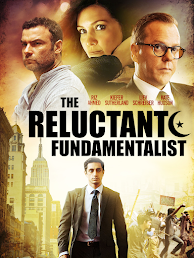
Reluctant Fundamentalist


the conflict between market fundamentalism and religious fundamentalism in the aftermath of 9/11

Zee5 Original Web-movie 'Tigers'


based on a Pakistani salesman's conflict with giant MNC Nestle

Madaari

The conflict between common man (father whose child died in bridge crash) and nexus between construction company and politicians

Sonali Cable
conflict between a girl who runs local tv/internet cable service vs giant company 'Shining' which started providing broadband

Rang De Basanti

A nexus between politician and businessman vs young college boys (one them has to murder his own father who was corrupt businessman before murdering the politician)

Real incidents


The Nestlé boycott can be seen as special in a sense that it linked human rights regulations and humanitarian activism with corporate responsibility and market capitalism. Consumers were basically acting as global citizens by aiding people in need outside their close communities – mothers in developing countries –, “using the marketplace not as a way of generating revenue, but rather as a space for protest”.


But in 2015, Maggi was also at the center of a massive food safety scandal, during which the noodles allegedly tested positive for high lead content, and the Food Safety and Standards Authority of India issued a brief, nationwide ban on all Maggi products.


Pesticide residue was 24 times above limits set by the Bureau of Indian Standards in 57 samples tested, the report said. In one bottle of Coca-Cola bought in Calcutta, the level of the carcinogenic pesticide Lindane exceeded the bureau's standards by 140 times.


The blog is quite lengthy, I have tried to give the overall idea presented in the essay. I hope it will be useful. Thank you.

[Words- 2700]

Monday, 31 October 2022

Flipped learning- Indian writing in English

Hello readers! This blog is in response to a task assigned by Yesha Bhatt ma’am. This blog deals with a few important topics of Indian writing in English. Before writing this blog the blogger has referred to Three Prose Writers: Radhakrishnan, Raghunathan, Nirad Caudhari; The ‘New’ Poets; and Conclusion from K.R Srinivasa Iyenger’s Indian Writing in English. This blog tries to attempt a few questions assigned to the task.

Indian writing in English 


Task 1: The Three prose Writers
Three prose writers on Indian writing in English, the three masters of prose, and very different from each other. Professor Radhakrishnan, the best known of the three, is a philosopher-statesman with an international reputation, a scholar with a phenomenal memory, a resourceful and eloquent and effective speaker, and a voluminous writer with an uncanny flair for lucidity and epigrammatic strength. Raghunathan, better known by his nom-de-plumVigneshwara, is a deep student of English and Sanskrit literature, and was for many years the leader writer of Hindu; but it was as the writer of the 'Sotto Voce' weekly causeries he made a significant impact on the readers of Swatantra and Swarajya. Nirad chaudari, an “unknown Indian” till 1951 when his Autobiography made him famous, is a master of prose style, an intellectual who has the courage to stand aside and be different from the crowd, a critic of Indian society with an almost Swiftian capacity for making surgical probes.


The contribution of S. Radhakrishnan in Indian Writing in English.
  • A note on S. Radhakrishnan’s perspective on Hinduism.
  • According to Radhakrishnan, what is the function of philosophy?


Sarvepalli Radhakrishnan (5 September 1888 – 17 April 1975), was an Indian philosopher and politician who served as the 2nd President of India from 1962 to 1967 and 1st Vice president of India from 1952 to 1962. He was also the 2nd Ambassador of India to the Soviet Union from 1949 to 1952 & 4th Vice Chancellor of Banaras Hindu University from 1939 to 1948.

Radhakrishnan was commissioned by J.H. Muirhead wrote a history of Indian Philosophy and the first volume of this formidable undertaking appeared in 1923 and the second four years later. The double merit of the work was that it was an interpretation of Indian Philosophy from within and it was also an exposition of Indian philosophical thought in an idiom at once intelligible and attractive to the west.

‘He was no mere historian of Indian Philosophy but also a thinker in his own right’


He was a Hindu for whom philosophy was not just a cloak but rather a way of like, a means of understanding life and force for changing was presently revealed in his upton lectures- The Hindu view of Life- 1927 and the wide-ranging Hibbert lectures and An Idealistic View of Life- 1923. The apologist of the Hindu view of life and ‘idealist’ view of life in terms mainly Advait vedanta- had to speak in an idiom that could define the uniqueness of The Hindu and Vedantic view of life, yet any insinuate its filiations with the Western Christian way of life.

He explain things with lucid clarity that seemed to be almost a deceptively simple:

Every sinner has a future even as every saint has had a past no one is so good or so bad as he imagines. Hinduism is a movement not a position, a process not a reason, a growing tradition not a fixed revelation.

Many Christians also said that if it was Hinduism they were Hindus too.

A.C. underwood in his Contemporary Indian Thought (1930) voice mild protest- The Hinduism of the of the Hindu view of Life is not Hinduism as it is or ever has been; but as professor Radhakrishnan would have it to be after he has removed it near to his Desire


Radhakrishna was bold enough to rethink the end and means of human life in the wider perspective of traditional Hinduism and modern thought. There are no questions in Philosophy; the old questions- what do I know? What ought I to do? What may I hope for?- are as valid today as ever, but one's answers need to be formulated in relation to the contemporaneous urgency. In every religion there is a mystical core, which age cannot weaken, nor modernity render superfluous. It was now Radhakrishnan’s turn, and circumstances and an extraordinary combination of qualities enabled him to appeal to a world audience, and to bring the west and the east to a closer understanding than ever before the nation.
Plato
What is the function of philosophy? Radhakrishnan says “to provide us with the spiritual rallying Center, synoptic vision, as plato loved to call it, a Samanvaya, as the Hindu thinkers put it… a spiritual concordat which will free the spirit of religion from the disintegration of doubt and make the Warfare of creeds and sects a thing of the past.”

Detractors have said that RadhakrishnanIs a historian of Indian philosophy, a scholastic, a theologian rather than a creative thinker in his own right; that he is at best, a philosopher in the Western rather than in the Indian tradition.


Task- 2: The New Poets
  • “An Indo-Anglian poet strives for self-expression in English.” Explain.
Since the end of world war 2, there has been a visible stir everywhere- partly a rustle of new hope and partly the stutter of a new despair. a new generation comes up with striking individuality of its own, sharpness in its feature, an angularity in its gestures, a tone of defiance in its speech, a gleam of hope in its eyes- new order perhaps, and even new rhythms and the nuances and acerbities of speech. There is a ‘new’ poetry in England, in France, in the states- and not least in India and in ‘Indo-anglia’


‘New’ poetry of course has always been ‘modern’ poetry even ‘modernist’ or ‘modn’ poetry. no true poet can escape tradition, for all our yesterday are involved in the poet’s deeper consciousness; and no true poet can escape pressure of the present, for he is in it and of it, and the best he can do is to relate the immediate present of the living past.

The Indo Anglian poet is no doubt noted in his particular and particular perplexity and Indian tribes for self expression in English but he is for this reason alone no more a slave of oddity than a man trying to fly in an aeroplane of his country living or dying in a submarine Indo Anglian poetry is not quite so much of a rarity as it is too readily taken for granted in the anthology modern Indian poetry edited by A V rajeswara Rao out of the 70 poets included as many as 25 are either Indo Anglian poet or poets with an adequate enough knowledge of English to translate into English word their own original work in one of the regional language.

All modern Indian poetry is sustained by the living waters of our racial tradition and by the continuing Breeze from the west- which now means Europe as well as America. In the 19th century in India the first flush of romantic exuberance. In recent times, however, we have been witnessing realistic clinical exploration by the poet turned proletarian, psychologist, psychoanalyst, cybernetics, naxalite or adamite primitive. There is a return to romance too and, there are the sensualists and the symbolists, and there are also the lareautes of the spirit. but then the poetry of the spirit is as ancient as the Veda and as modern as the latest guided missile.

It would be prudent and wise not to attach too much importance to any rigid chronology. When does the era of ‘new poetry’ begin? In English literature Hopkins the Victorian- who could be published only in 1918- was hailed as one of the ‘modernists’, on a par with Eliot and Pound. the later Tagore, was as modern as the newest of the new poets. in India the political and economic uncertainty of the thirties lead to some re-thinking on the part of Writers who came to be known as the “progressive” and the “proletarians'' and a literature of the protest was the result.

  • Write a critical note on the poems by Nissim Ezekiel.
Nissim Ezekiel- English is his mother tongue, has published five volumes of verse so far:
A time to change (1951),
Sixty poems (1953)
The Third (1959)
The Unfinished Man (1960) and
The Exact Name (1965)
He also edited for the for time Poetry India.

an artist who is willing to take pain, to cultivate reticence, to pursue the profession of poetry with a sense of commitment.


Ezekiel’s poems are as a rule lucid- a merit these days- and are splendidly evocative and satisfyingly sensual.

In his first two volumes, persons and places memories and situation literary equals and movements of vision, all inspired Ezekiel to poetic utterance. in his latter poetry there is revealed a more careful craftsmanship, a more mark restrained and a colder, a more conscious intellectuality, than in his first two volume.there is a gain in quality and integrity, and he is able to achieve conversational directness and ease without losing himself in discursiveness. obscurity And mere angularity are avoided and beauty and bareness of statement often go together. the discipline of rhyme and regular stanza form is not shirked, excet the special effects are intended

In some poems there is bold yet apt phrasing, a verbal sting, even a touch of a frivolous or ludicrous and a general competence of craftsmanship. Hints of sensuality in some of the poem, at least not served up as something nobly spiritual. There is a vague striving after wisdom- in the latest volume, there is even or pull towards philosophy- there is a feeble attempt at prayer and there are intermittent throbs of frustration.


Task 3: The Conclusion
  • Write a note on the changing trends in Post-Independence Indian Writing in English.
English as a second language forms a really “dominant minority” in India. The books in English published in India account for 50% of the total for all languages, and the English newspapers and magazines command a more impressive and influential circulation than others. The problem before the Indians of a century ago was how to learn from the British and from the west generally, without at the same time feeling resentful and humiliated. Without denying the inherited tradition, the new writer has been able to grow a wing of Creative self expression and is boldly caring towards the future. but English literature has continued to provide an impetus and an inspiration to writers, whether they write in English or in one of the indigenous languages.


During the last 20 years, and more especially during the last 10 years, the outlook of Indo- Anglian literature has become brighter than before. There are journals in English- the workshop that- publish poetry and creative prose, and literary pages in the papers and weekly magazines besides serious critical journals.

Book reviewing is still very unsatisfactory. Indian writing in English has now also begun to receive scholarly and critical attention in Indian and foreign universities. It figures as a paper at the MA level in several universities in India and courses in Indo Anglian literature are given in many American and Commonwealth universities. Indian teachers of English literature have been publishing learned papers and Critical monographs, not only on English and American authors but even on Indo-Anglian writers . An increasing mass of critical inquiry has been accumulating of late in India, partly because of the requirements of the doctorate degree, partly stimulated by Smith-Mundt scholarship tenable in American Universities, and partly also on account of the newly awakened interest in Indian writing in English.

This video gives a basic background of Indian Writing in English

  • “India is not a country”, says Raja Rao, “India is an idea, a metaphysic.” Explain with examples.

It is the unique role of Indo-Anglian literature both to derive from and to promote and all India consciousness. It is perhaps cynocal to talk of ‘national identity’ and of oneness with the mother at a time when the forces have been let loose and linguistic and communal patients are in all over the country.


As Sri Aurobindo pointed out in the article in the BandeMataram sixty years ago, “the sap that keeps it alive is the realization of the motherhood of God in our country, the vision of the mother, the perpetual contemplation, adoration and service of the mother”. Gandhiji too said at about the same time that the ancient Hindus saw that India was one undivided land so made by nature, that India was one nation, and to bring this home to the people they established holy places in different parts of India.

Our national epic, The Ramayana, is the epic of India; the Mahabharata is a veritable grammar of national literature, and even in Raja Ji’s abridged version in English, it has done a great deal to project a consciousness of ‘national identity.

Post-independence literature in India is rather full of muffled voices or historical cries, and the average writer’s world is filled too much with the irritations, excitements, and frustration of the movement. but there have been expectations too. Babhani Bhattacharya’s ‘A Goddess name Gold’ is a call of Fidelity and faith addressed to the new Indian nation. In the Mahabharata all roads lead to Kurukshetra; In The Serpent and the Rope, all Road likewise lead to Benares, the eternal city on the banks of a holy river, Ganga. and so Raja Rao says “India is not a country, India in an idea of a metaphysic.”

I hope this blog is useful. Thanks for visiting.

[words- 2257]

My Learnings from the National Workshop on Academic Writing (2026)

The National Workshop on Academic Writing  I recently had the opportunity to participate in the National Workshop on Academic Writing (2026)...