Hello! This blog is assigned by Dr. Dilip Barad sir. It deals with Amitav Ghosh’s 2019 novel Gun Island. As a task, we are assigned a few questions and from them, this blog deals with three questions.
GUN ISLAND
AMITAV GHOSH
Introduction:
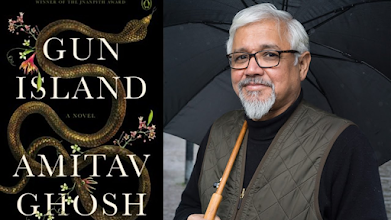
Amitav Ghosh is an Indian-born, internationally acclaimed author and one of the most prominent voices in English-language fiction. He is best known for his novels, which often explore themes related to history, migration, and globalization. Ghosh's writing is characterized by its rich and evocative language, as well as its deep engagement with the cultural and political issues of our time.
"Gun Island" is a novel by Amitav Ghosh, published in 2019. The book follows the journey of Deen Datta, a rare-book dealer from Kolkata, as he travels to Venice in search of answers about a mysterious legend surrounding the goddess of snakes and firearms. Along the way, Deen encounters a diverse cast of characters who challenge his beliefs and force him to confront the impact of climate change on our world. With its rich, atmospheric writing and its powerful exploration of themes related to environmentalism, "Gun Island" is a must-read for fans of Ghosh's work and for anyone interested in the intersection of fiction and environmental activism.
How does Amitav Ghosh use the myth of Manasa Devi to create the myth of a Gun Merchant ('Bonduki Sadagar') and initiate discussion on the issue of Climate Change and Migration/Refugee crisis / Human Trafficking?
In Amitav Ghosh's novel, Gun Island, the character of Manasa Devi is first introduced through a conversation between Kanai Dutt and Deen, in which the myth of Chand Saudagar is discussed. This myth, crafted by Ghosh himself, serves as a central thread that weaves the novel's themes together. Through this myth, Ghosh draws parallels between the Little Ice Age and our present-day reality, where natural disasters such as droughts, floods, cyclones, wildfires, and epidemics have become a ubiquitous part of life. The novel posits that these unprecedented climatic conditions are the primary cause of these disasters.

Despite being intrigued by the myth of the Gun Merchant after hearing it from Kanai, Deen initially sees it as nothing more than a story, not worth his further consideration. However, while attending a conference in Los Angeles, he is moved by the speeches of a young speaker and Cinta, who suggest that there may be some truth to the myth after all. Cinta inspires Deen to visit Venice and follow the route of the Gun Merchant, in order to uncover the truth behind the myth. Through his journey, Deen unravels the suspenseful and amusing names of places, as he strives to discover whether the myth of the Gun Merchant holds any truth or not.
The theme of migration is a prevalent one in Gun Island, with various characters throughout the book having migrated for a variety of reasons. Some characters have fled due to natural calamities, while others have been forced to move as a result of communal violence or poverty. Some have migrated in search of a better life, while others have been driven by socioeconomic conditions.
Through his conversation with Horen Naskar, while visiting the shrine of the Gun Merchant, Deen is prompted to consider the reasons for the Gun Merchant's migration from Sundarbans. It becomes clear that the Gun Merchant may have been driven to leave his home by one of these very same factors that have caused other characters to migrate. The rich tapestry of characters and their motivations in Gun Island provides a nuanced exploration of the complexities of migration and underscores the idea that there is no single reason why people choose to leave their homes and start anew elsewhere.
“the disaster that had forced the Gun Merchant to flee his
homeland: a drought so terrible that the streams, rivers
and ponds had dried up and the stench of rotting
fish and dead livestock had hung heavy in the air.”
The central characters are academics who have dedicated their careers to studying various forms of animal life. For instance, Piyali Roy is a researcher who has focused her efforts on the fascinating world of dolphins, while Lisa has studied the impact of climate change on bark beetles. Larry, another character, has dedicated himself to the study of spiders. Through the research of these characters, the reader is given an in-depth look into the lives of these creatures and how they are being affected by the changing climate. The novel also highlights the presence of snakes, spiders, and shipworms in Venice, offering a unique perspective on how these animals are adapting to their changing environment. These examples serve as poignant reminders of the far-reaching effects of climate change, and the importance of continued research and exploration.
“‘Larry says this is the first time he’s heard of one turning up so far north. But he’s not surprised either. He says the brown recluse has been increasing its range very quickly because it’s getting so much hotter in Europe. And there’s a related species, the Mediterranean recluse, that’s already widespread across Italy.” It gives us the effect of climate change on animals and their migration into the world."
At the conclusion of the novel, Ship, Lucania embarks on a mission to protect the refugees aboard the blue boat. Unfortunately, this mission is met with opposition from right-wingers, much like the attack experienced by the Gun Merchant during his time as a slave of pirates. This parallel serves to reinforce the themes of the novel and draws connections between the past and the present. Additionally, while everyone was aboard the Lucania, a sudden change in the atmosphere occurred, a phenomenon is known as bioluminescence. This event, with its mythical connotations, seems to suggest the presence of Manasa Devi herself. This moment serves to underscore the importance of the myth and its significance within the larger context of the novel.
The novel Gun Island uses the myth of the Gun Merchant to discuss important issues of Climate Change, Migration, and Human Trafficking. The events and characters in the book serve to explore these topics, inviting readers to reflect on the impact of their actions on the world and others. The novel raises important questions and provides insightful perspectives on these issues. this brief answer provides an overview of the themes explored in the novel Gun Island, and how they are linked to the myth of the Gun Merchant. I hope that this information will prove to be useful to you as you delve into the world of the novel and its thought-provoking themes.
What are your views on the use of myth and history in the novel 'Gun Island' to draw the attention of the reader toward contemporary issues like climate change and migration?

By incorporating elements of the past and using a mythical narrative, the author creates a compelling story that connects with the reader's emotions and imagination, making the themes of the novel more impactful and memorable. Myths and legends often have a timeless quality and universal appeal, making them a powerful tool for storytelling. By incorporating elements of myth into the narrative, the author creates a memorable and emotionally engaging story that draws the reader in and encourages them to reflect on the themes of the novel. The use of history in Gun Island provides a backdrop for the contemporary issues being explored, giving the reader a deeper understanding of the causes and consequences of these challenges. This helps to make the themes of the novel more relevant and meaningful and strengthens the connection between the reader and the narrative.
The East is a tapestry of myths and legends, woven into the fabric of its people's beliefs. The inhabitants of this region have a deep and abiding connection to the divine and the mythical, with their imaginations captured by tales of gods and heroes. For them, these stories hold immense meaning and evoke powerful emotions.
When presented with contemporary issues in a straightforward, non-fictional manner, the people of the East may struggle to fully comprehend their significance. However, by wrapping these issues in the cloak of myth, the material becomes more captivating, drawing readers in and offering a fresh and insightful perspective. The infusion of myth with reality provides a deeper understanding of the subject matter and a more engaging read.
For those who seek a rational understanding of the world, a historical foundation provides a solid basis for comprehension. By examining the past and its events, we can gain a greater understanding of the present and make informed decisions for the future. The combination of myth and history is a powerful tool for exploring the complexities of our world, providing both depth and context to contemporary issues.
Oh, Gun Island, a tale so rich and bold,
Of myths and legends, old and untold,
Through the pages of Amitav Ghosh,
We embark on a journey through time, full of twists and rosh.
Deen Datta, the seeker of truth,
Follows the whispers of an ancient proof,
To the city of water and love,
Where a goddess of snakes and guns, reigns from above.
Through the maze of canals,
We see the world's demise and its nightmarish thralls,
As greed and folly ravage the land,
Nature's wrath grows, a force to withstand.
Yet in Deen, we find a glimmer of hope,
As he learns the value of ancient lore,
And the power of knowledge to make right,
The wrongs of the past, and restore the light.
Oh Gun Island, your story we sing,
Of lessons learned and wisdom to bring,
For a world in peril, a call to action,
A reminder of our humanity's fraction.
Thanks for visiting. This is a brief blog, I hope it wi be helpful.
[words- 1582
Images- 3
Videos- 2]