Sunday, 10 July 2022

Wide Sargasso Sea

Hello! This blog is in response to a blog task assigned by Yesha Bhatt based on the novel Wide Sargasso Sea by Jean Rhys. In this blog I am applying postcolonial theory to Jean Rhys’ novel Wide Sargasso Sea.

A Postcolonial Reading of
Wide Sargasso Sea by Jean Rhys


About the Author:
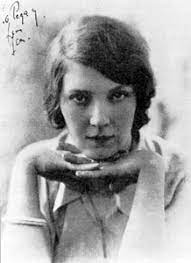

Jean Rhys, her birth name was Ella Gwendolyn Rees Williams (1890- 1979). She was a British novelist or is also known as Dominican-British author, she was born and brought up in Caribbean island of Dominica. From the age of 16, she shifted to England and took her education there. Rhys's father, William Rees Williams, was a Welsh doctor and her mother, Minna Williams, née Lockhart, a third-generation Dominican Creole of Scots ancestry.


About the Novel:


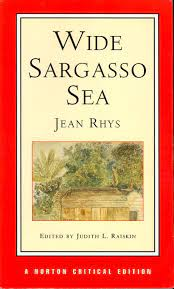
Jean Rhys is best known for her Novel Wide Sargasso Sea, Prequel of Charlotte Bronte’s Jane Eyre. The novel serves Postcolonial and feminist perspective to Jane Eyre novel. Wide Sargasso Sea as a flawless postcolonial parody of Charlotte Bronte’s Jane Eyre. The novel tells a story of Antoinette Cosway, a Creole, Bronte’s devilish ‘madwoman in the attic'. The plot is initially set in Colibri, Jamaica which moves to Dominica and England. It opens while after the abolishment of slavery Act 1833. The Novel presents the complete life of Antoinette who was caught in patriarchal society in which she couldn't fully belong to Europe or to Jamaica.

This novel is divided into three parts and each has a different narrator, it is narrated in a first person point-of-view. It is patch work of various narrators, told directly by Antoinette (part 1), Christophine and his unnamed husband (Mr. Rochester in reference to Bronte’s Jane Eyre) (part 2) and Grace Poole (part 3).


Characters-
  • Alexander Cosway (husband)
  • Anette Cosway (wife)
  • Antoinette Cosway (daughter)
  • Pierre Cosway (insane son)
  • Sandi Cosway (Illegitimate son of Alexander)
  • Daniel Cosway (Illegitimate son of Alexander)

  • Mr. Mason (Anette’s 2nd Husband)
  • Richard mason (son)
  • Aunt Cora (Antoinette’s guardian)
  • Edward Rochester (Antoinette’s husband- unnamed in wide Sargasso sea, named based on Wide Sargasso Sea)
  • Christophine (Annette's servant and Antoinette's nurse)

Introduction to Postcolonial Studies/ Postcolonialism

As per the glossary of literary terms by M.H. Abrams,
The critical analysis of the history, culture, literature, and modes of discourse that are specific to the former colonies of England, Spain, France, and other European imperial powers. These studies have focused especially on the Third World countries in Africa, Asia, the Caribbean islands, and South America.

Postcolonial studies sometimes encompass aspects of British literature in the eighteenth and nineteenth centuries, viewed through a perspective that reveals the extent to which the social and economic life represented in the literature was tacitly underwritten by colonial exploitation. Post- colonialism also relates to some issues as orientalism, atheism, national identity, the subaltern and hybridity. It includes the writing of those who try to defy the colonial writers, it is called writing back also in a form of resistance to the colonial texts.

Being a student when we read phrase post- colonial studies we generalize the literature after being decolonized which is not 100% incorrect but it is to be remembered that postcolonial literature/ studies is a way of reading, it can also be literature of before independence. It is not date/ period based. It is a critical analysis.

The aim or goal of post- colonial criticism is to deconstruct imperialist perspective, to contrast ideology, to question the system of values that support imperialism which is dominant in the West. It claims to rewrite history and give subjectivity to minor voices. It is also important to note that the West has not Colonized countries by armies but culturally, mentally so it's very difficult to decolonize the colonized countries.


Wide Sargasso Sea as a Post- colonial novel

The postcolonial writers in literature started to write for a specific purpose, using the language of the mainstream power and aiming at the same target. Wide Sargasso sea also serves the same purpose of constituting a cultural self for the formerly suppressed voice of the Creole people. Jean Rhys in the Wide Sargasso sea tries to bring out the voice of Charlotte Bronte’s Jane Eyre’s marginalized characters, the voice of creole people. Rhys uses the theme, characters and the plotline of Jane Eyre but deliberately gives the voice to silenced characters which are ‘othered’ in the Jane Eyre.

Bronte's madwoman in the Attic- Bertha mason. From the Creole Origin, Mr. Rochester’s first wife who has been silenced in Jane Eyre, introduced to the reader as a horrific dark image has become a subject as Antoinette Cosway in Rhys wide Sargasso sea. Wide Sargasso sea is a pathetic love story of Créole woman who goes crazy due to unrequited love in her marriage to an Englishman.

The madness of Bertha (Antoinette) is totally related to the triple oppression that she suffers as a woman from the patriarchy and as a Creole woman in the West Indies, the burden that places her just in-between white English society and newly emancipated slaves. She has been always tortures for not being of a complete white English society and was subjugated by the newly freed slaves. In Jane Eyre the readers get an empathetic relation with Mr. Rochester instead everyone favors the pitiful and misfortune fate of Creole, Antoinette.


Rhys has tried to leave the space for the views of the silenced characters and instead of first person narration she put forth the multiple narrations from the different characters for telling the stories from the various point of view so the readers can understand the previously marginalized characters in a newly centralized character. But according to the essay by Gayathri Spivak “The Three Women’s Texts and a Critique of Imperialism”, she states that Rhys in the novel subconsciously downgraded the native inhabitants and have portrayed them to sexual abuse, unreliable, performing obeah and abusing the main characters. In the novel it is dark and just demonstrated as a dark, abusive and minor character.


The West always creates a binary opposition with those who are non- westerners in order to identify their own identity as pure good and ideal. That's also the reason most of the West literature depict the qualities like cruelty, savageness, inferiority, laziness in non- westerners while all the ideal qualities like goodness, reason, hard work are demonstrated in western society. This is all that is mentioned in ‘Orientalism’ by Edward Said. This is pretty apparent in Wide Sargasso sea also through the character of Mr. Rochester, an Englishman who has been discarded from his heritage and for financial stability he married Antoinette. He was initially fascinated by Antoinette till Amelia and his brother-in-law made him aware about Antoinette from bad blood. And after then his orientalist attitude was directed not only towards Antoinette but also to the native Caribbean people.

“I like the drink, but I hate the language”

This statement stated that he surely likes the land, its richness, the plantations, the natural beauty, and the exoticism of nature, which cannot be attained in his homeland, England. The the west Indian culture is the issue disturbing him, culture refers to the native language, their customs and traditions, their native obeah conventions and all the other related issues, which do not smell like the Europeans, or suit a set of Eurocentric universal values. The another imperialistic attitude of Mr. Rochester is calling Antoinette a Bertha because it sounds more English than Antoinette. Throughout the story he keeps on commenting on Antoinette’s own way of dressing and styling and keeps on proposing western alternatives.

As Frantz Fanon puts forward in The Wretched of the Earth, throughout history, the colonizing power of Europe, devalued the histories of the colonized nations, alleging those histories as ‘pre- civilized voids’ and from then on the history and culture of the related nation was marked by the arrival of the European colonizers through their imposed educational systems.

In the book, Culture’s in Between, Bhabha recounts hybrid cultures, which is the social status of the Creole which is the highly central matter for the novel. Creole was the in-between identity which suffered more because of the inferior black community and superior white community. This aspect of Antoinette’s hybrid culture pushes her to suffer from all the traumas of in-betweenness. Antoinette having an unhealthy marriage with Mr. Rochester and pursuit of relief from Cristophine and her hateful relation with Amelia. Even her mother Annette and Antoinette both are fated in search of a white husband. Also the patriarchal Subjugation induces double othering.


The third oppression is her own search of self- identity which leads her to nothing else than madness. In relation to this one can consider Spivak’s famous essay Can the Subaltern Speak? And She believes that as long as the West denies judging the subaltern or the postcolonial subjects on their own authentic values, and instead, favors a system of judgment, which is Eurocentric universal, the subaltern cannot speak.


But there is sure a way out for Subaltern to come out of all this world power structure that is dream and madness. As Antoinette revolts against all those subjugating factors in her recurring dreams in which she sets fire to her British prison-house. May be one day all women will act out their dreams in search of self identity just as Antoinette in Wide Sargasso sea.


I hope my blog is helpful. Thanks for visiting.

Wednesday, 6 July 2022

Cultural Studies & Power Dynamics, Media Studies, And True Education

This blog is in response to the assigned task on Cultural Studies, allotted by Dr. Dilip Barad. In this blog I am talking about power and media in Cultural studies and what is truly educated.

Cultural Studies


Understanding of Power in Cultural Studies
It is very difficult to define cultural studies, Because the word "culture" itself is so difficult to pin down. But it can be defined as ‘Cultural studies is an interdisciplinary field that examines the political dynamics of contemporary culture (including popular culture) and its historical foundations.’ Researchers generally investigate the relations of existing cultural practices with the wide system of power associated with it. These include ideology, class structures, national formations, ethnicity, sexual orientation, gender, and generation. Cultural studies seeks to understand how meaning is generated, disseminated, contested, bound up with systems or power and control and produced from the social, political and economic spheres within a particular social formation or conjuncture.

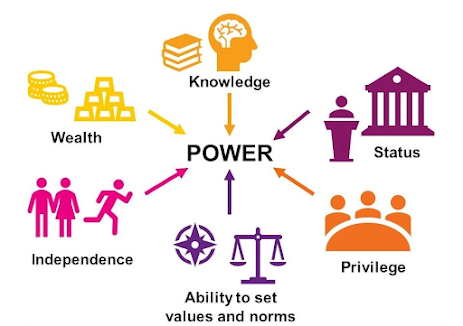
Michel Foucault came up with the idea ‘power is a whole complex of forces; it is that which produces what happens’. The question arises what is power? Power is an ability or capacity to do something or act in a particular way. In other words, power is an ability to make others do what one wishes to. How does one attain power? There are 6 sources of power
  • Physical force
  • Wealth
  • State government
  • Social norms
  • Ideas
  • Numbers

Foucault has challenged the idea that there are several events when the power flourished in the people or group of people and argued about power being everywhere. Instead it is a kind of ‘metapower’ or ‘regime of truth’ that pervades society, and which is in constant flux and negotiation. Use of the term ‘power/knowledge’ signifies that power is constituted through accepted forms of knowledge, scientific understanding and ‘truth’. In Foucault's theories power is granted through knowledge and therefore constructs truth. Foucault’s approach to power is that it transcends politics and sees power as an everyday, socialized and embodied phenomenon

One of the Four goals of Cultural Studies is Second, cultural studies is politically engaged. It is Cultural critics are oppositional to the power structure of society at large, they try to criticize the power.

We sometimes fail to recognize that we are constantly under power. power is constantly exercised by means of surveillance. An idea, power works for social conformity and discipline is a bubble. The mechanism of surveillance in prison, school and mental hospitals train the people in the name of discipline in order to subdue everyone. One constantly feels it to be for their betterment but it's a power of administration that doesn't let an individual to exercise their power and to be free. Surveillance as tool of power can be easily seen in George Orwell's Novel 1984. Language, unity, sharing ideas is power and all this is banned in Oceania ( fictional setting of 1984).

It can be argued that schools and asylums are the areas where control is must of students and patients. But in a civic arena we can find many examples of being controlled by the power. They control our mind in a way that we don't question and are always mesmerized by their ideas. The examples are 'Thali Bajao' and 'Diya Jalao' idea of program in order thanks to first line Corona warriors. Practically thinking it's not a way of thanking it was just to distract us from the real happenings. No-one stopped him, opposed or questioned Because it's his power on us.


Symbolically, power can be read when one in authority wants to have his own exhibition; making of statues, spreading their own photographs etc.. All this becomes helpful to study the culture of the society also. What can one do to stand against power? Read and write. It helps once to be powerful in public. Power lies with authority but it lies more in mass, population (it is also the source of power). Read the power, understand it, find the reason behind every happening and write it. Foucault also recognized that power is not just negative but it can also be a productive and positive force in society.

His kind of power is neither force nor capacity nor domination nor authority. Power is impersonal because it is neither possessed nor exerted by individuals, groups, or institutions. Power is the sum total of influences that actions have on other actions. Foucauldian power is blind and purposeless.


Why is Media Studies so important in our digital culture?
Media study is a broad field of studies that deals with the history, content and impact of various collective communication methods and tools. The work of the media is to provide their audiences with facts and keep them better informed. Its work is to provide criticism and debate to ensure the information is tested.

But in the contemporary period we see the media is not working for the audience but for the one who is in power. They believe in pschofancy. Watching various new channels we realize that some channels are trying to hide the real news. E.g. in India, when the farmers were protesting the news channels were diverting the minds by showing Aryan Khan’s drug case. While the real news to be shown were farmers' protests, it was against the power. Power also has the hand on news channels.

Work of media and advertisements is to sell the product but if we see otherwise, channels are owned by the business networks they don't sell [product we are the product for them through channels. It becomes necessary to know who is in power? Who owns the channel? And is the new channel biased towards power or are they true to their journalism?


Here in the above video we can clearly see what journalism is and what supporting power. Female journalists lean towards power while the male journalist is counter questioning and trying to go against power.


Who can be considered as a 'Truly Educated Person'?
The basic definition of Education is The process of receiving or giving systematic instruction, especially at a school or university. It is an act of both teaching and receiving knowledge. But the question arises with the phrase ‘truly educated’. Does a truly educated person mean one who scores highest? NO.

According to Noam Chomsky video, Truly educated means to be in a position to inquire and create on the basis of resources available, which can be appreciated and comprehended. A truly educated person is one who knows where to look, How to look, What to look, how to formulate serious questions. Truly educated has an ability to create constructively, independently without any external force/ control.

“It is not important what you cover in class but important is what you discover in class.”

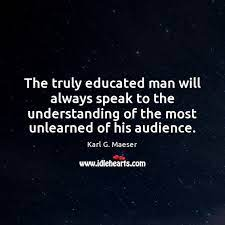
Being truly educated means developing the knowledge and skill to look beyond the standard meaning to find the hidden complexity. Being educated doesn't mean certificate holders, diplomas holders, degree holders, and Doctorates. It is an aspect of growing thinking ability, practicality and power to be able to see all the aspects of a situation.


We see the literacy rate is counted as if one can write his/ her name then he/ she is literate, which is not an ample requirement of being educated. Being educated is an ability to read and understand absence, which is not told. Reading and writing are the tools to be educated. Knowing a language is not being educated. Real education is no amount of information or controversies one puts in the mind, it's about learning and understanding from the controversies. Learning about controversies is an appropriate way for students to learn about values. It provides a wide view of the situation and lets them read, have self- education about the right and wrong deed.


In short I would like to say, a truly educated person is one who develops not in class but outside the class also. he/ she has an ability to understand the surrounding, has multiple ways of looking at problems and has multiple solutions. He/ she might not have gained the marks but have an ability to fight in every real life fight. A truly educated person can read what is not even said, one might not fall in the silly traps, policies by any authority. The one who uses his practical knowledge is real life as well tries to help others share his knowledge. Other than bookish knowledge can be considered to be truly educated.


I hope you liked my blog and it was useful to you. I have shared my views on the assigned questions.

Thanks for visiting.

Saturday, 25 June 2022

Digital Narrative : Sultana's Dream

SUNDAY READING
Sultana's Dream and Sultana's Reality

This blog is a response to a reading task given by Yesha Bhatt Ma'am. On the very first day of MA semester 3 class Ma'am introduced us to a ‘Digital Narrative’ in the class.


Women writers were not so celebrated in Literature. Reading female writers gives us insight to their life, we can read their situations and way of living in a specific period. ‘Sultana's Dream’ is a short story by Rokeya Sakhawat Hossain (1880 - 1932) which was originally published in The Indian Ladies' Magazine, Madras, 1905, in English.

Rokeya Hossain was a prominent Bengali feminist thinker, writer, educator and political activist from British India (present day Bangladesh). She is widely regarded as a pioneer of women's liberation in South Asia.

She advocated for men and women to be treated equally as rational beings, noting that the lack of education for women was responsible for their inferior economic position. Her major works include:

1. Matichur (A String of Sweet Pearls, 1904 and 1922), a collection of essays in two volumes expressing her feminist thoughts;
2. Sultana’s Dream (1908), a feminist science fiction novella set in Ladyland ruled by women; 3. Padmarag ("Essence of the Lotus", 1924) depicting the difficulties faced by Bengali wives;
4. Oborodh Basini (The Confined Women, 1931), a spirited attack on the extreme forms of purdah that endangered women's lives and self-image.


Afrah Shafiq is a multi/new media artist based out of Goa, India. Using the process of research as an artistic playground, Afrah intertwines archival findings, history, memory, folklore and fantasy to create a speculative world born of remixed culture. Afrah Shafiq has retold the story of Sultana from Rokeya Hossain’s story ‘Sultana’s Dream’ and presented her imaginative creative work which tries brings out the real situation which might be faced by Sultana or Rokeya Hossain in her life with the name ‘Sultana’s Reality’. ‘Sultana’s Reality’ is an interactive multimedia story that explores the relationship between women and the colonial education movement in India using archival imagery, women’s writing and history.


You can visit her Digital Narrative ‘Sultana’s Reality’- https://www.entersultanasreality.com/


Below I am answering the assigned question.

Concept of Andar mahal – the universe of Women

Beginning with the meaning of what is Andar mahal; Andar mahal or inner chambers is also known as Zenana, it is a part of a house for the seclusion of Women. The very first chapter of ‘Sultana’s Reality' talks about Andar mahal ‘an inner world of their own’.


The concept of Andar mahal was at its peak in the earlier part of the nineteenth century. It was a completely secluded place for women, the only contact with the outside world was working women who did household jobs in Andar mahal and had freedom to roam the world. It was the place from where women cannot step out and it was only the place where men can not step- in. in a small bonded place but women were all free to do what they wished. They used to live their best life singing, dancing, jokes, partying etc.

While reading a short story ‘Sultana’s Dream’ we realize that she also might be caged in an Andar mahal and it is giving her an imagination of the ladyland where women were free and men were caged in Mardana instead of Zenana. One can interpret the craving of women in Andar mahal to be free, roam unveiled.

Andar mahal can be considered to be a universe of women because it was the only place where they were safe from the men. In a compact, caged place, they were free to dance, sing, enjoy, writing poetry, gossip about husbands and making jokes on them.


Observation of females and their connection with books.
(Colonial education movement)

Sultana’s Reality explores the inner lives of the first generation of women to be educated in pre-independent India. Following an Alice in Wonderland style adventure the interactive multimedia installation brings to life accounts of different women.


On 14th August 1856. Koyla Schumer Bose gave a speech on ‘Education of Hindu Females’ in Calcutta. He appealed to the wealthiest people of Bengal to rally around for female education. He was the one to give a famous line “ She must be re-organized, refined, recast, regenerated.” In the second chapter of ‘Sultana’s Reality’ I Got my Eye on You’ we get an idea about why female education began. It seems like before this period no men paid attention to what happened inside the Andar mahal. Later, men felt that women were loose and men were embarrassed. So they decided to give education and hand books to them but not for their development and growing, for cultivating women’s true nature, their stri- bhava. Good books to improve their religious sense, being suitable for domestic work, to be more amiable and high principled, more faithful and devoted to men’s services, to have a modeled English women; men believed the only duty/ dharma of women is to serve their husband. The books ‘Stri- Dharma Padhti’ and ‘Bahishti Zewar’ were the two famous publications of the time.

The third chapter ‘Straighten Things Out’ clearly states that men wanted to bring women on line through education. Even in this system some women were happily accepting books but some were annoyed by it. Some would rather nap than read, Some were stoned in the streets for wearing shoes and carrying umbrellas, Some read forbidden texts in secret at night, Some read and then challenged the very ideas they read and some went on to write books - telling their story in their own words. The books they wrote reveal a universe of women’s lives as they were actually lived – outside the confines of bad and good behavior. The women in the books and the books in the women were full of messiness, intimacy, cynicism, humor, anger, dreams, beauty and love - and all of it together makes up their history. Men wanted a modeled woman for the show piece but for some getting books worked as a boon.

But later for all the women the savior women came and talked for women and their growth.


Compare both narratives of Sultana's Dream and Reality.

Sultan's Dream is the story of the utopian world, while Sultana's reality is the prequel of Sultana’s Dream. Sultana’s Dream is a story of dreamland, it has a wonderful feminist point of view of a ladyland. Sultana’s Dream is based on an imagined Ladyland where women Can access public spaces unrestricted by social or religious customs. A feminist utopia imagines a world without gender binaries and gender discrimination. women seem to have access to public spaces without being restricted by social or religious customs in Sultana’s Dream which is an unrealistic idea. But it gives us a feel for women’s urge to be free, live life like men. The story reveals various emotions felt by women facing patriarchal oppression. In the story, women are shown as more rational and scientific than men, wherein Sara (the protagonist’s imaginary friend) is a scientific researcher who considers women as superior to men. Women and men work in a completely opposite manner than sultana’s world. While the Sultana’s reality gives a view of Sultana’s world and their suffering. Complete opposite concepts are seen in both the stories like of Mardana and Zenana, Women ruling and growing faster in Dream and Reality. The story of Sultana’s Dream also gives a hope that only in a world of women, women ruling is far more better, organized, refined, regenerated, progressive than ruled by men.


Sultana’s Reality is told through animated video, graphics, gifs, comics, collages and other digital art forms made by collating, re-mixing, re-interpreting and re-imagining traditional visual imaginations of the female form. It tries to explore the multiplicity of women’s history and also image making – the ways in which it is told and remembered. Sultana’s Reality is perhaps an exercise in questioning history. Not the history of the image, but a history that is constructed with the image.

I hope my blog was useful to you. Thanks for visiting.

Friday, 3 June 2022

Relevance of ‘The Plague’ in contemporary Covid-19 crisis- Paper Presentation

 Relevance of ‘The Plague’ in Contemporary Covid-19 crisis


English Dept. of MK Bhavnagar university organised two days webinar in this lock-down period.The topic of webinar was 'Literature and epidemic'. This webinar gave a great chance to hear the views of expert speakers and to grow our thoughts and ideas on this particular topic. Some topics were so unique that we would have never thought about it. I presented a paper for the first time, My topic for this presentation was 'Relevance of 'The Plague' in contemporary covid-19 crisis'. I took reference from the novel 'The Plague' written by Albert Camus which was about the plague condition in Oran in 1940. It is awful that literature has already suggested epidemics and steps to prevent it but yet human beings fail to learn historical lesson from the historicity of the literature. This Seminar was broadcasted live of Prof. Dr. Dilip Barad's Facebook page and you tube Channel. 


This is my Presentation I presented in the seminar


This is video recording of my presentation.


Thank you for visiting I hope my this presentation and video recording are useful to you.


Thursday, 2 June 2022

ELT and Mobile Technology- Paper Presentation

ELT and Mobile Technology

One day UGC National Seminar was organised by Gujarat University on Exploring ELT: innovative strategies in Pedagogy. I presented on the theme 'ELT and Mobile Technology'. 


The first plenary session was by Atanu Bhattacharya sir. He discussed 'Emerging Trends in ELT Research and Pedagogy', dividing in four parts Corpus Linguistics, History of English Language Education, Multi-modal analysis and Teacher research. Personally, It was a difficult session to understand. The second plenary  session was by Paresh Joshi  sir (Veer Narmad University). He discussed 'Social Media and ELT'. It was a really useful and enriching session for us.


After Corona Pandemic, the education world is having a drastic change and it has started relying greatly on technology. In this presentation i have dealt that how a regularly used communication app can be considerably used for education.


This is my paper presentation Certificate.

Thank you For visit. I hope it will be helpful to you. 

Wednesday, 1 June 2022

GIAN course- Forensic Linguistics

FORENSIC LINGUISTICS

Recently I attended 'GLOBAL RELEVANCE OF FORENSIC LINGUISTICS a Short Term GIAN Course' hosted by Department of Linguistics, Aligarh Muslim University, Aligarh' in a virtual mode, from 24/05/2022 to 28/05/2022. The program was coordinated by Dr. Noman Tahir. Lectures were on various topic by Prof. Tej K. Bhatia, Prof . M.J. Warsi, Dr. Sweta Sinha, Dr. Abhinav K. Mishra and Dr. Grace Sunnetha. It was really an enlightening course. This blog deals with my course learning outcome.


Forensic Language can be known as legal language or the language of the law. It is a method and insights to the forensic context of law, language, crime, investigation, trial and judicial procedure. According to National Geographic, Forensic Science is emerging as a new science of solving crime and the vibrant field. Looking in a broader way, Forensic Science bridges between forensic science and psychiatrist.

Studying human language scientifically is called linguistics. When applied to a particular social setting, in this case the legal forum, it is termed as Forensic Linguistics. Forensic linguistics emerged in two paths: one, Miranda Vs Arizona case (1966) in US. And in the UK when Svartvik proved that language itself can be forensic evidence. Before the emergence of FL, the major focus of argument was only police statements. Suspects were supposed to dictate their statements which were never interrupted or interrogated by police.

Finally in 1988 FL came into limelight, when Germany’s Federal Criminal Police Office (Bundeskriminalamt) organized a two- day FL conference. IT pioneer Phonetic Acoustic method of speaker identification. Later various FL conferences were organized like in France (1991), Britain (1992) Australia (1995) and US (1997). Later in !990s FL began as a teaching stream but still it was not as formal schooling.

The discipline of FL does consistently improve its methodology in investigating information. There is heavy emphasis on people's ability to recall information. While today it faces problems because of burgeoning and frequently changing cyber fields.

Forensic linguistics is considered to be a game changer solution. Many times it happens that while a case study there is complete absence of physical evidence like DNA, hair, blood sample, saliva etc. in such a situation use of FL is activated. FL evidences human lives, evidences like manifestos, ransom notes, Letters and in the digital world mails, messages etc. are preferred. Example for the use of digital evidence is the Michelle Carter case. Also the case of El Loco was evidenced by FL, in this case there was presence of physical evidence but were distorted. It brings unreliability of physical evidence. Also to have physical evidence from criminals is a difficult task, it is not volunteered by criminals while in case of FL it is completely opposite. In FL working of the human mind works as a catalyst.

In FL language is prominent, and it is very much necessary to know the normal, natural and system of rules of language and sentences. There are languages like Urdu, Hindi which use the object before the verb while in English there is the object after the verb. Use of FL helps to profile suspects without seeing it through its accents, anatomy of language, speaking skills etc.

Forensic Linguistics do threat assessment, they decode identities, look at deceptions, trademark infringement, 911 emergency, secret codes/ linguistics cryptography are the situations or cases they look after. FL is not about reading minds.

The Major case, Unabomber, which is a pioneer of FL. It is the most expensive case spanning 17 -18 years. There are various methods used by Forensic Linguistics and in this case the FBI used Document analysis method. In this case the FBI compared 14 Docs of Unabomber and 178 Docs by his family. Unabomber’s own handwriting tracked him down to his arrest. Unabomber was compassionate in his childhood but his life experience, loneliness and isolations brought an apocalyptic vision. Also in Stacy Caster’s case Documentation analysis method was helpful to understand the deception By Stacy after murdering her own step daughter.

Forensic Linguistics is highly dependent on language, voice, words, written data etc. It is necessary to detect the behavior of a suspect from their voice. There are two types of stress in voice in FL investigation. Psychological stress, it is what reflects the sort of psychological state of human beings. To analyze an individual's behavior under stress it is necessary to know how it behaves when he/ she is not stressed. Another is linguistic stress. The challenges faced in finding out the stress is that it is often difficult to obtain exact recorded speech when the speaker is actually stressed and even if one gets a sample it's difficult to gauge the exact intensity of psychological stress.

The speech correlates stress through changing voice intensity. Our fundamental frequency is F0 and it is raised when emotions like fear or anger or stress are felt. E.g. Anger is reflected by rapid speaking. Linguistics is an indicator of false confessions also. Deceptive speech might have suppressed/ elaborated subjectives, repetitive patterns in recalling details could be false confession. The influence of anxiety and grammatical categories are the markers of lying. But it is very much necessary to know, understand and read the voice of suspects, to know their mental state. The reading says that a depressed person uses the most negative words. It's necessary to look at the mental state of the suspect and read his voice to get the truth.

Deception means the message distortion or omission of information. An intended to foster an understanding in another person which the deceiver considers to be false is deception. Linguistic tools for deception include two types of interviews- accusatory interview and investigative interview. Accusatory interview includes answer in yes/no condition and investigative interview has open ended questions. Person can deceive in conditions like stress, cognitive load, and emotional arousal. In deceptive behavior, fundamental frequency increases, intensity increases, speak rate decreases, pause increases, voice has creakiness and breathiness. When a person is in deceptive behavior, he tries to be normal which results in hiccups in between the speech.

Person has an unconscious and conscious mind. Psycholinguistics of forensic linguistics states that the psychology of a person can be known by the way s/he writes. The frequent use of punctuation marks, number of words in a sentence, conscious and unconscious language used can help to know the person’s mind. 911 Emergency calls have a small set of data which helps to know what’s going on in a person's mind. Questions asked by the caller are of- what is called about, theme of call, and how the call was made. If a person on call talks about saving himself or herself, it means s/he is guilty. And if the call is around the victim rather than themselves, it means s/he is innocent. There is variation in language from segment to sentence, speech features of individuals vary from situation to situation variations are systematic and non-systematic. There is no such thing as free or random variations. Systematic variations talk about sociolect form of language whereas unsystematic variation talks about idiolect variation.

The example of racial profiling is case of Clifford v. Kentucky. Social categories profiling includes the case of Stacy Castor. Multilingual mind includes language activation, language matching, language switching, language processing, and language comprehension.

Linguistic stylometric in authorship is a field where we can do profiling of a person based on styles used by that person. Authorship analysis includes identification, verification and profiling of authors. Stylometric (styles + measurements) analysis is called “linguistic fingerprints”. These styles are a reflection of habits. Text can be written and digital. In digital text, factors analyzed are bold, italic, use of abbreviations, spelling, number and symbols. Features of stylometric are line quality, word and letter spacing, size of letters, connecting strokes, slant in letter etc. Factors affecting handwriting are mood, age, time, instrument, illness, drugs and drink. Case of Mahant Narendra Giri is best example where linguist has tried to prove a point that it can be murder. The suicide note was of four pages which is against the fact that a person in stress can not write more than 300-400 words. The way suicide note was written was not in a way that an illiterate person writes.

Not only the style of writing but also the words written can help in victim and criminal profiling. Violent words written in a letter helped to know the intention of murderer in mass murder cases of Seung Hui Cho and Jiverly Wong. Manifests of both the murderer on analysis told about the sentiments of that persons. Cho was very negative and Wong was positive to some extent. Some more cases of master receptors are Sheila Eddy and Ted Bundy. Shiela with her another friend killed her third friend. And on asking the reason she said, “we didn't like her”.

Ted Bundy had kidnapped and killed more than 30 girls.

Forensics phonetics is identifying criminals based on speech and voice analysis. Every person has a different voice based on pitch, vibrations, and vocal folds. Anatomical factors, physiological factors and environmental factors play a major role for uniqueness of voice. Tape authentication done in JNU video clips, signal analysis in the case of gunshots, speech decoding by use of different filters and auditory illusion, speaker profiling and identification are the works that forensic phonetics deals with. Monolingual courts of the USA have 4 varieties- formal, standard English, colloquial English, and subcultural variations.

Thus, forensic linguistics is a wide field with various applications. It needs lots and lots of data and time for solving a case. In Indian courts also, the evidence is not given priority as in the USA and UK. Nowadays, AI is used for investigation which can give us results faster and better.


Thanks for visiting.

Wednesday, 18 May 2022

Presentation 10: Paper no.: 110

 VICTORIANISM VS MODERNISM


This is my presentation on paper no.: 110 History of English Literature


This is my presentation video on paper no.: 110 History of English Literature


Thank you for visiting I hope my this presentation and video recording are useful to you.

My Learnings from the National Workshop on Academic Writing (2026)

The National Workshop on Academic Writing  I recently had the opportunity to participate in the National Workshop on Academic Writing (2026)...