Interpreting Live Burial by Wole Soyinka
Name: Jheel Barad
Roll No.: 12
Enrollment No.: 4069206420210003
Paper no: 206
Paper code: 22413
Paper name: African Literature
Sem.: 4 (Batch 2021- 2023)
Submitted to: Smt S.B. Gardi Department of English, M.K. Bhavnagar University
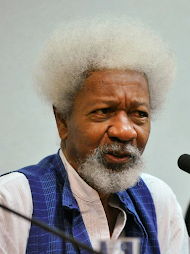
Wole Soyinka
Wole Soyinka is a Nigerian playwright, poet, and novelist who was born on July 13, 1934, in Abeokuta, Nigeria. He is one of the most significant and internationally recognized African writers of the 20th century and has made tremendous contributions to the field of literature, drama, and political activism. After completing his studies, he returned to Nigeria, where he became involved in political activism and played a significant role in Nigeria's struggle for independence from British colonial rule. Soyinka's literary works are primarily concerned with themes of African identity, colonialism, and the intersection of tradition and modernity. Soyinka is also an accomplished poet and novelist. In addition to his literary achievements, Soyinka has been a vocal critic of political corruption and human rights abuses in Nigeria and other African countries. He has been imprisoned several times for his activism, including during Nigeria's civil war in the late 1960s. Soyinka's contributions to literature and social justice have earned him numerous awards and honors. In 1986, he was awarded the Nobel Prize in Literature ‘for a wide cultural perspective and a sense of humor [which] are united in a poetic and sometimes rhapsodic style.’, becoming the first African to receive the prestigious award.

Soyinka's legacy as a writer, activist, and cultural icon continues to inspire generations of Africans and people around the world. His works have been translated into numerous languages and continue to be studied and celebrated by scholars and readers alike.
About the Poem:
The physical appearance of the “Poems from Prison” broadsheet is significant in that it reflects the harsh, gritty reality of the prison experience. The use of parchment-like paper and folded columns create a sense of age and wear, suggesting that the poems were born out of a long and difficult struggle. This also serves to emphasize the importance of the poems, as they are presented in a format that suggests they are valuable and worthy of preservation.
The two poems featured in the broadsheet, “Live Burial” and “Flowers for my Land”, both express a sense of desperation and hopelessness in the face of oppression. “Live Burial” is particularly effective in its use of concise, powerful language to convey the speaker's sense of isolation and entrapment. The additional stanzas added in “A Shuttle in the Crypt” detract from the impact of the original poem, as they shift the focus away from the speaker's own experience and dilute the poem's overall message. The inclusion of a note on Soyinka's release from prison serves to contextualize the poems and highlights their political significance. The fact that Soyinka was imprisoned for his political beliefs adds weight to his words and reinforces the idea that poetry can be a powerful tool for social and political change.
Literal Analysis of the poem
Sixteen paces
By twenty-three. They hold
Siege (a military blockade of a city or fortified place to compel it to surrender) against humanity
And Truth
Employing time to drill through to his sanity (quality of being sane- reasonable or sensible)
Schismatic (a person or group that splits away from a larger organization or community, often due to a disagreement over beliefs or practices)
Lover of Antigone!
You will? You will unearth
Corpses of yester-
Year? Expose manure of present birth?
Seal him live
In that same necropolis (a large, ancient cemetery or burial ground, typically containing many tombs, mausoleums, and other structures for housing the remains of the dead).
May his ghost mistress
Point the classic
Route to Outsiders' Stygian (used to describe things that are dark, gloomy, and associated with death or the afterlife; comes from the river Styx in Greek mythology) Mysteries.
Bulletin:
He sleeps well, eats
Well. His doctors note
No damage
Our plastic (fake) surgeons tend his public image.
Confession
Fiction ? Is truth not essence
Of Art, and fiction Art?
Lest it rust (lest - in order to avoid the risk of/ for fear that and rust - corrosion that occurs on metal objects when they are exposed to moisture and oxygen over time; phrase Lest it rust- action needs to be taken to prevent an object from becoming corroded or deteriorated over time.)
We kindly borrowed his poetic license.
Galileo
We hoped he'd prove - age
Or genius may recant (to publicly renouncing or retracting a statement, belief, or opinion that one has previously expressed. It typically involves admitting that one was wrong or mistaken, and expressing a new belief or opinion that contradicts the previous one) - our butchers
Tired of waiting
Ordered; take the scapegoat (a fictional or imaginary creature that exists in outer space, or as a metaphor for a person or entity that seems out of place or otherworldly), drop the sage(wise person).
Guara'l The lizard:
Every minute scrapes (To remove something from a surface by rubbing it)
A concrete mixer throat. (keeps on chewing tobacco or similar something)
The cola slime (Spit- of cola color)
Flies to blotch (to a discolored or irregularly shaped spot or mark on a surface- stain) the walls in patterned grime (type of dirt or filth that has accumulated on a surface over time)
The ghoul (The term "ghoul" generally refers to a legendary creature or monster from Middle Eastern folklore that is said to feed on human flesh, particularly corpses in graveyards or other places of burial; In modern usage, the term "ghoul" may also be used more broadly to describe someone who is fascinated with death, horror, or the macabre):
Flushed (red-faced) from hanging, sniffles
Snuff (consume Drug), to clear his head of
Sins -- the law
Declared -- that morning's gallows (structure, typically made of wood, that was used in the past for the execution of criminals by hanging) load were dead of.
The voyeur (a person who gets pleasure or enjoyment from watching others, often in a sexual context, without their knowledge or consent.):
Times his sly patrol (takes a round)
For the hour upon the throne (toilet seat)
I think he thrills
To hear the Muse's (Daughters of Zeus (group of nine daughters) – goddesses on poetry inspiration – here Muse refers to the poet himself) constipated groan
Critical Analysis
"Live Burial" is a powerful poem that tells the harrowing story of a prisoner who is tortured to death for a crime they didn't commit. The author of the poem, Wole Soyinka, himself experienced a similar ordeal during his 22-month imprisonment on false charges of conspiracy.

The title of the poem, ‘Live Burial,’ is a metaphor for the mental and physical torture inflicted on Soyinka by the Nigerian government. The idea of being buried alive while still conscious is a horrifying image that speaks to the deepest fears of the human psyche, evoking the fear of premature death.
The opening line of the poem, "Sixteen paces by twenty-three," sets a somber tone and suggests the dimensions of a prison cell or a grave. It gives the reader an idea of the small, claustrophobic space in which the prisoner is confined. The poem also touches on the theme of oppression and the struggle for human dignity and truth. The word ‘Truth’ is used as a metaphor for the poet himself, and his imprisonment is portrayed as an attempt to silence and imprison ‘Truth.’ The poet recognizes that his jailers deliberately deny him human companionship to use ‘time’ as a means of torture. In the poem, the word ‘drill’ suggests a gradual but forceful wearing away of the poet's advocacy and sanity over time. The title functions as more than just a metaphor for silencing "Truth," as the prisoner feels almost buried alive. The claustrophobic conditions of the cell prey on the poet's mind, and he imagines himself dying or even dead. This similarity to being buried alive is a strong catalyst for the fear of premature death. The poet, full of restless energy, is trapped and denied any outlet, much like the shuttle in the title.

Wole Soyinka refers to a character from Greek mythology named Antigone. Antigone was a brave and determined woman who defied her uncle's cruel law and buried her brother. She believed that divine law was more important than human law. Similarly, the poet also faced difficulties in going against authority, and he sees himself as a tragic hero like Antigone.
Antigone spoke up against her uncle's cruelty with courage and passion, and she paid a terrible price for her bravery. She was buried alive in a tomb, and her lover, Creon's son Haemon, killed himself because he could not bear to live without her. Even Creon's wife, Queen Eurydice, killed herself in despair over her son's death. The poet uses the phrase "corpses of yester-year" to refer to something that Antigone wanted to unearth. The poet interprets these "corpses" as "truth." This is because just as corpses are buried and hidden from sight, the truth can also be hidden and buried by those in power. The reference to death and corpses in the poem highlights the theme of mortality and the fragility of life. The poet suggests that just as the dead cannot defend themselves, the truth is often silenced by those in positions of authority.
Wole Soyinka compares the innocence of the prisoner to Antigone's lover who committed suicide because of a difference of opinion with his father. The poet believes that people are disturbing the peace of the dead by bringing up their past deeds and punishing them for something they never did.
In the third stanza of the poem, the poet is comparing his situation to a mythological story from ancient Greece. The word "Stygian" is used to describe his situation as dark and infernal, like the River Styx in Greek mythology. The River Styx is a river that separates the living world from the world of the dead.
The poet is being punished for trying to uncover the truth about the mistakes of the current government. He is being imprisoned and isolated from the world like a dead soul, unable to speak or act. The line "Seal him live / In that same necropolis" suggests that he is being trapped in a tomb or grave while still alive, which is a fate worse than death. The idea of a ghost mistress pointing the way to the Stygian Mysteries adds to the sense of otherworldly danger and mystery. It suggests that the poet is being punished not only with physical isolation and torture but also with spiritual and psychological isolation. He is being silenced and removed from the struggle to expose the truth about the government's mistakes. The stanza portrays the poet's sense of hopelessness and despair in the face of oppression and injustice. The mythological references add to the sense of otherworldly danger and mystery,
The poem's tone and focus suddenly change in the fourth stanza. Instead of using emotional language and allusions, the prison guards describe Soyinka's life in a plain manner, saying "He sleeps well, eats well." The guards also mention that Soyinka's doctors have not found any damage to his health, which could mean that he has not been physically harmed by the guards or that he is enduring the harsh conditions well. Additionally, the guards mention that "plastic surgeons" take care of Soyinka's public image by repairing any visible effects of the beatings.
This metaphorical language suggests that the truth about Soyinka's imprisonment and the unfairness of his situation are being covered up and distorted for public consumption.
Overall, the lines "He sleeps well, eats well. His doctors note no damage. Our plastic surgeons tend his public image" convey the idea that someone may appear healthy and well-cared for on the surface, but behind the scenes, they are being controlled and manipulated by unseen forces. This could be a commentary on how media and propaganda can shape public perception.
In the fifth stanza of the poem, the poet Soyinka is questioning the relationship between reality and art. He references a real-life event where the Nigerian government falsely accused him of supporting the rebel cause during the war of secession between Biafra and Nigeria. Soyinka had actually called for Western nations to stop supplying arms to either side. The government twisted the truth and imprisoned him without a trial. The author of this stanza, Soyinka, questions whether fiction can reveal deeper truths about the world, blurring the lines between reality and imagination. He suggests that truth is the essence of art, and fiction is a form of art. The idea of borrowing someone's poetic license adds to this sense of playfulness and experimentation. Essentially, the stanza explores the relationship between truth and fiction in art.

Wole Soyinka references Galileo in the next stanza, a famous scientist who was persecuted by the Catholic Church for his beliefs. This shows how people who challenge the status quo are still punished today. The prisoners in the poem are tired of waiting for their death and are being punished for the wrongdoings of others. They already know the truth and don't need to pretend to be wise. Soyinka believes that geniuses like Galileo are no longer respected in the current Post-Truth Era.
Soyinka also uses Galileo as an example of someone who redefined reality for the better. Galileo made many scientific discoveries and proved that gravity affects all objects equally. However, the church refused to accept his findings and punished him for challenging their authority. This shows how those in power often choose to blame individuals, rather than address the real issues.

In the last three stanzas of "Live Burial", Soyinka shifts focus to the guards who are the only people he encounters. Each stanza uses a single image of a guard, named "The lizard", "The ghoul", and "The voyeur", to expose their hypocrisy and evil. The poem describes a guard named The lizard, named Guara'l, who speaks harshly and constantly, like a concrete mixer churning out concrete. The phrase "cola slime" refers to the chewed-up tobacco that the guard spits out, which stains the walls with a dirty patternThis poem uses vivid imagery to convey a sense of disgust and discomfort towards the guard.
The next stanza of the poem describes the guard's use of snuff, a type of tobacco that is inhaled through the nose. The use of the word "ghoul" to describe the guard suggests that he is in some way monstrous or evil. The phrase "sniffles snuff" suggests that the guard is addicted to the drug and that it may be helping him to cope with the guilt or trauma of his role in the hangings.
The poem also suggests that the government's execution of the hanged men was inhumane and unjust, as the men are described as nothing more than a "load" on the gallows. The guard's use of snuff to escape from these thoughts and emotions suggests that he may have a similar inclination towards violence or brutality.
The final stanza of the poem is a powerful commentary on the sadistic nature of the guard's behavior. It suggests that the guard is not simply following orders mindlessly, but is actively seeking out opportunities to humiliate and degrade Soyinka. The use of ornate language and classical allusions highlights the contrast between the lofty ideals of art and culture, and the base and degrading reality of the guard's behavior. The reference to "The Muse" highlights the power of creativity and the human spirit, even in the face of oppression and cruelty.
The speaker describes a guard who takes pleasure in Soyinka's suffering and humiliation. The phrase "times his sly patrol" suggests that the guard is deliberately waiting for an opportunity to catch Soyinka in a vulnerable position. The phrase "hour upon the throne" is a euphemism for the time when Soyinka is using the toilet, specifically the toilet seat or "throne."
The final two lines of the stanza are particularly powerful. The use of the word "thrills" suggests that the guard takes great pleasure in Soyinka's pain and humiliation. The reference to "the Muse's constipated groan" is a metaphor for the suffering and struggle that Soyinka is experiencing, both physically and emotionally. The use of the word "constipated" emphasizes the idea that Soyinka is experiencing a blockage or obstruction, both in his physical body and in his life more broadly.
Conclusion
In "Live Burial," Wole Soyinka uses a combination of cryptic language, literary allusions, and disturbing imagery to explore themes of oppression, resistance, and the power of art. Through a series of grotesque and unsettling characters, Soyinka creates a sense of decay and corruption that pervades the poem, suggesting a broader critique of human nature and society. At the same time, he also offers glimpses of hope and possibility, such as the idea that art can reveal deeper truths about the world and that resistance against the unjust authority is always possible.
Overall, the poem is a powerful reflection on the human condition, raising important questions about the nature of power, oppression, and the role of art in society.
Works Cited
Henderson, Joel. “Soyinka's "Live Burial."” Postcolonial Web, 20 March 2002, https://www.postcolonialweb.org/soyinka/burial1.html. Accessed 26 March 2023.
McLuckie, Craig. “Literary Encyclopedia — Soyinka, Wole. Poems from Prison 1969.” Literary Encyclopedia, 2003, https://www.litencyc.com/php/sworks.php?rec=true&UID=12834. Accessed 26 March 2023.
“The Nobel Prize in Literature 1986 - NobelPrize.org.” Nobel Prize, https://www.nobelprize.org/prizes/literature/1986/summary/. Accessed 26 March 2023.
Olanrewaju, Adeolu Adekunle. “Cognitive and Perceptual Modes in Wole Soyinka’s “Prisonettes.”” The Internalional Journal of Humanities and Social science, vol. 8, no. 6, 2020, pp. 241-246. 10.24940/theijhss/2020/v8/i6/HS2006-086.Accessed 26 03 2023.
Soyinka, Wole. “Poems.” Soyinka, https://wolesoyinka.tripod.com/id3.html. Accessed 26 March 2023.
“Wole Soyinka – Biographical - NobelPrize.org.” Nobel Prize, https://www.nobelprize.org/prizes/literature/1986/soyinka/biographical/. Accessed 26 March 2023.
“Wole Soyinka | Biography, Plays, Books, & Facts.” Encyclopedia Britannica, 28 February 2023, https://www.britannica.com/biography/Wole-Soyinka. Accessed 26 March 2023.