Showing posts with label summary. Show all posts

Sunday, 26 March 2023

Assignment 206: African Literature

 Interpreting Live Burial by Wole Soyinka


Name: Jheel Barad

Roll No.: 12

Enrollment No.: 4069206420210003

Paper no: 206

Paper code: 22413

Paper name: African Literature

Sem.: 4 (Batch 2021- 2023)

Submitted to: Smt S.B. Gardi Department of English, M.K. Bhavnagar University


Wole Soyinka

Wole Soyinka is a Nigerian playwright, poet, and novelist who was born on July 13, 1934, in Abeokuta, Nigeria. He is one of the most significant and internationally recognized African writers of the 20th century and has made tremendous contributions to the field of literature, drama, and political activism. After completing his studies, he returned to Nigeria, where he became involved in political activism and played a significant role in Nigeria's struggle for independence from British colonial rule. Soyinka's literary works are primarily concerned with themes of African identity, colonialism, and the intersection of tradition and modernity. Soyinka is also an accomplished poet and novelist. In addition to his literary achievements, Soyinka has been a vocal critic of political corruption and human rights abuses in Nigeria and other African countries. He has been imprisoned several times for his activism, including during Nigeria's civil war in the late 1960s. Soyinka's contributions to literature and social justice have earned him numerous awards and honors. In 1986, he was awarded the Nobel Prize in Literature ‘for a wide cultural perspective and a sense of humor [which] are united in a poetic and sometimes rhapsodic style.’, becoming the first African to receive the prestigious award. 


His Notable Works

His Awards

  • "The Swamp Dwellers" (play, 1958)

  • "A Dance of the Forests" (play, 1960)

  • "The Lion and the Jewel" (play, 1963)

  • "Death and the King's Horseman" (play, 1975)

  • "Idanre and Other Poems" (poetry collection, 1967)

  • "The Interpreters" (novel, 1965)

  • "Season of Anomy" (novel, 1973)

  • "Mandela's Earth and Other Poems" (poetry collection, 1988)

  • "Aké: The Years of Childhood" (memoir, 1981)

  • "You Must Set Forth at Dawn" (memoir, 2006)

  • Nobel Prize in Literature (1986)

  • Commonwealth Writers' Prize

  • Anisfield-Wolf Book Award

  • Agip Prize for Literature


Soyinka's legacy as a writer, activist, and cultural icon continues to inspire generations of Africans and people around the world. His works have been translated into numerous languages and continue to be studied and celebrated by scholars and readers alike.


About the Poem:

The physical appearance of the “Poems from Prison” broadsheet is significant in that it reflects the harsh, gritty reality of the prison experience. The use of parchment-like paper and folded columns create a sense of age and wear, suggesting that the poems were born out of a long and difficult struggle. This also serves to emphasize the importance of the poems, as they are presented in a format that suggests they are valuable and worthy of preservation.

The two poems featured in the broadsheet, “Live Burial” and “Flowers for my Land”, both express a sense of desperation and hopelessness in the face of oppression. “Live Burial” is particularly effective in its use of concise, powerful language to convey the speaker's sense of isolation and entrapment. The additional stanzas added in “A Shuttle in the Crypt” detract from the impact of the original poem, as they shift the focus away from the speaker's own experience and dilute the poem's overall message. The inclusion of a note on Soyinka's release from prison serves to contextualize the poems and highlights their political significance. The fact that Soyinka was imprisoned for his political beliefs adds weight to his words and reinforces the idea that poetry can be a powerful tool for social and political change.


Literal Analysis of the poem


Sixteen paces

By twenty-three. They hold

Siege (a military blockade of a city or fortified place to compel it to surrender) against humanity

And Truth

Employing time to drill through to his sanity (quality of being sane- reasonable or sensible)


Schismatic (a person or group that splits away from a larger organization or community, often due to a disagreement over beliefs or practices)

Lover of Antigone!

You will? You will unearth

Corpses of yester-

Year? Expose manure of present birth?


Seal him live

In that same necropolis (a large, ancient cemetery or burial ground, typically containing many tombs, mausoleums, and other structures for housing the remains of the dead).

May his ghost mistress

Point the classic

Route to Outsiders' Stygian (used to describe things that are dark, gloomy, and associated with death or the afterlife; comes from the river Styx in Greek mythology) Mysteries.


Bulletin:

He sleeps well, eats

Well. His doctors note

No damage

Our plastic (fake) surgeons tend his public image.


Confession

Fiction ? Is truth not essence

Of Art, and fiction Art?


Lest it rust (lest - in order to avoid the risk of/ for fear that and rust -  corrosion that occurs on metal objects when they are exposed to moisture and oxygen over time;  phrase Lest it rust- action needs to be taken to prevent an object from becoming corroded or deteriorated over time.)

We kindly borrowed his poetic license.


Galileo

We hoped he'd prove - age

Or genius may recant (to publicly renouncing or retracting a statement, belief, or opinion that one has previously expressed. It typically involves admitting that one was wrong or mistaken, and expressing a new belief or opinion that contradicts the previous one) - our butchers

Tired of waiting

Ordered; take the scapegoat (a fictional or imaginary creature that exists in outer space, or as a metaphor for a person or entity that seems out of place or otherworldly), drop the sage(wise person).


Guara'l The lizard:

Every minute scrapes (To remove something from a surface by rubbing it)

A concrete mixer throat. (keeps on chewing tobacco or similar something)

The cola slime (Spit- of cola color)

Flies to blotch (to a discolored or irregularly shaped spot or mark on a surface- stain) the walls in patterned grime (type of dirt or filth that has accumulated on a surface over time)


The ghoul (The term "ghoul" generally refers to a legendary creature or monster from Middle Eastern folklore that is said to feed on human flesh, particularly corpses in graveyards or other places of burial; In modern usage, the term "ghoul" may also be used more broadly to describe someone who is fascinated with death, horror, or the macabre):

Flushed (red-faced) from hanging, sniffles

Snuff (consume Drug), to clear his head of

Sins -- the law

Declared -- that morning's gallows (structure, typically made of wood, that was used in the past for the execution of criminals by hanging) load were dead of.


The voyeur (a person who gets pleasure or enjoyment from watching others, often in a sexual context, without their knowledge or consent.):

Times his sly patrol (takes a round)

For the hour upon the throne (toilet seat)

I think he thrills

To hear the Muse's (Daughters of Zeus (group of nine daughters) – goddesses on poetry inspiration – here Muse refers to the poet himself) constipated groan


Critical Analysis

"Live Burial" is a powerful poem that tells the harrowing story of a prisoner who is tortured to death for a crime they didn't commit. The author of the poem, Wole Soyinka, himself experienced a similar ordeal during his 22-month imprisonment on false charges of conspiracy.


The title of the poem, ‘Live Burial,’ is a metaphor for the mental and physical torture inflicted on Soyinka by the Nigerian government. The idea of being buried alive while still conscious is a horrifying image that speaks to the deepest fears of the human psyche, evoking the fear of premature death.


The opening line of the poem, "Sixteen paces by twenty-three," sets a somber tone and suggests the dimensions of a prison cell or a grave. It gives the reader an idea of the small, claustrophobic space in which the prisoner is confined. The poem also touches on the theme of oppression and the struggle for human dignity and truth. The word ‘Truth’ is used as a metaphor for the poet himself, and his imprisonment is portrayed as an attempt to silence and imprison ‘Truth.’ The poet recognizes that his jailers deliberately deny him human companionship to use ‘time’ as a means of torture. In the poem, the word ‘drill’ suggests a gradual but forceful wearing away of the poet's advocacy and sanity over time. The title functions as more than just a metaphor for silencing "Truth," as the prisoner feels almost buried alive. The claustrophobic conditions of the cell prey on the poet's mind, and he imagines himself dying or even dead. This similarity to being buried alive is a strong catalyst for the fear of premature death. The poet, full of restless energy, is trapped and denied any outlet, much like the shuttle in the title.


Wole Soyinka refers to a character from Greek mythology named Antigone. Antigone was a brave and determined woman who defied her uncle's cruel law and buried her brother. She believed that divine law was more important than human law. Similarly, the poet also faced difficulties in going against authority, and he sees himself as a tragic hero like Antigone.


Antigone spoke up against her uncle's cruelty with courage and passion, and she paid a terrible price for her bravery. She was buried alive in a tomb, and her lover, Creon's son Haemon, killed himself because he could not bear to live without her. Even Creon's wife, Queen Eurydice, killed herself in despair over her son's death. The poet uses the phrase "corpses of yester-year" to refer to something that Antigone wanted to unearth. The poet interprets these "corpses" as "truth." This is because just as corpses are buried and hidden from sight, the truth can also be hidden and buried by those in power. The reference to death and corpses in the poem highlights the theme of mortality and the fragility of life. The poet suggests that just as the dead cannot defend themselves, the truth is often silenced by those in positions of authority.


Wole Soyinka compares the innocence of the prisoner to Antigone's lover who committed suicide because of a difference of opinion with his father. The poet believes that people are disturbing the peace of the dead by bringing up their past deeds and punishing them for something they never did.


In the third stanza of the poem, the poet is comparing his situation to a mythological story from ancient Greece. The word "Stygian" is used to describe his situation as dark and infernal, like the River Styx in Greek mythology. The River Styx is a river that separates the living world from the world of the dead.


The poet is being punished for trying to uncover the truth about the mistakes of the current government. He is being imprisoned and isolated from the world like a dead soul, unable to speak or act. The line "Seal him live / In that same necropolis" suggests that he is being trapped in a tomb or grave while still alive, which is a fate worse than death. The idea of a ghost mistress pointing the way to the Stygian Mysteries adds to the sense of otherworldly danger and mystery. It suggests that the poet is being punished not only with physical isolation and torture but also with spiritual and psychological isolation. He is being silenced and removed from the struggle to expose the truth about the government's mistakes. The stanza portrays the poet's sense of hopelessness and despair in the face of oppression and injustice. The mythological references add to the sense of otherworldly danger and mystery,


The poem's tone and focus suddenly change in the fourth stanza. Instead of using emotional language and allusions, the prison guards describe Soyinka's life in a plain manner, saying "He sleeps well, eats well." The guards also mention that Soyinka's doctors have not found any damage to his health, which could mean that he has not been physically harmed by the guards or that he is enduring the harsh conditions well. Additionally, the guards mention that "plastic surgeons" take care of Soyinka's public image by repairing any visible effects of the beatings. 


This metaphorical language suggests that the truth about Soyinka's imprisonment and the unfairness of his situation are being covered up and distorted for public consumption.

Overall, the lines "He sleeps well, eats well. His doctors note no damage. Our plastic surgeons tend his public image" convey the idea that someone may appear healthy and well-cared for on the surface, but behind the scenes, they are being controlled and manipulated by unseen forces. This could be a commentary on how media and propaganda can shape public perception.


In the fifth stanza of the poem, the poet Soyinka is questioning the relationship between reality and art. He references a real-life event where the Nigerian government falsely accused him of supporting the rebel cause during the war of secession between Biafra and Nigeria. Soyinka had actually called for Western nations to stop supplying arms to either side. The government twisted the truth and imprisoned him without a trial. The author of this stanza, Soyinka, questions whether fiction can reveal deeper truths about the world, blurring the lines between reality and imagination. He suggests that truth is the essence of art, and fiction is a form of art. The idea of borrowing someone's poetic license adds to this sense of playfulness and experimentation. Essentially, the stanza explores the relationship between truth and fiction in art.


Wole Soyinka references Galileo in the next stanza, a famous scientist who was persecuted by the Catholic Church for his beliefs. This shows how people who challenge the status quo are still punished today. The prisoners in the poem are tired of waiting for their death and are being punished for the wrongdoings of others. They already know the truth and don't need to pretend to be wise. Soyinka believes that geniuses like Galileo are no longer respected in the current Post-Truth Era.


Soyinka also uses Galileo as an example of someone who redefined reality for the better. Galileo made many scientific discoveries and proved that gravity affects all objects equally. However, the church refused to accept his findings and punished him for challenging their authority. This shows how those in power often choose to blame individuals, rather than address the real issues.


In the last three stanzas of "Live Burial", Soyinka shifts focus to the guards who are the only people he encounters. Each stanza uses a single image of a guard, named "The lizard", "The ghoul", and "The voyeur", to expose their hypocrisy and evil. The poem describes a guard named The lizard, named Guara'l, who speaks harshly and constantly, like a concrete mixer churning out concrete. The phrase "cola slime" refers to the chewed-up tobacco that the guard spits out, which stains the walls with a dirty patternThis poem uses vivid imagery to convey a sense of disgust and discomfort towards the guard.


The next stanza of the poem describes the guard's use of snuff, a type of tobacco that is inhaled through the nose. The use of the word "ghoul" to describe the guard suggests that he is in some way monstrous or evil. The phrase "sniffles snuff" suggests that the guard is addicted to the drug and that it may be helping him to cope with the guilt or trauma of his role in the hangings.


The poem also suggests that the government's execution of the hanged men was inhumane and unjust, as the men are described as nothing more than a "load" on the gallows. The guard's use of snuff to escape from these thoughts and emotions suggests that he may have a similar inclination towards violence or brutality.


The final stanza of the poem is a powerful commentary on the sadistic nature of the guard's behavior. It suggests that the guard is not simply following orders mindlessly, but is actively seeking out opportunities to humiliate and degrade Soyinka. The use of ornate language and classical allusions highlights the contrast between the lofty ideals of art and culture, and the base and degrading reality of the guard's behavior. The reference to "The Muse" highlights the power of creativity and the human spirit, even in the face of oppression and cruelty.

The speaker describes a guard who takes pleasure in Soyinka's suffering and humiliation. The phrase "times his sly patrol" suggests that the guard is deliberately waiting for an opportunity to catch Soyinka in a vulnerable position. The phrase "hour upon the throne" is a euphemism for the time when Soyinka is using the toilet, specifically the toilet seat or "throne."


The final two lines of the stanza are particularly powerful. The use of the word "thrills" suggests that the guard takes great pleasure in Soyinka's pain and humiliation. The reference to "the Muse's constipated groan" is a metaphor for the suffering and struggle that Soyinka is experiencing, both physically and emotionally. The use of the word "constipated" emphasizes the idea that Soyinka is experiencing a blockage or obstruction, both in his physical body and in his life more broadly.


Conclusion

In "Live Burial," Wole Soyinka uses a combination of cryptic language, literary allusions, and disturbing imagery to explore themes of oppression, resistance, and the power of art. Through a series of grotesque and unsettling characters, Soyinka creates a sense of decay and corruption that pervades the poem, suggesting a broader critique of human nature and society. At the same time, he also offers glimpses of hope and possibility, such as the idea that art can reveal deeper truths about the world and that resistance against the unjust authority is always possible.

Overall, the poem is a powerful reflection on the human condition, raising important questions about the nature of power, oppression, and the role of art in society.


Works Cited


Henderson, Joel. “Soyinka's "Live Burial."” Postcolonial Web, 20 March 2002, https://www.postcolonialweb.org/soyinka/burial1.html. Accessed 26 March 2023.


McLuckie, Craig. “Literary Encyclopedia — Soyinka, Wole. Poems from Prison 1969.” Literary Encyclopedia, 2003, https://www.litencyc.com/php/sworks.php?rec=true&UID=12834. Accessed 26 March 2023.


“The Nobel Prize in Literature 1986 - NobelPrize.org.” Nobel Prize, https://www.nobelprize.org/prizes/literature/1986/summary/. Accessed 26 March 2023.


Olanrewaju, Adeolu Adekunle. “Cognitive and Perceptual Modes in Wole Soyinka’s “Prisonettes.”” The Internalional Journal of Humanities and Social science, vol. 8, no. 6, 2020, pp. 241-246. 10.24940/theijhss/2020/v8/i6/HS2006-086.Accessed 26 03 2023.


Soyinka, Wole. “Poems.” Soyinka, https://wolesoyinka.tripod.com/id3.html. Accessed 26 March 2023.


“Wole Soyinka – Biographical - NobelPrize.org.” Nobel Prize, https://www.nobelprize.org/prizes/literature/1986/soyinka/biographical/. Accessed 26 March 2023.


“Wole Soyinka | Biography, Plays, Books, & Facts.” Encyclopedia Britannica, 28 February 2023, https://www.britannica.com/biography/Wole-Soyinka. Accessed 26 March 2023.

Tuesday, 5 April 2022

The Wasteland by T.S. Eliot

This blog deals with several assigned questions by Dr. Dilip Barad regarding T.S. Eliot’s poem The Wasteland, contradiction of Eliot with between Nietzsche and Freud and Indian thoughts in the poem.

THE WASTELAND

Let us discuss the summary of The Wasteland in brief.
The poem The Wasteland poem was published in T.S. Eliot in 1922. It is the most important work of modernist poetry. The poem is divided into five sections. 

The five parts of The Waste Land are entitled:
  • The Burial of the Dead
  • A Game of Chess
  • The Fire Sermon
  • Death by Water
  • What the Thunder Said


The Burial of the Dead:
The title refers to fertility and the burial service. It however brings out the spiritual death of citizens of wasteland. The citizens of the wasteland don't want to get disturbed from their routine of modern life. The idea of spiritual regeneration is painful to them, the value system of the citizens is different from the value system of the traditional one. April is generally the symbol of spring and rebirth while winter is a symbol of decay of death but for waste landers April is bad and cruel because it reminds them of The Spiritual decay and makes them think of regeneration and they enjoy winter because they can enjoy it.

A Game of Chess:
A Game of Chess is used by Middleton in the play entitled ‘Women beware Women’ where this game is played to hide the seduction of a young girl by a noble man. The first scene is about drawing room of a fashionable lady who is interested is sexual relations. And it also shares the story of Philomel, the raped girl who was transformed into Nightingale - is a symbol of purification through sufferings but in modern times, love has degenerated into lust and there is no hope of regeneration.

The Fire Sermon:
The title Fire Sermon is borrowed from the sermon of Lord Buddha where he said that the world is on fire, "burning with the fire of hatred, with the fire of infatuation, with birth, old age and death, sorrow, lamentation and misery, grief and despair". Which gives us the idea of spiritual degradation.

Death by Water:
this section-Death by Water says- water is a means of purification and re-birth. There are two metaphors/ stories in this section one from Shakespeare The Tempest and the other from the ancient Egyptian myth of the god of fertility. The death of Phlebas, the Greek sailor, is an example of people who devote themselves to worldly pursuits. Their youth and strength ultimately will be consumed by death.

What the Thunder said:
Reading the title, it indicated through thunder that it declares the liberation of society from spiritual barrenness. The first example is of the mythical journey of the knight to Chapel Perilous in the time of the Fisher King who was successful in removing the curse from his land. The second is the Biblical journey of Christ's disciples to Emmaus when they were accompanied by Christ in disguise and who disclosed his identity to confirm the truth of his resurrection.

Thus, Wasteland is a poem about brokenness and loss. The key theme of the poem in sexual perversion and spiritual degradation.


What are your views on the following image after reading 'The Waste Land'? Do you think that Eliot is regressive as compared to Nietzsche's views? or Has Eliot achieved universality of thought by recalling mytho-historical answers to the contemporary malaise?


Nietzsche claimed the exemplary human being must craft his/her own identity through self-realization and do so without relying on anything transcending that life—such as God or a soul; which is considered to be the progressive and forward looking. While Eliot in the waste land uses the myths, stories and identities from the past with an idea of mistake not being repeated whether in present or at. Elliot is trying to give a universal idea, using the myths of varied culture Eliot has tried to bring universality which inspires society to move on the path of peace.

Nietzsche believed in the idea about ‘God is dead’ and every man has to develop his own powers, will power and self esteem to be a ‘superhuman’, he is finding a solution for the present in future. While Eliot gave references of various spiritualities, myths, religions etc., he is not trying asking or driving us to believe in god but is trying to show the real world. With the reference of myths he is presenting scenarios of the present. He is trying to find the solution of the present and future in the past.

Nietzsche and Eliot both has different ideas about bringing peace and togetherness in society but I personally disagree with Eliot’s idea being ‘regressive and backward’ as it is thinking about present and future with strong foundation of Upanishad, Buddhism and Christianity which have been practiced since years.

For example Eliot discuss very prominent contemporary issues like-
1) sexual perversion - Rape
2) loss of spirituality
3) Depression - mental illness
4) war - political issues


Prior to the speech, Gustaf Hellström of the Swedish Academy made these remarks:


What are your views regarding these comments? Is it true that giving free vent to the repressed 'primitive instinct' leads us to a happy and satisfied life? Or do you agree with Eliot's view that 'salvation of man lies in the preservation of the cultural tradition'?

Freud has talked about the ‘primitive instincts’ which give rise to individuality. if one person works according to his wishes and own personal pleasures may be harmful and worrisome to others and if others are working according to their wishes and for their pleasure may be harmful or make us uncomfortable. As Matthew Arnold also said in his essay ‘Culture and Anarchy’:-

“Doing as one likes may bring chaos in the society”

While Eliot is talking about the preservation of cultural tradition. Culture is a network which connects the society and everyone gets ready to work, to live their life according to the culture which provides togetherness to the society.

Sudeep talks about the progress of individuals while Elliot talks about the progress of the universe. Thus, I personally agree with Eliot’s view that ‘salvation of man's lies in the preservation of cultural tradition.’


Write about allusions to the Indian thoughts in 'The Waste Land'. (Where, How and Why are the Indian thoughts referred?)


Eliot in the Wasteland has brought the various cultures and spirituality together and brought universality in the poem to solve the European problem in spiritual degradation and sexual perversion. Eliot has brought few Indian spiritual thoughts from Upanishads and Buddhism also to fertilize their barren land.

As we discussed the poem is divided in five sections. In the very second section of ‘Fire sermon’ comes the reference of ‘sermon’ which is the idea of buddha. The Buddha's sermon which talks about the four Noble truths in A sacred book of Buddhism named Adittapariyaya sutta. They are the truth of suffering, the truth of the cause of suffering, the truth of the end of suffering, and the truth of the path that leads to the end of suffering. Fire is used as a metaphor. Which reflects sexual perversion in the world.

Secondly in the fifth section ‘What the Thunder Said’ takes the reference of ‘Ganga’ river. And also the Title ‘What the Thunder Said’ is from Upanishad, Prajapati spoke in thunder ‘akashwani’ to his devotees and pointed out the way of salvation.

And through reference of ‘Ganga’, ‘Himavat’ in this part. Eliot refers to Wisdom of India for spiritual salvation of modern humanity.


Eliot uses the three “Da” taken from “Brihadaranyaka Upanishad".
Datta – giver; Dayadhvam – compassion; Damyata – self-control

The first ‘Da’ is a message by Prajapati for the Humans to be ‘Datta’ - be a giver, have charity not only charity but give oneself for a noble cause.

The second ‘Da’ is a message for the Demons - ‘Dayathvam’- have compassion, sympathize and come out of your isolation and live into others.

And the third ‘Da’ is a message for the Gods - ‘Damyata’ - to have self-control, self-restraint over one’s passions and desires.

And the Poem ends with “Shantih… shantih… shantih” an ambiguous note, with the triple repetition of the Sanskrit word 'Shantih', which Eliot translates as 'the peace which passeth understanding'. Which is repeatedly used in Indian culture after every mantra or shloka for the inner and outer peace.


Is it possible to read 'The Waste Land' as a Pandemic Poem?

In the literature we find that Spanish flu or any other pandemic is rarely recorded. We can read that through the literature only if we get any autobiographical context of a writer or that period. if we see the west land is published in 1922 between World War I and World War 2. It is similar to the period of the Spanish flu which spread widely.

We find autobiographical context of Eliot with pandemic flu, Eliot and his wife caught the virus in Dec 1918 in the second wave of the pandemic. Many critics are dealing with the idea of the war fragments though we may say that, in the part of the poem Eliot has portrayed the same thing by post-pandemic consciousness, according to Elizabeth Outka.

We see that the poem is written in fragmented form, it seems like a collage picture which we can read as Eliot might be suffering from fever, infected by a pandemic and is not able to write his thoughts clearly in the poem. He might be having a delirious state of mind.

In the beginning lines we can find a kind of negative atmosphere like all the bodies are suffering from the acute illnesses. ‘Feverish hallucination’ speaks about the symptoms of the feverish body. “ Burning burning burning burning” these lines may show the bodily pain of one’s own or the body of infected are burning in fever

Many such references are obtained while reading the Wasteland poem. We can read this poem from a pandemic lens as we have recently faced a corona pandemic and still the world is not completely cured.


Give link of the Google Sheet with tabular information on Myths, Allusions, Languages, Animals/birds, colors etc


I hope this blog is useful to you thanks for visiting.

[words- 1740]

Friday, 28 September 2018

Poem: La Belle Dame sans Merci

LA BELLA DAM SANS MERCI

What are poems?
Poems are the best form of literature. It is a piece of writing arranged in short lines in a musical manner and rhythm. Poems comprise of few lines, few lines of poem give great moral of life. poems express one's thoughts and feeling in the best expressive way and are the best way to convey emotion or ideas to the reader's or listener's mind. We get three words Poesy (the creation), poet (the creator), and poem ( the created) from the Greek verbs. Different forms of poetry are Ballads, sonnets, Doha, and rhyming completely. Poems are the oldest, ancient form of literature.

Through poems, the hearts can be won soon. Fredric P. Saboteur said, " I have won many female relations with this valid resource."

The great poets of English literature are William Shakespeare, William Wordsworth, John Keats, Emily Dickinson, D.H. Lawrence, Rabindranath Tagore, Henry Longfellow, and many more.

About the poet of the poem LA BELLE DAME SANS MERCI.
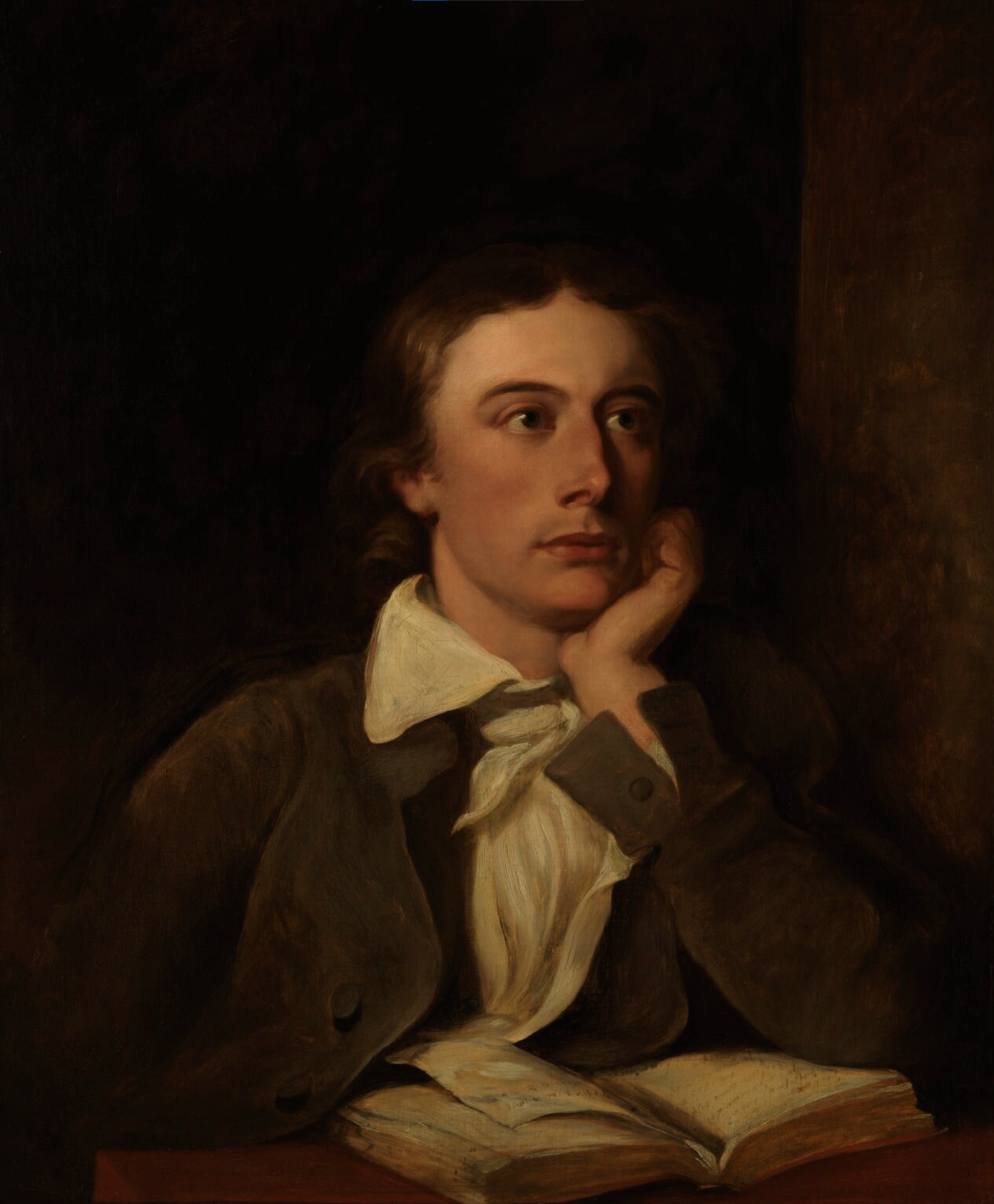
John Keats - Romantic poet


John Keats was born on 31 October 1795 in London he was an English Romantic poet. He was one of the main figures of the second generation of Romantic poets, despite his works having been in publication for only four years before his death. He died at the young age of 25 suffering from tuberculosis on 23 February 1821 in Rome.

Although his poems were not generally well received by critics during his lifetime, his reputation grew after his death, and by the end of the 19th century, he had become one of the most beloved of all English poets. The poetry of Keats is characterized by sensual imagery, most notably in the series of odes. This is typical of romantic poets, as they aimed to accentuate extreme emotion through an emphasis on natural imagery. Today his poems and letters are some of the most popular and most analyzed in English literature.

Some of the most acclaimed works by Keats are “Ode to a Nightingale”, "Sleep and Poetry", and the famous sonnet "On First Looking into Chapman's Homer".

About the poem LA BELLE DAME SANS MERCI.

Summary:
The speaker of the poem comes across a "knight at arms" alone, and apparently dying, in a field somewhere. He asks him what's going on, and the knight's answer takes up the rest of the poem. The knight says that he met a beautiful fairy lady in the fields. He started hanging out with her, making flower garlands for her, letting her ride on his horse, and generally flirting like knights do. Finally, she invited him back to her fairy cave. Sweet, thought the knight. But after they were through smooching, she "lulled" him to sleep, and he had a nightmare about all the knights and kings and princes that the woman had previously seduced – they were all dead. And then he woke up, alone, on the side of a hill somewhere.

O what can ail thee, knight-at-arms,
Alone and palely loitering?
The sedge has withered from the lake,
And no birds sing.

In the first stanza, the speaker questions the knight who is 'alone and palely loitering.' What's the pain to the knight that he looks ill. The edge of the lake is withered and there are no birds singing this indicates it is the time of evening or autumn or the early winter that birds are migrated.

O what can ail thee, knight-at-arms,
So haggard and so woe-begone?
The squirrel’s granary is full,
And the harvest’s done.

The knight at arm doesn't answer the question immediately, in the second stanza poet repeats the question. The second stanza gives two more adjectives to knight in pain 'haggard', and 'woe-begone'.
Last two lines of the stanza the squirrel's granary is full and the harvesting in the field is complete shows that it is sure late autumn.

I see a lily on thy brow,
With anguish moist and fever-dew,
And on thy cheeks a fading rose
Fast withereth too.

The third stanza is giving the physical appearance of a knight in pain. The speaker in the third stanza is still addressing the knight, 'lily of thy brow' signifies the knight is depressed or is in tension. his face is as pale as a lily. The words 'moist' and the 'fever drops' obviously prove that the knight is sick. In the last two lines of the stanza the face of the knight is compared with the fading rose it says how the color of the knight is fading away due to pain and depression.


I met a lady in the meads,
Full beautiful—a faery’s child,
Her hair was long, her foot was light,
And her eyes were wild.

Suddenly in stanza four, the knight answers the unnamed speaker. He reports that he met a beautiful lady in the meadows, she was a fairy- 'faery's child' princess from heaven. He describes the physical appearance of the lady he met. She had beautiful long hair, the knight described his graceful movement and her eyes were wild. she attracted the knight and made him fall for her.


I made a garland for her head,
And bracelets too, and fragrant zone;
She looked at me as she did love,
And made sweet moan

The fifth stanza shows the love moments between the knight and the lady. The knight makes the 'garland'- a flower wreath for the lady's head and 'bracelets' too which enhances the natural perfume. Lady with love in her eyes and moaning showed that she was feeling in love with the knight with every passing movement.


I set her on my pacing steed,
And nothing else saw all day long,
For sidelong would she bend, and sing
A faery’s song.

Stanza sixth is a continuation of stanza fifth the knight takes the fairy lady for a a ride on his horse -'pacing steed' doing nothing whole day. they enjoy each other's company and the fairy lady sings the fairy song for knight.

She found me roots of relish sweet,
And honey wild, and manna-dew,
And sure in language strange she said—
‘I love thee true’.

Fairy lady to show up her love for knight brought him some relish sweets - 'honey wild and manna dew.' The fairy lady tells the knight that she loves him, but she says it "in language strange." He doesn't say what language it is, or how he's able to understand her. Maybe he's just hearing what he wants to hear, or maybe her magical influence has enabled him to understand her "language strange."

She took me to her Elfin grot,
And there she wept and sighed full sore,
And there I shut her wild wild eyes
With kisses four.

In the eighth stanza the fairy lady takes the knight to her 'Elfin grot' a sort of magical place knight associates with fairy creatures such as elves. Suddenly reaching the cave the fairy lady bursts into tears cries out loud- 'sighed full sore'. The knight tries to soothe with his kisses that shut her “wild wild eyes”—words that suggest he has fallen in love with a creature that he cannot possess.


And there she lullèd me asleep,
And there I dreamed—Ah! woe betide!—
The latest dream I ever dreamt
On the cold hill side.

By the ninth stanza the knight comes to the present duration he further describes his horrible dream which made him loitering alone on the sedge. the fairy lady 'lulled' him to sleep and he dreamt, the memory of dream exclaimed him 'ah! woe betide!' which explained lot grief and sorrow. It was the last and the latest dream he dreamt on the cold hillside.

I saw pale kings and princes too,
Pale warriors, death-pale were they all;
They cried—‘La Belle Dame sans Merci
Thee hath in thrall!’

In the tenth stanza of poem the knight describes his dreams, the knight sees kings, princes and warriors they all were in 'death pale' the fact is the word pale is repeated thrice in the the stanza. The pale warriors, kings and princes were crying out loud ' LA BELLE DAME SANS MERCI.' Finally we reach to the title of the poem in tenth stanza; the title is in french translating it it is " a beautiful lady without mercy (pity). kings, warriors and princess cried out 'in thrall' with power.

I saw their starved lips in the gloam,
With horrid warning gapèd wide,
And I awoke and found me here,
On the cold hill’s side.

The knight continues to describe the pale warriors from his dream – in the 'gloam,' or dusk, all he can make out are their 'lips.' Their mouths are 'starved' and hungry-looking, and their mouths are all open as they cry out their warning to the knight. suddenly, the kinght wakes up from the dream finds himself on the cold hillside, feeling the deathlike cold of his dream and looking like the sad figure.

And this is why I sojourn here,
Alone and palely loitering,
Though the sedge is withered from the lake,
And no birds sing.

In stanza twelve, the knight notes that his experience with the lady is why he remains in this bleak (bare) setting, alone and feeling that he has lost the love of this beautiful figure that haunts and blights not only his life but also the world in which he finds himself. And the first stanza of the poem is repeated with the answer.

This deceptively simple tale written in a ballad style, featuring short lines and romantic longings, evokes the human yearning for an eternal, imperishable love, a bond that outlasts death and that conquers mortality. To lose the lady is tantamount to a kind of death for the knight. Thus, John Keats uses the medieval setting as a kind of allegory, a symbolic representation of what love represents. To the lover, the beloved is a fairy creature usually associated with perfection and with the desire to do good and to protect the loved one.


Meanings:
ail- pain
thee- you
pale- without energy
sedge- a grass- like plant
haggard- looking exhausted and unwell
woe begone- sad or miserable in appearance
anguish- mental or physical pain
withereth- become dry
meads- meadows
garland- a wreath of flowers and leaves, worn on the head or hung as a decoration
pacing steed- horse
elfin- having to do with elves
grot- cave
lulled- calm or send to sleep
hath- have
thrall- power
gloam- dusk
gaped- become wide open
sojourn- a temporary stay

My Learnings from the National Workshop on Academic Writing (2026)

The National Workshop on Academic Writing  I recently had the opportunity to participate in the National Workshop on Academic Writing (2026)...