Hello, this blog on figurative analysis by I.A. Richards is a response to a blog task by Dr. Dilip Barad sir. This blog deals with verbal analysis of Bollywood songs based on essays of I.A. Richards ‘Figurative language’ and Indian Poetics theory.
I.A.Richards
I.A. Richards, in full Ivor Armstrong Richards, (born Feb. 26, 1893- died Sept. 7, 1979), English critic, poet, and teacher who was highly influential in developing a new way of reading poetry that led to the new criticism and that also influenced some forms of reader-response criticism.
He wrote three of his most influential books: The Meaning of Meaning (1923;); and Principles of Literary criticism (1924) and Practical Critical(1929), companion volumes that he used to develop his critical method.
The essay ‘Figurative language' is a part of ‘Practical criticism’. The objectives of writing Practical Criticism are
1. To introduce a new kind of documentation to those who are interested in the contemporary state of culture whether as critics, philosophers, as teachers, as psychologists, or merely as curious persons.
2. To provide new techniques for those who wish to discover for themselves what they think and feel about poetry (and cognate matters)and why they should like or dislike it.
3. To prepare the way for educational methods more efficient than those we use now in developing discrimination and the power to understand what we hear and read.
In the Essay ‘Figurative Language’ he gavefour types of meanings.
Sense- ‘items’ referred to by a writer.
Feeling- “an attitude towards it, some special direction, bias or accentuation of interest towards it, some personal flavor or coloring of feeling”.
Tone- writer’s attitude to his readers or audience
Intention- writer’s aim, which may be conscious or unconscious.
Two uses of language
The scientific use
Emotive use
Four types of misunderstanding
Sense of poetry
Over- literal reading
Defective Scholarship
Difference between the words in poetry and prose
New Criticism:
New Criticism emphasizes explication, or "close reading," of "the work itself." It rejects old historicism's attention to biographical and sociological matters.
There are also the critics like- Cleanth Brooks who gave ‘Language of Paradox’; Allen Tate who talked about the Tension in the poetry between two opposite forces: extension (literal meaning- denotative) and intension (metaphorical meaning- connotative).
In Indian poetics also we have Three different ways of reading meaning.
અભિધા - we consider the direct meaning of the words.
લક્ષણા - there is no direct meaning, we need to consider secondary meaning.
વ્યંજના - there is direct meaning but it's not suitable so have to go for secondary meaning.
Now let us do a verbal analysis of the Bollywood song.
Singer- Sonu Nigam
Writer- Anil Pandey
Movie- Kabhi khushi Kabhi Gham
Composer- Sandesh Sandilya
सूरज हुआ मद्धम, चाँद जलने लगा
आसमान ये हाय क्यूँ पिघलने लगा
सूरज हुआ मद्धम, चाँद जलने लगा
आसमान ये हाय क्यूँ पिघलने लगा
मैं ठेहरा रहा, ज़मीन चलने लगी
धड़का ये दिल, सांस थमने लगी
ओ, क्या ये मेरा पेहला पेहला प्यार है
सजना, क्या ये मेरा पेहला पेहला प्यार है
हो ओ ओ, ओ ओ ओ ओ ओ,
आ आ आ आ आ आ
सूरज हुआ मद्धम, चाँद जलने लगा
आसमान ये हाय क्यूँ पिघलने लगा
मैं ठेहरी रही, ज़मीन चलने लगी
धड़का ये दिल, सांस थमने लगी
हाँ, क्या ये मेरा पेहला पेहला प्यार है
सजना, क्या ये मेरा पेहला पेहला प्यार है
है खूबसूरत ये पल, सब कुछ रहा है बदल
सपने हकीकत में जो ढल रहे है
क्या सदियों से पुराना है रिश्ता ये हमारा
के जिस तरह तुमसे हम मिल रहे है
यूँही रहे हर दम प्यार का मौसम
यूँही मिलो हमसे तुम जनम जनम
मैं ठेहरा रहा, ज़मीन चलने लगी
(ला ला ला, ला ला ला, ला ला ला)
धड़का ये दिल, सांस थमने लगी
हाँ, क्या ये मेरा पेहला पेहला प्यार है
सजना, क्या ये मेरा पेहला पेहला प्यार है
तेरे ही रंग से यूँ मैं तो रंगीन हूँ सनम
पाके तुझे खुद से ही खो रही हूँ सनम
ओ माहिया, वे तेरे इश्क में
हाँ दुबके पार मैं हो रही हूँ सनम
सागर हुआ प्यासा, रात जागने लगी
शोलो के दिल में भी आग जलने लगी
मैं ठेहरी रही, ज़मीन चलने लगी
धड़का ये दिल, सांस थमने लगी
क्या ये मेरा पेहला पेहला प्यार है
सजना
क्या ये मेरा पेहला पेहला प्यार है
New criticism/ First reading
First sense we get through this song is that it can be a nature song as it has used many natural elements like sun, moon, land, sky, ocean, etc.. We also get a sense of a love song as the word ‘pyar’ is found several times. It also suggests appreciation or thanking the beloved for love and being his/her companion and his/her importance in her/ his life. The poem also describes some unsystematic or random things which are perhaps to prove their lostness in love, in each other.
Misunderstanding
This is a Hindi song, so it becomes difficult for English native to understand it. I am trying to explain it in a way that everyone can get its gist and use figurative language in it. We will look at what misunderstanding can happen in reading this song.
मद्धम- dim light
जलने- burn, Lightened
पिघलने- melting
ठेहरा- steady, stay
चलने - walk, move
थमने- pause
These are some words from the first stanza of the song which seems to be problematic in the song when we go for scientific reading/ over literal reading.
सूरज हुआ मद्धम, चाँद जलने लगा
आसमान ये हाय क्यूँ पिघलने लगा
मद्धम and जलने (meaning are given above) are the words generally used for light or fire but here it is used for sun and moon. And also there is a contradiction, sun is brighter and moon but it is described as dim and moon brighter and rising and setting are the words used for sun and moon instead of dimming and brightening.
मैं ठेहरा रहा, ज़मीन चलने लगी
धड़का ये दिल, सांस थमने लगी
In the above lines, it suggests ‘ I was steady and land started moving’ and ‘heart started beating and breathing stopped ' which is completely unscientific. ‘ We can interpret that perhaps the protagonist is on Escalator! And the next line seems like the protagonist is in threat, due to the sudden effect of something he/ she is in shock. Both these activities are completely unscientific.
सपने हकीकत में जो ढल रहे है
ढल- falling, descend
Descend is generally fall, fall of evening but here ‘descend’ is used for falling of dreams into reality.
यूँही रहे हर दम प्यार का मौसम
यूँही मिलो हमसे तुम जनम जनम
प्यार का मौसम- season of love
These lines are wishes by the protagonist that the season of love stays the same forever and they meet similarly in their every birth. We interpret the protagonist to be a believer of re-birth philosophy. Season of love, according to the mythos grid we can read the season they are talking about can be summer as summer is the season for romance. But seasons are a changing thing; it cannot stay the same forever. And about the idea of meeting in every birth seems to be impractical, we don't have any proof about re- birth philosophy and if we believe in it, we don't remember anything about last birth so we don't know whether we are with the same partner or not.
तेरे ही रंग से यूँ मैं तो रंगीन हूँ सनम
Here the question arises: रंग -color means which color? Are they celebrating Holi? Is there any color to specific people which are shared with the beloved?
Also ‘सनम- sanam’ is the same as beloved or nick name or just spoken out of love?
पाके तुझे खुद से ही खो रही हूँ सनम
This line gives the idea that a homogeneous solution; solute completely loses its individual characteristics and apt characteristic of solvent and form solution. Here the question of equality can be raised! These are lines sung by female protagonists, we can interpret the society which forces women to adapt to a new house, follow rules of husband/ beloved and lose her own individuality which is considered ‘sanskar’. Why is a woman खो रही- losing herself after getting beloved?
ओ माहिया, वे तेरे इश्क में
हाँ दुबके पार मैं हो रही हूँ सनम
दुबके- drowning पार- beyond
How can someone drown in a human and also come across. We can also read as is the female protagonist achieving something she longed for after falling in love with him? इश्क में
हाँ दुबके- drowning in love; is love given a metaphor of ocean or ocean a metaphor of love?
सागर हुआ प्यासा, रात जागने लगी
शोलो के दिल में भी आग जलने लगी
सागर हुआ प्यासा- ocean getting thirty; रात जागने लगी- night awaking; शोलो के दिल में भी आग जलने लगी- fire in the heart of flame. Here the ocean, night and flame is personified. This seems completely illogical. Ocean is full of water and night is for sleeping.
We find many problems in over literal reading of the poems. All These complaints rest upon assumptions about language that would be fatal to poetry. If we look at every song or poetry scientifically perhaps it would not ever survive. Language in poetry and prose is very different so it needs a different attitude for better understanding.
Reading it through Gujarati meanings the major part of song comes under લક્ષણા (there is no direct meaning, we need to consider secondary meaning). For example; मैं ठेहरा रहा, ज़मीन चलने लगी- I was steady and land started moving. It has direct meaning but it makes no sense so we go for better understanding the perhaps protagonist is in state of shock and to explain his state he is using this types of metaphors.
Rasa
Theory by Bharata. Indian concept of aesthetic flavor, an essential element of any work of visual, literary, or performing art that can only be suggested, not described. rasa is an individual feeling, what feeling one attains from reading poetry. In this song I felt is ‘shringara rasa’ which evolves from love.
Dhvani
Rasa is something beyond the language, but Dhvani is all about language. Dhvani theory talks about understanding what is not said, to read between the lines. सागर हुआ प्यासा, रात जागने लगी
शोलो के दिल में भी आग जलने लगी these lines are the perfect example. It indirectly. Its Dhvani talks about the restlessness and happiness of the lover.
Vakrokti
Vakrokti, theory by Kuntaka. Vakrokti means irony. Vakrokti we find here is through this line क्या ये मेरा पेहला पेहला प्यार है सजना protagonists are sharing so much of their feelings and still they are in doubt about their feeling.
Riti
Vamana wrote that, શિલે ભવા શૈલી. According to Vamana riti is superior and most important in literature. Every writer has her/ his own style and this song is also written in a specific style, majorly ABCB.
Auchitya theory :
According to Ksemendra, any literary work should be written in proper format, structure wise, beauty wise, use of figurative, flow of emotions, each and everything should be proper. And we find that this song completely justifies all the needs of Auchitya. We can find here the flow of the emotions of poets.
This blog is like a new learning and experiment. If you find anything to add please comment below. Thank you
This blog deals with Indian Poetics- ભારતીય કાવ્ય મીમાંસા, response to Dilip Barad sir’s task. Being a literature student it’s a curiosity to know about literature of another language and so our syllabus includes a unit about Indian aesthetics in which we study about the various schools like Rasa, Dhvani, Auchitya, Vakrokti, Riti and Alankaar, in this blog I am going to give basic understanding about this school.
INDIAN POETICS
We got a wonderful chance to learn Indian Poetics from a recognized Indian poet, Prof. dr. Vinod Joshi Sir. We had his wonderful sessions for 8 days in our Department, Dept. of English, MKBU Bhavnagar.
Let us discuss seven schools of Indian poetics:
Rasa Theory:
Rasa theory originated by Bharata Muni in the sixth chapter of Natyashastra. He gives ‘Rasa Sutra’. In Indian aesthetics rasa literally means "nectar, essence or taste". It refers to the emotional flavors/essence crafted into the work by the writer and enjoyed by a 'sensitive spectator' or one can connect to the work with emotion, without dryness. Rasa is felt by various Bhavas (state of mind).
Rasa is produced from a combination of Determinants (vibhava), Consequents (anubhava) and Transitory States (vyabhicaribhava).
— Natyashastra 6.109 (~200 BCE–200 CE), Translator: Daniel Meyer-Dinkgräfe
Vibhav (object), Anubhav (reaction), vyabhichari bhava (not a permanent feeling) when all these three elements combine, rasa (juice, interest) is/ can be developed. Satisfaction, specific feelings or catharsis can be felt.
Rasa
Bhava
Deity
Color
Shringar
Romance, Love, attractiveness
Vishnu
Light Green
Hasyam
Laughter, mirth, comedy.
Shiv
White
Rudram
Fury
Shiv
Red
karunyam
Compassion, mercy
Yama
Grey
Bibhatsam
Disgust, aversion
Shiv
Blue
bhayanakam
Horror, terror
Yama
Black
viram
Heroism
Indra
Saffron
adbhutam
Wonder, amazement
Brahma
Yellow
santam
Peace or tranquility
Vishnu
White
श्रृंगारकरूणवीररौद्रहास्यभयानका।
बीभत्साद्भूतशांतश्च नवनाट्येरसास्मृता।।
- भरतः नाट्यशास्त्र (छंद अनुष्टुप)
ભરતમુનિ ના આ મત ને પડકારનારા ચાર વ્યાકરણશાસ્ત્રી (મીમાંસકો) છે.
1)ભટ્ટ લોલ્લટ : [ઉત્પત્તિવાદ]
ભટ્ટ લોલ્લટ માનવું છે કે નાટકમાં રસ હોતો નથી પણ તેને ઉત્પન્ન કરવો પડે છે. અને એ રસ નો પ્રથમ અનુભવ નટ અને નટીને થાય છે. ચાલો હું સરળ રીતે ઉદાહરણ સાથે સમજાવું -જેમકે કવિ કાલિદાસ નું પ્રસિદ્ધ નાટક અભિજ્ઞાનશાકુન્તલમ જેમાં દુષ્યંત નું પાત્ર ભજવનારા આપણા શેરીના રમેશ ભાઈ, એ તો કરીયાણાની દુકાન ચલાવે છે, અને શકુંતલા એ તો આપણા રમાબેન, એ પોતે શિક્ષિકા છે હવે એ બને થીએટર માં એમના વ્યવસાયના વિચારો લઈને જશે તો એમને રસની અનુભૂતિ શું થઇ શકે? જો કલાકાર જ રસ નિષ્પન્ન કરવામાં નિષ્ફળ જાય તો ભાવક ને તે રસો ની પ્રતીતિ થઇ ના શકે.
(2) ત્રિશંકુક: [અનુમિતિવાદ]
ચાર પ્રકરની પ્રતીતિઓ દ્વારા આપણે રસનું અનુમાન કરવું પડે કે, ધારવો પડે. ૧) યથાર્થ પ્રતીતિ, ૨) મિથ્યા પ્રતીતિ ૩) સંશય પ્રતીતિ ૪) સાદ્રશ્ય પ્રતીતિ.
(3) ભટ્ટનાયક: [સાધારણીયકરણવાદ]
મૂળ પાત્રો એ જે ભાવ જે કક્ષાએ અનુભવ્યો એ જ કક્ષાએ એ પ્રેક્ષક અનુભવે તો સાધારણીકરણ થાય ને ત્યારે રસનિષ્પત્તિ થાય
(4) અભિનવગુપ્ત: [અભિવ્યક્તિવાદ]
તેમણે કહ્યું કે પ્રકાશાનન્દમયઃ જ્ઞાન અને વિશ્રાંતિ ની અનુભૂતિ કરાવે તે ઉત્તમ કાવ્ય છે.
According to the Natya shastra, the goals of theater are to empower aesthetic experience and deliver emotional rasa. Entertainment is an effect, but not the primary goal of arts according to Natya shastra. The primary goal is to create rasa so as to lift and transport the spectators, unto the expression of ultimate reality and transcendent values.
Dhvani Theory:
The Dhvani Theory found its first systematic expression in Ānandvardhan's 'Dhvanyāloka'.
For simple understanding Dhvani is voice which helps us to complete a word; ક્ + અ = ક here અ is Dhvani which completes ક્.
विभाजित लावण्यम् इव अंगनाशु ।।
Dhvani adorns poetry and beauty adorns women.
ધ્વનિ એટલે પ્રતીયમાન અર્થ..
Getting new meanings through the same words is Dhvani- apparent meanings. That is the soul of poetry.
Construction of Dhvani
The communication of proper meaning through words requires a proper arrangement of sounds. Language basically can be written or spoken which has words as their foundation. Sanskrit critic has described three types of words:
अभिधा (Abhidha) - Literal Meaning of the word
लक्षणा (Lakshana) - Characteristically Meaning of the word
व्यंजना (Vyanjana) - Poetic & Metaphysical Meaning of the word
In this way, the third word Vyanjana reaches the soul and gives the suggested meaning of the word. It is also called 'dhvani'. Dhvani is considered to be the soul of the body, it gives life to poetry.Dhvani theory is a theory of meaning and symbolism which leads to the poetry of suggestion being accepted as the highest kind of poetry.
Vakrokti theory
Kuntaka in his work ‘Vakroktijīvitam’ postulates the Vakrokti Siddhānta or theory of Oblique Expression. Etymologically, the word Vakrokti consists of two components - 'vakra' and 'ukti'. The first component means 'crooked, indirect or unique' and the second means 'poetic expression or speech'.
Vakrokti is ‘vakra’ which is something like a curve. Beauty has no pointed curve, do we find anything in nature that has a pointed curve? Vakrokti is ironic.
Vakrokti can be divided in six categories:
વર્ણવિન્યાસ- the phonetic level,
પદપૂર્વાર્ધ- the lexical level,
પદપરાર્ધ- the grammatical level,
વાક્યવક્રતા- the sentential level,
પ્રકરણ- the contextual level and
પ્રબંધ- the compositional level
Alankar Theory:
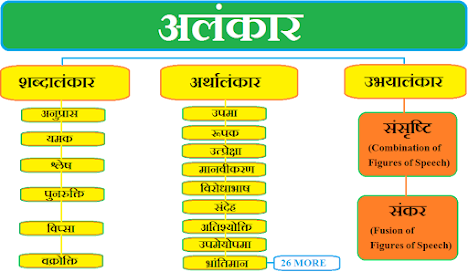
Direct meaning we easily understand through alankar is ornaments. It adorns and gives beauty to poetry. Acharya Bhamah was the first to define poetry and for the first time presented the interpretation of 39 metaphors while accepting the main element of poetry, metaphor.
Language is ornamental, and ornamental language is applied to language. Bhamaha categorized Alankara into groups : SHABDALANKAR and ARTHALANKAR.
Alankar is not natural. E.g.; ‘Her face is like the moon’. This sentence contains Alankar. Alankar mixes in language, like a homogeneous mixture.
Riti Theory
'रीतिरात्मा काव्यस्य; विशिष्टापदरचना रीति: |'
Riti means style. Kavyalankasutra is the poetic work of Acharya Vamana, where he talks about riti. For Vamana, that formless, indeterminate essence of Kavya is Riti.Vamana said; the essence of Kavya is Riti (रीतिरात्मा काव्यस्य); just as every body has Atma, so does every Kavya has its Riti.The explanation offered by Vamana meant that the verbal structure having certain Gunas is the body of Kavya, while its essence (soul) is, Riti.
Riti, a very high position by designating Riti as the Soul of Kavya – 'रीतिरात्मा काव्यस्य; विशिष्टापदरचना रीति:
Auchitya theory
Kshemendra in Kavikanthabharana introduces to auchitya school. It means justification, propriety, decency
उचितं प्राहुराचार्याः सदृशं किल यस्य यत्।
उचितस्य च यो भावस्तदौचित्यं प्रचक्षते॥
He said Auchitya is the very life of Kavya (Kavyasya jivitam) that is endowed with Rasa (Aucityam rasa siddhasya sthiram kavyasya jivitam).
The most essential element of Rasa , he said, is Auchitya. The test of Auchitya is the harmony between the expressed sounds and the suggested Rasa. And , he described Auchitya as that laudable virtue (Guna) which embalms the poetry with delight.
According to Kshemendra, “When one thing befits another or matches perfectly, it is said to be appropriate, Auchitya”:
I Hope this blog is useful to you. I have practically applied Indian aesthetics in my other blogs. Please visit it.
William Butler Yeats (13 June 1865 – 28 January 1939) was an Irish poet, dramatist, writer and one of the foremost figures of 20th century literature. From 1900 his poetry grew more physical, realistic and politicized. Yeats was awarded the Nobel Prize in literature in 1923, his major works include 1928's The Tower and Words for Music Perhaps and Other Poems, published in 1932. Yeats is considered one of the key twentieth-century English-language poets. He was a Symbolist poet, using allusive imagery and symbolic structures. His use of symbols is physical that is both itself and a suggestion of other, perhaps immaterial, timeless qualities.
The Second Coming:
The Second Coming poem was written in 1919 and was first published in ‘The Dial’ in 1920. afterwards included in his 1921 collection of verses Michael Robarts and the Dancer. .It's A Modernist poem as a dirge for the Decline of European Civilization and it can also be called an Apocalyptic poem.
The Second Coming poem is written in the 1919 aftermath of world war 1 and the beginning of Irish War of Independence. This Information easily helps us to read the Poem as a war poem. But if we read the history of 1918-19 we find that it was also a period of Flu pandemic. This creates a confusion whether Yeats wrote this Apocalyptic poem in reference to war or flu, as the poem does not suggest any specific reference in it.
We read the poem as a war poem as war is recorded in our mind very differently than pandemics, Pandemics are individualized while War is a national fight which is powerfully recorded in our minds. Today when we are facing Corona Pandemic we are pulled to read literary works with pandemic insight, till day we used to study same texts but never read it through pandemic sight as we never faced it or it was not in our memory.
Here we are going to read this poem as a pandemic poem.
Elizabeth Outka in her text ‘Viral Modernism: The Influenza Pandemic and Interwar Literature’ (2019) explains a bit about the authors who addressed pandemic in their work. Outka looked closely at the works of Eliot, Woolf and Yeats who have experienced Flu in person. In this blog we will read W.B. Yeats poem The Second Coming with pandemic insight with reference to Elizabeth Outka’s book ‘Viral Modernism: The Influenza Pandemic and Interwar Literature’.
As Eliot said in his essay ‘Tradition and Individual Talent’ the literary work must not be affected by the poet's personal experience. The main aim of literature or a literary work is to provide details about the condition of the society in which it is written. The poet cannot depersonalize his/her work from his personal experience. So first of all we would have to see what W.B. Yeats or any of his loved ones has faced influenza. If he or any of his loved ones would have faced it his mind must be occupied with all the influenza which will be mirrored in his work.
Reading Yeats’ biography we do find that his wife, Georgie Hyde- Lees was pregnant and was caught by Influenza. In that period the highest ratio of death was among the pregnant ladies, around 70% pregnant ladies were dying because of influenza. Yeats wrote this poem when his wife was recovering. Looking at this biographical element we can interpret this poem to be a pandemic poem, it is definitely a war poem but we also find Influenza effect recorded in this poem.
Now we will read a few lines of a poem which verifies pandemic recorded in the poem.
Turning and turning in the widening gyre
The falcon cannot hear the falconer;
Things fall apart; the centre cannot hold;
These lines of the poem capture the terrible situation of that period, the authority is not able to control the condition of. We have seen this situation in the Corona pandemic when the people were dying and getting infected by the Corona pandemic. We didn't have medicine or vaccines, we were not having any solution to this disease and everything was falling apart. We can imagine the influenza pandemic must be having the same situation and that must be the reason behind writing these lines: ‘Centre cannot hold’ the thing was in control and everything was ‘falling apart’.
The blood-dimmed tide is loosed, and everywhere
The ceremony of innocence is drowned;
‘Blood- dimmed tide’ this imagery very strongly indicates influenza as the frequent effect of influenza was bleeding from nose, ears and mouth. ‘Ceremony of innocence’, we can read it as thousands of people who did no sin, innocent were dying. We can relate it to the Corona pandemic, how young and old everyone was dying. Here through ceremony of innocence we can also read that in influenza pregnant womens were dying, the child who was not yet born who has not yet done any ‘karma’, the most innocent one were also dying.
The question might arise why the pandemic is recorded in the background and why it is not directly recorded. We are reading an apocalyptic poem directly in context to war and the pandemic insight becomes secondary. As we saw in the poem above ‘The Second Coming’.
We have gone through pandemic lens, the video will give analysis of the poem.
We already discussed that pandemic or disease is a personal battle and therefore it is recorded differently in everyone's mind and the war is a national issue and it is recorded to everyone in a similar way as it is shown. If a poet a writer writes anything on a contemporary issue they might face some political pressure for not writing negative on any issues like pandemic or disease and write something in the favor of authority and perhaps that's only reason that why in the ‘On Being asked for the War’ Yeats has written
A poet's mouth be silent, for in truth
We have no gift to set a statesman right;
Which suggests whether the poet write truth or not the society the people is only always going to listen to authority, the Statesman and the mob will troll the writer.
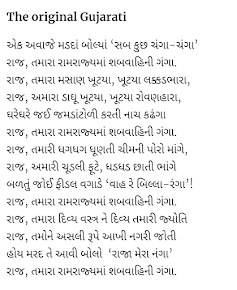
As it happened in our Corona pandemic the Gujarati part 2 switch off the all social media accounts for writing a Gujarati poem showing Real world and negative connotation to authority she was trolled and her controversy was printed in the national newspapers also here is his poem
Looking at the situation we can feel what W.B. Yeats is going through and that's the reason why he is asking that it's better ‘a poet's mouth be silent’. And perhaps this is the reason why today influenza is not recorded in the people's mind the way war is done. we are able to read the poem with the pandemic instead of War but for that we need influenza in our mind and today we are reading it as we are facing the same Corona pandemic and this is opening our minds to read in past that whether any pandemic was present in the past and if yes then how it is recorded in the literature. today this poem this Gujarati poem is recording the real-world, perhaps in the future when the pandemic will erupt society will read this poem and will understand the situation of the world in last pandemic.
On being Asked for a War Poem
Let us analyze ‘On being Asked for a War Poem’ poem as we discussed its line above.
I think it better that in times like these
A poet's mouth be silent, for in truth
We have no gift to set a statesman right;
He has had enough of meddling who can please
A young girl in the indolence of her youth,
Or an old man upon a winter’s night.
It is a small 6 line poem with an ABC ABC rhyming scheme, written in 1915. Yeats was asked by his friend Henry James to write a political poem in response to world war I. Yeats wrote the above titular poem and it has undergone various titles-
To a friend who has asked me to sign his manifesto to the neutral nations
Changed to ‘A Reason…’ In a letter written to Henry James
A Reason for Keeping Silent
Published in Edith Wharton’s A book of Homeless (1916)
On being asked for a War Poem
Published in The Wild Swans at Coole
Critical Analysis of the Poem:
Looking at the title and as discussed before, the poem is a response to the request of a friend to write a political poem in response to War. The poetry begins with a question about the role of the poem in society. As Shelley, a great Romantic poet, once called poets “the unacknowledged legislators of the world”. An ancient philosopher, Plato, even thought that poetry should be banned as corrupting to society. The poem's line ‘A poet's mouth be silent’, Indicates that yet is supporting Plato's view of the poet being silent ‘in times like these’ Which suggest the time like war, the difficult time of the nation or the world. Here we find a contradiction where the poet is writing in the poem that he or she should remain silent it seems the poet has used Metonymy.
‘have no gift to set a statesman right;’ suggested that even if the writers speak or write they have no write to ‘gift’ guide or ability to tell or interfere in any political leader or issue. Which clearly meant that poetry has no connection with politics.
‘He has had enough of meddling who can please’ In this fourth line of the poem that can be read in the two ways as a poet or as a statesman. As the word Statesman is used recently we will first read with reference to the statesman through these lines he suggests that Statesman have done enough ‘meddling’ the other word used for interference in the life of a youth and the life of the old man. And with quick change of imagery by using a poet at the place of he, we can read with a positive connotation that Youth and the old both the generation enjoy is the poem’s interference in their life they enjoy the poet's meddling youth enjoy with its romantic versus while the old enjoys his ballads.
This poem is a contradictory poem, it has an act of refusal-as-assent. It consists of an air of irony, the poet himself is asking poet’s to be silent and he himself is writing it through poem.
We also get confused as to why poets are not happy with war or not supporting it. Because the poet is Pacifist. And the reason for his refusal for not writing a war poem is seen in his letter written to his friend Lady Gregory: ‘I suppose, like most wars it is at root a bagman’s war, a sacrifice of the best for the worst. I feel strangely enough most for the young Germans who are now being killed.’
In a letter of the same year, sent to John Quinn, Yeats wrote that the First World War was ‘merely the most expensive outbreak of insolence and stupidity the world has ever seen and I give it as little thought as I can.’
Also his poems like ‘Easter 1916’, ‘An Irish Airman foresees his death’ suggests his unhappiness towards the war. Ireland was a colony of the British, Irish soldiers had to fight a war not of their patriotic duty but by force of Britisher. We can interpret that it might also be the reason why poet is not interested in wars, Irish people were fighting in war but they had no profit, they were bounded by Britishers.
According to Kuntaka’s Vakrokti theory, the poem has a Vakrokti element in “On being asked for a war poem’ cause of refusal-as- assent in the poem. Specifically Prakaran Vakrokti.
Along with, varn vinyas vakrokti- ‘I think it better that in times like these’.
We also find Ksemedra’s Auchitya theory, as it is a symmetric poem- Iambic pentameter.
According to Anandvardhan’s theory of Dhvani- ‘A poet's mouth be silent’ this line has Ras Dhvani (Vyanjana), it has direct meaning of staying silent but in the poem through this line poet is satirizing that we should stay silent as no authority is going to listen indirectly its satire to authority, we are supposed to understand the other meaning despite its having direct meaning.
According to Bharat’s rasa theory, we find Adbhutam originated from (amazement and wonder) rasa in it.
The Second Coming
According to Kuntaka’s theory of Vakrokti, The imagery of lion’s body and man’s head and rebirth of god seems ironic, which is not possible in real life.
Vyanjana dhvani in ‘The falcon cannot hear the falconer’ has a direct meaning of a bird not being in control but we are supposed to imagine the world/ situation not being in control also “the blood-dimmed tide” stands for waves of violence, while “the rough beast” stands for “the Second Coming.”
Varn vinyas Vakrokti in ‘Turning and turning’.
According to Bhamaha’s Alankar theory, ‘A gaze blank and pitiless as the sun,’ we find upama alankara;
Utpreksha alankar in ‘Surely the Second Coming is at hand.’
And Rupak Alankara in “the blood-dimmed tide” stands for waves of violence, while “the rough beast” stands for “the Second Coming.” ‘The falcon cannot hear the falconer’ has a direct meaning of a bird not being in control but we are supposed to imagine the world/ situation not being in control.
According to Bharat’s rasa theory, Karunya ( compassion, mercy) rasa compassion tears the sufferers who have no choice else then second birth of almighty; Bibhatasam (disgust) and ‘Bhayanakam’( horror, terror) raas in felt in imagery of lion’s body and man’s head imagery
Auchitya is also found as it is a symmetric poem.
This is all my understanding about poems. I have tried to give the majority of Indian poetics (based of theories present in our syllabus) theory applicable in the poem. If you find any to add please write below in the comment box. I hope this might have been helpful to you.