Monday, 29 January 2024

Vadnagar: Historical town (Visit to Vadnagar)

VADNAGAR- AN ANCIENT CITY
(Project-based Learning under Viksit Bharat Abhiyan)

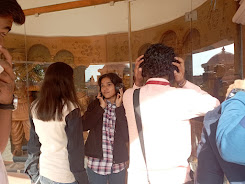
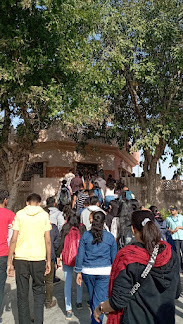
In the pursuit of holistic education, the Institute of India Education(IITE) in Gandhinagar organized an enlightening visit to Vadnagar – a town steeped in history. This immersive experience, part of the Project-Based Learning (PBL) initiative under the Viksit Bharat Abhiyan, aimed to provide students with a firsthand exploration of the cultural, historical, and educational facets of this ancient town. This blog offers concise insights into Vadnagar, providing a snapshot of the visited locations and the experiences encountered during the exploration.
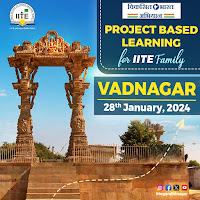

Wandering through Vadnagar's streets, time seems non-linear, blending 4500 years of history in pottery, textiles, and tools from ancient agricultural communities. Traces of the 12th century are felt in step embankments and Solanki dynasty torans.

Echoes of Bhavai folk theater resonate in the Government Museum, with chances of street performances. Vadnagar boasts Gujarat's poets like Dayaram, and Narsinh Mehta, novelists like Govardhanram Tripathi, and musicians like Kaumudi Munshi, and hosts the Tana Riri Music Festival in homage to Nagar Brahmin sisters.

Buddhist presence emerges with a 2nd-century AD sandstone Buddha head, black polished ware-shreds with Brahmi inscriptions found in the Monastery at Vadnagar. The monastery, within the fortified area, featured votive stupas and a Swastika-like pattern of cells around a central courtyard.


Vadnagar: An Ancient Kingdom
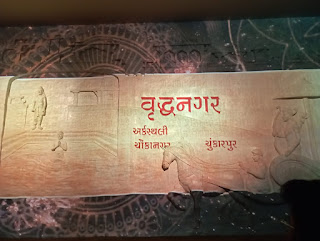
Vadnagar finds its mention in ancient literature, Jain scriptures, and copper plates, which testify that Vadnagar was a famous city of ancient India. As per mythological scriptures, this city was known as 'Chamatkarpur' in Satya Yuga, 'Anartapur' in Treta Yuga, "Anandapur' in Dvapara Yuga and 'Vruddhanagar' or 'Vadnagar' in Kali Yuga. Apart from these names, Vadnagar was also known as 'Arkasthali', Chaunkanagar', or 'Chunkarpur' as well as 'Skandapur'. However, there is no firm opinion about when exactly this ancient city was established.

Nagarkhanda, a part of Skanda Purana (the largest of all 18 mythological scriptures) mentions Vadnagar as 'Chamatkarpur. As narrated in Nagarkhanda, one day, King Chamatkar was out on a hunting expedition. While aiming a male deer, he accidentally killed the female deer, who cursed him that he would suffer from white leprosy throughout life, Suffering from pain, the King sought advice from some renowned Brahmins, who asked him to take a dip in the magical water of the Shankh Tirth Lake. The king did as told; a miracle happened, and he was free of his curse, looking as radiant as ever. Ecstatic, he offered his kingdom and wealth to these Brahmins, but they refused, and instead asked the King to build a beautiful city for them to reside safely. King Chamatkar built a large city, which became famous as 'Chamatkarpur'. According to historical records, the King donated this city to the Brahmins.

Home to Brahmins, followers of Vedas and Nagars, Vadnagar became a thriving city of knowledge and religious presence, gaining prosperity and earning its fame as the 'Kashi of Gujarat'.
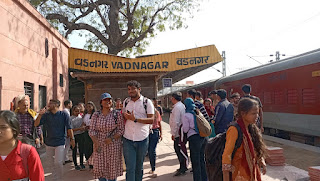
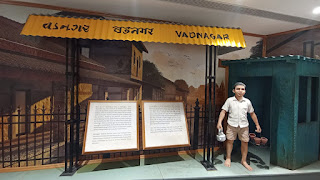


Historic Glory of Vadnagar

According to the Puranas, the name 'Anarta' was derived from Anarta, son of Sharyati, grandson of Vaivasvata Manu. As it was an important manufacturing and trading center for various products, Anantapur was made the capital of Anarta Pradesh. It is also said that Vadnagar must have been a popular center for Buddhism, Jainism, Shaivism, and Vaishnava faiths. The glory of the ancient city of Vadnagar echoed across boundaries, attracting not just traders, but students, local and global travelers, and spiritual knowledge-seekers.

Anartapur, established on the banks of the beautiful Sharmishtha Lake, fed by the waters of river Kapila, finds its mention in Mahabharata as well. The Anarta warriors - Satyaki and Kritavarma fought in the Kurukshetra War. Although, Anartapur rose to glory due to the war, as soon as the war ended, the loss reflected on its weakened military strength. As time progressed, Vadnagar was attacked and looted by many local and foreign rulers. With each attack, it stood up stronger, somehow maintaining its historical significance and identity. Vadnagar kept losing its Nagar Brahmins and other residents, who moved out of the city, seeking shelter elsewhere.

Vadnagar, a city of Brahmins, literary scholars, artists, sculptors, and singer-musicians... the land of pilgrimage places such as Hatkeshwar Temple and Sharmistha Lake, along with the fort enclosing the city with six-gates, Kirti Toran, Tana-Riri Memorial as well as marvelous vernacular architecture has made Vadnagar city an amalgamation of art, culture, and history.



Vadnagar Town Planning
Aparajit-Prichchha, a famous book on town planning elaborates on how well a town can be planned keeping in view the natural elements such as air, sunlight, and water. In this book, 'Pashchime tu Jalashaya' which translates to 'there should be a reservoir in the west' has been considered an essential part of town planning. The scientific logic behind this is that if there is a river or a water body to the west of the town, then the air coming from that side gets cooled, which in turn provides a sense of relief to the inhabitants of the town. Vadnagar is found to have been built based on this very scientific principle.

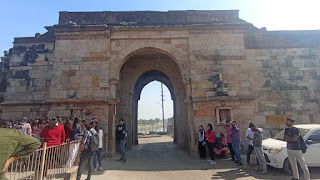
Vadnagar's old town is found inside the walls of a fort with six gates: Kirti, Arjun, Nadiol, Amarthol, Ghaskol, and Pithori. The town was added to the tentative list of the UNESCO World Heritage Sites in December 2022.

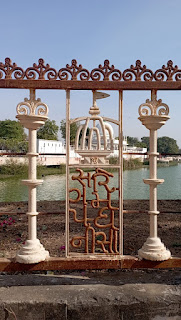
Arjun bari darwajo (Gate


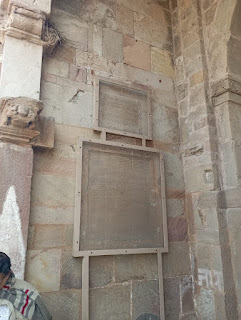
Write up on the Gate by Kavi Shripal (poet in Darbar in Solanki kal) in Prakrut Language. 


Architectural Beautification during the Solanki Period

In 1152 A.D., Solanki ruler Kumarapal enhanced the fort in a city, constructing six unique gates. King Siddharaj built Lake Sharmistha with intricate stonework, featuring Arjunbari Darwajo gate on its shore. The gates showcased sculptures of various deities.

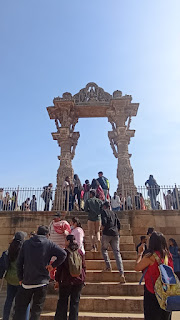
Kirti Toran in Vadnagar, an ornate archway, symbolized Solanki glory with delicate carvings in red and yellow sandstone. The Solanki dynasty contributed to the creation and renovation of temples, establishing a well-planned market, paved roads, and water structures like wells and step-wells.

Magnificent entrances in Dabhoi and Zinzuwada forts, Rani Ni Vav, Modhera's Sun temple, Rudramaal in Siddhpur, and Jain temples at Palitana, Girnar, Tauranga, Kumbhariyaji, and Mount Abu were credited to the Solanki dynasty, showcasing exquisite craftsmanship.


Must-Visit Gems in Vadnagar: Unveiling the Essential Spots Explored

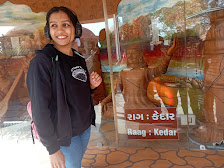
Theme park- On musical ragas
A captivating theme park dedicated to Indian musical ragas awaits visitors, offering a unique experience. Equipped with specially designed headphones, guests can immerse themselves in the enchanting melodies of the six main ragas. Each raga, thoughtfully recorded for optimal listening pleasure, provides a harmonious journey through the rich tapestry of Indian classical music.
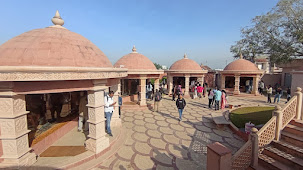


Sharmishtha lake
The ancient lake was developed during the Solanki period and continues to be one of the most scenic points in the city of Vadnagar popularly known as Sameda Lake


Sharmishtha Lake is also mentioned in the Puranas. It is believed to have been constructed by one of the most prominent rulers of the Solanki dynasty, Siddharaj Jaisinh Solanki, but it's believed that it was named after the daughter of the Som dynasty king, who undertook penance here. The early settlement was on the bank of river Kapila flowing from the hills of Aravalli. It fed water to a lake, known as Sharmishtha, at the site, and the settlement extended around it. Over some time the settlement grew into a city of considerable size.

Kirti Toran
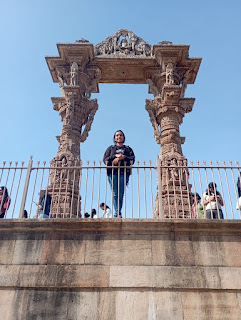
  

Standing at nearly 40 feet, Vadnagar's Kirti Toran, installed by the Solanki rulers, boasts intricately carved images and has miraculously survived numerous attacks and invasions over the centuries. Toran, in Indian architecture, means an artistic arched gateway. Typically, the torans were built at the temple entrances, and banks of vavs (step-wells), wells, or lakes. Many times, when the temples were attacked and destroyed, and only the Torans survived as remnants, it was recognized as 'Yugaloni Chori'. In the oral tradition, Vadnagar's Toran is known as 'Kuwarbaini Chori'. The architecture of the Kirti Toran is very similar to the architecture of Modhera's Sun temple and Siddhpur's Rudramal (Rudra Mahalaya), which leads us to believe that these were built during the Solanki period. Owing to its intricate carving and exquisite sculptures, the Kirti Toran occupies a place of significance amongst Gujarat's Torans.


Shree Hatkeshwar Mahadev
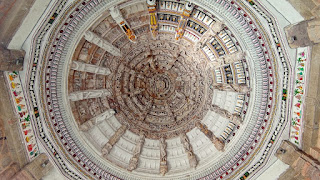


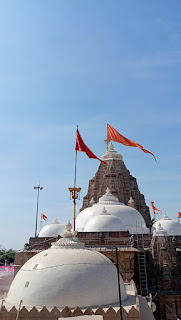
The most significant of the attractions at Vadnagar is the Hatkeshwar Mahadev Temple, considered the Tamily deity of Nagar Brahmins. As per scholars' views, the garbha-griha (inner sanctum of the temple is adorned with an Antarala trief sponge a Mandap (an octagonal hypostyle hall, and three ornamental lateral porches in cardinal directions. The walls of the entire temple are adorned with exquisite sculptures. Mandovara Pitha (the wall that rises above the Shikhar or vertex), Mandap as well and the walls of the porches are adorned with sculptures of the nine planets, figurines of gods and goddesses, and scenes from the life of Land Krishna and events from Pandavas life. Among the sculptures found at the Hatkeshwar Mahades temple, the sculpture of Matsyavatar Vishnu stands out in terms of sculptural art with its upper half in a human shape and the lower half in the shape of a fish.


Buddhist monastery
In 1992, a Bodhisattva idol dating back to the 2nd-3rd century was unearthed in Vadnagar, with an inscription on the pedestal indicating it was donated by a nun for the Chaitya.
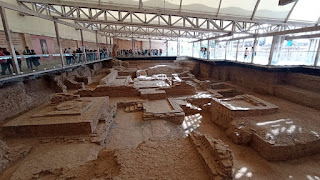

The following major periods of events have been identified through archaeological 'excavation at the site

1. Foundation of the first settlement: pre-Mauryan Period (pre-3rd Century BCE)
2. First fortified settlement: Mauryan & Post-Mauryan (3rd Century BCE-1st BCE)
3. Re-planned town with but brick Fortification: Kshatrapa-Maitraka - Solanki Period (1st Century ACE- 11th Century ACE)
4. Internal modification in town planning: SolankiSultanate-Mughal-Period (12th Century CE-18th Century ACE)
5. Period of present town planning: Maratha to Present (19th Century CE to date)

Historical Background
The Chinese Buddhist Monk Xuanzang or Hiuen Tsiang Visited Vadnagar (ANANDPUR) around 641CE He records, "there are less than 1000 monks of the sammatiya school or little vehicle in 10 monasteries." It suggests that Vadnagar was one of the important centers of Buddhist learning in Western India during that period. He also records Vadnagar as a capital city that has no king. The discovery of the monastery has proved hidden records true.

A Bodhisattva image was found in 1992 from an agricultural field, lying about 1 km southwest of this monastery site. Vadnagar is now an important site in Gujarat for the study of the spread of Buddhism and for understanding the historical and cultural development of the city-state, as literary references and archaeological evidence reveal.



The Legend of Tana Riri

It is well known that Akbar, the great Mughal Emperor, was a patron of art and culture. Tansen, his chief musician, whom he considered one of the Navratna (nine jewels), was blessed with the gift of the knowledge of various ragas. One day, the emperor insisted he sing raga Deepak. Tansen pleaded stating the dire consequences but Akbar didn't budge.

While his singing lit up the lamps of the palace, it induced an intense burning sensation within Tansen's body. The only remedy for cooling it down was that somebody else truly sang raga Malhar. Tansen roamed around the country and came to know that there was a possibility of someone with knowledge of raga Malhar in Vadnagar.

He reached Vadnagar by nightfall and rested on the banks of Lake Sharmistha. Early in the morning, women started coming to the lake to fetch water. As Tansen was watching them closely, he spotted two women in particular filling their pitchers with water. They were sisters - Tana and Riri. No sooner did Tana fill her pitcher than she emptied it, and she did this several times. When Riri asked Tana, "Sister, how many times are you going to do this?" she replied, "As long as we do not hear the tunes of Malhar". Ultimately, Tana succeeded in filling the pitcher such that the water flowing in it emitted the tune of Malhar.

Tansen approached the sisters seeking help saying he was a Brahmin, and was made to sing raga Deepak on the Emperor's insistence. They took pity on him and sought permission from their elders to sing. As they started singing raga Malhar, black clouds of rain engulfed the sky, and by the time they finished, it was raining heavily. Tansen, completely drenched in the cool water, got rid of his burning sensation magically.

Despite knowing that only Tansen could truly sing raga, Deepak, Tana helped him as he had pretended to be a Brahmin. No sooner than his real identity was revealed, Tansen begged everyone present to forgive him. The people forgave him only on the condition that he wouldn't ever divulge details to anyone about Tana and Riri.


The Story behind Tana Riri Memorial
Upon returning to Delhi, Akbar asked Tansen how he was cured. Tansen was in a dilemma - If he gave away the secret, his promise would be broken, but if he didn't, he would be a victim of Akbar's wrath. Out of fear, he narrated everything that had happened at Vadnagar, praising the sisters' singing as well as their beauty.

Unfortunately, two of Akbar's princes eavesdropped the conversation. They planned on kidnapping the sisters for themselves. They reached Vadnagar by nightfall and picked a spot by Sharmistha Lake to rest.

When dawn broke, women started arriving at the shore to fetch water. As soon as Tana and Riri came, the princes recognized them with no difficulty, as they looked quite distinct from other women.

After filling their pitchers, they took the water-filtering cloth off and shook it in the air for drying. The princes took it as a signal for calling them. They approached the two sisters praising their beauty, but the women present there were shocked at the sight of two unknown men and started shouting for help. In no time, the people of the town rushed and caught the princes, beating them to death in the chaos. They buried them along with their horses on the shore.

On the other hand, over the absence of his sons, a worried Akbar ordered his soldiers to start the search. After some time, the news came that the princes had met with death in Vadnagar. Raging with fury, Akbar sent his army to Vadnagar to punish the people of the town and bring Tana and Riri to Delhi.

The army massacred all the people, burnt the city, and captured Tana and Riri. The soldiers put them in a palanquin and began their march back to Delhi. Tana and Riri were determined to die rather than go to Delhi, so when their palanquin reached the Mahakaleshwar temple, just outside the city gates, they sucked the diamonds they were wearing on their rings and died of the poison.

Their bodies were cremated there itself. Later on, two small temple-like structures were built there as their memorial. Set in a beautiful garden, the Tana-Riri Memorial is the venue for the music festival held annually at Vadnagar in their memo and memory. The city never forgot the sacrifice of Tana-Riri and continues to honor their memory with an annual music festival.


Lateri vav
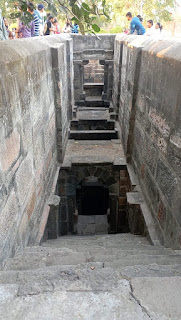

This ancient stepwell, along with many others in Vadnagar, is getting a facelift and being converted into a tourist spot.

Much like the other water retention structures of the region, this vav too offered the option of walking downstairs to recover water. Along with that, this ancient structure does point to the fact that a farming civilization had its roots deep in the region.


Art Gallery
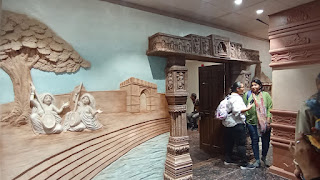


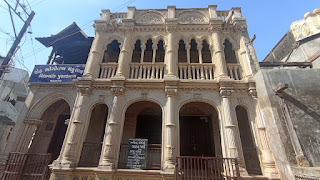
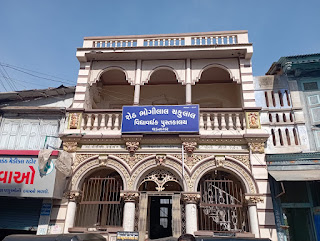
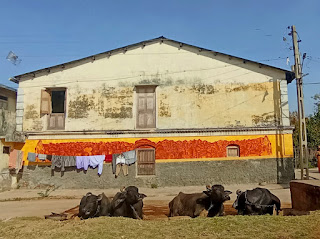
Ancient Structures and Havelis in Vadnagar



Read more about Vadnagar
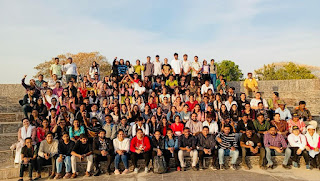
Thanks for reading

Thursday, 19 October 2023

Research Paper: Mythical Patterns in Contemporary Events: A Study of Amitav Ghosh's Gun Island

Wrote this paper at the two-day International Conference on Revisiting History, Ethnicity, and Myth in Literature, organized by Amity University, Rajasthan, on October 19-20, 2023. The paper delves into the topic of Mythical Patterns in Contemporary Events: A Study of Amitav Ghosh's Gun Island.

Mythical Patterns in Contemporary Events: A Study of Amitav Ghosh's Gun Island

Abstract:
Myth, a traditional narrative explaining the origins of the world and society, often involving gods and supernatural elements, was not accepted by Plato in his Republic due to its lack of trusted truth and perceived irrationality. However, the Indian mind has a habit of finding connections between myth and reality, consciously identifying recurring mythic patterns in contemporary events. Regarding the use of myth in the novels, Mukherjee comments- the myth was used consciously to enhance the effect of a contemporary situation. The amalgamation of myth and reality not only adds depth and meaning to the stories but also provides a new contribution to the overall development of their themes and structures. Ultimately, the conscious use of myth in contemporary literature enriches the reading experience by bridging ancient wisdom with modern experiences. The novel Gun Island by Amitav Ghosh masterfully delves into the underexplored territory of utilizing mythology to address contemporary issues and concerns. The myths in this unknown function as symbolic threads that intricately connect the past and the present, shedding light on the profound relationship between humans and nature. Ghosh artfully intertwines historical events, diverse ethnicities, and mythical elements, shedding light on contemporary issues, and environmental challenges. By expertly blending myth and reality, Ghosh prompts readers to question the conventional divisions between truth and imagination, past and present, and the boundaries that separate humanity from the natural world.

Keywords: Myth, Reality, Amitav Ghosh, Gun Island, Contemporariness

Introduction:
Mythical patterns in literature hold a profound and timeless allure, weaving themselves into the fabric of storytelling since the dawn of human civilization. These patterns are distinguished by their archetypal characters, epic quests, and symbolic motifs that transcend cultural boundaries, providing a window into the universal facets of the human experience. In doing so, they furnish a framework for examining complex themes and emotions that resonate with readers across time and place. Myth, an integral element of literary composition, serves as both a reservoir of symbolism and a canvas for artistic expression. Its roots delve deep into classical mythology, offering modern writers a shorthand to explore concepts, interpret events, and dissect characters and themes in innovative ways. Leveraging mythological references within literature adds depth, layers of meaning, and opportunities for contemplation.

Among the literary luminaries who understood and harnessed the potency of myth within their works, T.S. Eliot stands as a prime example. Eliot's masterful use of myth extends beyond mere allusion and metaphorical flourish; it serves as a conduit for connecting his ideas and tropes with universal themes, thereby establishing an external order to the ideas woven throughout his poems (Eliot, 2014).

William Righter in his book Myth and Literature quotes Warren and Wellek, “Myth is narrative, irrational … story-telling of origins and destinies, the explanations… of why the world is and why we do what we do” (Righter, 1975). Myth, at its core, embodies narrative storytelling that often defies rationality, offering explanations for the origins and destinies of the world and human behavior. Scholar William Bascom succinctly defines myths as true narratives from the remote past upheld through faith and often regarded as sacred. This research paper embarks on a journey of demystification, seeking to unravel the enigmas and illusions associated with myths and mythology. Scholars such as Roland Barthes and Claude Levi-Strauss underscore the significance of comprehending the underlying structures and relationships within myths, transcending surface-level content and narrow allegorical interpretations. Mythology emerges as a form of storytelling that imparts philosophical meaning to ordinary life, rendering our experiences intelligible.

In this essay Archetypal Criticism: Theory of Myths from Anatomy of Criticism: Four Essays, Frye explores the archetypal patterns and symbols that recur in myths across different cultures and periods. The intricate interplay between myths and literature underscores how literature both draws from and reinterprets these mythic elements. Frye's archetypal criticism provides a powerful lens through which one can analyze and unveil the profound meanings and universal themes embedded within literary works. He posits that myths, as the ultimate wellspring of storytelling, offer a gateway to excavating the latent conflicts and narratives concealed within the annals of history (Frye, 2000).

Cecil Foster, in his work Blackness and Modernity, quotes Frye's perspective, asserting that "an ideology is a secondary and derivative structure, and that what human society does first is to create stories." In essence, mythology serves as the primordial source from which ideologies ultimately derive. This concept underscores the fundamental role of myth in shaping human thought and culture. (Foster, 2007)

Frye also posits that the plot or narrative of a literary work emerges organically from the metaphorical and poetic language in which myth is embodied. In this light, contemporary mythological novels bear a striking resemblance to Aristotle's concept of "mythos" or narrative, which he referred to as the animating formal cause—the very "soul" of a work—that assimilates all details into the realization of its unity. Frye's insight underscores the intrinsic relationship between myth and narrative structure in literature, highlighting how they converge to give depth and coherence to literary creations. (Frye, 2000)

In the influential work Mythologies, Roland Barthes redefines myth as a historically specific ideological worldview that organizes and guides social life. He posits that objects and concepts can attain the status of myth over time, persisting as enduring symbols in culture. Barthes sees myth as a form of communication, capable of transforming nearly any subject into a myth when conveyed through a specific discourse. The key characteristic of myth, according to Barthes, is its ability to present culturally specific elements as timeless and natural, thus reinforcing ideological narratives. By demystifying myth, Barthes aims to unveil the illusions that underpin national and social cultures. He emphasizes that myths, whether ancient or modern, have a historical foundation chosen by history to validate certain political ideas. This dual nature of myth, simultaneously universal and ideological, highlights its role in shaping and legitimizing societal beliefs. Levi-Strauss's scientific approach to mythology reveals the underlying structures within these narratives, providing insights into the human psyche. Demystification, treating myths as linguistic systems of signs and symbols, contextualizes them culturally and historically, deepening our understanding of their symbolic dimensions. Myths, transcending their origins, offer tools to explore contemporary issues and provide fresh insights. He writes, “Myth is a language and it is part of human speech… It is both the same thing as language and also something different from it” (Barthes, 1993).

The intersection of myth, literature, and demystification creates a captivating realm where timeless narratives evolve, illuminating modern conundrums and showcasing the enduring power of storytelling. Levi-Strauss likens myth to language, as it's both similar to and distinct from it. Mikics summarizes Levi-Strauss, depicting myths as fundamental thought structures governing human existence, rooted in oppositions like cultivated versus primitive and human versus divine, explaining natural phenomena and bearing distinct cultural structures. (Lévi-Strauss, 2003)

In the essay, “Myth Today”, Barthes considers myth as a type of speech - a second-order semiological system of communication that is a special preconditioned form of language with a message. Myth has a double function. It points out and notifies us, it makes us understand something and it imposes it on us. (Barthes, 1993)

For Malinowski in his Myth in Primitive Psychology (2011), myths are an ‘indispensable ingredient’ of all cultures, which are continually modified and renewed by the modifications of history (Malinowski, 2014).


Amitav Ghosh’s Gun Island
Myths were inherently literary in structure. “Mythology as a total structure, defining as it does, a society’s religious beliefs, historical traditions, cosmological speculations, in short, the whole range of its verbal expressiveness – is the matrix of literature” (Frye, 2000). 

Amitav Ghosh's novel Gun Islan’ skillfully blends mythology with modern themes. Ghosh's talent for weaving history, culture, and myth is evident in this 2019 book. The story takes readers from the present to the ancient past, connecting them through myths and legends. With settings like the Sundarbans and Venice, the novel blurs reality and imagination, making it a captivating and immersive read. Ghosh's use of mythology isn't just a backdrop; it's a driving force that prompts reflection on the enduring power of myths in shaping our world. Gun Island describes the quest of Deen, a scholar and collector of rare books, who returns from New York, his city of domicile, to the Sunderbans in West Bengal to unravel the mystery and legend of a seventeenth-century merchant, Bonduki Sada-gar, translated “The Gun Merchant,” and his persecution by Manasa Devi, mythical goddess of snakes.

In Amitav Ghosh's novel, Gun Island, the character of Manasa Devi (Snake Goddess) is first introduced through a conversation between Kanai Dutt and Deen, in which the myth of Chand Saudagar is discussed. This myth, crafted by Ghosh himself, serves as a central thread that weaves the novel's themes together. Deen's discovery of the Myth of Bonduki Saudagar and Manasa Devi and visits to The Shrine, as told by Nilima Bose, takes center stage. Here, he bears witness to the Great Cobra, a belief held by many that the snake perpetually resides within the Shrine of Mansa Devi.

Through this myth, Ghosh draws parallels between the Little Ice Age and our present-day reality, where natural disasters such as droughts, floods, cyclones, wildfires, and epidemics have become a ubiquitous part of life. The novel posits that these unprecedented climatic conditions are the primary cause of these disasters. Despite being intrigued by the myth of the Gun Merchant after hearing it from Kanai, Deen initially sees it as nothing more than a story, not worth his further consideration. However, while attending a conference in Los Angeles, he is moved by the speeches of a young speaker and Cinta, who suggest that there may be some truth to the myth after all. During his visit to Los Angeles for a conference, he once again had a startling encounter with nature. This time, he witnessed a yellow-bellied sea snake in the ocean, an encounter that tragically resulted in the demise of a nearby dog.

After the conference, Deen engaged in a deep conversation with Cinta about the myriad questions and confusions that had arisen from his encounters with the Manasa Devi Myth in Bangladesh. Together, they embarked on a quest to decipher the etymology of the various locations associated with the myth. Inspired by Cinta's wisdom and enthusiasm, Deen felt compelled to explore the enchanting city of Venice and trace the footsteps of the Gun Merchant, hoping to uncover the hidden truths concealed within the myth. Along his journey, Deen unraveled the intriguing and sometimes whimsical names of these places, all while diligently striving to unearth the veracity of the Gun Merchant's legend.

In the novel, Deen is introduced to a myriad of stories surrounding Bonduki Sadagar and his encounters with Manasa Devi, all recounted by individuals like Nilima Bose and Tipu. Among these tales, one particularly intriguing narrative unfolds, involving the Gun Merchant. As the story goes, Mansa Devi herself urged the Gun Merchant to become her devoted worshipper and construct a shrine in her honor. However, the Gun Merchant, initially reluctant, interpreted the trials and tribulations that befell him as signs sent by Mansa Devi, prompting him to seek refuge on an isolated island, which came to be known as Gun Island. Despite his best efforts to evade her, Mansa Devi eventually located him in this remote refuge, subjecting him to enduring torment and trials. It was during this grueling ordeal that the Gun Merchant finally acquiesced to Mansa Devi's divine will, embracing his role as her devoted worshipper. With newfound determination, he resolved to build a shrine dedicated to her amidst the mystic landscapes of the Sundarbans. Through the conversation with Horen Naskar, while visiting the shrine of the Gun Merchant, Deen is prompted to consider the reasons for the Gun Merchant's migration from Sundarbans. It becomes clear that the Gun Merchant may have been driven to leave his home by one of these very same factors that have caused other characters to migrate. “the disaster that had forced the Gun Merchant to flee his homeland: a drought so terrible that the streams, rivers, and ponds had dried up and the stench of rotting fish and dead livestock had hung heavy in the air.”(Ghosh, 2019)

At the end of the novel, Ship, Lucania embarks on a mission to protect the refugees aboard the blue boat. Unfortunately, this mission is met with opposition from right-wingers, much like the attack experienced by the Gun Merchant during his time as a slave of pirates. This parallel serves to reinforce the themes of the novel and draws connections between the past and the present. Additionally, while everyone was aboard the Lucania, a sudden change in the atmosphere occurred, a phenomenon known as bioluminescence. This event, with its mythical connotations, suggests the presence of Manasa Devi herself. This moment serves to underscore the importance of the myth and its significance within the larger context of the novel.

In the research paper entitled Myth and Contemporary Maithili Literature, Ratneshwar Mishra states that “myth corresponds neither to religion nor to science. It, rather, comforts both heart and mind and coalesces the gap between intellect and emotions, fact and ideal, the human and non-human” (Saccidānandan, 2010). Dinanath Datta, the central character of the novel, embarks on a captivating journey, tracing the footsteps and experiences of Bonduki Saudagar as relayed in the myth. Through this odyssey, he comes to a profound realization that the myth itself is a reflection of the tangible, lived experiences of an individual. As Deen traverses the path once trodden by the Gun Merchant, he finds himself facing parallel encounters, mirroring those described in the myth. On the beach, his flight, the Shrine, becomes a stage where he, too, confronts enigmatic snakes reminiscent of how Saudagar witnessed the presence of Manasa Devi in his own life. In this convergence of myth and reality, Deen's journey unravels the intricate tapestry of beliefs and experiences, blurring the lines between the two in a mesmerizing exploration of the human spirit. The dichotomy between history and myth often hinges on the distinction between literate and non-literate societies, with history predominantly emerging from literate societies and myths serving as a reservoir of the past in non-Western and less technologically advanced societies.

At the heart of the novel lies the captivating myth of the snake goddess Manasa, which Ghosh interlaces with the Santa Maria della Salute in Venice, also known as the Madonna of Good Health. This fusion of ancient folklore and contemporary symbolism serves as a thematic anchor, drawing connections between spirituality, health, and the environment. A central concept explored in Gun Island is the notion of a new universal religion—one centered on compassion towards nature and all living beings. Ghosh emphasizes a fluid, trans-temporal, and trans-spatial essence and existence, challenging conventional religious boundaries and promoting a harmonious coexistence with the natural world.

In his The Texture of Culture (2012), Aleksei Semenenko mentions that the beauty of myths lies in the fact that they do not “belong exclusively to the past and archaic cultures but constitute an intrinsic part of modern culture as well”(Semenenko, 2012). The myth of Prometheus, a central figure in Greek mythology, embodies the archetype of a benefactor who defies divine authority to bestow knowledge and power upon humanity. This enduring narrative has found striking resonance in recent real-world events, particularly within the realm of technological advancements. we undertake a comprehensive analysis of contemporary events that unmistakably reflect these mythical patterns in Gun Island, while concurrently accentuating the ethical dilemmas and repercussions mirroring the Promethean myth. These modern technological advancements function as a contemporary iteration of Prometheus's daring act of purloining fire, symbolizing the acquisition of transformative knowledge. In the context of artificial intelligence, biotechnology, and space exploration, these innovations promise remarkable capabilities and possibilities while concurrently raising profound ethical questions. We explore the burgeoning ambitions of private space enterprises and the associated ethical concerns surrounding resource utilization, environmental impact, and the responsibilities of space exploration. In elucidating these developments, we draw explicit parallels to the Promethean myth, showcasing humanity's contemporary expansion into new frontiers and the ethical responsibilities that accompany such endeavors. This examination underscores the enduring relevance of the Promethean myth in our contemporary world, where humanity grapples with the dual nature of empowerment and responsibility amid the relentless pursuit of knowledge and technological progress.


Conclusion:
In conclusion, the intricate relationship between mythology, literature, and contemporary culture is a testament to the enduring power of storytelling and its ability to shape our understanding of the world. Amitav Ghosh's novel Gun Island exemplifies the enduring relevance of mythology in literature, where the ancient and the modern intersect. The novel Gun Island by Amitav Ghosh masterfully exemplifies the power of myth in addressing contemporary issues and forging connections between the ancient and the modern. Ghosh's skillful weaving of mythology, history, and reality creates a rich tapestry that not only adds depth and meaning to the narrative but also serves as a vehicle for exploring profound themes and environmental concerns. In a world where Plato once rejected myth as lacking in trusted truth and rationality, Ghosh's work demonstrates that myths can indeed serve as potent tools for understanding and engaging with our complex reality. By blurring the lines between truth and imagination, past and present, and humanity and nature, Ghosh challenges readers to rethink conventional boundaries and appreciate the enduring wisdom that myths provide. Ultimately, the conscious use of myth in contemporary literature, as exemplified by Gun Island, enriches the reading experience by bridging the timeless wisdom of ancient tales with the urgent issues and experiences of the modern world, reminding us that the threads of myth continue to weave their way through our lives, connecting us to the mysteries of existence. Exploration of the Promethean myth in the context of technological advancements underscores the ongoing dialogue between ancient narratives and our ever-evolving understanding of the world, we are reminded that the power of myth extends beyond the pages of literature. It shapes our cultural consciousness, influences our ethical choices, and guides us in addressing the pressing challenges of our times. As we reflect on the journey through myth and literature, we find that these timeless stories continue to illuminate our path forward, providing insight, inspiration, and a profound connection to the human experience. Amitav Ghosh's Gun Island serves as a vivid testament to the enduring relevance of mythology in literature, inviting us to embrace the wisdom of the past as we navigate the complexities of the present and the unknown horizons of the future.


References

Barthes, R. (1993). Mythologies (A. Lavers, Ed.; A. Lavers, Trans.). Vintage.

Eliot, T. S. (2014). The Waste Land: 75th Anniversary Edition. HarperCollins.

Foster, C. (2007). Blackness and Modernity: The Colour of Humanity and the Quest for Freedom. McGill-Queen's University Press.

Frye, N. (2000). Anatomy of Criticism: Four Essays. Princeton University Press.

Ghosh, A. (2019). Gun Island: A Novel. Penguin Random House India Private Limited.

Ghosh, A. (2019). Gun Island by Amitav Ghosh. World Literature Today. Retrieved September 21, 2023, from https://www.worldliteraturetoday.org/2019/autumn/gun-island-amitav-ghosh

Huda, R. (2021). Revisiting Popular Bengali Folklores to Re-imagine the Past and Engage with the Present: Gun Island and the Tribulations of Climate Change. Re-writing, Re-imagining the Past, XI(1), 102-113. https://doi.org/10.31178/UBR.11.1.9

Lévi-Strauss, C. (2003). Myth and Meaning. Taylor & Francis.

Malinowski, B. (2014). Myth in Primitive Psychology. Read Books Limited.

Righter, W. (1975). Myth and Literature. Routledge & Paul.

Saccidānandan (Ed.). (2010). Myth in Contemporary Indian Literature. Sahitya Akademi.

Semenenko, A. (2012). The Texture of Culture: An Introduction to Yuri Lotman's Semiotic Theory. Palgrave Macmillan.

Zade, D. M. C. (2018, July). Myth And History. Literary Endeavour, IX(3), 329-333.

Wednesday, 4 October 2023

Maslow's Hierarchy of Needs- Abraham Maslow

Maslow's Hierarchy of Needs
Abraham Maslow

Maslow's hierarchy of needs is a psychological theory developed by Abraham Maslow in the mid-20th century. It is often depicted as a pyramid and outlines a hierarchical structure of human needs, with the most basic physiological needs at the bottom and higher-level psychological needs at the top. The theory suggests that individuals are motivated to fulfill these needs in a sequential order, with lower-level needs taking precedence before higher-level ones.


Here is a brief overview of the five levels of Maslow's hierarchy of needs, from the most basic to the highest:

1. Physiological Needs: These are the most fundamental needs for survival, including food, water, shelter, sleep, and basic health. Without these necessities, a person's physiological well-being is compromised.

2. Safety Needs: Individuals seek safety and security once physiological needs are met. This includes physical safety (protection from harm), financial security, stable employment, and a safe living environment. Meeting safety needs helps reduce anxiety and fear.

3. Love and Belongingness Needs: After the physiological and safety needs are satisfied, people need social belonging and intimate relationships. This level includes friendships, family bonds, romantic relationships, and a sense of community. Humans are inherently social beings and thrive on connection with others.

4. Esteem Needs: Once social needs are met, individuals strive for self-esteem and recognition from others. This includes gaining self-respect, achieving success, earning the respect of others, and feeling a sense of accomplishment. Esteem needs can be both internal (self-confidence, self-worth) and external (recognition and admiration from others).

5. Self-Actualization Needs: At the top of the hierarchy is self-actualization, which represents the realization of one's full potential, personal growth, and self-fulfillment. People pursuing self-actualization engage in creative activities, seek personal growth, and strive for a sense of purpose and meaning in life.

It's important to note that not everyone progresses through these levels similarly, and individuals may move back and forth between them. 

Additionally, Maslow later expanded his theory to include two more groups: Cognitive Needs (the need for knowledge and understanding) and Aesthetic Needs (the need for beauty and order). However, these additions are not as widely recognized as the original five levels.


Maslow's hierarchy of needs has been influential in psychology and various fields, including education, management, and marketing, as it provides a framework for understanding human motivation and behavior. However, it has also been critiqued for its Western cultural bias and the assumption that these needs are universally prioritized in the same way across all cultures.

Maslow's Hierarchy of Needs provides a timeless framework for understanding human motivation and behavior. In a rapidly evolving world filled with technological innovations, it's fascinating to see how these innovations have influenced and reshaped our pursuit of needs across the hierarchy. While the model isn't without its limitations, it remains a valuable tool for psychologists, researchers, and anyone interested in understanding what drives human behavior.

As we continue to navigate the complexities of the digital age, Maslow's pyramid serves as a reminder that, at our core, we all share fundamental human needs that guide our actions and aspirations. Innovations will continue to emerge, adapting to our ever-changing world and helping us meet our needs in new and creative ways.


Innovations in Meeting Human Needs

Throughout the years, innovative solutions have emerged to help individuals meet their needs across Maslow's Hierarchy. Let's take a closer look at how these innovations have reshaped our understanding of human motivation:

1. Digital Connectivity and Social Needs:
In the realm of love and belongingness, social media platforms have fundamentally altered how we connect with others. Facebook, Twitter, Instagram, and other platforms allow us to maintain relationships, make new friends, and share our lives in ways that were unimaginable just a few decades ago.

2. E-commerce and Safety Needs:
Online shopping and the growth of e-commerce have transformed how we fulfill our safety needs. With the click of a button, we can purchase home security systems, insurance policies, and even cybersecurity services to protect our physical and digital assets.

3. Online Learning and Self-Actualization:
The internet has democratized access to education and self-improvement resources. Platforms like Coursera, Khan Academy, and YouTube offer a plethora of courses and tutorials, allowing individuals to pursue self-actualization and personal growth on their terms.

4. Personal Branding and Esteem Needs:
Social media and personal branding have given individuals the tools to build their self-esteem and gain recognition. Many people have leveraged platforms like LinkedIn and Medium to share their expertise and experiences with a global audience.

Challenges and Critiques
While Maslow's Hierarchy of Needs remains a valuable framework, it's essential to acknowledge some of the criticisms it has faced. Critics argue that human needs are not always hierarchical and can vary widely from person to person and from culture to culture. Additionally, the model doesn't account for the complexities of individual experiences, such as those with disabilities or in challenging social circumstances.


Real-World Applications of Maslow's Hierarchy
Understanding Maslow's Hierarchy of Needs has profound implications for various fields, including psychology, education, marketing, and personal development. Let's explore some practical applications:

1. Education: In the realm of education, teachers and educators can apply Maslow's theory by recognizing that students must have their basic physiological and safety needs met before they can fully engage in learning. Schools often provide meals, a safe environment, and emotional support to create the conditions for effective education.

2. Marketing and Advertising: Marketers understand that their campaigns can tap into consumers' needs at different levels of the hierarchy. For instance, an advertisement might appeal to the need for self-esteem by portraying a product as a status symbol or highlighting safety features to address security concerns.

3. Personal Development: Individuals can use Maslow's Hierarchy as a framework for personal growth. By identifying which level of needs they're currently focused on, they can set appropriate goals and aspirations. This self-awareness can lead to a more fulfilling life.

4. Psychological Counseling: Therapists often use Maslow's theory to assess their clients' needs and develop treatment plans. Understanding which needs are unmet can help therapists address underlying issues and guide individuals toward greater well-being.

Critiques and Limitations
While Maslow's Hierarchy of Needs has been influential, it's not without its criticisms. Some argue that the hierarchy oversimplifies human motivation and that individuals may prioritize needs differently based on their culture, life experiences, and personal circumstances. Moreover, the theory may not account for the complexities of modern life, where people may pursue multiple needs simultaneously.

Saturday, 12 August 2023

Research Paper: From Tradition to Animation: A Critical Examination of Gender in Indian Folklore and Disney Films

From Tradition to Animation: A Critical Examination of 
Gender in Indian Folklore and Disney Films
(National Seminar- Coimbture- Blended mode)


On August 4, 2023, I presented my research paper titled 'From Tradition to Animation: A Critical Examination of Gender in Indian Folklore and Disney Films' at the National Seminar 'Confluence of Tales, Myths, and Culture in Literature, organized in a blended mode by PSG College of Arts and Science, Coimbatore. The paper delved into the deep-seated gender bias within Indian society, tracing its origins from ancient mythologies, and critically analyzing the representation of gender in Disney films. The study revealed how both contexts reinforce traditional stereotypes, contributing to the shaping of societal norms.


Abstract: 
Gender bias is a pervasive issue deeply ingrained in societal structures, with women often being misunderstood and misrepresented. In patriarchal societies like India, this bias is reflected in religious texts, mythologies, and traditional beliefs, where women are relegated to subordinate roles and restricted in their aspirations and contributions. This research paper aims to shed light on the entrenched position of women in Indian society, focusing on how mythologies contribute to the degradation of their status. It traces the roots of gender inequality back to the Aryan civilization, emphasizing the longstanding nature of the problem. Children's understanding of relationships and gender can be influenced by TV representations, which might not readily accept new information that challenges existing beliefs. Disney, a major animation company, has tried to avoid direct objectification or dependency of female characters on males. However, it still exhibits discriminatory attitudes towards men and often portrays limitations on female characters' pursuits of dreams, overshadowing their aspirations with an emphasis on marriage and domesticity. While Disney heroines gain a stronger sense of self, they perpetuate the image of an unattainable ‘perfect girl’, reinforcing traditional stereotypes. Additionally, female characters in Disney films rely heavily on support from others, reinforcing the notion that women need constant help and undermining efforts to promote gender equality. This paper delves into the portrayal of gender behaviors and appearances in both Indian folklore and Disney films, critically analyzing the perpetuation of traditional stereotypes. By examining the narratives and character representations in these two distinct cultural contexts, it seeks to draw parallels and identify the impact of gender bias on shaping societal norms and expectations.

Keywords: Gender bias, Indian Folklore, Disney Movies, ideal women,


Introduction
Gender discrimination in patriarchal India remains a pressing issue, with men holding property ownership and women facing subordinate roles. The birth of male children is celebrated, while girl childbirths are often devalued, leading to a limited emphasis on girls' education. Women endure household violence and sacrifice in critical situations, facing unequal access to education and limited employment opportunities. Challenging prevailing norms, empowering women through education, and promoting equal opportunities are essential for achieving gender equality.

Gender biases are ingrained societal constructs, impact perceptions, treatment, and worth based on gender. These biases, explicit or subtle, influence decisions, opportunities, and relationships. Recognizing their origins and outcomes is vital for fostering equality and inclusivity. Often rooted in cultural, historical, and institutional norms, tackling gender biases is essential for progress. According to the prominent feminist scholar Simone de Beauvoir, "One is not born, but rather becomes a woman" (De Beauvoir). De Beauvoir argues that gender is a social construct, not an inherent trait and that societal expectations shape the roles and behaviors assigned to men and women.

The status of women in Indian society has undergone significant changes over the centuries, particularly within the realm of religion. Wendy Doniger points out, “The female sex has never found favor with any of the world’s religions, or with their priests and prophets” (Doniger).

Women in Indian Myths/ Folklore
Looking back to the Early Vedic period which marks the composition of Rigved it provides valuable insights into the status of women during that era. Despite living within a patriarchal society, women held significant importance as joint owners of property alongside their husbands. They exercised authority over bipeds (slaves) and quadrupeds (cattle), signifying their active involvement in household economy and societal affairs. Unlike later periods, chastity did not carry excessive value during the Early Vedic Period, allowing women a degree of personal agency. Education played a vital role for women in this era. Many high-class women received education and actively engaged in intellectual and philosophical discourses. Remarkable female composers, known as ‘Brahmavadinis’, such as Gosha, Apala, Lopamudra, Maitreyi, Gargi, Indrani, Mudgalini, and Vishvara, are mentioned throughout the Rig Veda. Lopamudra, for instance, is credited with six verses in Book 1 Hymn 179, showcasing women's literary achievements (Doniger).

In ancient India, women went beyond household duties, engaging in various careers like teaching, music, dance, and even martial pursuits. Historical records highlight female warriors such as Shashiyasi, Vadhrimati, and others, showcasing their multifaceted roles. Some women, like Amajur, opted for unmarried lives. However, while the Early Vedic Period showcased women's empowerment, it wasn't universally accessible. Limited mentions of female scholars and unequal religious roles indicate constraints on women's freedoms. Male dominance persisted, seen in minor female deity roles and limited religious authority for women.


Women in Ramayana
The Ramayana, a major Indian epic, occupies a crucial role in Hindu mythology and literature. While Valmiki's rendition from the 2nd century BCE to the 2nd century CE is widely acknowledged, the epic encompasses various versions across religious beliefs and geographical regions. (Vālmīki).

In Rama's infancy, women like Kausalya, Kaikeyi, Sumitra, Manthara, and Ahalya exemplify Dharma through obedience as daughters, sisters, and wives. Deviations lead to tragedy — Sita's abduction and Ahalya's petrification. Rama's heroic rescues define the narrative. In his adulthood, the focus shifts to Sita, Urmila, Mandavi, and Shrutakirti. They embody loyalty as wives and sisters, supporting husbands. Deviation brings consequences. The forest exile introduces ambitious women like Anasuya, Surpanakha, and Shabri, challenging norms. Kaikeyi's ambition banishes Rama, and Surpanakha's assertiveness angers men, implying defiance shames women.

Goddesses like Sita, Sati, and Savitri are revered among Hindu women as embodiments of devotion, sacrifice, and loyalty to husbands. Traditional ideals spotlight women's dedication to spouses, seen in Ramayana and Mahabharata. Sita, devoted to Rama, personifies this ideal. Despite being abducted during Rama's forest exile, she overcomes challenges and reunites. Doubts about her fidelity lead to a trial by fire, vindicating her innocence. However, skepticism persists, causing Rama to send her to the forest, where she gives birth to their twin sons.

Hole highlights that Sita is revered as a paragon of virtue, offering a model for young girls to follow. Her steadfast devotion to her husband becomes an inspiration for Hindu women, fortifying traditional gender roles and cultural expectations. However, it's crucial to acknowledge that these narratives, although ingrained in Hindu culture, might not encompass the diverse viewpoints and aspirations of modern women. Depicting women solely as self-sacrificing and devoted to husbands can reinforce certain gender norms, potentially curbing opportunities for women's empowerment and agency (Hedman).


Women in Mahabharata
In contrast to the Ramayana, the Mahabharata offers a wealth of intricate female characters that defy simple categorization. While traces of patriarchy persist, they hold less sway, permitting diverse and courageous portrayals. The epic mirrors sexual liberation with varying conjugal dynamics. Women break traditional molds, revealing intellect, political sway, and martial prowess. Despite extolling devoted wives, instances like Draupadi's use as a gambling prize expose underlying mistreatment and misogyny. Remarkably, the Mahabharata's narrative features women, particularly Draupadi, questioning their husbands' choices, influencing politics, and taking charge for justice—an aspect less apparent in the Ramayana. (Arnold).

In the Mahabharata, women embrace greater sexual freedom, participating in polygamous and polyandrous relationships. Pandu's multiple wives and Draupadi's five husbands exemplify intricate conjugal dynamics. Unlike Ramayana's archetypes, Mahabharata's women exhibit diverse personalities and skills. Draupadi's mastery of 36 arts underscores her intellectual prowess. Hidimba and Amba challenge gender norms through martial abilities. Crucially, Draupadi defies tradition by questioning husbands' decisions and shaping politics, contrasting with Ramayana's submissive women. Her assertiveness marks a significant shift in female portrayal.

In the Mahabharata, obedient and self-sacrificing wives are venerated, alongside liberated depictions. Draupadi's disrobing exposes mistreatment and misogyny. Similar to Ramayana, threats to a woman's honor challenge her husband's masculinity, sparking conflict. Mahabharata's women break norms, displaying diverse roles and skills. Despite lingering patriarchy, it differs from Ramayana, presenting nuanced and varied ancient Indian female representation.

In the Puranas, goddesses exhibit two fundamental qualities: Shakti (active and creative) and Prakriti (material essence). These qualities are deemed positive when guided by masculine forces. Male gods oversee the attributes of protective and creative goddesses. Deities like Lakshmi, Sita, and Parvati honor and heed their husbands. Conversely, goddesses like Kali and Shitala are seen as potent and independent, not bound by male control.

In the article ‘Hindu Goddesses as role models for Women?’ by Hanna Hedman. Hole aligns with Hellman's view that femininity should be under male control. She notes a power dynamic where Prakriti symbolizes wildness. Women, perceived with more Prakriti, are seen as needing control to prevent overpowering. Goddess Kali exemplifies this—her consort Shiva curbs her violence. Purusa defeating Prakriti restores order, fostering harmony. (Hedman).

Women in Disney Movies
In 1937, with the release of its first animated film, Disney embarked on a journey that has spanned generations. However, despite the advancement of feminism over the years, the portrayal of female characters in Disney films has often been criticized for reinforcing passive, idealized stereotypes that cater to male characters. Throughout Disney's history, female characters have been depicted as white-skinned, slim, and dressed in a manner deemed ‘decent’. Additionally, they are frequently portrayed as relying on male characters to achieve their goals, perpetuating a gender dynamic that could have potentially negative consequences for young female audiences exposed to these films during their formative years (Ji).

Bell, Haas, and Sells note, "If Disney corpus can be seen as peddling a pedagogy of innocence, perhaps one of the most telling lessons it sells us is that of gender ---of bodies, sexuality. and desire" (Bell et al. 155-156). Disney princess films, including Beauty and the Beast, exemplify entrenched gender stereotypes through characters adhering to traditional roles. Despite targeting a female audience, Disney maintains a male-centric character-creation approach. Male interests, power, and leadership overshadow female counterparts, resulting in female characters deferring to male guidance and relying on them for rescue and salvation.

Corsaro refers to the term childhood symbolic culture to explain the various representations or expressive symbols of children's beliefs, concerns, and values. Three primary sources of childhood symbolic culture are children's media (e.g., cartoons and films), children's literature (e.g., fairy tales), and mythical figures (e.g., Santa Clause). Simply put, children often make use of popular stories, myths, and fairy tales to make sense of themselves and their surroundings (Corsaro). Examining the broader scope, Disney films consistently center on significant themes: marriage/love as the ultimate goal for heroines; equating beauty with femininity; constraining females at puberty; suppressing women's voices; depicting females succeeding or being rescued solely by men's aid. Hence, ‘the Disney heroine survives to find happiness thanks solely to the heroism and sacrifice of male characters and without experiencing personal growth or self-empowerment (O'Brien).

Snow White, Ariel, and Cinderella epitomize this trend. Snow White's wish is for her true love to find her, Ariel forsakes her voice and independence to win Prince Eric, and Cinderella is granted a mere few hours to enchant the prince before her return to her humble life. In Disney's depiction of Cinderella, her contrast with her stepsisters emphasizes beauty, charm, and homemaking as marriage prerequisites. Snow White and Sleeping Beauty confront grim outcomes while their male counterparts seek freedom. These constraints reflect emerging female sexuality and rivalry fears. Likely preserving purity or appeasing male concerns, control emerges during crucial life stages. In The Little Mermaid, Ariel gives up her voice for a man's love, and Belle in Beauty and the Beast sacrifices her freedom for castle life. This pattern of silencing heroines mirrors the historical suppression of women's voices in fairy tales. Male characters save princesses—Cinderella's companions orchestrate her rescue, and Ariel's friends defeat the sea witch for her prince.

Downey argues Disney fairy tales ideologically saturate their audiences with "archetypal myths...symbols...[and] values derived from a distinctly American cultural context" (Downey 187). Because the context historically is rooted in patriarchy, Disney tales can be interpreted as reaffirming the status quo, and depicting the feminine as a "paradigm of powerlessness" (Downey 185). Researchers like O'Brien claim the female characters in Cinderella and The Little Mermaid represent a continuation of the practice of creating characters that enact female oppression and embrace patriarchal values (O'Brien).

Conclusion
This paper explores the interplay between Indian folklore and Disney films, uncovering persistent gender biases across cultures. These mediums uphold traditional norms, limiting female characters' agency. Religious texts, mythologies, and animations highlight the challenge of misrepresentation and restricted roles for women. Ancient narratives shape modern gender perceptions, perpetuating discrimination.


Media, notably animation, holds transformative power. While Disney addresses objectification, subtler biases remain. Recent films like Frozen and Moana depict women navigating societal expectations while caring for others. The research stresses media literacy and responsible storytelling, urging stereotype-challenging dialogues. Moving from tradition to animation should prioritize equity, sidestepping regressive norms. In today's media-driven world, storytellers, educators, parents, and society must shape narratives. The study calls for bias-dismantling storytelling, fostering empowerment regardless of tradition. The aim is a future where ancient heritage and modern animation join to create a fairer global landscape.


Works Cited:

Valmiki Ramayana, https://www.valmikiramayan.net/. Accessed 6 August 2023.

Arnold, Edwin. Indian Idylls - from the Sanskrit of the Mahabharata. Read Books, 2010.

Bell, Elizabeth, et al., editors. From Mouse to Mermaid: The Politics of Film, Gender, and Culture. Indiana University Press, 1995. Accessed 7 August 2023.

Branagh, Kenneth, director. Cinderella (2015 American FIlm). Walt Disney Pictures, Kinberg Genre, Allison Shearmur Productions, Beagle Pug Films, 2015.

Condon, Bill, director. Beauty and Beast. Walt Disney Pictures, Mandeville Films, 2017.

Corsaro, William A. The sociology of childhood. SAGE Publications, 2005.

De Beauvoir, Simone. The Second Sex. Translated by Constance Borde and Sheila Malovany-Chevallier, Knopf Doubleday Publishing Group, 2011.

Doniger, Wendy. On Hinduism. Aleph Book Company, 2013.

Doniger, Wendy, editor. The Rig Veda. Translated by Wendy Doniger, Penguin Publishing Group, 2005.

Downey, Sharon D. “Feminine Empowerment in Disney's Beauty and the Beast.” Women In Communication, vol. 19, no. 2, 1996, pp. 185- 212. https://www.tandfonline.com/doi/abs/10.1080/07491409.1996.11089812, https://doi.org/10.1080/07491409.1996.11089812.

Hand, David, et al., directors. Snow white and the Seven Dwarf. Walt Disney Productions, 1937.

Hedman, Hanna. “Hindu-goddesses as role models for women.” DiVA portal, 2007, https://www.diva-portal.org/smash/get/diva2:145363/FULLTEXT01.pdf. Accessed 6 August 2023.

Holmes, Peggy, director. The Little Mermaid: Ariel's Beginning. DisneyToon Studios, Walt Disney Pictures, 2008.

Jayan, Jayasree, and K. C. Sankarnarayanan. “Divine Gender Inequality: A Study of Mythological Degradation of Hindu Women in India.” SSRN, 2017, p. 12, http://dx.doi.org/10.2139/ssrn.2949781.

Ji, Jiaxin. “Analysis of Gender Stereotypes in Disney Female Characters.” Advances in Social Science, Education and Humanities Research, vol. 594, 2021.

Lund, Lori K., et al. “Images of Couples and Families in Disney Feature-Length Animated Films.” The American Journal of Family Therapy, vol. 31, no. 5, 2003, https://doi.org/10.1080/01926180390223987.

O'Brien, Pamela Colby. The Happiest Films on Earth: A Textual and Contextual Analysis of how and why Walt Disney Altered the Fairy Tales and Legends of Snow White, Cinderella, The Little Mermaid, and Pocahontas. Indiana University, 2003.

Vālmīki. Valmiki's Ramayana. Translated by Arshia Sattar, HarperCollins Publishers India, 2019.


My Learnings from the National Workshop on Academic Writing (2026)

The National Workshop on Academic Writing  I recently had the opportunity to participate in the National Workshop on Academic Writing (2026)...