A Critical Analysis of Female Characters in Revolution 2020
Name: Jheel Barad
Roll No.: 12
Enrollment No.: 4069206420210003
Paper no: 207
Paper code: 22414
Paper name: Contemporary Literatures in English
Sem.: 4 (Batch 2021- 2023)
Submitted to: Smt S.B. Gardi Department of English, M.K. Bhavnagar University
Chetan Bhagat
Chetan Bhagat is a prominent Indian author, columnist, and YouTuber. He was born on April 22, 1974, in New Delhi, India. After completing his master's degree in business administration in 1998, he started his career in the corporate world. He worked with top-notch firms such as Peregrine Investments Holdings in Canada and Goldman Sachs in Hong Kong. However, his passion for writing led him to pursue a career in writing.

Chetan Bhagat started writing his debut novel "Five Point Someone" while working at Goldman Sachs in Hong Kong in the early 2000s. The book was published in 2004 by Rupa Publications, Delhi. It tells the story of three students who consider themselves to be below average among their peers at the Indian Institute of Technology (IIT). The novel received widespread critical acclaim and was later adapted into a successful Bollywood film named "3 Idiots."
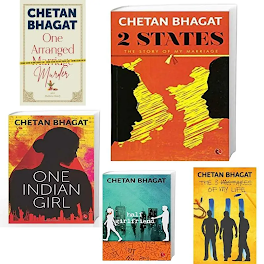
Bhagat's success with his debut novel paved the way for his subsequent works, including "One Night @ the Call Center," "The 3 Mistakes of My Life," "2 States," "Revolution 2020," "Half Girlfriend," and "One Indian Girl." His books have been translated into several languages and have sold millions of copies worldwide. In addition to his writing career, Chetan Bhagat is also a renowned motivational speaker. He has spoken at more than 800 organizations in 1000 cities worldwide. Bhagat's works have been recognized and appreciated globally. He was included in Time magazine's list of the World's 100 Most Influential People in 2010.
Chetan Bhagat's notable works with their published year
Five Point Someone (2004)
One Night @ the Call Center (2005)
The 3 Mistakes of My Life (2008)
2 States (2009)
Revolution 2020 (2011)
Half Girlfriend (2014)
One Indian Girl (2016)
The Girl in Room 105 (2018)
One Arranged Murder (2020)
400 Days (2021)
Revolution Twenty20
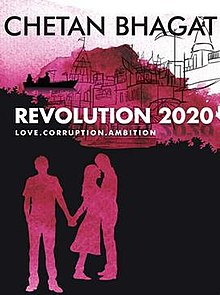
Revolution 2020 is a novel published in 2011, is set in the city of Varanasi, India, and tells the story of three childhood friends, Gopal, Raghav, and Aarti, as they navigate through life in the midst of corruption, politics, and societal pressures. The novel revolves around the central theme of the Indian education system and its drawbacks, as well as the political and social corruption that plagues the country. The characters in the book are relatable and their struggles resonate with the readers, making it an engaging and thought-provoking read.

The novel "Revolution 2020" by Chetan Bhagat tells the tale of two friends, Gopal and Raghav, and their love for Aarti, a girl they have known since childhood. Their ambitions and passions lead them down different paths, causing their friendship to suffer. Gopal's desire for wealth and status leads him into corruption, while Raghav's passion for fighting corruption makes him a journalist and later a political leader. Aarti, caught in between the two, falls in love with Raghav, but circumstances bring her and Gopal together.
The story is a poignant one that explores the harsh realities of life in India. The characters are well-developed, and the plot is engaging, with several twists and turns. The themes of ambition, corruption, love, and friendship are woven together seamlessly to create a compelling narrative.
The author's writing style is simple yet effective. He uses straightforward language that is easy to understand, making the story accessible to a wide audience. The dialogues between the characters are realistic and reflect the nuances of everyday conversations. The author's use of imagery and metaphors adds depth to the story, making it more engaging for the reader.
The character of Gopal is particularly well-crafted. The reader sees him evolve from a naive young man to a shrewd businessman, but also someone who is deeply conflicted about his choices. Despite his flaws, the author portrays him as a good man at heart. He is willing to sacrifice his own happiness to bring about the revolution that his friend Raghav desires.
The story is also a commentary on the rampant corruption in Indian society. The author portrays how corruption is deeply entrenched in every aspect of life and how difficult it is to fight it. Through Raghav's character, the author highlights the power of the media in exposing corruption and creating change.
In conclusion, "Revolution 2020" is a well-written novel that offers a glimpse into the complexities of Indian society. The story is engaging and thought-provoking, with well-crafted characters and a plot that keeps the reader hooked until the end. The author's simple yet effective writing style, along with his use of imagery and metaphors, make this a must-read novel.
Portrayal of Women
The portrayal of women in literature has always been a significant social commentary on the changing gender subjectivities of society. Chetan Bhagat's novels are no exception. Bhagat's characters, particularly his women, are depicted as having an unwavering will to emerge from the depths of melancholy. They revel in life and are not easily subdued by adversity. Bhagat's women are intelligent and capable of making their own choices and accepting challenges and risks in their decision-making process.
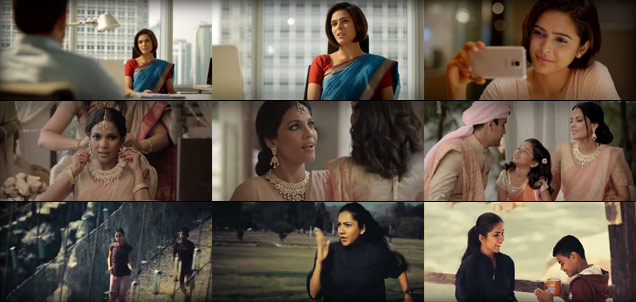
Rupal Oza has recognized that the post-development era in the 1990s introduced the concept of the 'new Indian woman', representing a modern, emancipated, and liberated woman in mainstream society. This idea was seen as vital to India's desire to be viewed as a global economic force. However, this image of the 'new Indian woman' was carefully crafted to be modern and represent globalizing India, while still being tethered to traditional values.
Bhagat's novels, particularly those written post-progression, reflect the post-millennial Indian woman and her urban life. The new setting of living and lifestyle choices presents a multitude of new potential personalities. The standards of social pressure and expectation seem to have shifted, with women now more intrinsically bound to the pressures of globalization, economics, and the genuine probability of individual choice. Nevertheless, both generations of stories explore what it means to be a woman in Indian society.
As India integrated into the global economy, many women, particularly those belonging to the working class, benefited from the expansion of the private sector. They were offered better wages and greater opportunities for mobility, which was not experienced by earlier generations. The image of the subservient gendered subject in a changing country was no longer viable. The digressive production of the idea of the new Indian woman is closely linked to the middle-class discourse on globalization and modernity, where the working class continues to define their modernity through certain traditional standards and practices while also adopting values such as greater independence, self-confidence, and a strong commitment to careers and professional growth. The new Indian woman is no longer confined to the domestic world but actively participates in professional and public spaces. She must find the right balance between tradition and modernity.
Bhagat's novels aptly depict the importance of his women focal characters. They believe in absolute, ideal, pure, and respectable freedom. They are creative in romance, breaking social decorum by pursuing men instead of the other way around. Bhagat is the only writer among his peers to portray women as hunters and men as the pursued. His women use all means to serve their female impulses.
Women in Revolution Twenty20
Revolution 2020 is a novel by Chetan Bhagat that presents a poignant tale of love, ambition, and corruption set against the backdrop of contemporary India. Aarti, the female hero of the novel, represents the new Indian woman who is caught between tradition and modernity, and who strives to carve her own path in life.
Aarti is a complex character who embodies the contradictions and challenges faced by Indian women today. She is a woman of great beauty and refinement, who is also fiercely independent and ambitious. Aarti is keen to pursue her own career and dreams, but she is also constrained by the patriarchal norms and expectations of her family and society. She is torn between her desire to break free from these constraints and her loyalty to her family and community.
“Aarti's struggle to assert her independence and pursue her dreams was a reflection of the larger societal conflicts and contradictions that define contemporary India” (Bhagat).
Aarti, the female hero of Revolution 2020, was an exceptional woman, who embodied a rare combination of beauty, intelligence, and independence. Gopal, her childhood friend, admired her for her grace and poise which set her apart from the other kids in their neighborhood. Raghav, on the other hand, was attracted to her sharp mind and quick wit, which made her the smartest girl in their class.
Aarti's beauty and intelligence, however, were not her only virtues. She was also ambitious, driven, and independent, which made her different from the other girls Gopal and Raghav knew. Gopal, who was in love with her, could not help but admire her fire and determination. Raghav, who eventually became her boyfriend, was drawn to her warmth and kindness which made everyone feel welcome.
“Aarti was the kind of girl who could light up a room with her smile. She had a warmth and a kindness that made everyone feel welcome” (Bhagat).
But Aarti's life was not without its challenges. She was torn between her loyalty to her family and her own desires, which is a common struggle for many women in India. She wanted to pursue her dreams of becoming an air hostess, but her parents wanted her to stay in Varanasi and join politics, a field that is typically dominated by men. Aarti's struggle to assert her independence and pursue her dreams was a reflection of the larger societal conflicts and contradictions that define contemporary India.
Despite the pressure from her parents and society, Aarti remained true to herself and her dreams. She was a trailblazer who dared to defy the norms and expectations of her family and society.
As the narrator notes, “Aarti was a symbol of the changing times in India. She embodied the contradictions and complexities of the new Indian woman, who is both modern and traditional, independent and loyal, ambitious and aware of her social and cultural context” (Bhagat).
The novel portrays Aarti as a woman who is aware of the social and cultural pressures that shape her identity and choices. She is conscious of the expectations placed on her as the daughter of a District Magistrate and the social norms that govern women's lives in India. Aarti's struggle to assert her independence and pursue her dreams is a reflection of the larger societal conflicts and contradictions that define contemporary India.
Through Aarti's character, Bhagat offers a nuanced portrayal of the new Indian woman who is both modern and traditional, independent and loyal, ambitious and aware of her social and cultural context. Aarti's name itself is a nod to the Hindu ritual of a night prayer, which underscores her close ties to traditional Hindu religious practices. At the same time, Aarti was a remarkable character who defied stereotypes and challenged the status quo. Her story is a testament to the resilience and determination of Indian women who dare to dream and pursue their ambitions despite the obstacles in their path. As one of the characters in the novel remarks, “Aarti was an inspiration to all of us who dared to dream” (Bhagat).
Conclusion
Over the years, female characters have been portrayed in different ways, ranging from stereotypical roles as damsels in distress to strong and independent women who break gender norms. While some portrayals have been progressive and empowering, others have perpetuated harmful stereotypes and objectified women. One of the main issues with the portrayal of female characters is the lack of representation and diversity. Women of color, LGBTQ+ women, and women with disabilities are often underrepresented or portrayed in a stereotypical manner.
Moreover, female characters are often subjected to unrealistic beauty standards and sexual objectification, with their value and worth being based on their physical appearance rather than their personality or achievements. This can lead to a negative impact on young girls and women, who may develop a poor body image and low self-esteem. On the other hand, female characters who are portrayed as strong, intelligent, and capable can have a positive impact on young girls and women, inspiring them to pursue their dreams and break gender norms. However, even these characters are not immune to criticism, as they can sometimes be portrayed as too perfect or lacking in flaws, making them unrealistic and unrelatable.
In conclusion, the portrayal of female characters in media is a complex issue, and there is no one-size-fits-all solution. While progress has been made in recent years, there is still a long way to go in terms of representation, diversity, and the elimination of harmful stereotypes and objectification. It is important for creators and audiences alike to be aware of these issues and strive for more accurate and empowering portrayals of women.
Works Cited
Bhagat, Chetan. Revolution Twenty20 : Love . Corruption. Ambition. RUPA PUBLICATIONS INDIA PVT Limited, 2014. Accessed 7 March 2023.
“Chetan Bhagat’s 'Revolution 2020' to be on silver screen | Hindi Movie News.” Times of India, 30 September 2013, https://timesofindia.indiatimes.com/entertainment/hindi/bollywood/news/chetan-bhagats-revolution-2020-to-be-on-silver-screen/articleshow/23260592.cms. Accessed 7 March 2023.
LAHANE, DR. B. T. “Delineation Of Female Character Aarti In Chetan Bhagat's novel 'Revolution 2020.'” Pune Research An International Journal In English, vol. 2, no. 6, 2016, pp. 2-8.
Oza, Rupal. The Making of Neoliberal India: Nationalism, Gender, and the Paradoxes of Globalization. Routledge, 2006. Accessed 7 March 2023.
Pandey, Rajesh Chandra. “'Revolution 2020' by Chetan Bhagat: A critical review.” IndiaStudyChannel.com, 2 November 2011, https://www.indiastudychannel.com/resources/146343-Revolution-2020-by-Chetan-Bhagat-A-critical-review.aspx. Accessed 7 March 2023.
SinghJhanji, Dr. Rajtinder. “INDIAN WOMAN-THE ICON OF NEW INDIA IN THE NOVELS OF CHETAN BHAGAT.” International Journal of Research and Analytical Reviews (IJRAR), 2008, http://ijrar.com/upload_issue/ijrar_issue_20544141.pdf. Accessed 7 March 2023.