Saturday, 23 March 2024

Online Platforms, Offline Proficiency: Navigating the Impact of Social Media on Language Skills

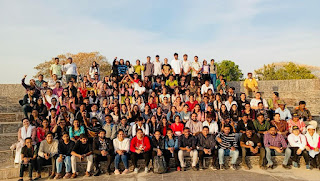
I had the honor of presenting my paper entitled Online Platforms, Offline Proficiency: Navigating the Impact of Social Media on Language Skills at the inaugural National Multidisciplinary Conference on Transformative Trends in Commerce and Humanities for National Development. The conference, hosted by Maharani Shree Nandkuvarba Mahila College and managed by the esteemed Shree Nandkuvarba Kashtriya Kanya Vidhyalay Trust, took place on January 21, 2024.

Online Platforms, Offline Proficiency: Navigating the Impact of Social Media on Language Skills


Abstract:

This research explores the multifaceted influence of social media on the process of English language learning, examining how digital platforms shape language acquisition, linguistic competence, and socio-cultural interactions. With the pervasive integration of social media in contemporary society, English language learners are increasingly exposed to diverse linguistic inputs and interactive environments. This study investigates the positive and negative effects of social media on language learning outcomes, considering factors such as vocabulary acquisition, language proficiency, and cultural competence. In the contemporary digital era, social media platforms have revolutionized various aspects of human life, reshaping communication, information dissemination, knowledge exchange, commerce, and education. Davies aptly notes, "texts of the new technologies have mutated into complex hybrid systems that have made new demands on reading and writing, viewing, social exchange, and communication" (Roelofse, 2013). This paper seeks to delve into the nuanced impact of social networks on English language proficiency, aiming to unravel whether these influences sway language knowledge and usage towards positivity or negativity.


Recent research underscores the potential of various social media platforms—YouTube, WhatsApp, Facebook, Instagram, and Twitter—as effective teaching tools. Contrary to concerns about negative impacts, these platforms have demonstrated the ability to enhance students' motivation, proficiency, and interest in learning English. Through a fusion of multimedia, interactive features, and real-time communication, social media engages learners in ways that traditional methods may not. The findings underscore that platforms like YouTube contribute to listening skills, providing authentic content that exposes learners to diverse accents and expressions. Similarly, WhatsApp and Facebook foster language exchange and written communication, positively influencing writing skills. Instagram and Twitter, with their succinct format, encourage concise expression, impacting both vocabulary and writing proficiency. This research endeavors to offer a comprehensive understanding of the evolving dynamics between social media and English language learning. By recognizing the positive contributions of these platforms alongside potential challenges, educators can harness their potential to cultivate a more immersive and effective language learning experience in today's interconnected digital landscape.


Keywords: Digital age, English, Language learning, Social media platforms


In the ever-evolving digital age, the influence of online platforms on various aspects of our lives is undeniable. One notable arena undergoing significant transformation is language learning, where the integration of social media has become a prevalent force. As individuals increasingly navigate the realms of online communication, this study delves into the intersection of virtual spaces and language proficiency. Social media has changed how we communicate and share information. This study explores how it impacts language learning, specifically for English learners. We'll look at both the good and bad effects on things like vocabulary, language skills, and cultural understanding. The goal is to understand how social media can be a useful tool for learning. Educators are encouraged to integrate social media into language learning curricula judiciously. Incorporating authentic social media content, guiding learners in selecting appropriate language exchange platforms, and fostering digital literacy skills can enhance the positive impact of social media on language learning. ‘Educators can integrate social media tools into their existing pedagogy. Online environments used by education professionals include Course management systems, wikis, blogs, virtual worlds and more’ (Thomas et al., 2013, 39-54).


‘Social media is constantly changing the way people live in different aspects. Nowadays, various social media platforms are affecting communication, information delivery, knowledge exchange, commerce, education and all different aspects of life’ (Reiger & Christoph, 2018, 87- 118). Social media plays a crucial role in contemporary society by facilitating the instantaneous sharing of everyday experiences through videos, pictures, or text across various platforms like Facebook, Instagram, or YouTube. Utilizing diverse technologies, it presents numerous opportunities for written communication. While some perceive technical inaccuracies and spelling errors in instant messaging as detrimental, others argue that these deviations may represent the emergence of a distinct yet complementary online media language. Social networking sites, accessed by millions globally, generate a significant volume of multimedia text, contributing to the evolution of a novel language on screens, tablets, and smartphones. This transformation stems from our interaction with these technologies, enabling informal and personal communication on a mass scale, ultimately influencing the choice of words in our daily communication. 


Social media has revolutionized global communication, increasing the speed and efficiency of interactions. Platforms like Twitter, with its character limit have led to shorter and more concise sentences, reshaping the way we express ourselves. The impact extends to language alterations, as words like ‘FaceTime’ transition from nouns to verbs, and universal replacements like ‘Google it’ become commonplace. The continuous evolution of the English language is evident in the incorporation of neologisms, such as ‘emojis’, recognized by the Oxford English Dictionary. 


Social media's influence also extends to the reappropriation of words; for instance, ‘tweet’ now signifies posting a brief message on Twitter. Acronyms, abbreviations, and hashtags have become natural substitutes in real-time conversations, aiding in faster communication. Internet slang, often vowel-excluded, further enhances efficiency and readability. Hashtags, unbroken phrases identified by a hash mark, contribute to the formation of virtual communities around specific topics, fostering real-time discussions globally. Social media introduces a new writing style, impacting purposes ranging from casual conversations to formal discourse, with linguistic changes requiring adaptation. 


Youtube is another social network that is commonly used by language educators and learners. There are many popular language education channels on YouTube that have a large number of followers that use the video-based platform to learn and interact with other users. The landscape of language learning has undergone a remarkable transformation with the pervasive integration of various social media platforms. From the dynamic visual content of Instagram and YouTube, offering immersive language exposure through videos and images, to the real-time interactive discussions on Twitter and Facebook fostering communicative skills, learners now have an array of tools at their disposal. Platforms like Duolingo and Babbel gamify language acquisition, making the learning process engaging and interactive. The versatility of social media, spanning platforms like Snapchat, TikTok, and WhatsApp, enables users to explore language nuances, expressions, and colloquialisms in real-world contexts. As we navigate the digital realm, the educational potential of these platforms becomes increasingly evident, offering learners a rich tapestry of linguistic resources to enhance their proficiency.


The evolution of communication, particularly through technologically mediated platforms, has given rise to a diverse lexicon comprised of acronyms, abbreviations, and neologisms. Originating from online forums and Internet Relay Chat (IRC) preceding text messaging, these linguistic shortcuts serve to expedite real-time typed conversations or minimize the challenges of typing on mobile phones. Emoticons like 😉 and acronyms such as LOL, celebrating its 25th birthday, contribute elements of non-verbal expression, though their overuse can be divisive. Twitter syntax, enriched by hashtags that categorize tweets, has not only permeated other social media platforms but has also infiltrated everyday speech. While some caution against excessive use, hashtags have permeated popular culture, appearing on greeting cards, t-shirts, and even in sitcom dialogues. Beyond syntax, social media has subtly transformed communication styles, fostering more informal and open exchanges, with individuals sharing personal information with larger audiences. This shift towards brevity, succinctness, and creative constraints, such as Twitter's 140-character limit, has become a hallmark of modern communication styles, influencing broader aspects of life and culture.


“Language learning is interwoven with cultural interaction and is mediated by linguistic and other symbolic activity”(Schieffelin & Ochs, 1986). Social media provides an environment that allows users to weave their goal of language acquisition with culturally relevant interactions through a wide array of available platforms that are often categorized as formal for classroom use and informal for personal use.


‘Common social media platforms such as Facebook and Twitter and are used by language learners to communicate with other learners and native speakers of the target language’ (Alm, n.d.,) .


Facebook has redefined common words like friend, like, status, wall, page, and profile, reflecting the platform's influence on language. Social media has introduced darker meanings, turning trolls into online provocateurs, sock puppets into a deceptive online persona, and astroturfing into a fake grassroots movement. The evolution of language is no longer confined to traditional publishing, as social media allows anyone to contribute to world trends. Oxford Dictionaries' 2013 Word of the Year, ‘selfie’, originated on an Australian internet forum, showcasing the impact of online forums, Twitter, and Facebook in quickly popularizing new terms. The ease of instant interaction with wide audiences makes it simpler than ever to help a word gain traction from the comfort of one's armchair.


Facebook can serve as a valuable tool for English language learning by offering a diverse platform for global communication in English. Users can immerse themselves in a rich linguistic environment, exposing them to various writing styles, vocabulary, and grammar structures through posts, articles, and comments. Actively engaging in discussions and commenting on content enhances written communication skills. Moreover, the platform hosts numerous educational pages and groups dedicated to English language learning, providing valuable resources, tips, and language exercises. Additionally, the support for video content on Facebook allows learners to access instructional videos and subtitled materials, facilitating improvement in listening and comprehension skills. However, it's crucial for learners to use Facebook mindfully and complement their usage with other language learning methods for a comprehensive educational experience.


Similarly, YouTube presents a valuable platform for English language learners, offering a diverse array of dedicated channels. These channels provide a wealth of resources, including lessons, tutorials, and interactive videos aimed at enhancing listening and speaking skills, expanding grammar knowledge, and refining pronunciation. Learners can leverage this vast repository of content to tailor their language learning experience, gaining exposure to various accents, expressions, and real-life communication scenarios. The interactive nature of many YouTube language learning channels also facilitates active engagement and practical application of newly acquired skills, contributing to a well-rounded language education. Combining YouTube resources with other learning methods can further optimize the effectiveness of the language learning journey.


In a similar vein, Instagram serves as another valuable platform for language learners. By following Instagram accounts dedicated to English language learning, users can access a curated stream of content that includes vocabulary exercises, grammar tips, idioms, and other language-related materials. This curated content not only assists learners in enhancing their reading and writing skills but also provides a visually engaging and bite-sized approach to language learning. The platform's visual nature allows for a dynamic learning experience, combining educational content with the appeal of multimedia. Integrating Instagram into language learning efforts, alongside other methods, can offer a well-rounded and interactive approach to skill development.


‘Through pedagogical use of social media, educators and learners are allowed to engage with Indigenous communities around the world, access a myriad of resources not previously available, and engage in their education in a new medium’ (Kitchenham, 2013, 351- 364). 


Social media platforms, through features like reels, shorts, and videos, wield both positive and negative influences on language learning. On the positive side, these bite-sized visual snippets offer a glimpse into real-life language usage, incorporating colloquial expressions and cultural subtleties that textbooks may overlook. The amalgamation of auditory and visual elements in short videos enhances listening skills and comprehension, catering to various accents and speech patterns. The inherently engaging nature of social media content fosters a positive attitude towards language learning, transforming it into an enjoyable and consistent practice. Moreover, the cultural richness embedded in videos enhances cultural awareness, providing learners with valuable insights into the lifestyles and traditions of native speakers. However, to reap these benefits, learners must approach social media mindfully, striking a balance with structured language learning methods and ensuring exposure to diverse language registers for a comprehensive language education.


Consistent posting and updates on social media wield dual influences on language learning, contingent upon individuals' approach to their online activities. On a positive note, regular social media engagement can serve as a constructive avenue for language development. The act of posting necessitates users to articulate thoughts in writing, fostering improved grammar, vocabulary, and overall writing proficiency through continuous practice. The immediacy of feedback on social platforms, where friends or language exchange partners may offer corrections or suggestions, enriches the learning experience. Additionally, active participation in online communities exposes learners to diverse language styles, vocabulary, and cultural nuances, enhancing their linguistic repertoire. The informal language prevalent in social media posts further provides exposure to colloquial expressions and slang, complementing more formal educational settings. Furthermore, the sense of accountability generated by sharing one's language learning journey motivates learners to maintain consistency and progress. 


Baldwin suggests that social media can be both a friend and a foe for natural language processing. While he considers social media a cause for “spelling inconsistencies, the free-form adoption of new terms, and regular violations of English grammar norms,” he refers to the advantage of “lexical normalization” in the same linguistic setting (Baldwin, n.d., 58-59).

Social media, while offering a plethora of advantages, poses several challenges to language learning. One notable drawback is the prevalence of informal language, characterized by abbreviations, emojis, and slang, which can hinder learners in developing a nuanced understanding of proper grammar and vocabulary usage. Additionally, the text-based nature of social media communication limits interaction, depriving learners of the essential nuances present in spoken language, such as tone and pronunciation. The platforms are rife with inaccurate information and linguistic errors, potentially confusing language learners. Furthermore, the addictive nature of social media and the associated time consumption can divert learners from structured language study, impacting their focus and concentration. Moreover, the limited exposure to cultural diversity on these platforms may result in a narrow understanding of language and hinder the ability to engage with various accents, dialects, and cultural contexts. In navigating these challenges, learners must exercise discernment, supplementing their social media exposure with more comprehensive and structured language learning resources.

In conclusion, this research offers a nuanced understanding of the evolving relationship between social media and English language learning. By recognizing both the positive contributions and potential challenges, educators can harness the potential of these platforms to cultivate a more immersive and effective language learning experience in today's interconnected digital landscape. The study underscores the importance of adapting language education strategies to leverage the benefits of social media while mitigating potential drawbacks. Ultimately, a well-informed integration of social media in language learning can lead to enhanced proficiency, cultural competence, and a more engaging educational experience. While social media offers unprecedented opportunities for language exposure and interaction, careful consideration must be given to mitigate potential distractions and language quality concerns. critics may find grammatical errors and misspelled words challenging, for the younger generation growing up in the era of pervasive social media, this evolving dialect represents the language of the times and is likely to endure.


References

Alm, A. (n.d.). Facebook for informal language learning: perspective from tertiary language students. The EuroCALL Review, 2(3). https://doi.org/10.4995%2Feurocall.2015.4665

Baldwin, T. (n.d.). Social Media: Friend or Foe of Natural Language Processing? Paper presented at 26th pacific Asia Conference on Language, Information and Compiutation, 58- 59.

Hamir, S. (2016, 7 19). How Social Media is Changing Language. WikipediaAyoutube. Retrieved January 21, 2024, from https://youtu.be/4YIyfVn0lBQ?si=qifZK0uKTlJlfUbe

Kitchenham, A. (2013). The Preservation of Canadian Indigenous Language and Culture through Educational Technology. An International Journal of Indigenous Peoples, 9(4), 351- 364. https://doi.org/10.1177%2F117718011300900406

Reed, J. (2016, February 21). How social media is changing language. Jon Reed. Retrieved January 21, 2024, from http://www.jonreed.co.uk/social-media-changing-language/

Reiger, D., & Christoph, K. (2018). The Daily Dose of Digital Inspiration: a multimodal Exploration of Meaningful Communication on Social Media. New media and Society, 21(1), 87- 118.

Schieffelin, B. B., & Ochs, E. (Eds.). (1986). Language Socialization Across Cultures. Cambridge University Press.

Thomas, M., Reinders, H., & Warschauer, M. (Eds.). (2013). Contemporary Computer-Assisted Language Learning. Bloomsbury Academic.


Monday, 29 January 2024

Vadnagar: Historical town (Visit to Vadnagar)

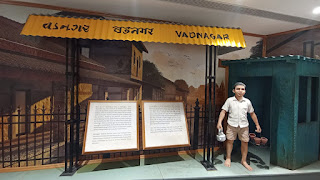
VADNAGAR- AN ANCIENT CITY
(Project-based Learning under Viksit Bharat Abhiyan)

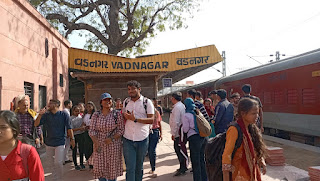
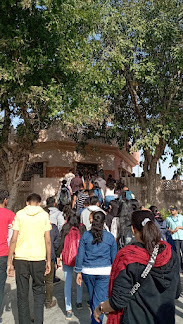
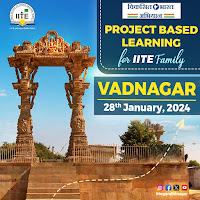
In the pursuit of holistic education, the Institute of India Education(IITE) in Gandhinagar organized an enlightening visit to Vadnagar – a town steeped in history. This immersive experience, part of the Project-Based Learning (PBL) initiative under the Viksit Bharat Abhiyan, aimed to provide students with a firsthand exploration of the cultural, historical, and educational facets of this ancient town. This blog offers concise insights into Vadnagar, providing a snapshot of the visited locations and the experiences encountered during the exploration.


Wandering through Vadnagar's streets, time seems non-linear, blending 4500 years of history in pottery, textiles, and tools from ancient agricultural communities. Traces of the 12th century are felt in step embankments and Solanki dynasty torans.

Echoes of Bhavai folk theater resonate in the Government Museum, with chances of street performances. Vadnagar boasts Gujarat's poets like Dayaram, and Narsinh Mehta, novelists like Govardhanram Tripathi, and musicians like Kaumudi Munshi, and hosts the Tana Riri Music Festival in homage to Nagar Brahmin sisters.

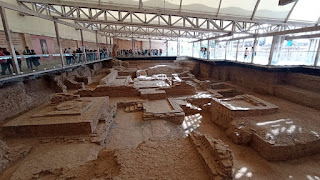
Buddhist presence emerges with a 2nd-century AD sandstone Buddha head, black polished ware-shreds with Brahmi inscriptions found in the Monastery at Vadnagar. The monastery, within the fortified area, featured votive stupas and a Swastika-like pattern of cells around a central courtyard.


Vadnagar: An Ancient Kingdom
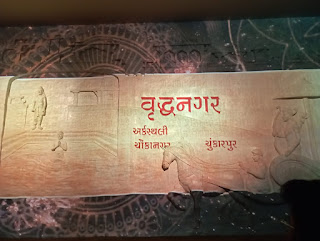
Vadnagar finds its mention in ancient literature, Jain scriptures, and copper plates, which testify that Vadnagar was a famous city of ancient India. As per mythological scriptures, this city was known as 'Chamatkarpur' in Satya Yuga, 'Anartapur' in Treta Yuga, "Anandapur' in Dvapara Yuga and 'Vruddhanagar' or 'Vadnagar' in Kali Yuga. Apart from these names, Vadnagar was also known as 'Arkasthali', Chaunkanagar', or 'Chunkarpur' as well as 'Skandapur'. However, there is no firm opinion about when exactly this ancient city was established.

Nagarkhanda, a part of Skanda Purana (the largest of all 18 mythological scriptures) mentions Vadnagar as 'Chamatkarpur. As narrated in Nagarkhanda, one day, King Chamatkar was out on a hunting expedition. While aiming a male deer, he accidentally killed the female deer, who cursed him that he would suffer from white leprosy throughout life, Suffering from pain, the King sought advice from some renowned Brahmins, who asked him to take a dip in the magical water of the Shankh Tirth Lake. The king did as told; a miracle happened, and he was free of his curse, looking as radiant as ever. Ecstatic, he offered his kingdom and wealth to these Brahmins, but they refused, and instead asked the King to build a beautiful city for them to reside safely. King Chamatkar built a large city, which became famous as 'Chamatkarpur'. According to historical records, the King donated this city to the Brahmins.

Home to Brahmins, followers of Vedas and Nagars, Vadnagar became a thriving city of knowledge and religious presence, gaining prosperity and earning its fame as the 'Kashi of Gujarat'.


Historic Glory of Vadnagar

According to the Puranas, the name 'Anarta' was derived from Anarta, son of Sharyati, grandson of Vaivasvata Manu. As it was an important manufacturing and trading center for various products, Anantapur was made the capital of Anarta Pradesh. It is also said that Vadnagar must have been a popular center for Buddhism, Jainism, Shaivism, and Vaishnava faiths. The glory of the ancient city of Vadnagar echoed across boundaries, attracting not just traders, but students, local and global travelers, and spiritual knowledge-seekers.

Anartapur, established on the banks of the beautiful Sharmishtha Lake, fed by the waters of river Kapila, finds its mention in Mahabharata as well. The Anarta warriors - Satyaki and Kritavarma fought in the Kurukshetra War. Although, Anartapur rose to glory due to the war, as soon as the war ended, the loss reflected on its weakened military strength. As time progressed, Vadnagar was attacked and looted by many local and foreign rulers. With each attack, it stood up stronger, somehow maintaining its historical significance and identity. Vadnagar kept losing its Nagar Brahmins and other residents, who moved out of the city, seeking shelter elsewhere.

Vadnagar, a city of Brahmins, literary scholars, artists, sculptors, and singer-musicians... the land of pilgrimage places such as Hatkeshwar Temple and Sharmistha Lake, along with the fort enclosing the city with six-gates, Kirti Toran, Tana-Riri Memorial as well as marvelous vernacular architecture has made Vadnagar city an amalgamation of art, culture, and history.


Vadnagar Town Planning
Aparajit-Prichchha, a famous book on town planning elaborates on how well a town can be planned keeping in view the natural elements such as air, sunlight, and water. In this book, 'Pashchime tu Jalashaya' which translates to 'there should be a reservoir in the west' has been considered an essential part of town planning. The scientific logic behind this is that if there is a river or a water body to the west of the town, then the air coming from that side gets cooled, which in turn provides a sense of relief to the inhabitants of the town. Vadnagar is found to have been built based on this very scientific principle.

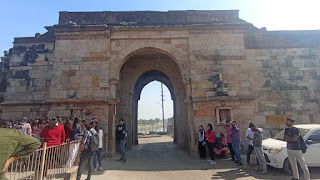
Vadnagar's old town is found inside the walls of a fort with six gates: Kirti, Arjun, Nadiol, Amarthol, Ghaskol, and Pithori. The town was added to the tentative list of the UNESCO World Heritage Sites in December 2022.

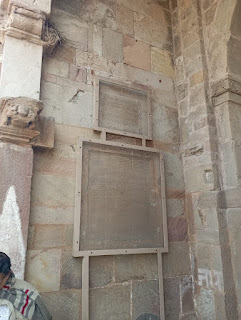
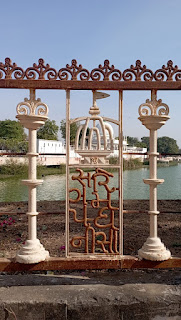
Arjun bari darwajo (Gate


Write up on the Gate by Kavi Shripal (poet in Darbar in Solanki kal) in Prakrut Language. 


Architectural Beautification during the Solanki Period

In 1152 A.D., Solanki ruler Kumarapal enhanced the fort in a city, constructing six unique gates. King Siddharaj built Lake Sharmistha with intricate stonework, featuring Arjunbari Darwajo gate on its shore. The gates showcased sculptures of various deities.

Kirti Toran in Vadnagar, an ornate archway, symbolized Solanki glory with delicate carvings in red and yellow sandstone. The Solanki dynasty contributed to the creation and renovation of temples, establishing a well-planned market, paved roads, and water structures like wells and step-wells.

Magnificent entrances in Dabhoi and Zinzuwada forts, Rani Ni Vav, Modhera's Sun temple, Rudramaal in Siddhpur, and Jain temples at Palitana, Girnar, Tauranga, Kumbhariyaji, and Mount Abu were credited to the Solanki dynasty, showcasing exquisite craftsmanship.


Must-Visit Gems in Vadnagar: Unveiling the Essential Spots Explored

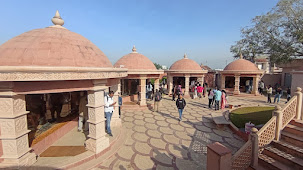
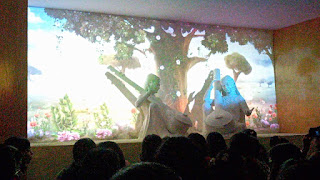
Theme park- On musical ragas
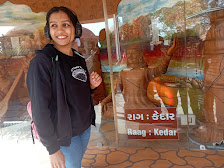
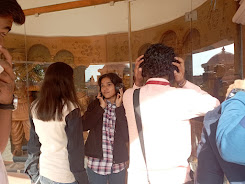
A captivating theme park dedicated to Indian musical ragas awaits visitors, offering a unique experience. Equipped with specially designed headphones, guests can immerse themselves in the enchanting melodies of the six main ragas. Each raga, thoughtfully recorded for optimal listening pleasure, provides a harmonious journey through the rich tapestry of Indian classical music.


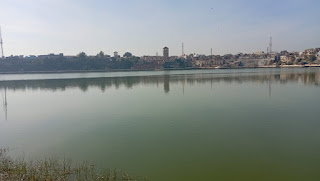
Sharmishtha lake
The ancient lake was developed during the Solanki period and continues to be one of the most scenic points in the city of Vadnagar popularly known as Sameda Lake


Sharmishtha Lake is also mentioned in the Puranas. It is believed to have been constructed by one of the most prominent rulers of the Solanki dynasty, Siddharaj Jaisinh Solanki, but it's believed that it was named after the daughter of the Som dynasty king, who undertook penance here. The early settlement was on the bank of river Kapila flowing from the hills of Aravalli. It fed water to a lake, known as Sharmishtha, at the site, and the settlement extended around it. Over some time the settlement grew into a city of considerable size.

Kirti Toran


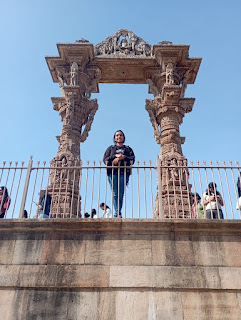
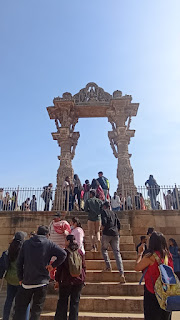
Standing at nearly 40 feet, Vadnagar's Kirti Toran, installed by the Solanki rulers, boasts intricately carved images and has miraculously survived numerous attacks and invasions over the centuries. Toran, in Indian architecture, means an artistic arched gateway. Typically, the torans were built at the temple entrances, and banks of vavs (step-wells), wells, or lakes. Many times, when the temples were attacked and destroyed, and only the Torans survived as remnants, it was recognized as 'Yugaloni Chori'. In the oral tradition, Vadnagar's Toran is known as 'Kuwarbaini Chori'. The architecture of the Kirti Toran is very similar to the architecture of Modhera's Sun temple and Siddhpur's Rudramal (Rudra Mahalaya), which leads us to believe that these were built during the Solanki period. Owing to its intricate carving and exquisite sculptures, the Kirti Toran occupies a place of significance amongst Gujarat's Torans.


Shree Hatkeshwar Mahadev


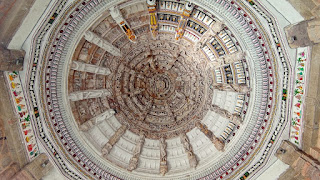
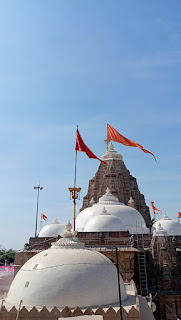
The most significant of the attractions at Vadnagar is the Hatkeshwar Mahadev Temple, considered the Tamily deity of Nagar Brahmins. As per scholars' views, the garbha-griha (inner sanctum of the temple is adorned with an Antarala trief sponge a Mandap (an octagonal hypostyle hall, and three ornamental lateral porches in cardinal directions. The walls of the entire temple are adorned with exquisite sculptures. Mandovara Pitha (the wall that rises above the Shikhar or vertex), Mandap as well and the walls of the porches are adorned with sculptures of the nine planets, figurines of gods and goddesses, and scenes from the life of Land Krishna and events from Pandavas life. Among the sculptures found at the Hatkeshwar Mahades temple, the sculpture of Matsyavatar Vishnu stands out in terms of sculptural art with its upper half in a human shape and the lower half in the shape of a fish.


Buddhist monastery
In 1992, a Bodhisattva idol dating back to the 2nd-3rd century was unearthed in Vadnagar, with an inscription on the pedestal indicating it was donated by a nun for the Chaitya.


The following major periods of events have been identified through archaeological 'excavation at the site

1. Foundation of the first settlement: pre-Mauryan Period (pre-3rd Century BCE)
2. First fortified settlement: Mauryan & Post-Mauryan (3rd Century BCE-1st BCE)
3. Re-planned town with but brick Fortification: Kshatrapa-Maitraka - Solanki Period (1st Century ACE- 11th Century ACE)
4. Internal modification in town planning: SolankiSultanate-Mughal-Period (12th Century CE-18th Century ACE)
5. Period of present town planning: Maratha to Present (19th Century CE to date)

Historical Background
The Chinese Buddhist Monk Xuanzang or Hiuen Tsiang Visited Vadnagar (ANANDPUR) around 641CE He records, "there are less than 1000 monks of the sammatiya school or little vehicle in 10 monasteries." It suggests that Vadnagar was one of the important centers of Buddhist learning in Western India during that period. He also records Vadnagar as a capital city that has no king. The discovery of the monastery has proved hidden records true.

A Bodhisattva image was found in 1992 from an agricultural field, lying about 1 km southwest of this monastery site. Vadnagar is now an important site in Gujarat for the study of the spread of Buddhism and for understanding the historical and cultural development of the city-state, as literary references and archaeological evidence reveal.


The Legend of Tana Riri

It is well known that Akbar, the great Mughal Emperor, was a patron of art and culture. Tansen, his chief musician, whom he considered one of the Navratna (nine jewels), was blessed with the gift of the knowledge of various ragas. One day, the emperor insisted he sing raga Deepak. Tansen pleaded stating the dire consequences but Akbar didn't budge.

While his singing lit up the lamps of the palace, it induced an intense burning sensation within Tansen's body. The only remedy for cooling it down was that somebody else truly sang raga Malhar. Tansen roamed around the country and came to know that there was a possibility of someone with knowledge of raga Malhar in Vadnagar.

He reached Vadnagar by nightfall and rested on the banks of Lake Sharmistha. Early in the morning, women started coming to the lake to fetch water. As Tansen was watching them closely, he spotted two women in particular filling their pitchers with water. They were sisters - Tana and Riri. No sooner did Tana fill her pitcher than she emptied it, and she did this several times. When Riri asked Tana, "Sister, how many times are you going to do this?" she replied, "As long as we do not hear the tunes of Malhar". Ultimately, Tana succeeded in filling the pitcher such that the water flowing in it emitted the tune of Malhar.

Tansen approached the sisters seeking help saying he was a Brahmin, and was made to sing raga Deepak on the Emperor's insistence. They took pity on him and sought permission from their elders to sing. As they started singing raga Malhar, black clouds of rain engulfed the sky, and by the time they finished, it was raining heavily. Tansen, completely drenched in the cool water, got rid of his burning sensation magically.

Despite knowing that only Tansen could truly sing raga, Deepak, Tana helped him as he had pretended to be a Brahmin. No sooner than his real identity was revealed, Tansen begged everyone present to forgive him. The people forgave him only on the condition that he wouldn't ever divulge details to anyone about Tana and Riri.


The Story behind Tana Riri Memorial
Upon returning to Delhi, Akbar asked Tansen how he was cured. Tansen was in a dilemma - If he gave away the secret, his promise would be broken, but if he didn't, he would be a victim of Akbar's wrath. Out of fear, he narrated everything that had happened at Vadnagar, praising the sisters' singing as well as their beauty.

Unfortunately, two of Akbar's princes eavesdropped the conversation. They planned on kidnapping the sisters for themselves. They reached Vadnagar by nightfall and picked a spot by Sharmistha Lake to rest.

When dawn broke, women started arriving at the shore to fetch water. As soon as Tana and Riri came, the princes recognized them with no difficulty, as they looked quite distinct from other women.

After filling their pitchers, they took the water-filtering cloth off and shook it in the air for drying. The princes took it as a signal for calling them. They approached the two sisters praising their beauty, but the women present there were shocked at the sight of two unknown men and started shouting for help. In no time, the people of the town rushed and caught the princes, beating them to death in the chaos. They buried them along with their horses on the shore.

On the other hand, over the absence of his sons, a worried Akbar ordered his soldiers to start the search. After some time, the news came that the princes had met with death in Vadnagar. Raging with fury, Akbar sent his army to Vadnagar to punish the people of the town and bring Tana and Riri to Delhi.

The army massacred all the people, burnt the city, and captured Tana and Riri. The soldiers put them in a palanquin and began their march back to Delhi. Tana and Riri were determined to die rather than go to Delhi, so when their palanquin reached the Mahakaleshwar temple, just outside the city gates, they sucked the diamonds they were wearing on their rings and died of the poison.

Their bodies were cremated there itself. Later on, two small temple-like structures were built there as their memorial. Set in a beautiful garden, the Tana-Riri Memorial is the venue for the music festival held annually at Vadnagar in their memo and memory. The city never forgot the sacrifice of Tana-Riri and continues to honor their memory with an annual music festival.


Lateri vav


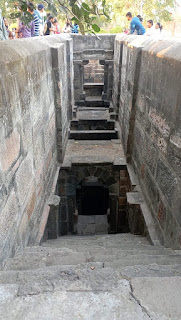
This ancient stepwell, along with many others in Vadnagar, is getting a facelift and being converted into a tourist spot.

Much like the other water retention structures of the region, this vav too offered the option of walking downstairs to recover water. Along with that, this ancient structure does point to the fact that a farming civilization had its roots deep in the region.


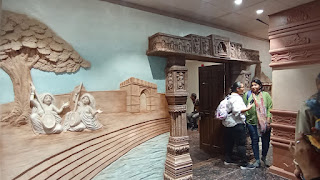
Art Gallery


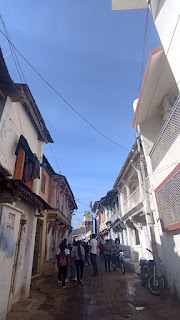
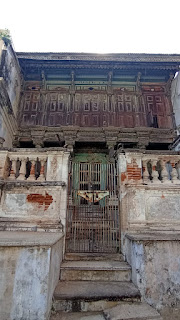
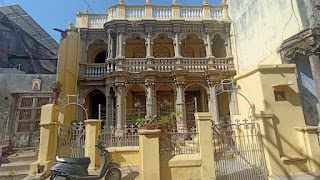
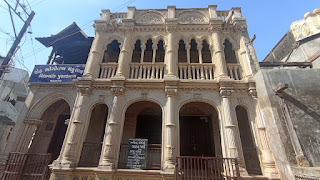
Ancient Structures and Havelis in Vadnagar


Read more about Vadnagar

Thanks for reading

Thursday, 19 October 2023

Research Paper: Mythical Patterns in Contemporary Events: A Study of Amitav Ghosh's Gun Island

Wrote this paper at the two-day International Conference on Revisiting History, Ethnicity, and Myth in Literature, organized by Amity University, Rajasthan, on October 19-20, 2023. The paper delves into the topic of Mythical Patterns in Contemporary Events: A Study of Amitav Ghosh's Gun Island.

Mythical Patterns in Contemporary Events: A Study of Amitav Ghosh's Gun Island

Abstract:
Myth, a traditional narrative explaining the origins of the world and society, often involving gods and supernatural elements, was not accepted by Plato in his Republic due to its lack of trusted truth and perceived irrationality. However, the Indian mind has a habit of finding connections between myth and reality, consciously identifying recurring mythic patterns in contemporary events. Regarding the use of myth in the novels, Mukherjee comments- the myth was used consciously to enhance the effect of a contemporary situation. The amalgamation of myth and reality not only adds depth and meaning to the stories but also provides a new contribution to the overall development of their themes and structures. Ultimately, the conscious use of myth in contemporary literature enriches the reading experience by bridging ancient wisdom with modern experiences. The novel Gun Island by Amitav Ghosh masterfully delves into the underexplored territory of utilizing mythology to address contemporary issues and concerns. The myths in this unknown function as symbolic threads that intricately connect the past and the present, shedding light on the profound relationship between humans and nature. Ghosh artfully intertwines historical events, diverse ethnicities, and mythical elements, shedding light on contemporary issues, and environmental challenges. By expertly blending myth and reality, Ghosh prompts readers to question the conventional divisions between truth and imagination, past and present, and the boundaries that separate humanity from the natural world.

Keywords: Myth, Reality, Amitav Ghosh, Gun Island, Contemporariness

Introduction:
Mythical patterns in literature hold a profound and timeless allure, weaving themselves into the fabric of storytelling since the dawn of human civilization. These patterns are distinguished by their archetypal characters, epic quests, and symbolic motifs that transcend cultural boundaries, providing a window into the universal facets of the human experience. In doing so, they furnish a framework for examining complex themes and emotions that resonate with readers across time and place. Myth, an integral element of literary composition, serves as both a reservoir of symbolism and a canvas for artistic expression. Its roots delve deep into classical mythology, offering modern writers a shorthand to explore concepts, interpret events, and dissect characters and themes in innovative ways. Leveraging mythological references within literature adds depth, layers of meaning, and opportunities for contemplation.

Among the literary luminaries who understood and harnessed the potency of myth within their works, T.S. Eliot stands as a prime example. Eliot's masterful use of myth extends beyond mere allusion and metaphorical flourish; it serves as a conduit for connecting his ideas and tropes with universal themes, thereby establishing an external order to the ideas woven throughout his poems (Eliot, 2014).

William Righter in his book Myth and Literature quotes Warren and Wellek, “Myth is narrative, irrational … story-telling of origins and destinies, the explanations… of why the world is and why we do what we do” (Righter, 1975). Myth, at its core, embodies narrative storytelling that often defies rationality, offering explanations for the origins and destinies of the world and human behavior. Scholar William Bascom succinctly defines myths as true narratives from the remote past upheld through faith and often regarded as sacred. This research paper embarks on a journey of demystification, seeking to unravel the enigmas and illusions associated with myths and mythology. Scholars such as Roland Barthes and Claude Levi-Strauss underscore the significance of comprehending the underlying structures and relationships within myths, transcending surface-level content and narrow allegorical interpretations. Mythology emerges as a form of storytelling that imparts philosophical meaning to ordinary life, rendering our experiences intelligible.

In this essay Archetypal Criticism: Theory of Myths from Anatomy of Criticism: Four Essays, Frye explores the archetypal patterns and symbols that recur in myths across different cultures and periods. The intricate interplay between myths and literature underscores how literature both draws from and reinterprets these mythic elements. Frye's archetypal criticism provides a powerful lens through which one can analyze and unveil the profound meanings and universal themes embedded within literary works. He posits that myths, as the ultimate wellspring of storytelling, offer a gateway to excavating the latent conflicts and narratives concealed within the annals of history (Frye, 2000).

Cecil Foster, in his work Blackness and Modernity, quotes Frye's perspective, asserting that "an ideology is a secondary and derivative structure, and that what human society does first is to create stories." In essence, mythology serves as the primordial source from which ideologies ultimately derive. This concept underscores the fundamental role of myth in shaping human thought and culture. (Foster, 2007)

Frye also posits that the plot or narrative of a literary work emerges organically from the metaphorical and poetic language in which myth is embodied. In this light, contemporary mythological novels bear a striking resemblance to Aristotle's concept of "mythos" or narrative, which he referred to as the animating formal cause—the very "soul" of a work—that assimilates all details into the realization of its unity. Frye's insight underscores the intrinsic relationship between myth and narrative structure in literature, highlighting how they converge to give depth and coherence to literary creations. (Frye, 2000)

In the influential work Mythologies, Roland Barthes redefines myth as a historically specific ideological worldview that organizes and guides social life. He posits that objects and concepts can attain the status of myth over time, persisting as enduring symbols in culture. Barthes sees myth as a form of communication, capable of transforming nearly any subject into a myth when conveyed through a specific discourse. The key characteristic of myth, according to Barthes, is its ability to present culturally specific elements as timeless and natural, thus reinforcing ideological narratives. By demystifying myth, Barthes aims to unveil the illusions that underpin national and social cultures. He emphasizes that myths, whether ancient or modern, have a historical foundation chosen by history to validate certain political ideas. This dual nature of myth, simultaneously universal and ideological, highlights its role in shaping and legitimizing societal beliefs. Levi-Strauss's scientific approach to mythology reveals the underlying structures within these narratives, providing insights into the human psyche. Demystification, treating myths as linguistic systems of signs and symbols, contextualizes them culturally and historically, deepening our understanding of their symbolic dimensions. Myths, transcending their origins, offer tools to explore contemporary issues and provide fresh insights. He writes, “Myth is a language and it is part of human speech… It is both the same thing as language and also something different from it” (Barthes, 1993).

The intersection of myth, literature, and demystification creates a captivating realm where timeless narratives evolve, illuminating modern conundrums and showcasing the enduring power of storytelling. Levi-Strauss likens myth to language, as it's both similar to and distinct from it. Mikics summarizes Levi-Strauss, depicting myths as fundamental thought structures governing human existence, rooted in oppositions like cultivated versus primitive and human versus divine, explaining natural phenomena and bearing distinct cultural structures. (Lévi-Strauss, 2003)

In the essay, “Myth Today”, Barthes considers myth as a type of speech - a second-order semiological system of communication that is a special preconditioned form of language with a message. Myth has a double function. It points out and notifies us, it makes us understand something and it imposes it on us. (Barthes, 1993)

For Malinowski in his Myth in Primitive Psychology (2011), myths are an ‘indispensable ingredient’ of all cultures, which are continually modified and renewed by the modifications of history (Malinowski, 2014).


Amitav Ghosh’s Gun Island
Myths were inherently literary in structure. “Mythology as a total structure, defining as it does, a society’s religious beliefs, historical traditions, cosmological speculations, in short, the whole range of its verbal expressiveness – is the matrix of literature” (Frye, 2000). 

Amitav Ghosh's novel Gun Islan’ skillfully blends mythology with modern themes. Ghosh's talent for weaving history, culture, and myth is evident in this 2019 book. The story takes readers from the present to the ancient past, connecting them through myths and legends. With settings like the Sundarbans and Venice, the novel blurs reality and imagination, making it a captivating and immersive read. Ghosh's use of mythology isn't just a backdrop; it's a driving force that prompts reflection on the enduring power of myths in shaping our world. Gun Island describes the quest of Deen, a scholar and collector of rare books, who returns from New York, his city of domicile, to the Sunderbans in West Bengal to unravel the mystery and legend of a seventeenth-century merchant, Bonduki Sada-gar, translated “The Gun Merchant,” and his persecution by Manasa Devi, mythical goddess of snakes.

In Amitav Ghosh's novel, Gun Island, the character of Manasa Devi (Snake Goddess) is first introduced through a conversation between Kanai Dutt and Deen, in which the myth of Chand Saudagar is discussed. This myth, crafted by Ghosh himself, serves as a central thread that weaves the novel's themes together. Deen's discovery of the Myth of Bonduki Saudagar and Manasa Devi and visits to The Shrine, as told by Nilima Bose, takes center stage. Here, he bears witness to the Great Cobra, a belief held by many that the snake perpetually resides within the Shrine of Mansa Devi.

Through this myth, Ghosh draws parallels between the Little Ice Age and our present-day reality, where natural disasters such as droughts, floods, cyclones, wildfires, and epidemics have become a ubiquitous part of life. The novel posits that these unprecedented climatic conditions are the primary cause of these disasters. Despite being intrigued by the myth of the Gun Merchant after hearing it from Kanai, Deen initially sees it as nothing more than a story, not worth his further consideration. However, while attending a conference in Los Angeles, he is moved by the speeches of a young speaker and Cinta, who suggest that there may be some truth to the myth after all. During his visit to Los Angeles for a conference, he once again had a startling encounter with nature. This time, he witnessed a yellow-bellied sea snake in the ocean, an encounter that tragically resulted in the demise of a nearby dog.

After the conference, Deen engaged in a deep conversation with Cinta about the myriad questions and confusions that had arisen from his encounters with the Manasa Devi Myth in Bangladesh. Together, they embarked on a quest to decipher the etymology of the various locations associated with the myth. Inspired by Cinta's wisdom and enthusiasm, Deen felt compelled to explore the enchanting city of Venice and trace the footsteps of the Gun Merchant, hoping to uncover the hidden truths concealed within the myth. Along his journey, Deen unraveled the intriguing and sometimes whimsical names of these places, all while diligently striving to unearth the veracity of the Gun Merchant's legend.

In the novel, Deen is introduced to a myriad of stories surrounding Bonduki Sadagar and his encounters with Manasa Devi, all recounted by individuals like Nilima Bose and Tipu. Among these tales, one particularly intriguing narrative unfolds, involving the Gun Merchant. As the story goes, Mansa Devi herself urged the Gun Merchant to become her devoted worshipper and construct a shrine in her honor. However, the Gun Merchant, initially reluctant, interpreted the trials and tribulations that befell him as signs sent by Mansa Devi, prompting him to seek refuge on an isolated island, which came to be known as Gun Island. Despite his best efforts to evade her, Mansa Devi eventually located him in this remote refuge, subjecting him to enduring torment and trials. It was during this grueling ordeal that the Gun Merchant finally acquiesced to Mansa Devi's divine will, embracing his role as her devoted worshipper. With newfound determination, he resolved to build a shrine dedicated to her amidst the mystic landscapes of the Sundarbans. Through the conversation with Horen Naskar, while visiting the shrine of the Gun Merchant, Deen is prompted to consider the reasons for the Gun Merchant's migration from Sundarbans. It becomes clear that the Gun Merchant may have been driven to leave his home by one of these very same factors that have caused other characters to migrate. “the disaster that had forced the Gun Merchant to flee his homeland: a drought so terrible that the streams, rivers, and ponds had dried up and the stench of rotting fish and dead livestock had hung heavy in the air.”(Ghosh, 2019)

At the end of the novel, Ship, Lucania embarks on a mission to protect the refugees aboard the blue boat. Unfortunately, this mission is met with opposition from right-wingers, much like the attack experienced by the Gun Merchant during his time as a slave of pirates. This parallel serves to reinforce the themes of the novel and draws connections between the past and the present. Additionally, while everyone was aboard the Lucania, a sudden change in the atmosphere occurred, a phenomenon known as bioluminescence. This event, with its mythical connotations, suggests the presence of Manasa Devi herself. This moment serves to underscore the importance of the myth and its significance within the larger context of the novel.

In the research paper entitled Myth and Contemporary Maithili Literature, Ratneshwar Mishra states that “myth corresponds neither to religion nor to science. It, rather, comforts both heart and mind and coalesces the gap between intellect and emotions, fact and ideal, the human and non-human” (Saccidānandan, 2010). Dinanath Datta, the central character of the novel, embarks on a captivating journey, tracing the footsteps and experiences of Bonduki Saudagar as relayed in the myth. Through this odyssey, he comes to a profound realization that the myth itself is a reflection of the tangible, lived experiences of an individual. As Deen traverses the path once trodden by the Gun Merchant, he finds himself facing parallel encounters, mirroring those described in the myth. On the beach, his flight, the Shrine, becomes a stage where he, too, confronts enigmatic snakes reminiscent of how Saudagar witnessed the presence of Manasa Devi in his own life. In this convergence of myth and reality, Deen's journey unravels the intricate tapestry of beliefs and experiences, blurring the lines between the two in a mesmerizing exploration of the human spirit. The dichotomy between history and myth often hinges on the distinction between literate and non-literate societies, with history predominantly emerging from literate societies and myths serving as a reservoir of the past in non-Western and less technologically advanced societies.

At the heart of the novel lies the captivating myth of the snake goddess Manasa, which Ghosh interlaces with the Santa Maria della Salute in Venice, also known as the Madonna of Good Health. This fusion of ancient folklore and contemporary symbolism serves as a thematic anchor, drawing connections between spirituality, health, and the environment. A central concept explored in Gun Island is the notion of a new universal religion—one centered on compassion towards nature and all living beings. Ghosh emphasizes a fluid, trans-temporal, and trans-spatial essence and existence, challenging conventional religious boundaries and promoting a harmonious coexistence with the natural world.

In his The Texture of Culture (2012), Aleksei Semenenko mentions that the beauty of myths lies in the fact that they do not “belong exclusively to the past and archaic cultures but constitute an intrinsic part of modern culture as well”(Semenenko, 2012). The myth of Prometheus, a central figure in Greek mythology, embodies the archetype of a benefactor who defies divine authority to bestow knowledge and power upon humanity. This enduring narrative has found striking resonance in recent real-world events, particularly within the realm of technological advancements. we undertake a comprehensive analysis of contemporary events that unmistakably reflect these mythical patterns in Gun Island, while concurrently accentuating the ethical dilemmas and repercussions mirroring the Promethean myth. These modern technological advancements function as a contemporary iteration of Prometheus's daring act of purloining fire, symbolizing the acquisition of transformative knowledge. In the context of artificial intelligence, biotechnology, and space exploration, these innovations promise remarkable capabilities and possibilities while concurrently raising profound ethical questions. We explore the burgeoning ambitions of private space enterprises and the associated ethical concerns surrounding resource utilization, environmental impact, and the responsibilities of space exploration. In elucidating these developments, we draw explicit parallels to the Promethean myth, showcasing humanity's contemporary expansion into new frontiers and the ethical responsibilities that accompany such endeavors. This examination underscores the enduring relevance of the Promethean myth in our contemporary world, where humanity grapples with the dual nature of empowerment and responsibility amid the relentless pursuit of knowledge and technological progress.


Conclusion:
In conclusion, the intricate relationship between mythology, literature, and contemporary culture is a testament to the enduring power of storytelling and its ability to shape our understanding of the world. Amitav Ghosh's novel Gun Island exemplifies the enduring relevance of mythology in literature, where the ancient and the modern intersect. The novel Gun Island by Amitav Ghosh masterfully exemplifies the power of myth in addressing contemporary issues and forging connections between the ancient and the modern. Ghosh's skillful weaving of mythology, history, and reality creates a rich tapestry that not only adds depth and meaning to the narrative but also serves as a vehicle for exploring profound themes and environmental concerns. In a world where Plato once rejected myth as lacking in trusted truth and rationality, Ghosh's work demonstrates that myths can indeed serve as potent tools for understanding and engaging with our complex reality. By blurring the lines between truth and imagination, past and present, and humanity and nature, Ghosh challenges readers to rethink conventional boundaries and appreciate the enduring wisdom that myths provide. Ultimately, the conscious use of myth in contemporary literature, as exemplified by Gun Island, enriches the reading experience by bridging the timeless wisdom of ancient tales with the urgent issues and experiences of the modern world, reminding us that the threads of myth continue to weave their way through our lives, connecting us to the mysteries of existence. Exploration of the Promethean myth in the context of technological advancements underscores the ongoing dialogue between ancient narratives and our ever-evolving understanding of the world, we are reminded that the power of myth extends beyond the pages of literature. It shapes our cultural consciousness, influences our ethical choices, and guides us in addressing the pressing challenges of our times. As we reflect on the journey through myth and literature, we find that these timeless stories continue to illuminate our path forward, providing insight, inspiration, and a profound connection to the human experience. Amitav Ghosh's Gun Island serves as a vivid testament to the enduring relevance of mythology in literature, inviting us to embrace the wisdom of the past as we navigate the complexities of the present and the unknown horizons of the future.


References

Barthes, R. (1993). Mythologies (A. Lavers, Ed.; A. Lavers, Trans.). Vintage.

Eliot, T. S. (2014). The Waste Land: 75th Anniversary Edition. HarperCollins.

Foster, C. (2007). Blackness and Modernity: The Colour of Humanity and the Quest for Freedom. McGill-Queen's University Press.

Frye, N. (2000). Anatomy of Criticism: Four Essays. Princeton University Press.

Ghosh, A. (2019). Gun Island: A Novel. Penguin Random House India Private Limited.

Ghosh, A. (2019). Gun Island by Amitav Ghosh. World Literature Today. Retrieved September 21, 2023, from https://www.worldliteraturetoday.org/2019/autumn/gun-island-amitav-ghosh

Huda, R. (2021). Revisiting Popular Bengali Folklores to Re-imagine the Past and Engage with the Present: Gun Island and the Tribulations of Climate Change. Re-writing, Re-imagining the Past, XI(1), 102-113. https://doi.org/10.31178/UBR.11.1.9

Lévi-Strauss, C. (2003). Myth and Meaning. Taylor & Francis.

Malinowski, B. (2014). Myth in Primitive Psychology. Read Books Limited.

Righter, W. (1975). Myth and Literature. Routledge & Paul.

Saccidānandan (Ed.). (2010). Myth in Contemporary Indian Literature. Sahitya Akademi.

Semenenko, A. (2012). The Texture of Culture: An Introduction to Yuri Lotman's Semiotic Theory. Palgrave Macmillan.

Zade, D. M. C. (2018, July). Myth And History. Literary Endeavour, IX(3), 329-333.

Wednesday, 4 October 2023

Maslow's Hierarchy of Needs- Abraham Maslow

Maslow's Hierarchy of Needs
Abraham Maslow

Maslow's hierarchy of needs is a psychological theory developed by Abraham Maslow in the mid-20th century. It is often depicted as a pyramid and outlines a hierarchical structure of human needs, with the most basic physiological needs at the bottom and higher-level psychological needs at the top. The theory suggests that individuals are motivated to fulfill these needs in a sequential order, with lower-level needs taking precedence before higher-level ones.


Here is a brief overview of the five levels of Maslow's hierarchy of needs, from the most basic to the highest:

1. Physiological Needs: These are the most fundamental needs for survival, including food, water, shelter, sleep, and basic health. Without these necessities, a person's physiological well-being is compromised.

2. Safety Needs: Individuals seek safety and security once physiological needs are met. This includes physical safety (protection from harm), financial security, stable employment, and a safe living environment. Meeting safety needs helps reduce anxiety and fear.

3. Love and Belongingness Needs: After the physiological and safety needs are satisfied, people need social belonging and intimate relationships. This level includes friendships, family bonds, romantic relationships, and a sense of community. Humans are inherently social beings and thrive on connection with others.

4. Esteem Needs: Once social needs are met, individuals strive for self-esteem and recognition from others. This includes gaining self-respect, achieving success, earning the respect of others, and feeling a sense of accomplishment. Esteem needs can be both internal (self-confidence, self-worth) and external (recognition and admiration from others).

5. Self-Actualization Needs: At the top of the hierarchy is self-actualization, which represents the realization of one's full potential, personal growth, and self-fulfillment. People pursuing self-actualization engage in creative activities, seek personal growth, and strive for a sense of purpose and meaning in life.

It's important to note that not everyone progresses through these levels similarly, and individuals may move back and forth between them. 

Additionally, Maslow later expanded his theory to include two more groups: Cognitive Needs (the need for knowledge and understanding) and Aesthetic Needs (the need for beauty and order). However, these additions are not as widely recognized as the original five levels.


Maslow's hierarchy of needs has been influential in psychology and various fields, including education, management, and marketing, as it provides a framework for understanding human motivation and behavior. However, it has also been critiqued for its Western cultural bias and the assumption that these needs are universally prioritized in the same way across all cultures.

Maslow's Hierarchy of Needs provides a timeless framework for understanding human motivation and behavior. In a rapidly evolving world filled with technological innovations, it's fascinating to see how these innovations have influenced and reshaped our pursuit of needs across the hierarchy. While the model isn't without its limitations, it remains a valuable tool for psychologists, researchers, and anyone interested in understanding what drives human behavior.

As we continue to navigate the complexities of the digital age, Maslow's pyramid serves as a reminder that, at our core, we all share fundamental human needs that guide our actions and aspirations. Innovations will continue to emerge, adapting to our ever-changing world and helping us meet our needs in new and creative ways.


Innovations in Meeting Human Needs

Throughout the years, innovative solutions have emerged to help individuals meet their needs across Maslow's Hierarchy. Let's take a closer look at how these innovations have reshaped our understanding of human motivation:

1. Digital Connectivity and Social Needs:
In the realm of love and belongingness, social media platforms have fundamentally altered how we connect with others. Facebook, Twitter, Instagram, and other platforms allow us to maintain relationships, make new friends, and share our lives in ways that were unimaginable just a few decades ago.

2. E-commerce and Safety Needs:
Online shopping and the growth of e-commerce have transformed how we fulfill our safety needs. With the click of a button, we can purchase home security systems, insurance policies, and even cybersecurity services to protect our physical and digital assets.

3. Online Learning and Self-Actualization:
The internet has democratized access to education and self-improvement resources. Platforms like Coursera, Khan Academy, and YouTube offer a plethora of courses and tutorials, allowing individuals to pursue self-actualization and personal growth on their terms.

4. Personal Branding and Esteem Needs:
Social media and personal branding have given individuals the tools to build their self-esteem and gain recognition. Many people have leveraged platforms like LinkedIn and Medium to share their expertise and experiences with a global audience.

Challenges and Critiques
While Maslow's Hierarchy of Needs remains a valuable framework, it's essential to acknowledge some of the criticisms it has faced. Critics argue that human needs are not always hierarchical and can vary widely from person to person and from culture to culture. Additionally, the model doesn't account for the complexities of individual experiences, such as those with disabilities or in challenging social circumstances.


Real-World Applications of Maslow's Hierarchy
Understanding Maslow's Hierarchy of Needs has profound implications for various fields, including psychology, education, marketing, and personal development. Let's explore some practical applications:

1. Education: In the realm of education, teachers and educators can apply Maslow's theory by recognizing that students must have their basic physiological and safety needs met before they can fully engage in learning. Schools often provide meals, a safe environment, and emotional support to create the conditions for effective education.

2. Marketing and Advertising: Marketers understand that their campaigns can tap into consumers' needs at different levels of the hierarchy. For instance, an advertisement might appeal to the need for self-esteem by portraying a product as a status symbol or highlighting safety features to address security concerns.

3. Personal Development: Individuals can use Maslow's Hierarchy as a framework for personal growth. By identifying which level of needs they're currently focused on, they can set appropriate goals and aspirations. This self-awareness can lead to a more fulfilling life.

4. Psychological Counseling: Therapists often use Maslow's theory to assess their clients' needs and develop treatment plans. Understanding which needs are unmet can help therapists address underlying issues and guide individuals toward greater well-being.

Critiques and Limitations
While Maslow's Hierarchy of Needs has been influential, it's not without its criticisms. Some argue that the hierarchy oversimplifies human motivation and that individuals may prioritize needs differently based on their culture, life experiences, and personal circumstances. Moreover, the theory may not account for the complexities of modern life, where people may pursue multiple needs simultaneously.

My Learnings from the National Workshop on Academic Writing (2026)

The National Workshop on Academic Writing  I recently had the opportunity to participate in the National Workshop on Academic Writing (2026)...