Sunday, 11 December 2022

Why Comparative Indian Literature?- Sisir Kumar Das

This blog is a response to a task assigned by Dr. Dilip Barad Sir. The syllabus of the Department of English, MKBU includes paper no.- 208 Comparative Literature and Translation studies which includes around 9 articles. We (students) are assigned a task of classroom presentation of assigned articles in a pair. In this blog we are supposed to write abstract, key points / arguments and concluding remarks on all three articles of Unit 1 of paper Comparative Literatures and Translation Studies. It also includes the recording of class presentations presented by respective students. Blogger and her partner have made a presentation on the third article, presentation and a video of a particular article is embedded (as per the task).

ARTICLE 1
Why Comparative Indian Literature?
Sisir Kumar Das

Detailed concept of article:
Article begins with an idea of attempt of finding unity is literature of India, the beginning of the century a group of scholars have been trying to project the idea of Indian literature emphasizing the underlying unity of themes and forms and attitudes among the various literature produced in different Indian languages to discover the essential threads of unity in our multilingual and multi religious country. It is commendable but these attempts in discovering the basic unity of the Indian creative mind are made at the risk of ignoring the plurality of expressions in our creative minds.

Recently a group of scholars is talking of ‘Comparative Indian Literature’ to add a new dimension to our literary studies. However one wonders, Whether it is being used to lend some respectability to the study of Indian language by linking up with comparative literature, a western discipline or indeed to indicate the proper framework within which Indian literature can be studied. The goal of a newly emerged discipline, comparative literature, is to visualize the total itinerary activities of man as a single universe.

Goethe spoke about Weltliteratur instead of European literature in 1827, perhaps attempting to bring together the literature of different civilizations; he was the first man in history to speak of Weltliteratur . Goethe in a conversation with Eckermann on 31st January 1827 said, “National literature is now rather an unmeaningful term, the epoch of world literature is at hand, and everyone must strive to Hasten its approach.” He did not tell us how to hasten the approach of world literature but we assume that by world literature he meant the memorable works in all languages of the world, rather than the assemblage of all literature.


The goal of comparatist is also world literature but not in the sense that Goethe or R. Tagore had used it but in the sense of literary traditions. The comparatist knows that comparative literature is a method of investigation while world literature, as Goethe meant, is a body of valuable literary works. Comparative literature differs from the study of single literature not in method but in matter, attitude and perspective. it can go on extending its area of operation- its ultimate limit is the literatures of the whole world. Its strength and its weakness lie in its cosmopolitanism (the concept that all of humanity could (and should) belong to a single community.)

Yet from the last hundred years Western comparatist has kept itself restricted to Western literature. If one goes through the enormous corpus of western work produced by them one would wonder about their awareness of the existence of any literature other than their. How is it that the votary of Cosmopolitanism is literary study is a pathetic victim of parochialism (narrow- mindedness)? The contact between West and East Literature began early in history.
  • Europe came to know of Hebrew Literature the day it accepted Christianity.
  • The ‘Panchtantra’ reached Europe through its Arabian and Syrian version before The Renaissance.
  • Cordova in Spain in the eleventh century was the center for Arabic literature.
  • By the end of the 18th century, Europe discovered Sanskrit, which brought about a revolution in linguistics.
  • When comparative literature was established in the universities of Europe and America translation of many works in Chinese and Japanese and of course in Arabic and Persian were available in European languages
Francois Jost admits that “Western criticism… is still reluctant to integrate into the Corpus literature, the literature of so-called Exotic continents for no reason other than ignorance of Exotic civilizations and languages.

Das says- But it cannot be only because of ignorance; it is more because of indifference, if not because of prejudice against these exotic civilisations to some extent. to plead ignorance of eastern literature made a euphemism for Macauleyean arrogance; The result is that comparative literature in the West began as compared to Western literature and it remains so even today.

Das is ready to admit that the charge of Eurocentrism against the western comparatist is unfair and that his choice of European literatures as the main area of investigation has been prompted more by pragmatism than by prejudice against oriental literatures. Ulrich Weinsstein expressed his hesitation to extend ‘the study of parallels of phenomena pertaining to two different civilizations’, reacting to Henry Remak’s definition of comparative literature which embraces a very wide field and Etiemble’s call for widening the scope of comparative literature. The academic justification for excluding Oriental literatures from comparative literature in the West comes from the necessity ‘to avoid all ahistorical parallels based solely on speculation’. Although there is no reason why such studies will necessarily be based on speculation, one considers the necessity of delimiting the area of comparative literature on the basis of certain principles. If the criteria of Civilization be accepted as a sound one, the European comparatist is within his rights to make Western literature a sole area of his investigation. If they prefer to remain ignorant about other literatures; our comparative literature comprising the study of Indian literature will be as valid as comparative literature in the West.

One can also argue that comparative Western literature is the study of different National literature, while comparative Indian literature is the study of literature of one Nation. Is not Comparative Indian Literature a retrograde step so far as the basic premise of Comparative literature is concerned?

When Europe defined Comparative Literature in terms of national literatures, it only thought of European Nation-states which are monolingual. Today when we talk about India, a nation- state or Soviet Union it consists of several nationalities with different languages, and is multilingual. Neither language or political boundary nor culture can be the sole criteria of Comparative literature. Comparative Literature has to be both Inter Linguistic and Intra Linguistic. If we agree to make language a sole Criterion of for the identification of literatures, we will certainly gain one kind of homogeneity, perhaps a tangible one but the idea of cultural homogeneity on which Western comparative literature rests will fall apart. Even if the exponents of comparative literature insist on the study of the relationship between different National literatures rather than other literatures of any group of people then they have to come to terms with nations which have a lot of literature or with National literature within many languages. e.g. India

Das talks about Comparative Indian Literature as a valid area in comparative literature not because Comparative literature in the West is exclusively a study of western literature. we should try to resist all parochialism in literary studies. Whatever be the goal of comparative literature it must be Terra Firma- a solid ground. Literature deals with the concrete, not with abstractions. It is born of language and yet it goes beyond language; it is nourished by a culture. Any attempt towards a literary belief that cosmopolitanism neglects the literature or literatures that are components of a cultural history is bound to turn into dilettantism. The lesson we must learn from the Western comparatist is the lesson of vigilance against dilettantism. Our comparative literature must be comparative Indian literature because nothing else can be the basis for our literary study. This is not chauvinism, but only an affirmation of the relation between literature and people. We cannot study literature as a body of impersonal knowledge without any relation to the people or to the time to which we belong.

Another argument: Will not the study of Indian literature alone breed a kind of literature Patriotism or a critical parochialism which must be avoided?
Multilingualism is a fact of Indian society and Indian literature. Indian not only have different languages interacted with each other but also gave the rise to new literary style such as manipravala but have also given birth to the new language and literature, example Urdu;
not only have writers used two languages simultaneously but also who have switched from one language to another;
not only do we have text which has been claimed as their own by different linguistic Groups (Charya songs, Mirabai songs) but text has been written in more than one languages e.g. Sanskrit plays.
There is hardly any society where we see that the languages belonging to so many families have been operated side by side and have interacted with each other for so many centuries

Inherent nature of Indian literature, or of Indian literature demands a wide literary perspective and there is no reason why the Indian comparatist should confine himself to his own literature. Comparative Indian literature not only justifies the need for a literary study but it provides the comparative study of literature with new range and vision. A text like Meghnavadham Kavya, unique in the history of literary relations involving two different Civilizations or the emergence of implied tragedy and the novel in India was a challenge to the Indian comparative to study Indian literature in relation to ancient Greek and modern European literature respectively. Indian literature is not merely Indian.

Video recording of this article's presentation, presented by my classmates Divya Sheta and Aamena Rangwala


Presentation of the article by Divya Parmar and Mayuri Pandya


Conclusion:
In a recent article, ‘Towards comparative Indian literature’, Amiya Dev said, ‘Comparison is the right reason for us because, one, we are multilingual and two, we are third world.’ The effect of multilingualism is more or less appreciated by Indians scholars. The third world situation that lends Indian comparative literature of greater validity may need further comments. He points out that the tools of Western comparison are hardly adequate to deal with our literary situation. For example, the categories ‘influence’ and ‘imitation’ and ‘reception’ and ‘survival’ need serious modification to suit the third world literary situation. The third world situation has imposed certain psychological restrictions on us. Our idea of comparative literature will emerge only when we take into account the historical situation in which we are placed. Our journey is not from comparative literature to comparative Indian literature but from comparative Indian literature to comparative literature


It is common to find it challenging to read original articles and summarize them. As a result, I have simplified this article through my understanding and with the help of ChatGPT. Simplifying articles is helpful in achieving a better and clearer understanding of the concept, which will make reading the original article easier. The main aim is to help students or readers understand the concept so that they can read the original article with ease. CLICK HERE FOR A LAYMANISED ARTICLE.

I hope this blog is useful.
[words- 1640]

Comparative Literature in India- Amiya Dev

This blog is a response to a task assigned by Dr. Dilip Barad Sir. The syllabus of the Department of English, MKBU includes paper no.- 208 Comparative Literature and Translation studies which include around 9 articles. We (students) are assigned a task of classroom presentation of assigned articles in a pair. In this blog we are supposed to write abstract, key points/arguments and concluding remarks on all three articles of Unit 1 of paper Comparative Literatures and Translation Studies. It also includes the recording of class presentations presented by respective students. Blogger and her partner have made a presentation on the third article, presentation and a video of a particular article is embedded (as per the task).


ARTICLE 2
Comparative Literature in India
Amiya Dev


Abstract:
In his article, "Comparative Literature in India," Amiya Dev bases his discussion on the fact that India has many languages and literatures thus representing an apriori situation and conditions of diversity. He therefore argues that to speak of Indian literature in the singular is problematic. Nonetheless, Dev also observes that to speak of Indian literature in the plural is equally problematic. Such a characterization, he urges, either overlooks or obscures manifest interrelations and affinities. His article compares the unity and the diversity thesis, and identifies the relationship between Indian commonality and differences as the prime site of comparative literature in India. He surveys the current scholarly and intellectual positions on unity and diversity and looks into the post-structuralist doubt of homogenization of differences in the name of unity. Dev also examines the search for common denominators and a possible pattern of togetherness and Dev underlines location and located inter-Indian reception as an aspect of inter-literariness. It is t/here Dev perceives Indian literature, that is, not as a fixed or determinate entity but as an ongoing and inter literary process: Indian language and literature ever in the re/making.

Comparative Literature in India (Detailed points from article):
In this article, Amiya Dev is discussing an a priori location of comparative literature with regard to aspects of diversity and unity of India. Scholars of literature either for unity of Indian literature or for a diversity and distinctiveness of the literatures of India. Instead of this binary approach, Dev's proposal involves a particular view of the discipline of comparative literature because he argues that in the case of India the study of literature should involve the notion of interliterary process and a dialectical view of literary introduction. According to census and Sahitya Academy there are a total 22 major languages in India and literature in all these languages. In general, the perspective of India as a hegemonic language and literature area is ubiquitous.

We have a plurality of so-called major literatures in India, we are confronted by a particular problem: Is Indian literature, in the singular, a valid category, or are we rather to speak of Indian literatures in the plural?

Literary histories written in India by Indian scholars also focused and still focus on a single literature. This single-focus perspective is a result of both a colonial and a post-colonial perspective, the latter found in the motto of the Sahitya Akademi: "Indian literature is one though written in many languages" (Radhakrishnan). However, this perspective was opposed by scholars who argued that a country where so many languages coexist should be understood as a country with literature (in the plural). Presently, a different kind of resistance has emerged to the unity thesis in the form of what may be called "hegemonic apprehensions." In brief, arguments of unity in diversity are in Dev’s opinion suspect, for they encroach upon the individualities of the diverse literatures. In other words, a cultural relativist analogy is implied here, difference is underlined and corroborated by the fact that both writers and readers of particular and individual literatures are overwhelmingly concerned with their own literature and own literature only. It is from this perspective the Academy's motto "Indian literature is one though written in many languages," the retort is "Indian literature is one because it is written in many languages."

Dev mentions Gurbhagat Singh who has been discussing the notion of "differential multilogue". He rejects the notion of Indian literature because the notion as such includes and promotes a nationalist identity. As a relativist, Singh accords literatures not only linguistic but also cultural singularities. With regard to the history of comparative literature as a discipline, he rejects both the French and the American schools as well as the idea of Goethe's Weltliteratur. His insistence on the plurality of logoi is particularly interesting because it takes us beyond the notion of dialogue, a notion that comparative literature is still confined to; enabling us to understand Indian diversity without sacrificing the individualities of the particulars.

Singh's notion of differential multilogue reflects a poststructuralist trend in Indian discourse: poststructuralism understands difference as a notion of inclusion, that is, mutuality. Thus, it cannot accept the single-focus category "Indian" without deconstructing its accompanying politics. If Indian literature had not been so heavily publicized and hammered down, as it were, into our national psyche, if our individual literatures had been left alone and not asked to pay their dues to "Indian literature," there would be no resistance to the notion of unity in diversity.

Ironically, Indian poststructuralism inflicts upon itself a sameness with difference- speakers elsewhere and does not seem to recognize that difference-speaking in India may be different from difference-speaking elsewhere. At the same time, this poststructuralism does not seem to recognize that given all the differences pertaining to the Indian experience, underlying it and tying together the different entities, there may be a commonality, a sensus communis of a broadly cultural kind.

Jaidav develops an argument for this cultural differential approach. Jaidev's notion of an Indian sensus communis is instances of "national" and racial image formations which suggest homogeneity and result in cultural stereotyping. The concept of an Indian sensus communis in the context of Singh's differential multilogue or Jaidev's differential approach brings me to the question of situs and theory. That is, the "site" or "location" of theory and of the theorist are important factors. If situs means cultural and linguistic rootedness then the notion of commonality is applicable.

Jaidev's concept of oneness provides an ambience for particular concerns with regard to cultural and artistic expression such as the case of language overlaps, the bi- and multilinguality of authors and their readership, openness to different genres, the sharing of themes based in similar social and historical experiences, emphasis on the oral and performing modes of cultural and artistic transmission, and the ease of inter-translatability. On the other hand, Jaidev suggests these characteristics of Indian cultural commonalities are rooted in a situs of the premodern age of Indian literatures.

Aijaz Ahmad's In Theory: Classes, Nations, Literatures describes the construct of a "syndicated" Indian literature that suggests an aggregate and unsatisfactory categorization of Indian literature. Ahmad argues the notion of "European literature" is at best an umbrella designation and at worst a pedagogical imposition while Indian literature is classifiable and categorizable.

Further, he argues that while European and African literatures have some historical signifiers in addition to their geographical designation, these are recent concepts whereas Indian homogeneity has the weight of tradition behind it. In Ahmad's argumentation, the problem is that in the "Indian" archive of literature, Indianness ultimately proves limited when compared with the differential literature comprising each of the twenty-two literatures recognized by the Sahitya Akademi.An "Indian" archive of literature as represented by an "English" archive -- while non-hegemonic on the one hand by removal from a differential archive but hegemonizing by a latent colonial attitude on the other – also reflects the official language policy of the government: English, while not included in the Indian Constitution, is still recognized as a lingua franca of government, education, etc.

V.K. Gokak and Sujit Mukherjee who were speaking of an Indo-English corpus of literature that was created out of English translations of major texts from major Indian languages.

Ahmad's concern is with the hegemony of English, although he does not suggest its abolition in a way which would be close to Ngugi's arguments. It is true that the ideal of one language in India has been made real by now by ideological and political mechanisms. The official national language is Hindi and if literary texts from the other languages could be translated into Hindi, we could possibly arrive at a national Indian literature. However, in this case we would again arrive at a hegemonizing situation. On the other hand, it is clear that in the realm of education, English is the largest single language program in our colleges and universities.

Swapan Majumdar takes this systemic approach in his 1985 book, ‘Comparative Literature: Indian Dimensions, where Indian literature is neither a simple unity as hegemonists of the nation-state persuasion would like it to be, nor a simple diversity as relativists or poststructuralists would like it to be. He suggests that Indian literature is neither "one" nor "many" but rather a systemic whole where many subsystems interact towards one in a continuous and never-ending dialectic.

Same route of literary history, Sisir Kumar Das has taken with his planned ten-volume project, A History of Indian Literature, whose first volume, 1800-1910: Western Impact / Indian Response, appeared in 1991.

The underlying and most important finding is a pattern of commonality in nineteenth-century Indian literatures. Das's work on the literatures of the nineteenth century in India does not designate this Indian literature a category by itself. Rather, the work suggests a rationale for the proposed research, the objective being to establish whether a pattern can be found through the ages. One age's pattern may not be the same as another age's and this obviously preempts any given unity of Indian literature. Thus, Das's method and results to date show that Indian literature is neither a unity nor is it a total differential.

In many ways, Das's work is similar to K.M. George's two-volume Comparative Indian Literature of 1984-85. George's work was not as comprehensive as Das's: it only dealt with fifteen literatures and that too in a limited way. In Dev’s view George's work also demonstrates Western hegemony. For example Poetry was discussed in terms of "traditional" and "modern" but as if traditional was exclusively Indian and modern the result of a Western impact. Another problem of George's two volumes was that although they were titled Comparative Indian Literature, there was no comparison built into the findings and the fifteen individual literatures were placed simply side by side.

The Gujarati poet Umashankar Joshi -- a supporter of the unity approach -- was the first president of the Indian National Comparative Literature Association, and the Kannada writer U.R. Anantha Murthy is the current president of the Comparative Literature Association of India. Comparatists reflect the binary approach to the question of Indian literature as explained above. However, the Association also reflects a move toward a dialectic. The method of Comparative Literature allows for a view of Indian literature in the context of unity and diversity in a dialectical inter literary process and situation.

Dev suggests other aspects which support his understanding of Indian literature in an inter literary process: we are located in our own languages -- whether with an active or passive bilinguality -- where we have access to one or two other languages. Through inter-Indian translation we have also access to texts from a fourth and more languages. Now, as readers, consciously or subconsciously we place the texts in additional languages beside our original and first text. Inter-Indian reception presupposes that our situs is in our first text, that is, first language literature.

Video recording of this article's presentation, presented by my classmates Divya Parmar and Mayuri Pandya


Presentation of the article by Divya Parmar and Mayuri Pandya 


Conclusion:
In the concluding part of the article, Amiya Dev assures the readers, scholars and the students that the problems of unity and diversity are not unique to India. He discussed that if, for instance, Canadian diversity, it would have been from the outside, that is. from an Indian situs. Comparative Literature has taught us not to take comparison literally and it also taught us that theory formation in literary history is not universally tenable. He suggested that we should first look at ourselves and try to understand our own situations as thoroughly as possible. Let us first give full shape to our own comparative literature and then we will formulate a comparative literature of diversity in general.

It is common to find it challenging to read original articles and summarize them. As a result, I have simplified this article through my understanding and with the help of ChatGPT. Simplifying articles is helpful in achieving a better and clearer understanding of the concept, which will make reading the original article easier. The main aim is to help students or readers understand the concept so that they can read the original article with ease. CLICK HERE FOR A LAYMANISED ARTICLE.


I hope this blog is useful.
[Words- 1930]

Friday, 9 December 2022

COMPARATIVE LITERATURE IN INDIA: An Overview of its History

This blog is a response to a task assigned by Dr. Dilip Barad Sir. The syllabus of the Department of English, MKBU includes paper no.- 208 Comparative Literature and Translation studies which includes around 9 articles. We (students) are assigned a task of classroom presentation of assigned articles in a pair. In this blog we are supposed to write abstract, key points / arguments and concluding remarks on all three articles of Unit 1 of paper Comparative Literatures and Translation Studies. It also includes the recording of class presentations presented by respective students. Blogger and her partner have made a presentation on the third article, presentation and a video of a particular article is embedded (as per the task).


ARTICLE 3
COMPARATIVE LITERATURE IN INDIA: 
An Overview of its History
Subha Chakraborty Dasgupta

Myself, Jheel Barad and Dhruvita Dhameliya presented an article by Subha Dasgupta COMPARATIVE LITERATURE IN INDIA: An Overview of its History.


Here is the video recording of the presentation


Here is the presentation presented in above video


To watch presentation of all the articles CLICK HERE
I hope this blog is useful. 

Thursday, 8 December 2022

The Piano And The Drums- GABRIEL OKARA

This blog is in response to a task assigned by Yesha ma’am based on Gabriel Okara’s African poem ‘The Piano and The Drums’. This blog deals with an assigned class activity to write any one theme in class based on our understanding and the same is published in a blog under the title of class activity. Also this blog carries the detailed information, summary and analysis of the poem.

THE PIANO AND THE DRUMS BY GABRIEL OKARA

About Gabriel Okara-
Gabriel Imomotimi Okara (24 April 1921 – 25 March 2019) was a Nigerian poet and novelist who was born in Bumoundi in Nigeria. The first Modernist poet of Anglophone Africa, he is best known for his early experimental novel, The Voice (1964). In his poems and his prose, Okara drew on African thought, religion, folklore and imagery and he has been called "the Nigerian Negritudism". He was awarded the Commonwealth Poetry Prize in 1979 for The Fisherman's Invocation.


One of Okara's most famous poems is "Piano and Drums". Another popular poem, "You Laughed and Laughed and Laughed", is a frequent feature of anthologies. Okara was very concerned with what happens when the ancient culture of Africa is faced with modern Western Culture, as in his poem "Once Upon a Time".

Title/ Symbols in poem-

The poet uses two musical instruments Piano and Drums to symbolize two different cultures. It evokes cultural dichotomy in the poem and it forms the tiles of the poem also. The poet uses the "piano" to symbolize the western culture, and the drums to symbolize African culture. The poem is basically a postcolonial poem which exhibits the dilemma in the citizens of the colonized region when the new, opposite and complex culture is imposed upon them.

Background of the Poem:
This poem brings out the post- Independence attitude of elites who instead of going back to their traditions and cultures get stuck to the western civilization and begin the period of neo- colonialism. Which results in a collapse of African culture. Poet uses drums, a symbol of African culture which is lost by Piano, symbol of western/ white- masters culture. In African cultures drums play an important role, it begins their traditional ceremonies. These drums are called ‘djembe’ which means to stay true to the history. READ MORE ABOUT THE CONNECTION OF DRUMS AND AFRICA.

Wole Soyinka and D. O Fagunwa in 
“The Forest of a Thousand Daemons” 
page seven say “like the sonorous proverb 
do we drum agidigbo (drum), it is the 
wise who dance to it, and the learned 
who understand its language.”

Structure of the poem-
The poem is divided into Four stanzas of 29 lines. It is written in simple, visual and intelligible language. It has no consistent rhyming scheme, hence one can say that it is mainly a free verse. The mood of the poem is dilemma, mixed feeling and confusion; it had a sober tone of lamentation.

Stanza 1

African nature/ climate/ environment and occupation

Stanza 2

Reminiscent of childhood, the rawness of Africa, Satire to white world.

Stanza 3

Piano/ White Culture and its complexities, Lost African traditional culture

Stanza 4

Dilemma/ Confusion/ lost between two different or hybrid cultures in Africa in the Postcolonial period.  


About the Poem-
The poem ‘The Piano and The Drums’ was published in ‘Collected Poems (edited and with an introduction by Brenda Marie Osbey)’ in 2016 in Part I: Early poems. The setting of the poem appears to be the poet's village and it is a typical African countryside as the poet refers to ‘riverside’.

The poem begins with a speaker sitting on the riverside at dawn. He hears ‘jungle drums’ which have ‘mystic rhythm’, some supernatural strength, and are raw which connect the speaker to the nature and culture of pre- colonial Africa. He describes the hunting occupation of African people. The traditional drums and its beating gives strength and power to Africans to hunt and fight with wild animals like leopards and panthers.


In the second stanza the poet is nostalgic about his infancy when he used to suckle in her mother’s lap. Which can be read as his connection with his motherland. He describes the rawness and connection of Africa with nature through ‘paths with no innovation’, he walked on the paths which were not tarred as in western culture, satire of their materialistic and civilized life.

In the third stanza poet/ speaker is hearing ‘wailing piano’, emergence or beginning of colonization. Through the use of complex musical technical words like ‘concerto’, ‘diminuendo’, ‘counterpoint’, ‘crescendo’, he is exhibiting the complexity of western civilization and culture. He deploys them to emphasize the difficulty in understanding this new sound.

During the last stanza of the poem, the speaker laments on the level of confusion the new sound brings when it mixes with the drums. The speaker finds himself lost between the amalgamation to two completely opposite cultures.

Glossary:
  • Telegraphing- send (someone) a message by telegraph.
  • Pounce- spring or swoop suddenly so as to catch prey by animal
  • Spears- a weapon 
  • Torrent-a strong and fast-moving stream of water or other liquid.
  • Topples- overbalance or cause to overbalance and fall.
  • Suckling- baby who feeds through breast
  • Wailing- crying
  • Coaxing- persistent gentle
  • Diminuendo- a decrease in loudness in a piece of music.
  • Counterpoint-the technique of setting, writing, or playing a melody or melodies in conjunction with another, according to fixed rules
  • Crescendo- the loudest point reached in a gradually increasing sound.
  • Labyrinth- a complicated irregular network of passages or paths in which it is difficult to find one's way; a maze.
  • Dagger-point- The point or tip of a dagger.

Poem Analysis-
The poem brings the difference between the normal lifestyle of Africans and that of the modern world. The central theme of the poem talks on the effect of foreign culture on Africans.

In the very first stanza poets describe the jungle drums sending ‘urgent’ and ‘raw’ messages to remind the speaker about his culture and tradition, the natural and rustic African environment where he lived his youth days before the effect of western civilization. It's a message to a son of Africa who has lost his own identity to get connected or in remembrance of his native land which is scared by Western world. The rhythms of these jungle drums raises his memories of hunters with spears stalking leopards and panthers.

With the rhythms of drums and memories of youth days, the speaker gets nostalgic about his childhood days, as a baby sucking her mother’s breast in the comfortable lap, playing in the streets of mother land. He recollects his walk on the raw ‘paths with no innovation’, simple African life. With the same recollection it seems like Poet is being satiric to the western world for their innovations and development. As Africa is using ‘rugged and untarred path which is surrounded by nature.

In the third stanza poets use the imagery of ‘wailing piano’. The piano is a musical instrument which is played individually which suggests isolation. And the use of complex terms like ‘diminuendo’, ‘crescendo’ suggests the complexities of the western civilization and the world. With the musical imagery of a concerto, the poet- speaker paints a culture that is in disarray (disorganization) despite its advancement. The piano (western world) silently tries to blend in counterpoint with the rhythm of the drums (Africans) to create a sweet melody but this attempt ends up producing discordant music, which symbolizes the impossibility of living two diverse cultures together. The "coaxing" blend of the conflicting melodies results in a dissonant tune whereby the speaker becomes lost in its "complexities".

The last stanza of the poem brings the dilemma in the speaker/ poet. The amalgamation of the two cultures has confused Africa as well as poets which culture to be adapted, there is no one in its fullest. In the end of the poem also the speaker is on the same spot ‘riverside', lost in the ‘mist’ of the two incompatible cultures. So, the poet-speaker is caught in a tangled in between his African roots and past, and his exposure to modern civilization through education.

The end of the poem has no end to the confusion of the poet/ speaker of the citizens of this tangled culture. They aren't able to balance between the two opposite cultures. They struggle to cope up with the hybridity.


Themes of Poem:
  • Celebration Of nature
  • no place like motherland/ home
  • living a double standard lifestyle
  • acculturation
  • Inferiority
  • cultural obliteration
  • cultural conflict
  • Innocent
  • Neo colonialism
  • cultural orientation
  • Nature
  • loss of Identity laws of Africa's perfect state dependence
  • dilemma

Class Activity: Motherland in the poem ‘The piano and The Drums’ by Gabriel Okara.
As the blog discusses the whole poem, it will talk briefly about the importance of mother land.
Motherland: one’s native country; mother country.

We also have a Sanskrit shloka which suggests the importance of Ramayana about mother and motherland.

“जननी जन्मभूमिश्च स्वर्गादपि गरीयसी|”
Translation- One’s mother and motherland are superior to the highest heavens.

In the first two stanzas of the poem we see the speaker poet being nostalgic about his youthful period and his childhood in the raw of Africa before the white/ western world started encroaching on their region. Sitting riverside in nature he recollects the origin, tradition, culture and occupation of Africa.

‘jungle drums’, ‘mystic rhythm’, ‘hunters crouch with spears poised’, ‘paths with no innovations’, ‘naked warmth of hurrying feet’, ‘green leaves and wild flowers pulsing’,
are the phrases from the poem which suggests the speaker/ poet's memory for his motherland and love for his nation.


Currently (in poem) African culture is affected or overpowered by the western culture which is destroying the serenity, beauty and harmony of the African environment. Poet is also lured by the western culture and the ‘jungle drums’ that is his root culture/ motherland is calling him through ‘telegraphing’.

Celia wren, wrote in Washington post- 
‘Their colonial education taught them to see Britain as the motherland.’

Which can also be read in present time, that is in post- colonial period and is applicable to all the one-time colonized countries.


Some useful reading material.

I hope this blog is useful. Thanks for visiting.
[Words- 1635
Images- 7
Videos- 1]

Sunday, 4 December 2022

VULTURES- CHINUA ACHEBE

This blog is in response to a task assigned by Yesha ma’am based on Chinua Achebe’s African poem ‘Vultures’. This blog deals with an assigned class activity to write any one theme in class based on our understanding and the same is published in a blog under the title of class activity. Also this blog carries the detailed information, summary and analysis of the poem.

VULTURES- CHINUA ACHEBE

About Chinua Achebe–
Chinua Achebe was an Nigerian novelist, poet and critic who is regarded as a dominant figure of African Literature. His three novels ‘Things Fall Apart’, ‘No Longer at Ease’ and ‘Arrow of God’ are his so-called African Trilogy. He is often referred to as the ‘father of African Literature’. He was fiercely critical of how European literature depicted Africa. He wrote in and defended the use of English. He won the Man Booker Prize in 2007.


His writing style depends on Igbo oral tradition and combines straightforward narration with representations of folk stories, proverbs and oratory.


About Poem–
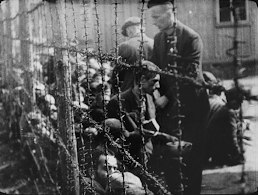
The poem Vultures by Chinua Abheche was published in 1971 in the collection ‘Beware, Soul Brother’. The poem begins with the filthy and dark environment, it depicts the truthful picture of Belsen concentration camp. Vultures are represented in a disparaging and grim fashion that is constructed as a metaphor for the people responsible for the atrocities of Belsen. The commandant, in the poem, is none other than a representative of a class, who selflessly thinks of his own family even if thousands of families are rotting just around him. The fetid smell of rotting humanity inside him gets featured through the imagery of the vultures.

Imagery of Vultures = rotting humanity (inside commandant in particular)

The whole poem is divided into four stanzas on 21,8,11 and 11 lines respectively. The poem is written in free verse with no specific rhyming pattern. It is written in third-person free form, and the personification of emotions is employed to form a stronger sense of understanding and relatability.


Background of the Poem–
The poem brings to the light the historical image of Nazis human atrocities, Belson Concentration camp. Bergen-Belsen Camp or Belson camp is a Nazi concentration camp. It was established as a prisoner of war camp in 1943. Parts of it became a concentration camp. Achebe refers to a commandant working at the Belson Camp and his ignorance of the fetid smell of “human roast'' around him. This dreary scene presents a true picture of the concentration camp.

Title–


The title of the poem contains a metaphor. Through the title, Achebe implicitly compares the commandants at Belson Camp to vultures, for their cruelty and cold-blooded nature.

A living creature that preys greedily and ruthlessly on others, especially the helpless.

In this poem, Achebe makes use of a figurative application of the word vultures to describe a Nazi commandant at one of the concentration camps during WWII.


Poem analysis–

“In the greyness … telescopic eyes…”


The poem opens with the dark, gray and filthy dawn which is not stirred by harbingers. The very first stanza describes physical outlook and the actions of the vulture. Vulture is sitting on a dead tree close to his mate, which shows the love among the vultures. There is a sharp difference between the cold mechanicalistic nature of the vulture’s appearance and their fond actions towards one another- yet, they coexist. The stanza describes the atmosphere, physical look and action of vultures in detail. The use of ‘telescopic eyes’ eyes the mechanical feel towards the bird.

This is a small hint to the larger topic of the poem: the presence of light in darkness and love in evil.

Strange indeed… to the wall!

Second stanza is the perfect depiction of the presence of love in the most awful and unexpected situations. The previous stanza gave us glimpses of love in the evilest bird. In this stanza the poet is personifying love by using ‘her’ , a charnel-house is a building where corpses and skeletons are kept- it symbolizes lifelessness and destruction. Saying that love is coiled up there represents love to be present in the evilest heart and deadliest place, portraying ‘love’ as ‘light’ and ‘death’ as ‘darkness’, a clever comparison is made through imagery.

…Thus the Commandant …….Daddy’s return…


The third stanza introduces the new protagonist in the poem. This stanza brings out the two incompatible scenes; one of Belson camp and other a commandant buying chocolate for his child. Achebe possibly uses the Commandant as a human form of the vulture. Commandant is returning home after roasting human bodies and description of Belson camp throws light on the cruelty and deadly action of commandant. While buying chocolate, affection and love for his child. This also evokes the thought of goodness in everyone. It brings out the coexistence of two elements in human beings. Child’s wait shows the child's unawareness of everything her father does at work- she just wants to see him. This display of childish innocence and naivety is representative of love and light.

Praise bounteous … perpetuity of evil.


By the description of Ogre (mythological monster) feeding on human beings, once again the poet brings the theme of death and darkness represented by the vulture, the charnel house and the Commandant.

the poet wonders whether this is a thing to be praised or despaired. Is it a positive thing that no matter how much darkness there is, we will still find at least a flicker of light? Or is it a misfortune that we can never find light unless it is surrounded by total darkness? These two perspectives are similar to the yin-and-yang, which depicts dualism– the interconnected yet contradictory forces of the natural world: we cannot find one without the other.


What is the message of ‘Vultures’?
The message of this piece is hinted at in the last stanza. Through this poem, Achebe tells readers that even in the cold caverns of someone’s cruel heart, love can exist. This love is compared to a “germ” that not only affects the loved ones but also others around a person, from humanity's perspective.


Classroom activity—

Explanation of theme Vulture as metaphor.


The poem vultures by Chinua Achebe is bringing forward a dark atmosphere of the Belson concentration camp and how the atrocities were carried out by the supervisors of the camp. The poet has used vulture as a metaphor of the rotting humanity in the commandant in particular and the human in general.

Vultures are considered as a bird of prey, in the animal world, are a dangerous Bird.

“Picked the eyes of a swollen corpse”

This line of the poem tries to bring the gross and Evil image of the vulture

“nestled(settled) close to his mate his smooth”
“...in easy range of cold telescopic eyes.”

reflects the selfish image of the vulture

Chinua Achebe’s other protagonist in the poem is a commandant of the Belson concentration camp who is going home after his day’ “with fumes of human roast” which are “clinging rebelliously to his hairy nostrils” before reaching house went to a shop and “pick up a chocolate for his” child who has been waiting for him. The poem brings the historical image of Nazi Belson concentration camp in Germany where the Jews and large amount of people died due to atrocities and starvation.

Comparing these human atrocities with the dangerous Bird vultures we see that humans are more dangerous. Commandant’s nostrils were filled with ‘fumes of roasted humans’ who were killed without any fault. while Vultures ate a swallowed dead body.

Humans in general, and commandants in particular do have their own thinking capacity, societal and psychological way of thinking and vultures eat bodies out of their nature. Humans are pushing other humans to death and vultures are eating already dead bodies which also helps ecology.

Comparing the two protagonists of the poem we realize the vultures are better than humans. Vulture's action does not only quench its hunger but also is eco-friendly. While human deeds are out of animosity with their own creed and against nature, it seems that humans want to be master of nature.

Looking over their love account we say that Vulture is sitting and eating with its mate. vulture is true to his mate and shows himself as it is. While, when the commandant is returning to his house, he is buying the chocolate for his child to show love, which can be interpreted as his own attempt to hide his deed from his child.

We can see that there is goodness in the actions of vultures in spite of being Evil Bird. On the other side there is no hope of goodness in the evil heart of the commandant because he is good only to his child and worse to others while vultures treat everyone equally to everyone.

Thus Vulture is used as a metaphor of humans to exhibit evilness but humans are thousand times more human than vulture.

Here are some of the reading materials from where I referred to the poem.


I hope this blog is useful. Thanks for visiting.

[words- 1516
Images- 8
Video- 1]

My Learnings from the National Workshop on Academic Writing (2026)

The National Workshop on Academic Writing  I recently had the opportunity to participate in the National Workshop on Academic Writing (2026)...