Saturday, 5 November 2022

Assignment 203: The Post- Colonial Studies

 Metafiction in J.M. Coetzee’s Foe


Name – Jheel Barad

Roll No.: 12

Enrollment No.: 4069206420210003

Paper no: 203

Paper code: 22408

Paper name: The Post- Colonial Studies

Sem.: 3 (Batch 2021- 2023)

Submitted to: Smt S.B. Gardi Department of English, M.K. Bhavnagar University

E-mail- jheelbarad@gmail.com


Introduction to Metafiction:

Metafiction is a form of fiction which emphasizes its own contractedness in a way that continually reminds the audience to be aware they are reading or viewing a fictional work. Metafiction is self-conscious about language, literary form, and story-telling, and works of metafiction directly or indirectly draw attention to their status as artifacts. Metafiction is frequently used as a form of parody or a tool to undermine literary conventions and explore the relationship between literature and reality, life, and art.
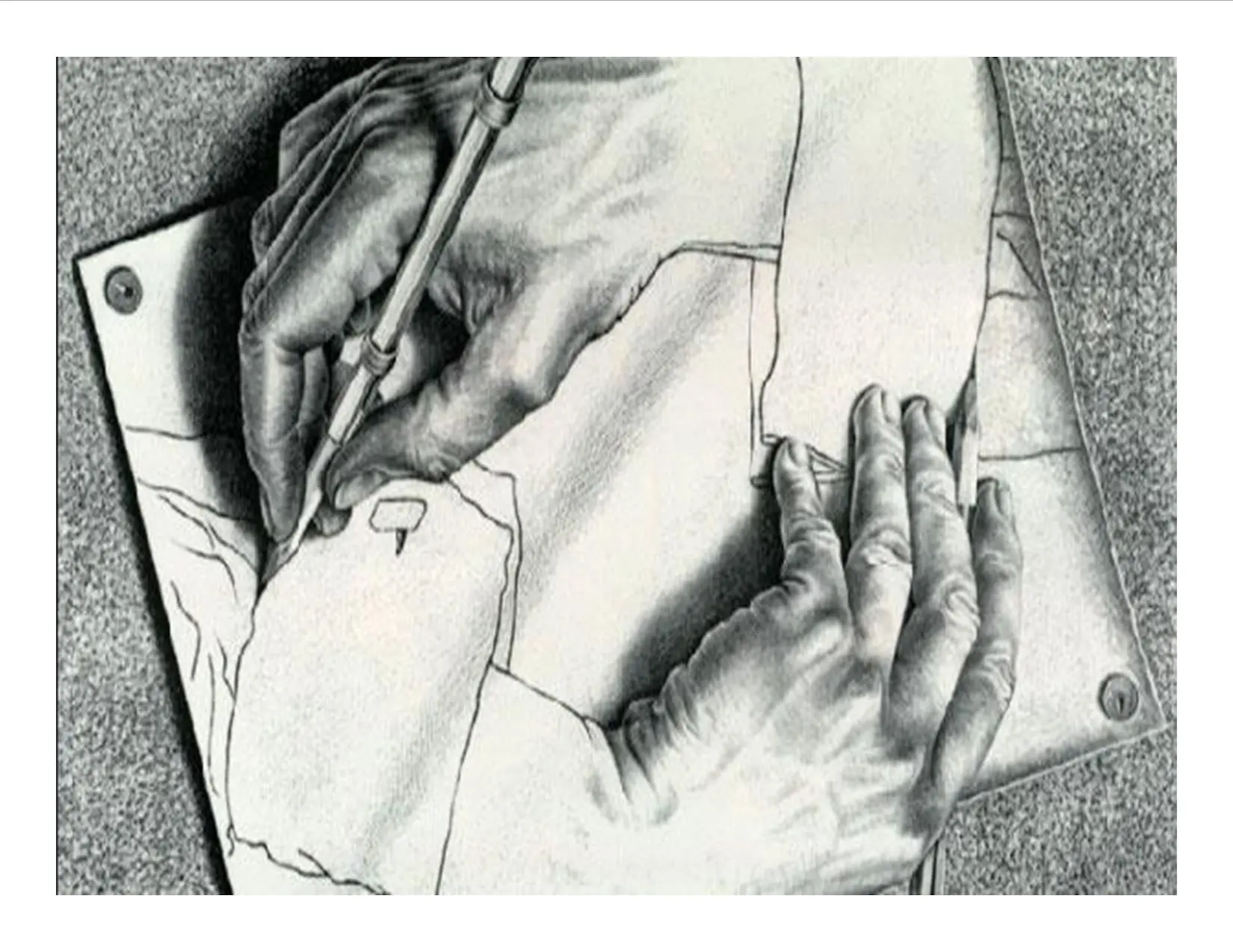
Metafiction occurs in fictional stories when the story examines the elements of fiction itself. For example, a story that explores how stories are made by commenting on character types, how plots are formed, or other aspects of storytelling is engaged in an example of metafiction. Metafiction can be playful or dramatic, but it always forces the reader to think about the nature of storytelling itself and how fictional stories are made.


Metafiction is a type of fiction which self-consciously addresses the device of fiction. It is the term given to fictional writing which self- consciously and systematically draws attention to its status as an artifact in order to pose questions about the relationship between fiction and reality. It usually involves irony and is self reflective.


Metafiction is primarily associated with modernist and postmodernist literature but can be found at least as far back as Cervantes’ ‘Don Quixote’ and even Chaucer's 14th century ``Canterbury Tales’. It came to prominence in the early 1960 through such authors as John Barth, Robert Coover and William H. Gass.


Some common metafictive devices include:

  • A novel about a person writing a novel.

  • A novel about a person reading a novel.

  • A story that addresses the specific conventions of the story, such as title, paragraphing or plots.

  • A non- linear novel, which can be read in some order other than beginning to end.

  • Narrative footnotes, which continue the story will comment on it.

  • A novel in which the author is a character.

  • A story that anticipates the reader’s reaction to the story.

  • Characters who do things because of those actions and what they would expect from characters in a story.

  • Characters who Express awareness that they are in a work of fiction (also known as Breaking the fourth wall)

  • A work of fiction within a fiction. 


The term 'metafiction' was coined in 1970 by William H. Gass in his book Fiction and the Figures of Life. Gass describes the increasing use of metafiction at the time as a result of authors developing a better understanding of the medium.


Differentiated metafiction:

According to Werner Wolf, metafiction can be differentiated into four pairs of forms that can be combined with each other.


Explicit/ Implicit metafiction

Explicit metafiction is identifiable through its use of clear metafictional elements on the surface of a text. It comments on its own artificiality and is quotable. Explicit metafiction is described as a mode of telling. An example would be a narrator explaining the process of creating the story they are telling.


Rather than commenting on the text, implicit metafiction foregrounds the medium or its status as an artifact through various, for example disruptive, techniques such as metalepsis. It relies more than other forms of metafiction on the reader's ability to recognize these devices in order to evoke a metafictional reading. Implicit metafiction is described as a mode of showing.


Direct/ Indirect metafiction

Direct metafiction establishes a reference within the text one is just reading. In contrast to this, indirect metafiction consists in metareferences external to this text, such as reflections on other specific literary works or genres (as in parodies) and general discussions of aesthetic issues. Since there is always a relationship between the text in which indirect metafiction occurs and the referenced external texts or issues, indirect metafiction always impacts the text one is reading, albeit in an indirect way.


Critical/ non- Critical Metafiction

Critical metafiction aims to find the artificiality or fictionality of a text in some critical way, which is frequently done in postmodernist fiction. Non-critical metafiction does not criticize or undermine the artificiality or fictionality of a text and can, for example, be used to "suggest that the story one is reading is authentic".


Generally media-centered/truth- or fiction-centered metafiction

While all metafiction somehow deals with the medial quality of fiction or narrative and is thus generally media-centered, in some cases there is an additional focus on the truthfulness or inventiveness (fictionality) of a text, which merits mention as a specific form. The suggestion of a story being authentic (a device frequently used in realistic fiction) would be an example of (non-critical) truth-centered metafiction.


J.M. Coetzee

John Maxwell Coetzee (born 9 February 1940) is a South African–Australian novelist, essayist, linguist, translator and recipient of the 2003 Nobel Prize in Literature. He is one of the most critically acclaimed and decorated authors in theEnglish Language. He has won the Booker Prize (twice), the CNA Prize (thrice), the Jerusalem Prize, the Prix Femina Etranger , and The Irish Times International Fiction Prize, and holds a number of other awards and Honorary Doctorates 


Coetzee moved to Australia in 2002 and became an Australian citizen in 2006. He lives in Adelaide.


Metafiction in J.M. Coetzee’s Foe

Postmodernism challenges the idea of the author as source and center of the text, author figures, paradoxically, have become pervasive in postmodern fiction where they often function as a means to articulate a text’s metafictional reflection. J. M. Coetzee is seen by critics as “a self conscious postmodernist,” “a writer’s writer” whose central preoccupation is the nature of authorship, the writer’s authority over his subject, as well as the broader issue of the cultural authority to which fiction written within the Western tradition can lay claim. 


In the novel Foe, Coetzee has revisited authors of the past: Foe features Daniel Defoe and rewrites Robinson Crusoe (1719) from the female castaway’s point of view. In Foe Coetzee revisits and subverts the source text by inserting into the original plot the character of Susan Barton, a female castaway on Cruso’s [sic] island. Rescued by an English ship, Susan and Friday finally return to London, yet Cruso dies on the voyage back to England. Out of the four sections of the novel only the first (and the shortest) one - Susan’s account of the island episode - offers a narrative which can claim to be a version of the Robinson Crusoe story. The remainder of the novel dramatizes Susan’s efforts to tell the island story first through and then over and against the writer Daniel Foe. 


Foe is both a metafictional and political allegory questioning the assumptions of race, class and gender underlying the works of the Western literary canon; it has been described by Dominic Head  as a “textual decolonization.” In particular, Coetzee’s novel narrativized the exclusion practices which operate in the construction of a literary canon and reveals that “storytellers can certainly silence, exclude, and absent certain past events - and people”


In Coetzee’s novel, there is a continuing debate as to who determines the boundaries of the story and, as a result, controls and owns the narrative. Susan shared the island experience with Cruso and Friday, can she claim the island story as her own? Or is she only telling Cruso’s story in his absence? And what are Friday’s rights in this regard? While Susan wants to recount the island episode, she realizes that she is not equipped to do it and needs Foe’s experience and established reputation as a professional writer. Yet, Susan’s views as to where her story begins and ends are very different from those of Foe. This differing point of view about the limits of the story and especially about who has the right to set those limits, contains elements of a power-struggle. The metafictional discourse here closely parallels the novel’s exploration of power relationships.


Coetzee further problematizes the question of the ownership of stories by highlighting the polysemantic nature of the author’s name. In other words, just as the author generates texts, texts generate the author. Revealed to be a discursive construct, the author is dispossessed of his work; the authoritative and controlling role of the author is called into question and the author’s exclusive right over his own texts is problematized. 
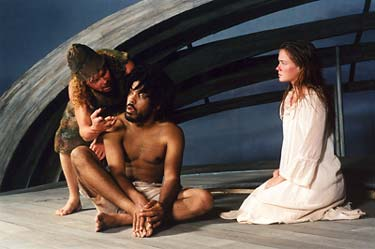
In the final section of the novel Susan’s first-person narration is replaced by that of an unidentified first-person narrator, destabilizing the narrative further both in temporal and fictional terms. This new unnamed and unidentified narrator enters a London property and finds Susan and Foe, presumably dead, in a bed and Friday bricked up alive in an alcove. Pressing his ear close to the door, the narrator hears some strange noises flowing from behind it: “From his mouth, without a breath, issue the sounds of the island”. On the other hand, the whole metafictional reflection which this part of the novel articulates may be understood as being aimed at disrupting the traditional power relations implicit in the dichotomy author-reader and rejecting a linear epistemology according to which the left-hand term is seen as superior and dominant. 


Works Cited

Frank, Joseph. “Uncanny authors, ambiguous tales: metafictional discourse in J. M. Coetzee's Novels Foe and The Master of Petersburg.” CORE, https://core.ac.uk/download/pdf/288120322.pdf. Accessed 5 November 2022.

Head, Dominic. The Cambridge Introduction to J. M. Coetzee. Cambridge University Press, 2009. Accessed 5 November 2022.

Schörkhuber, Verena. Metafiction in J.M. Coetzee's 'Foe'. GRIN Verlag, 2007.

Sonderegger, Melba. “Metafiction. The Theory and Practice of Self-Conscious Fiction.” Academia.edu, https://www.academia.edu/3626028/Metafiction_The_Theory_and_Practice_of_Self_Conscious_Fiction. Accessed 5 November 2022.

Wolf, Werner, et al., editors. Metareference Across Media: Theory and Case Studies. Rodopi, 2009. Accessed 5 November 2022.

Assignment 202: Indian English Literature (Post- Independence)

 Verisimilitude is Meena Kandasamy's Selected Poems 


Name – Jheel Barad

Roll No.: 12

Enrollment No.: 4069206420210003

Paper no: 202

Paper code: 22407

Paper name: Indian English Literature (Post- Independence)

Sem.: 3 (Batch 2021- 2023)

Submitted to: Smt S.B. Gardi Department of English, M.K. Bhavnagar University

E-mail- jheelbarad@gmail.com


About Meena Kandasamy

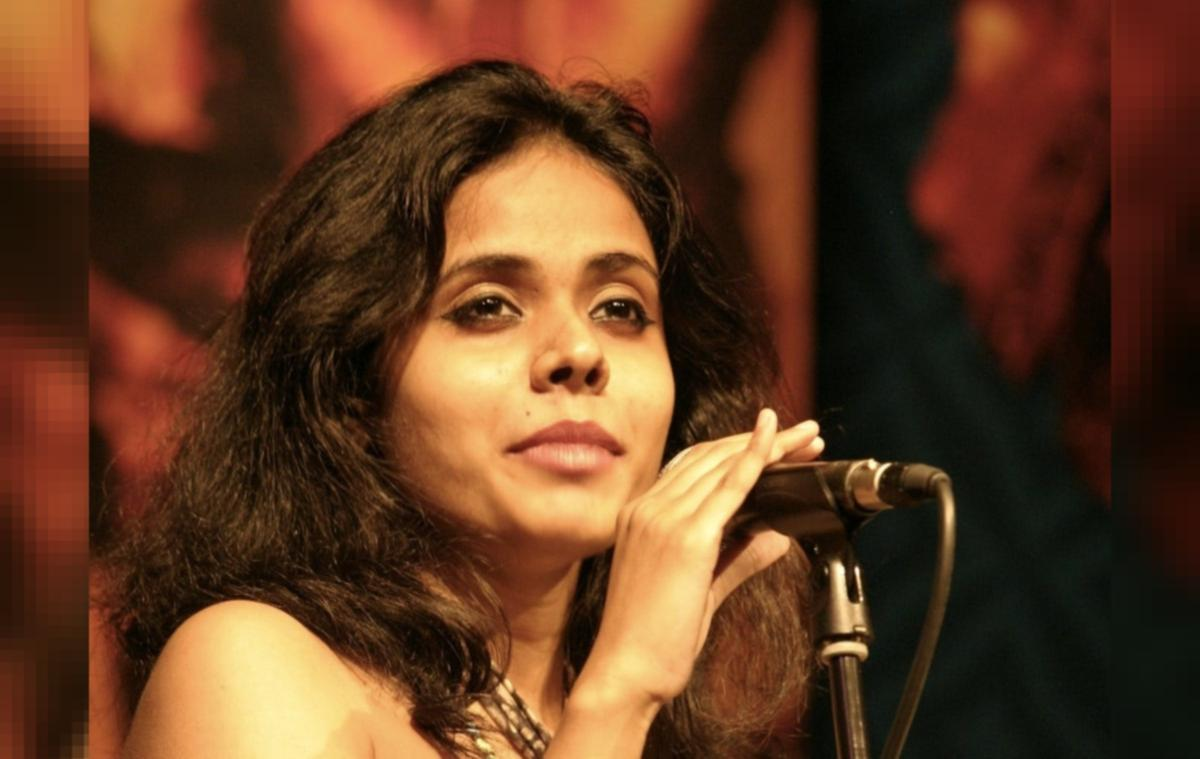
Ilavenil Meena Kandasamy (born 1984) is an Indian poet, fiction writer, translator,and activist from Chennai, Tamil Nadu, India.  She developed an early interest in poetry, and later adopted the name Meena. She completed a Doctorate of Philosophy in Socio- Linguistics from Anna University, Chennai. She began writing poetry at age 17 and began translating books by Dalit writers and leaders into English. 


As a writer, Meena's focus was mainly on caste annihilation, feminism and linguistic identity. She prefers to use it for her activism. She is an anti-caste activist, poet, novelist and translator. Her writing aims to deconstruct trauma and violence, while spotlighting the militant resistance against caste, gender, and ethnic oppressions.


She says-

 "Poetry is not caught up within larger structures that pressure you to adopt a certain set of practices while you present your ideas in the way that academic language is" 


Given her impassioned politics, it is perhaps not surprising that she wrote her first love poem only two years after she started writing her “angry, militant” verse. The poems in this edition reveal more than militant rage, however. There is fierce and exuberant wit and wordplay which make one look forward to more of Kandasamy’s work in the years to come.

ARUNDHATI SUBRAMANIAN, Poet, 

Poetry International Web


Read more about Meena Kandasamy


Early Life

Kandasamy was born in 1984 in Chennai, India, the daughter of a mixed-caste Tamil marriage. She offloaded her anger at India’s “very rigid caste system, which doesn’t give acknowledgement to anyone except the Brahmin [high-caste] population, and even women are excluded from that”


Contemporariness of her poetry

We all know that India is a country which is filled with Brahminical thoughts, scriptures and life. And as Meena Kandaswamy felt we have always seen around us the people of lower caste always have to face a variety of issues. Dalit society is a post- independent thought, it was named by Gandhiji to resolve the caste discrimination which existed in Pre- independent India. Even today Dalit is an emerging voice in India. As a by-product of nation building, the privileged sections of society attain dominance over the weaker working class.


The vestige of caste discrimination triggered the literary people of Independent India

to take up writing as resistance. The transformation that took place in the Dalit sensitivity and

consciousness gave birth to Dalit Literature. Dalits adopted cultural, political and social resistance against the upper caste culture of India through their literature and other art forms. Literature becomes one of the effective mediums to reveal their identity in its full-fledged form.

The non-Dalit writers with their representation of the subjugation of Dalit on the basis of caste hierarchy attempted to claim social equality rather than to construct cultural Dalit identity. Indian

poetry captures the collective mindset of middle class people, abject poverty of proletarians and rarely echoes the plight of Dalits. However, the Dalit writers choose poetry as a platform to promote their voice to be heard outside the brahminic discourses. 


Beyond the boundaries of time and space, Kandaswamy attacks the evils as social, cultural, political and historical through her strong questions raised in her poems.  writes poems

denouncing the established social history of the depressed classes.She speaks out the

marginalization of every subaltern group in the society plagued with gender discrimination,

sexual harassment, casteism, racism, and so on. The poet especially questions the Hindu ideology and its perpetrators who skillfully inculcated its manifesto into its followers


Advaita

Her poem Advaita: The Ultimate Question, questions the concept of Advaita in Hindu philosophy. She says according to the concept of Advaita, she, as an untouchable outcast, also be a god. But the Indian consciousness could ever agree to that. Then she asked as a final question whether non-dualism is a true concept, her untouchable Atman and Brahmin Atman could ever be one. She throws these questions of nondualism to the mind of Hindus and she provokes them to question their own scriptures, religion and even their nationality. 

Meena Kandasamy’s two collections of poems Touch (2006) and Ms. Militancy (2010) are the manifestations of her anger over the dehumanized state of Dalits and the unjust taboos perpetrated by the upper caste people. 


One- Eyed

In the poem titled “One-eyed” poignantly reveals the story of a child whose eyesight was snatched for drinking water in the glass that is meant only for the upper castes.


‘her left eye, lid open but light slapped away,

the price for a taste of that touchable water.’

( Ms.Militancy 9-10) 


The teacher of the school considers it as an act of violating the rule whereas the media looks at it as a fresh headline to publish.


This poetry was written a year back, after that we see a lot of changes in this world. But has our way of looking at lower caste changed? Have we come out from class and caste discrimination in our mind? And the answer is no.

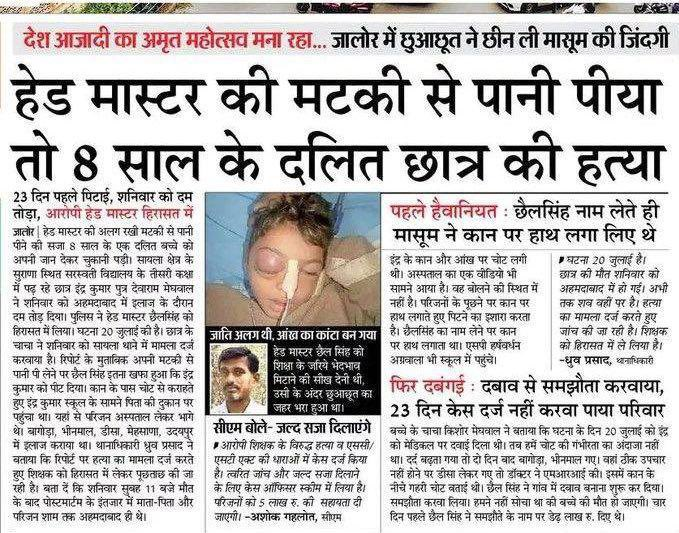
Recently in Rajasthan dalit boy beaten to death for touching water pot. 

Rajasthan: ‘Were asked to compromise, not file case’, says family of Dalit boy killed for ‘drinking water from pot meant for upper caste teacher’

Read in detail about this case.


Ekalaivan

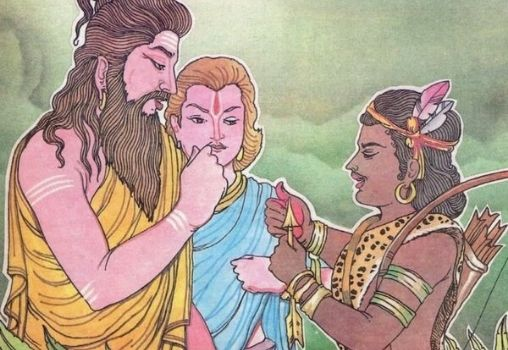
Meena Kandasamy demystifies the mythical stories to drive home the social conditioning on the unprivileged sections of society. In the poem Eklaivaan she relates the myth of Eklavya to modern society. Eklavya here becomes a symbolic representation of the victims of Dalit community. In Mahabharata, Eklavya, the skilled outcast was demanded his thumb by his Guru for being a rival to the prince Arjuna in archery. Kandasamy reviews it from the subaltern perspective and proclaims that Eklavya was silenced in the name of loyalty. This kind of circulation of power and hegemony is exercised on the underprivileged in the past. Gramsci points out that such a world of ideas have been produced and circulated by “Traditional individuals.” Gramscian Hegemony is exerting domination “not by force … but by more subtle and inclusive power over the economy… by which the ruling class’s interest is presented as the common interest” She consoles Eklavya that he could do so many things with his left hand and moreover he could not need the right thumb to pull a trigger or hurl a bomb. She presents new ways of reactions which are more powerful than old armours. Here the left hand also shows her support for communism which advocates equality and an organization worked for the upliftment of peripherals. She says that the new innovations of the world will help the Dalit to forget the old threats. In a short poem she presents a powerful idea. She recalls Eklavya who vanished silently in history and tried to give a new life to him. Moreover, she assumes the Dalit are modern counterparts of Eklavya. Here Dronacharya is a symbolic representation of fascism in modern society.


Here we see that a great Guru Dronacharya took away the powers of the lower caste so that his students, the privileged one, could rule over. Even today such incidents happen. How? Is it possible in modern education?


Eighty-four percent of the SC/ ST students surveyed said examiners had asked them about their caste directly or indirectly during their evaluations. Click here to read in detail

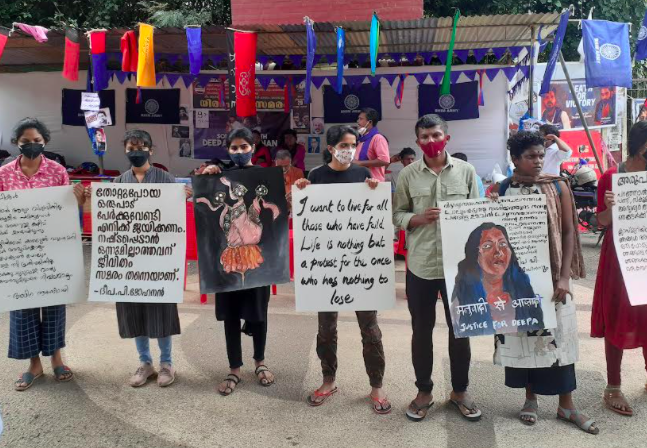
"I desperately want to finish my PhD and realized that it would not be possible till I publicly called out the campus discrimination I had faced for years," Mohanan, 36, said in a phone interview from her home in Kottayam in southern India.  Read more 


The victim Deepa Mohan had a hunger strike against the authority for not letting her complete Ph.D. CLICK HERE TO READ MORE


Conclusion:

Kandasamy expresses her resistance through writing and she takes poetry to enlighten and empower the subaltern. Through her powerful depictions, Meena Kandasamy targets the readers to whom she wants to transform into a sensitive and sensible agent for social change. She made her poems unique in its unfamiliar content, its special means and mode of expression and humanist ideology. Her usage of foul language, venomous sarcasm, sacrilegious ideology, vengeful expressions altogether make an aesthetics of resistance. 

Works Cited

“ATTACKING THE ICONS OF INDIAN CULTURE WITH THE AESTHETICS OF RESISTANCE: A READING OF MEENA KANDASWAMY'S SELECTED POEMS.” IJCRT.org, https://www.ijcrt.org/papers/IJCRT2002003.pdf. Accessed 5 November 2022.

“BIO | meenakandasamy.” Meena Kandasamy, https://www.kandasamy.co.uk/about. Accessed 5 November 2022.

“India's Universities Are Falling Terribly Short on Addressing Caste Discrimination.” The Wire, 21 November 2017, https://thewire.in/caste/india-universities-caste-discrimination. Accessed 5 November 2022.
Kandasamy, Meena. “Advaita: The ultimate question - Advaita: The ultimate question Poem by Meena Kandasamy.” Poem Hunter, 16 March 2018, https://www.poemhunter.com/poem/advaita-the-ultimate-question-2/. Accessed 5 November 2022.
Kandasamy, Meena. “Ekalaivan - Ekalaivan Poem by Meena Kandasamy.” Poem Hunter, 20 June 2012, https://www.poemhunter.com/poem/ekalaivan/. Accessed 5 November 2022.

Kandasamy, Meena. “ONE-Eyed - ONE-Eyed Poem by Meena Kandasamy.” Poem Hunter, 4 August 2016, https://www.poemhunter.com/poem/one-eyed-2/. Accessed 5 November 2022.

“Kerala Varsity Removes Prof Accused of Casteism From Post, PhD Scholar Calls for Expulsion.” The Wire, 7 November 2021, https://thewire.in/caste/casteism-kerala-deepa-mohanan-hunger-strike. Accessed 5 November 2022.

“Meena Kandasamy's Poetry: an Angry Young Woman's Counter Narrative.” Academia.edu, https://www.academia.edu/47788440/Meena_Kandasamys_Poetry_an_Angry_Young_Womans_Counter_Narrative. Accessed 5 November 2022.

“PhD student's fight against caste discrimination raises Dalit hopes.” Deccan Herald, 30 November 2021, https://www.deccanherald.com/national/south/phd-students-fight-against-caste-discrimination-raises-dalit-hopes-1056028.html. Accessed 5 November 2022.

“Rajasthan: 'Were asked to compromise, not file case', says family of Dalit boy killed for 'drinking water from pot meant for upper caste teacher.'” The Indian Express, 14 August 2022, https://indianexpress.com/article/cities/jaipur/rajasthan-were-asked-to-compromise-not-file-case-says-family-of-dalit-boy-killed-for-drinking-water-from-pot-meant-for-upper-caste-teacher-8090201/. Accessed 5 November 2022.

Self, John, and Meena Kandasamy. “Meena Kandasamy: 'If I was going to write my life story, I would condense that marriage to a footnote.'” The Guardian, 25 November 2019, https://www.theguardian.com/books/2019/nov/25/meena-kandasamy-interview-exquisite-cadavers. Accessed 5 November 2022.

Assignment 201: Indian English Literature (Pre- Independence)

 Sri Aurobindo:  Way of Writing and Poem ‘To a Hero- Worshipper’ 


Name – Jheel Barad

Roll No.: 12

Enrollment No.: 4069206420210003

Paper no: 201

Paper code: 22406

Paper name: Indian English Literature (Pre- Independence)

Sem.: 3 (Batch 2021- 2023)

Submitted to: Smt S.B. Gardi Department of English, M.K. Bhavnagar University

E-mail- jheelbarad@gmail.com


Sri Aurobindo

Of all the Anglo- Anglican poets, Sri Aurobindo alone has the distinction of being a major poet critic- writing poetry and writing on poetry. He has a significant body of criticism on the nature of poetry which is strikingly original, profound and even provocative. The hallmarks of his poetic genius are inspiration, sublimity, mastery of both, the lyric and epic forms, profound thought, symbolism and spiritualism and commendable technical devices.


Aurobindo’s Poetic Career

Sri Aurobindo's poetic career covers a period of sixty years from 1890- 1950. His early id romantic, decadent and lyrica whereas his later poetry is imaginatively bold, mystical and original. His early poetry is represented by ‘Songs to Myrtilla’ (1859). ‘More Death’ (1895), ‘Urvaaie’ (1896), 'Love and Death’' (1921) and ‘Other Poems’ (1950) and ‘Baji Prabhon’ (1922) etc. The later poetry includes ‘Poems’ (1947), ‘Poems: Past and Present’ (1946), ‘Savitri: A Legend and a Symbol' (1950-51) and ‘Last Poems’.  His Savithri represents the peak of his poetic development and achievement, and the basis of his reputation as a poet.


Sri Aurobindo About Poetry

According to Sri Aurobindo, the function of poetry is neither to teach truth, nor to pursue knowledge, but to have a life of its own to embody beauty and give delight. the future poetry, therefore, should be directed towards the forthcoming of the self of men and the large self of the universe. poetry should enable one to enjoy and realize the ‘Life divine’. He claimed that poetry is the ‘Mantra of the Real’ and considered the poem as the ‘Rose of God’.


Sri Aurobindo thinks that there is a popular misconception about the essence of poetry. Both the ordinary reader and the intellectual critic are guilty of this error. The ordinary thinks that poetry is just an aesthetic pleasure for imagination, a sort of elevated pass time. but these pleasing appeals to the imagination and the senses is only the first element. Great poetry is aesthetically satisfying, but at the same time it goes far beyond the senses, imagination and intellect. These three elements are only channels or instruments. 


“The true creator and true hearer of poetry is the soul” 


The intellectual pretty on the other hand takes the view that poetry is a matter of Exquisite technique technique is important and is the first step toward Perfection but there are so many other steps as well even perfect the craftsmanship does not constitute a great poetry for in the mysterious chemistry of poetry form and technique have ever indispensable and Northern determining factors in fact poetry determines its own phone is not imposed on a couple it comes spontaneously aborted inspiration takes hold of the soul and seeks its own utterance.


Great poetry, in Sri Aurobindo’s view, is vibrant, incantatory and rhythmic speech which rises from the heart of the seer when it is inspired by the Infinite. it is or should be the Mantra of the real. poetry as Mantra is possible only with three highest intensities of poetic speech meet and become indissolubly one. These three elements are: 

  1. The highest intensity of rhythmic movement.

  2. The highest intensity of style achieved by the integration of verbal-form and thought substance. 

  3. The highest intensity of the souls vision of truth


Rhythm is of primary importance in poetic utterance, but it is not a really metrical rhythm. Meter, of course, is important to poetry both as an artistic device and as a truth of psychology. The metrical rhythm invests the poetic material with beauty. It is also an aid to memory. That was why in ancient India all kinds of knowledge were rendered in poetry. Yet, mere metrical rhythm is only a job-trot Pegasus. in great poetry, there is a deeper and more subtle music, a rhythmical soul-movement, entering the metrical form and even over flooding it. 


Metrical rhythm is only the physical basis of the soul returns and it is the latter that matters. The conductor of this orchestral movement is this soul itself, coming forward to get its work done by its own higher non analytic methods. The reason is something as near to wordless music as word music can get. and at its highest, this soul rhythm is in harmony with the cosmic meters which is the vedic view sustaining the galactic movement of the universe itself.


 The highest intensity of style is another Hallmark of poetry as Mantra. in this connection, Sri Aurobindo distinguishes between the aims of prose style and poetic style. prose style aims at intellectual comprehension while poetic style caters to the imaginative or spiritual comprehension. at its highest, the latter makes one see not only one see by the imagination but by the soul. This superior, higher style is achieved by tapping the soul-value of words. In poetry, words have a life of their own. They have a sound-value and a thought-value. it is the artistic and spiritual integration of these values that confers soul-value to words 


The style of such poetry corresponds to its substance. between the word and vision, there are certain equations. various kinds of style- the vital, the emotional, the intellectual and the imaginative are ways of working out these equations. but none of these, Rises to the level of poetry as Mantra. Yet each of these can rise to this intensity if it can achieve the integration of the verbal form and thought substance and make us see. 


Vision is the characteristic power of the poet. The ‘Kavi’ is the seer and revealer of truth. Great poets have done those who have had a powerful interpretative and intuitive vision of life and rendered that vision a revelatory utterance. but of late, thought appears to dominate our vision as we call upon the poets to offer an intellectual explanation to the enigma of modern life. but thought is no substitute for vision. In poetry as Mantra, it is vision which pours itself into thought images. The mantra is not in its substance. nor does it form poetic enunciations of philosophical truths. It is the rhythmic revelation of the souls' sight of God, nature and man.


This vision is a soul-view. It comes from the poet. He creates it out himself and not out of what he sees outwardly. The outward seeing only serves to excite the inner vision to its task. In fact any object may trigger that vision. The only thing is that the poet should be able to go beyond the object and get it to the light of that which it has the power to reveal. The object is then submerged by the light in a similar way when at the highest level the personality to the seer is lost in the eternity of the vision. The spirit alone remains.


Sri Aurobindo’s Poem

Sri Aurobindo’s poetry is not only full of grandeur but also rich in form. He did not attempt a meter that he did not make his, by a sovereign right. with a great English measure, blank verse, he is of the supreme class. He has also succeeded in adapting the epic hexameter and other classical meters and showing the possibility of a really quantitative English poetry. 


To a Hero- Worshipper

Sri Aurobindo has spent his early life in England (Victorian Era) and so we find impacts of Keats in his arousing inspiration of nature and Shelley for his usage of natural objects as inspiration. 


The very first stanza uses a lot  of imagery in the poem. ‘Song.. Idle wind’. ‘Woven wealth of rhyme’. In the very first stanza we find a tone of sadness and we can also read it as a criticism of romanticism, 'harsh figure… harsh music’, ‘uncouth voice


Mysticism

Aurobindo is a philosopher, yogi and maharishi, mysticism plays an important role in his role and writing. Mysticism is popularly known as any kind of ecstasy or altered state of consciousness which is given a spiritual or religious meaning, but may refer to becoming one god to the absolute. The words like ‘magical rod’, ‘Oracular’, ‘Swart’, 'Ominous star’, ‘Sinai thunder voicing God’. In the very second stanza brings in light the mysticism in the poem. 


Indianness

The trend of Indian romanticism ushered in by three great forces, influenced the destiny of modern Indian Literature. 

Sri Aurobindo: search for the Divine man

R. tagore: beauty in nature and man

M.K, Gandhi: Experiments of truth and non violence.


In the very next stanza use of ‘Oaten Pipe’. And Byron is used to symbolize satire; Wordsworth for Nature and man and Shelley for atheism, nature and sorrow.

Spirituality

In the second part of  the poem, poets claim to have studied nature where humans crave for meaning but he couldn't find meaning in nature. ‘Moral… murmuring wind’, ‘message… snows’.


Nature

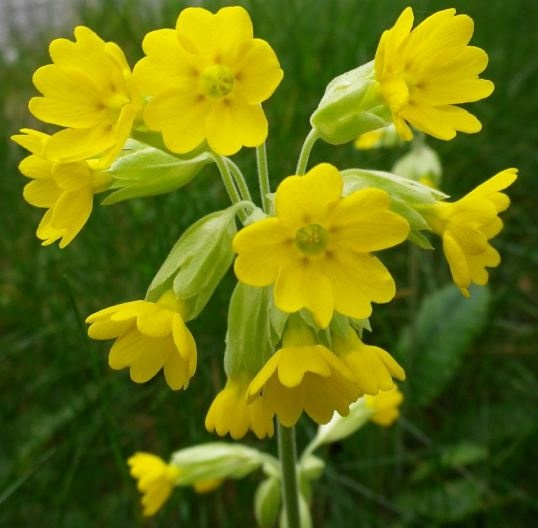
There are various references to Nature, flowers like Daisy, Crocus, Narcissus, cowslips, Lilies; Sun, moonlight vale and a russet nightingale which shows Aurobindo love for nature.


Conclusion:

Through the example of this poem we do see Sri Aurobindo’s  poetic genius are inspiration, sublimity, mastery of both, the lyric and epic forms, profound thought, symbolism and spiritualism and commendable technical devices. And we find a significant body of criticism on the nature of poetry which is strikingly original, profound and even provocative. And a rhythmic revelation of the souls' sight of God, nature and man.


Works Cited

Aurobindo, Sri. “Sri Aurobindo. To a Hero-Worshipper.” AuroMaa, https://auromaa.org/sri-aurobindo-ru/workings/sa/37_02/0024_e.htm. Accessed 5 November 2022.

Chaama, Sridhar. “Remembering a guru.” The Hindu, 16 August 2012, https://www.thehindu.com/features/friday-review/history-and-culture/remembering-a-guru/article3779469.ece. Accessed 5 November 2022.

Srinivasa Iyengar, K. R. Indian Writing in English. Sterling Publishers, 1987. Accessed 5 November 2022.

Vallath, Kalyani, editor. Indian Writing in English. Bodhi Tree Books, 2015.

My Learnings from the National Workshop on Academic Writing (2026)

The National Workshop on Academic Writing  I recently had the opportunity to participate in the National Workshop on Academic Writing (2026)...