Monday, 18 July 2022

Derrida and deconstruction; Deconstruction in practice

Hello! This blog is in response to a task assigned by Dr. Dilip Barad sir. In this Blog I am going to deal with my own understanding of deconstruction and going to elaborate deconstruction with examples. Derrida and Deconstruction, we learnt this topic in Flipped learning, to read my learning outcome CLICK HERE.

Derrida and Deconstruction


What is deconstruction?
It is a form of textual analysis. The theory of Deconstruction was introduced by the French Philosopher Jacques Derrida along with Paul de Man and his fellow Yale Deconstructionists; Harold Bloom, Geoffrey Hartman and J. Hillis Miller. Deconstruction is one of the important strings in Post Structuralism. Deconstruction had an immense influence on Literary studies (though this is more marked in the English- speaking world than in France) philosophy and Historiography. Gayatri Chakravarty Spivak was Derrida’s translator and had a major impact on Postcolonial theory and also became important element in Queer theory.

Deconstruction is a very difficult term to be defined; many of its practitioners insist that it is not a theory or philosophy that can be applied or can be defined in a set of propositions But its number of general principles can be identified.

Deconstruction relies upon extremely close reading of the texts under analysis and tends to refrain from introducing external evaluative criteria. Deconstruction can be called as an extreme form of Immanent critique. De Man states that it is not something that is added to the text.


Derrida says,
“Language bears within itself the necessity of its own critique.”


A literary text deconstructs itself because it simultaneously asserts and denies the authority of its own rhetoric.

Derrida was not the initiator of this theory but it is ancestry is traced in Friedrich Nietzsche that there are no facts, only interpretations and Marti Heidegger’s critique of the priority that is traditionally given to the present tense in attempts to discuss the nature of being. While Derrida’s one of the constant concerns is with ‘Metaphysics of Presence’; to read the absence in the present of presence. Also can be said that the ‘subject’ can be self- understanding and can express itself fully in speech. Derrida also criticizes logocentrism or phono centrism which says that speech exists prior to writing. Logocentrism emphasizes the privileged role that logos, or speech, has been accorded in the Western tradition.

He claims that speech is the primal and the full form of expression. Logocentrism ignores or conceals the fact that if writing is a supplement to speech then definitely something must be absent in the speech that has to be supplemented. Speech does not have a point of origin but it arises from an ordinary lack. Following Saussure, Derrida describes language as a series of supplements and substitutions But he argues that the theory of the sign is itself an instance of logocentrism.


While in the critic of the sign Derrida introduce a new word ‘Differance’

Difference= differ + defer

This demonstrates that language has one point of origin and on end. The ‘meaning’ of the word is always a product of the difference between signs and it is always ‘deferred’ by a temporal structure that never comes to end.

For e.g.: It is a tree because it's not a plant
It's dark due to absence of light
Women due to absence of masculinity

So, there is never a final reading of the text, every reading infuses a supplementary reading.

The universalist ambition of structuralism is also challenged by deconstruction’s emphasis on undecidable apereas which cannot be described in terms of sets of binary oppositions. E.G. Plato’s ‘PHARMAKON’ which means both poison and antidote.

Derrida’s Grammatology which in detail studies Saussure exemplifies deconstruction’s insistence on unraveling the logic and contradictions of the text itself. Derrida explains deconstructing a philosophical text means working through its concepts and logic in such a way as to discover and determine what it cannot describe, what its history has excluded in order to constitute it as what it is.

Paul de Man makes a similar point in his argument that if they are to be coherent and self- consistent, Literary texts must of necessity be blind to the ‘metaphors’ and other figures of rhetoric that constitute them as texts. Deconstruction’s rigorous examination of those figures reveals the weakness of the links that hold them together.

Deconstruction is a poststructuralist theory, based largely but not exclusively on the writings of Derrida. It is in the first instance a philosophical theory and a theory directed towards the (re)reading of philosophical writings.

This is my basic understanding about deconstruction. Further in the blog I am going to deconstruct some ads and some Bollywood songs

This is Dr. Dilip Bard sir's presentation which instructs ‘How to Deconstruct a Text?’

Language bears within itself the necessity of its own critique

Deconstruction insists not that truth is illusory but that truth is institutional.


पैरों में पायल की बेड़ी से बंध के मैं ना रहने वाली
मैं अल्हड़ पुरवा के जैसी हूँ, परदेसों तक बहने वाली
मुझे गहनों से बढ़ के सपनों की चाहत है
जिन सपनों को सच हो जाने की आदत है
कट्टी है मेरी मर्दों से, यारी फ़िल्मों के पर्दों से

The above lines is from the Bollywood song “Param Sundari” from 2021 Laxman Utekar’s movie ‘Mimi’. Movie is about young ambitious woman who wants to be a actress and for money she opts to be a Surrogate mother for a foreign couple.

This is a stanza from the song sung by the female protagonist, the four lines of the song are very appealing that a woman is trying to come out from the traditional female role and loves her dreams. But the last line of the stanza again takes us back to the idea of limitations of women’s dreams. Dreams of beautifying themselves, dreams of being admired. In Contrast , dreams of male Bollywood characters are like ideal, sophisticated dreams. For example ‘Kabir Singh’ is a love story, male protagonist is toxic, still he is a top surgeon and is honest to his work, no image damage as a doctor, and lives his dream. . While the female protagonist dreams to have a happy life, being admired, money and to be beautiful. Another instant example is also a ‘Fashion’ movie.


Tarak Mehta ka Ooltah chashmah is a Hindi sitcom based on the weekly column "Duniya Ne Undha Chasma" by Taarak Mehta in Chitralekha magazine. It is produced by Asit Modi. This serial focuses on the members of Gokuldham Society who come from different backgrounds, It attempts to deliver a beautiful notion of India which believes in Unity in Diversity. .Gokuldham is also referred to as "Mini India" in the show. But, deconstruction is always about finding loops. Perhaps it shares the unspoken socio- political condition of India. The Serial has one ‘Muslim” character Abdul. And he has no place in Gokuldham society, he owns a shop outside the society. He is part of every occasion but not of society. The society which is called Mini India perhaps really tries to bring a critic of India’s religious (Hindu- Muslim) biases. Or perhaps it is speaking the language of authority and trying to set viewers mentally.


Fairness cream ads are majorly problematic. It prioritizes fairness, white skin for being a leading personality in any field. It downgrades the talent, and beauty is prioritized. Here is the series of ads for ‘Ponds white cream’ . It's a storyline in which a boy breaks up with his beloved and falls for a white girl. But comes back to the girl once she starts looking fair. This brushes the racist ideology in the human mind. If a girl wants love or a job she needs to be fair. This ad also brings out the idea of colonizers and colonized. Still the colonizers are colonizing us, this ad makes us feel beneath them. Especially to women, there are white skinned people who won't let have a dreamt or happy life. Continuous telecast of this type of ads boosts this ideology in the culture.


Even the taglines of beauty products are like; Fair and lovely taglines- “Badal do apni kahani” and “Guaranteed Fairness. Guaranteed Fame.” To change life, to have fame one has to be fair.

Even our Bollywood songs praising the white skin “गोरे गोरे मुखड़े पे, काला काला चस्मा”


सुन्दर हो और सुशील
रंग चांदी सा चमकीला
डिग्री भी हो फैशन भी जाने सोनिये
हो सीता जैसे नारि और जाने दुनिया दारी
पिया को सब कुछ ही वो माने
दिल से दिल्ली हो वो धड़कन से हो लंदन
ढूंडू में ढूंडू
मेरे ब्रदर की दुल्हन

मोहब्बत की हो वो गूगल
जो देदे हर क्वेश्चन का हल
नज़र के एक ही क्लिक से सोनिये
वाक पे सुनती हो जाने
ब्रदर को खुश करना जाने
जो सबके दिल में दुआ सी बस्से
मॉडल हो वर्ल्ड बेस्ट पर मिटटी हो इंडियन
ढूंडू में ढूंडू
मेरे ब्रदर की दुल्हन


Mere Brother Ki Dulhan (translation. My Brother's Bride) is a 2011 Indian Hindi -language Romantic comedy film written and directed by Ali Abbas Zafar. The above lines are from its titular song. In this line a male protagonist is singing the characteristics he wants in his sister-in-law (Bhabhi). It suggest he want a hi-fi women who is capable to stand in this hi-fi world but should not leave her traditional values like husband is everything “pati Parmeshwar” idea पिया को सब कुछ ही वो माने. He demands a beautiful lady shining like a diamond, knowing fashion along with education but she should also be like SITA (mythical character from Ramayana). Should be loving, responsible, modern and could also make or keep his brother happy. She should be all rounder but traditional ideal Indian lady characteristics should be there.

Here we can see the demanding society, a woman should be more than 100% no guarantee about the men.

The same film also has a dialogue.


So here I end my blog, I have tried my best to make deconstruction easier for the readers. I hope it was useful to you. Thanks for visiting.

[words 1650]

Wednesday, 13 July 2022

Short Story- An Astrologer's Day- R.K. Narayan

Hello readers! This is the response blog to Yesha Bhatt ma’am’s assigned task. This blog deals with R. K. Narayan’s short story An Astrologer’s Day from Malgudi Days, in this I am answering the questions based on the reading of the original short story and watching a short film based on it.


We watched a short film on An Astrologer’s day Prepared by Pocket Films on You tube; directed and produced by Sushant Bhat. CLICK HERE to watch the Movie


About the Author:
An Astrologer’s day is Written by R.K. Narayan, his full name is Rasipuram Krishna swami Iyer Narayana swami (10 October 1906 – 13 May 2001). He was a leading India author along with Aulk Raj Anand and Raja Rao. He was known for his work set in the fictional South Indian town Malgudi. A winner of the Sahitya Akademi Award (1960) and the Padma Vibhushan (2000), he was nominated for a term in the Rajya Sabha. His work ‘The Guide’ was adapted for the film. He contributed to Indian Literature around 15 novels along with 100 short stories.

He declared, "Only the story matters that is all … if a story is in tune completely with the truth of life, truth as I perceive it, then it will be automatically significant."

R.K. Narayan on a 2009 stamp of India


What is a short story?
A short story is a piece of prose fiction that typically can be read in one sitting and focuses on a self-contained incident or series of linked incidents, with the intent of evoking a single effect or mood.

A short story is a voyage of discovery of self - discovery, self - realization for the character as well as a reader. A short story has to have a formal plot or structure. An ideal structure of a short story makes it interesting and true to life, it builds suspense and arouses reader’s curiosity. A good short story strives for a unity of effect - a "single effect" and must be complete in itself. Stories also convey psychological reality.

About An Astrologer’s Day:
An Astrologer’s Day is a short story from the collection Malgudi days by R.K. Narayan. It is a thriller and suspense story. It was the titular story of Narayan's fourth collection of short stories published in 1947 by Indian Thought Publications.


An Astrologer’s day deals with a Day’s event in an imposter’s life who earned his livelihood through his clever guessing. The setting of the story is a town, Malgudi which is located in South India, near to Madras. Astrologer’s life is a story of a man who ran from his native because of his delusion of murdering someone and pretended to be an astrologer. Due to the irony of fate he runs into a man to whom he thought of being murdered.

This short story brings darker psychological realities of human nature like hypocrites, shrewdness, vengeful nature and selfishness. Every character in the story goes through these feelings. It is the cleverness of an astrologer that he could fool the man in his search and misguide in such a way that he never has to face him again.


Further I will deal with the questions of the worksheet:

How faithful is the movie to the original short story?
The movie based on this short story we watched was prepared by pocket films as discussed before. The movie is hugely faithful to the short story but still we find many changes done in the movie. The storyline and the plot is wonderfully maintained along with the overall theme and sound.

Let's discuss the major and minor differences made in the movie:
Setting in the film and the description of the setting in the short story has minor changes like the description talks about nut vendors under whose lights Astrologers used to word after sunset and also ‘The place was lit up by shop lights’. But in the movie we don't find many shops around the astrologer’s place.

An Astrologer in the movie has not worn the saffron turban which is described in the original short story.

The movie also has the glimpse of a cat which can be interpreted as or read as a symbol of human nature. Astrologer’s deed or double standard of living life which is later revealed in the movie.

The unit of currency used in the short story is annas while the movie uses rupees.

The movie shows the astrologer's detailed conversation, his clever guessing with his one customer in the beginning of the novel and later various customers are shown as a montage. But the original short story has no such described conversation with any of this customer other than Guru Nayak.

The Movie has revealed the name and gender of the astrologer couple's child, they have a daughter named Chutki while the original short story denotes her/ him as a child only. The movie also gives the name to the wife, Usha, which is not mentioned in Original text.

Movie presents the wife, Usha on the screen twice while in the original short story once. Usha and Astrologer were spotted twice in the movie having a conversation. Once they had a conversation about their daughter and wife and discussed her whole day remembering their family and at last when astrologers disclosed his truth, the original story has only the second one.

Wife in the original story is described to be waiting on the door when the astrologer gets late. We don't find scenes this similar in movies.

The question also arises though the original short story doesn't reveal the region or state family belong to but we can interpret that the story is set in madras. It might be a Madrasi family but the movie used a Marathi family.

Last line of the original story is `Time to sleep," he said, yawning,and stretched himself on the pyol.’ and the movie has ‘tell Chutki abba uske liye mithai laya’.

But all these changes are accepted as it is the work of the movie to present more to the audience with the help of cameras and every literary maker has his own rights to produce whatever they want, it is free from the bondages.


After watching the movie, has your perception about the short story, characters or situations changed?
Yes, after watching the movie our perception for an Astrologer changes to some extent which can also be read in the original story but visual elements help us more to see precisely. Initially we feel An astrologer is doing this work because of greed of early earning or poverty but later we get an idea about his bad deed, his past. Along with two minor characters his wife and daughter are also grown.

There is no major change in short story’s perception the one scene or situation when suddenly astrologer’s refuses for the deal with Guru Nayak was a suspense while reading a short story but through movie the pause they used in the movie on the lightning of cigarette by Guru Nayak gave idea or cleared out the situation and fear of An Astrologer.


Do you feel ‘aesthetic delight’ while watching the movie? If yes, exactly when did it happen? If not, can you explain with reasons?
On the personal grounds the story provided a kind of relief but not aesthetic delight. We feel aesthetic delight when we see something closely related to our personal life but I don't find any such aspects in this story. I felt a kind of relief looking at the guilt of Astrologer and his precise/ intelligent escape from Guru Nayak. And yes I can feel aesthetic delight watching his real world of fake astrology in the movie.


Does the movie screening help you in better understanding of the short story?
Yes, we find no major change in watching and reading short stories but what camera is able to say, it gives words to the silence, is not possible in reading the original story. And the best example of this which was easily understood in the movie was Guru Nayak’s introduction or his revelation as guru Nayak. In reading we just realized that something happened and the astrologer tried to pull off his deal but after watching the movie we realized that he tried to pull off because he saw guru Nayak’s face in light, lightening of cigarette, Nayak and decided to safeguard himself. This gave a clear reading of the story and An astrologer’s character.

Also in the short story An astrologer describes his past which doesn't seem too interesting but the movie presents it in flashback, black and white which is also fascinating.


Was there any particular scene or moment in the story that you think was perfect?
The perfect scene in the story as well as the movie is Nayak’s revelation to An astrologer. The scene is perfectly cinematographed adding to it it provides the moral and comprehension of the whole story. The flashbacks shown in the movie are also perfectly shown. I liked them too.


If you are the director, what changes would you like to make in the remaking of the movie based on the short story “An Astrologer’s Day” by R.K.Narayan?
If I would be the director of movie based on this short story the changes i would like to make is about the setting because, first, it is not according to short story and secondly as described it is a crowded place but in movie we feel in to be chaotic. I would also try to change lighting compared to this movie.


All the above answers are my personal interpretations. If you want to add or change something, write in a comment box. I hope it was useful to you thanks for visiting.

[words- 1620]

Monday, 11 July 2022

Derrida and Deconstruction: Flipped Learning

This blog is assigned the task of flipped learning about Derrida and Deconstruction. We are assigned the task of watching the selected videos, attempt a quiz, write brief answer related to it, write our understanding on it and to raise question/ bring own doubts.


Flip learning is the modern form of education. And it's the complete opposite of the traditional learning process. In this class work is done as homework and home work is done as classroom. This process is accepted in order to engage a number of students in the discussion happening. IN flip learning students carry out the research by their own or under the task allotment and discuss with teacher or ask doubts about in the classroom. It provides freedom to students to select their own atmosphere to study.

Derrida and Deconstruction


Video 1
Video 5.1 discusses Derrida and Deconstruction. It discusses the question like why is it difficult to define deconstruction? Is Deconstruction a negative term? How does deconstruction happen on its own?


Derrida himself questioned “is it possible to define something? What are the limitations or to what extent can we define anything?”. Derrida also claimed that all of his essays were attempts to define what deconstruction is, and that deconstruction is necessarily complicated and difficult to explain since it actively criticizes the very language needed to explain it. Actually, we are accustomed to clear cut definitions, we want definition, whereas it is not possible to define Deconstruction.

Deconstruction cannot be considered as a negative term. Why? Deconstruction (in a verb form) means "undo the construction of, take to pieces," 1973, a back-formation form. Basically deconstruction doesn't mean to destroy but to inquiry in the foundations. Derrida’s aim while introducing this theory was to transform the people’s way of thinking.

The reason behind the deconstruction happening on its own is - the conditions which give 'meaning' to the system, that very conditions put a limit to it. So, when the foundations of meanings are inquired, it break free the limitations. Thus, an inquiry into foundations destroys the institution. So we can say that deconstruction happens on its own.
E.g.: the term ‘emancipation’
Meaning of this word is - the fact or process of being set free but if we deconstruct this term inquiring its foundations it is to transfer ownership; i.e. going into another control from one.


Video 2
Video 5.2.1 discusses The influence of Heidegger on Derrida and Derridean rethinking of the foundations of Western philosophy. Derrida was influenced by Heidegger, Nietzsche and Freud for the deconstruction philosophy and He acknowledged them in his essay ‘Structure, sign and play’. He was influenced by philosophical ideas of Heidegger, The seeds of deconstruction were sprouted in Heidegger.


Heidegger argued that the western thought has neglected or repressed the question of Being of beings which has resulted in a deep crisis in the western civilization.
Derrida in the first book Of 'Grammatology'  (1968) argues that neglect and the repression of the question of writing in its conception of language as speech is another such blind-spot in the western thought and the rigorous pursuit of this question can similarly ‘deconstruct’ the tradition of western thinking.
Heidegger demands the destruction (Destruktion) of the Western philosophical tradition, which is not its destruction but total transformation.
Derrida continues and critiques the Heideggerian themes of radical rethinking of the very foundations of western thought by dismantling the metaphysical tradition and raising the key question of language and reinvention of the language of western philosophy. Heidegger in his later work points out that it is ‘language that speaks, not Man’ and that language is ‘the house of Being’.
Derrida gave the idea of Logocentrism while Heidegger shared the phonocentric idea.

Que: what were the themes of Heidegger and did Derrida continued them all?

Video 3
Video 5.2.2 discusses Ferdinand de Saussure and Derrida and talks about How does Derrida deconstruct the idea of arbitrariness? Concept of metaphysics of presence.


Saussure in his ‘Course in General linguistics’ work gave the relation between words and its meanings is not natural but conventional one. 'What connects a word with its meaning is the convention and the convention is always social.’ E.g.: mother; it doesn't have any natural meaning but it presents a connection with humans. It shows the arbitrariness of the meaning of a word. Any Word can be used to talk about anything.

Derrida deconstructing this idea points out that the meaning of the word is nothing but the other word, meaning is thought of something in our mind.
Metaphysics of Presence is a term from Heidegger which points out that when we consider being of something we often connect it with its presence. While Derrida pointed out that western philosophy is built on the differences of binary opposition- just like human language. Saussure also stated- there is no positive lament in language but only negative one. We recognize elements of language by contrasting it. Presence of something can only be understood by the absence of something. And this is the only method of Western philosophies. 

E.g.; Women? Absence of manliness; Dark? Absence of light

However, Derrida points out that these oppositions are not equal but hierarchic where the second term is considered either derivative or inferior to the first, the privileged one.

Que- Please explain Logocentrism and Phonocentrism in relation to deconstruction?

Video 4

Video 5.3 discussed about the Derridean concept of DiffArnce, Infinite play of meaning and Diffarnce= to differ and to defer.


Différance is a French term coined by Jacques Derrida. It is a central concept in Derrida's deconstruction, a critical outlook concerned with the relationship between text and meaning. Derrida says there is no ultimate or final meaning, it is a myth. It is a tendency of language to Postpone. If we search for a meaning in a dictionary we get another group of words not a meaning and we assume that we have grasped. Saussure says- sign is equal to signifier which signifies something but Derrida says- Sign is a free play of signifiers signifying nothing. Derrida calls it deferring. In Western Philosophy we assume that final meaning is grasped but final meaning is transcendental (beyond language) signified. Saussure 'sign' is equal to 'signifier' which 'signifies' some meaning; but Derridean 'sign' is 'FREE-PLAY' of signifiers, signifying nothing.

Infinite play of meaning suggest that there is no specific meaning to any word, another words is assumed as the meaning of the word
Eg.: Internet- money, hobby, attraction, advantage, share in business these are the meanings through which we understand words. But actually these words are a group of words. We also have to find its meaning, meaning of meaning. This way the infinite play of meaning continues.

DifferEnce/ DifferAnce= to differ + to defer

Differ is to disagree and defer is to put off or to choose to do something at a later time, postpone. Difference- it applies force, it's not an idea or a concept but force which makes differentiation possible, which makes postponing possible.

Que- Differance 'is force which makes differentiation possible, which makes postponing possible'- elaborate.

Video 5
Video 5.4 discussed structure, sign and play in the discourse of the human sciences and “language bears within itself the necessity of its own critique” statement from the same essay.
Quoted statement by Derrida sums up the deconstruction in itself.” It implies that structuralism began as criticism or attack on metaphysics on one hand and science (predominant of getting knowledge in the west.) on other hand.


Structure Sign and Play in the Discourse of the Human Sciences’ was read at the colloquium on 'Structuralism' at John Hopkins Uni.(1966). It inaugurated post- structuralism, going beyond structuralism. Essay is critic of Claude Levi- Strauss, a famous French Anthropologist who made structuralism very popular.

Derrida questions how Levi's is using the same assumptions that we find in metaphysics and science, in his own practice of structuralism? So structuralism is criticism of science and metaphysics on the other hand it is criticism of the same assumptions.
One word is used again and again so it doesn't go out of tradition, it has to work under the inherent legacy of that tradition; and this happens because of the language, because language contains all the assumptions coded into it. As we already saw, the final meaning can not be grasped; it can be promised or deferred.
So when a philosopher criticizes any system he uses the same language, ideas and assumptions. So he says structuralism falls prey to what he wants to pray upon (science and metaphysics). When you start criticizing something you start resembling that thing. And this happens due to language according to Derrida. As we cannot capture the final meaning of the language.

So any philosophical language contains blind spot, which asks for criticism and that applies as much to deconstruction also, that's why deconstructive writing is most of the time auto- critical. It questions itself

Que- Criticism doesn't go out of tradition. what does it say 'a word' or 'an idea' doesn't go out of tradition?

Video 6
Video 5.5 talks about the Yale School- a hub of the practitioners of deconstruction in the literary theories and the characteristics of the Yale School of Deconstruction.


During the 1970s, the Yale School has been a hub of the practitioners of deconstruction in literary theories. Yale University has played a vital role in propagating Derrida’s idea in America and the whole world. Earlier it was confined to continental traditions of European philosophy. It became a kind of new thing breaking on the scene after new criticism, and so it became famous. The four people Paul de Man, J. Hillis Miller, Harold Bloom and Geoffrey Hartman made it very popular. All these four are very different from each other in occupation but still Yale school played an important role for bringing Deconstruction in literary criticism, earlier it was largely in philosophy domain.

Important Characteristics: Looking at literature as rhetorical or figurative construct.
As Language is full of Figurative components, it becomes an unreliable tool for communication of meaning. Figurative puts language as a very problematic entity. So all four focused on the figurative components of literature and showed that literature can create multiplicity of meaning by focusing on various figures of speech.
E.g.: my love is like a red red rose, that's newly sprung in June.
No logical or rhetorical sense if we look at it logically but its use of figurative gives it a multiplicity of meanings.

Secondly, they question both the aesthetics as well as the formalist approach to literature; and also question the historicist and sociologist approach to literature.

They point out that language is not a transparent medium of communication as it doesn't take us directly to the society and what makes it non- transparent is figurative components. Materiality of signifiers is what creates aesthetic delight or illusion, Paul de Man argues that aesthetic is the very illusory effect of language and so is social and historical. So the people who read literature from sociologists as well as aesthetic approach for both deconstruction is very challenging.

Third important characteristic of Yale School is their preoccupation with romanticism.
They read romantic literature from the deconstruction approach and later give it to us. Romanticized literature uses metaphors and symbols but Paul de Man demonstrates that it is the allegory and metonymy which are the most important devices in romantic poetry. Thus, he wants to show that the whole romantic desire to transcend the difference between subject and object as in Wordsworth the subject is the poet just be current and object is the nature and so this desire for transcending this binary is achieved through the use of metaphors and so metaphor being more organic in romanticism but Paul de Man shows that its not metaphor but allegory that is more important in romanticism. His reading of Romanticism is very counter and conventional.

Que: how is Paul de Man proving that 'not metaphor but allegory that is more important in romanticism'?

Video 7
Video 5.6 discussed about the other critical schools like New Historicism, Cultural Materialism, feminism, Marxism and Postcolonial theories.


We will see the difference between the Yale school of deconstruction and how other critical approaches used deconstruction. Yale school was primarily preoccupied with rhetorical and figurative analysis of literary texts and in demonstrating that literary text has a multiple range of meanings so that was one of the most important preoccupations of Yale school.

While the other critical approaches like New Historicism, Cultural Materialism, feminism, Marxism and Postcolonial theories all of them have been influenced from Derrida’s writing. 

E.g.; Postcolonial theories fascinated by the ability to show that the texts of the discourse of the colonizers can be deconstructed from within narratives.

Feminist theory interested because it deals with how to subvert the binary between male and female and deconstruction provided tools to subvert patriarchal discourse.

Cultural materialism is interested in it to emphasize the materiality of language, Derrida emphasized language is material construct and it has an ability to unmask the hidden ideological agendas and program.
New historians are also influenced by it and of what Louis Montrose stated new historians are interested in reciprocal concern between textuality of history and historicity of texts so he meant that text itself is a historical context, being shaped by the history and what is known about history is also from text. Montrose points out about is historicity of texts and textuality of history’

We can see that Derrida has an impact on multiple approaches to literary criticism.

I hope my blog is useful.

[words: 2073]

Sunday, 10 July 2022

Wide Sargasso Sea

Hello! This blog is in response to a blog task assigned by Yesha Bhatt based on the novel Wide Sargasso Sea by Jean Rhys. In this blog I am applying postcolonial theory to Jean Rhys’ novel Wide Sargasso Sea.

A Postcolonial Reading of
Wide Sargasso Sea by Jean Rhys


About the Author:


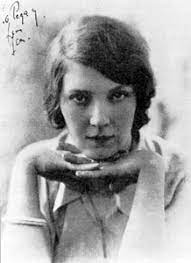
Jean Rhys, her birth name was Ella Gwendolyn Rees Williams (1890- 1979). She was a British novelist or is also known as Dominican-British author, she was born and brought up in Caribbean island of Dominica. From the age of 16, she shifted to England and took her education there. Rhys's father, William Rees Williams, was a Welsh doctor and her mother, Minna Williams, née Lockhart, a third-generation Dominican Creole of Scots ancestry.


About the Novel:


Jean Rhys is best known for her Novel Wide Sargasso Sea, Prequel of Charlotte Bronte’s Jane Eyre. The novel serves Postcolonial and feminist perspective to Jane Eyre novel. Wide Sargasso Sea as a flawless postcolonial parody of Charlotte Bronte’s Jane Eyre. The novel tells a story of Antoinette Cosway, a Creole, Bronte’s devilish ‘madwoman in the attic'. The plot is initially set in Colibri, Jamaica which moves to Dominica and England. It opens while after the abolishment of slavery Act 1833. The Novel presents the complete life of Antoinette who was caught in patriarchal society in which she couldn't fully belong to Europe or to Jamaica.

This novel is divided into three parts and each has a different narrator, it is narrated in a first person point-of-view. It is patch work of various narrators, told directly by Antoinette (part 1), Christophine and his unnamed husband (Mr. Rochester in reference to Bronte’s Jane Eyre) (part 2) and Grace Poole (part 3).


Characters-
  • Alexander Cosway (husband)
  • Anette Cosway (wife)
  • Antoinette Cosway (daughter)
  • Pierre Cosway (insane son)
  • Sandi Cosway (Illegitimate son of Alexander)
  • Daniel Cosway (Illegitimate son of Alexander)

  • Mr. Mason (Anette’s 2nd Husband)
  • Richard mason (son)
  • Aunt Cora (Antoinette’s guardian)
  • Edward Rochester (Antoinette’s husband- unnamed in wide Sargasso sea, named based on Wide Sargasso Sea)
  • Christophine (Annette's servant and Antoinette's nurse)

Introduction to Postcolonial Studies/ Postcolonialism

As per the glossary of literary terms by M.H. Abrams,
The critical analysis of the history, culture, literature, and modes of discourse that are specific to the former colonies of England, Spain, France, and other European imperial powers. These studies have focused especially on the Third World countries in Africa, Asia, the Caribbean islands, and South America.

Postcolonial studies sometimes encompass aspects of British literature in the eighteenth and nineteenth centuries, viewed through a perspective that reveals the extent to which the social and economic life represented in the literature was tacitly underwritten by colonial exploitation. Post- colonialism also relates to some issues as orientalism, atheism, national identity, the subaltern and hybridity. It includes the writing of those who try to defy the colonial writers, it is called writing back also in a form of resistance to the colonial texts.

Being a student when we read phrase post- colonial studies we generalize the literature after being decolonized which is not 100% incorrect but it is to be remembered that postcolonial literature/ studies is a way of reading, it can also be literature of before independence. It is not date/ period based. It is a critical analysis.

The aim or goal of post- colonial criticism is to deconstruct imperialist perspective, to contrast ideology, to question the system of values that support imperialism which is dominant in the West. It claims to rewrite history and give subjectivity to minor voices. It is also important to note that the West has not Colonized countries by armies but culturally, mentally so it's very difficult to decolonize the colonized countries.


Wide Sargasso Sea as a Post- colonial novel

The postcolonial writers in literature started to write for a specific purpose, using the language of the mainstream power and aiming at the same target. Wide Sargasso sea also serves the same purpose of constituting a cultural self for the formerly suppressed voice of the Creole people. Jean Rhys in the Wide Sargasso sea tries to bring out the voice of Charlotte Bronte’s Jane Eyre’s marginalized characters, the voice of creole people. Rhys uses the theme, characters and the plotline of Jane Eyre but deliberately gives the voice to silenced characters which are ‘othered’ in the Jane Eyre.

Bronte's madwoman in the Attic- Bertha mason. From the Creole Origin, Mr. Rochester’s first wife who has been silenced in Jane Eyre, introduced to the reader as a horrific dark image has become a subject as Antoinette Cosway in Rhys wide Sargasso sea. Wide Sargasso sea is a pathetic love story of Créole woman who goes crazy due to unrequited love in her marriage to an Englishman.

The madness of Bertha (Antoinette) is totally related to the triple oppression that she suffers as a woman from the patriarchy and as a Creole woman in the West Indies, the burden that places her just in-between white English society and newly emancipated slaves. She has been always tortures for not being of a complete white English society and was subjugated by the newly freed slaves. In Jane Eyre the readers get an empathetic relation with Mr. Rochester instead everyone favors the pitiful and misfortune fate of Creole, Antoinette.


Rhys has tried to leave the space for the views of the silenced characters and instead of first person narration she put forth the multiple narrations from the different characters for telling the stories from the various point of view so the readers can understand the previously marginalized characters in a newly centralized character. But according to the essay by Gayathri Spivak “The Three Women’s Texts and a Critique of Imperialism”, she states that Rhys in the novel subconsciously downgraded the native inhabitants and have portrayed them to sexual abuse, unreliable, performing obeah and abusing the main characters. In the novel it is dark and just demonstrated as a dark, abusive and minor character.


The West always creates a binary opposition with those who are non- westerners in order to identify their own identity as pure good and ideal. That's also the reason most of the West literature depict the qualities like cruelty, savageness, inferiority, laziness in non- westerners while all the ideal qualities like goodness, reason, hard work are demonstrated in western society. This is all that is mentioned in ‘Orientalism’ by Edward Said. This is pretty apparent in Wide Sargasso sea also through the character of Mr. Rochester, an Englishman who has been discarded from his heritage and for financial stability he married Antoinette. He was initially fascinated by Antoinette till Amelia and his brother-in-law made him aware about Antoinette from bad blood. And after then his orientalist attitude was directed not only towards Antoinette but also to the native Caribbean people.

“I like the drink, but I hate the language”

This statement stated that he surely likes the land, its richness, the plantations, the natural beauty, and the exoticism of nature, which cannot be attained in his homeland, England. The the west Indian culture is the issue disturbing him, culture refers to the native language, their customs and traditions, their native obeah conventions and all the other related issues, which do not smell like the Europeans, or suit a set of Eurocentric universal values. The another imperialistic attitude of Mr. Rochester is calling Antoinette a Bertha because it sounds more English than Antoinette. Throughout the story he keeps on commenting on Antoinette’s own way of dressing and styling and keeps on proposing western alternatives.

As Frantz Fanon puts forward in The Wretched of the Earth, throughout history, the colonizing power of Europe, devalued the histories of the colonized nations, alleging those histories as ‘pre- civilized voids’ and from then on the history and culture of the related nation was marked by the arrival of the European colonizers through their imposed educational systems.

In the book, Culture’s in Between, Bhabha recounts hybrid cultures, which is the social status of the Creole which is the highly central matter for the novel. Creole was the in-between identity which suffered more because of the inferior black community and superior white community. This aspect of Antoinette’s hybrid culture pushes her to suffer from all the traumas of in-betweenness. Antoinette having an unhealthy marriage with Mr. Rochester and pursuit of relief from Cristophine and her hateful relation with Amelia. Even her mother Annette and Antoinette both are fated in search of a white husband. Also the patriarchal Subjugation induces double othering.


The third oppression is her own search of self- identity which leads her to nothing else than madness. In relation to this one can consider Spivak’s famous essay Can the Subaltern Speak? And She believes that as long as the West denies judging the subaltern or the postcolonial subjects on their own authentic values, and instead, favors a system of judgment, which is Eurocentric universal, the subaltern cannot speak.


But there is sure a way out for Subaltern to come out of all this world power structure that is dream and madness. As Antoinette revolts against all those subjugating factors in her recurring dreams in which she sets fire to her British prison-house. May be one day all women will act out their dreams in search of self identity just as Antoinette in Wide Sargasso sea.


I hope my blog is helpful. Thanks for visiting.

Wednesday, 6 July 2022

Cultural Studies & Power Dynamics, Media Studies, And True Education

This blog is in response to the assigned task on Cultural Studies, allotted by Dr. Dilip Barad. In this blog I am talking about power and media in Cultural studies and what is truly educated.

Cultural Studies


Understanding of Power in Cultural Studies
It is very difficult to define cultural studies, Because the word "culture" itself is so difficult to pin down. But it can be defined as ‘Cultural studies is an interdisciplinary field that examines the political dynamics of contemporary culture (including popular culture) and its historical foundations.’ Researchers generally investigate the relations of existing cultural practices with the wide system of power associated with it. These include ideology, class structures, national formations, ethnicity, sexual orientation, gender, and generation. Cultural studies seeks to understand how meaning is generated, disseminated, contested, bound up with systems or power and control and produced from the social, political and economic spheres within a particular social formation or conjuncture.

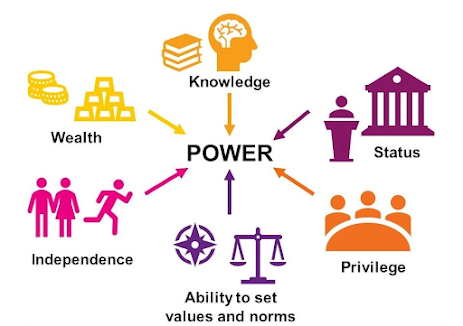
Michel Foucault came up with the idea ‘power is a whole complex of forces; it is that which produces what happens’. The question arises what is power? Power is an ability or capacity to do something or act in a particular way. In other words, power is an ability to make others do what one wishes to. How does one attain power? There are 6 sources of power
  • Physical force
  • Wealth
  • State government
  • Social norms
  • Ideas
  • Numbers

Foucault has challenged the idea that there are several events when the power flourished in the people or group of people and argued about power being everywhere. Instead it is a kind of ‘metapower’ or ‘regime of truth’ that pervades society, and which is in constant flux and negotiation. Use of the term ‘power/knowledge’ signifies that power is constituted through accepted forms of knowledge, scientific understanding and ‘truth’. In Foucault's theories power is granted through knowledge and therefore constructs truth. Foucault’s approach to power is that it transcends politics and sees power as an everyday, socialized and embodied phenomenon

One of the Four goals of Cultural Studies is Second, cultural studies is politically engaged. It is Cultural critics are oppositional to the power structure of society at large, they try to criticize the power.

We sometimes fail to recognize that we are constantly under power. power is constantly exercised by means of surveillance. An idea, power works for social conformity and discipline is a bubble. The mechanism of surveillance in prison, school and mental hospitals train the people in the name of discipline in order to subdue everyone. One constantly feels it to be for their betterment but it's a power of administration that doesn't let an individual to exercise their power and to be free. Surveillance as tool of power can be easily seen in George Orwell's Novel 1984. Language, unity, sharing ideas is power and all this is banned in Oceania ( fictional setting of 1984).

It can be argued that schools and asylums are the areas where control is must of students and patients. But in a civic arena we can find many examples of being controlled by the power. They control our mind in a way that we don't question and are always mesmerized by their ideas. The examples are 'Thali Bajao' and 'Diya Jalao' idea of program in order thanks to first line Corona warriors. Practically thinking it's not a way of thanking it was just to distract us from the real happenings. No-one stopped him, opposed or questioned Because it's his power on us.


Symbolically, power can be read when one in authority wants to have his own exhibition; making of statues, spreading their own photographs etc.. All this becomes helpful to study the culture of the society also. What can one do to stand against power? Read and write. It helps once to be powerful in public. Power lies with authority but it lies more in mass, population (it is also the source of power). Read the power, understand it, find the reason behind every happening and write it. Foucault also recognized that power is not just negative but it can also be a productive and positive force in society.

His kind of power is neither force nor capacity nor domination nor authority. Power is impersonal because it is neither possessed nor exerted by individuals, groups, or institutions. Power is the sum total of influences that actions have on other actions. Foucauldian power is blind and purposeless.


Why is Media Studies so important in our digital culture?
Media study is a broad field of studies that deals with the history, content and impact of various collective communication methods and tools. The work of the media is to provide their audiences with facts and keep them better informed. Its work is to provide criticism and debate to ensure the information is tested.

But in the contemporary period we see the media is not working for the audience but for the one who is in power. They believe in pschofancy. Watching various new channels we realize that some channels are trying to hide the real news. E.g. in India, when the farmers were protesting the news channels were diverting the minds by showing Aryan Khan’s drug case. While the real news to be shown were farmers' protests, it was against the power. Power also has the hand on news channels.

Work of media and advertisements is to sell the product but if we see otherwise, channels are owned by the business networks they don't sell [product we are the product for them through channels. It becomes necessary to know who is in power? Who owns the channel? And is the new channel biased towards power or are they true to their journalism?


Here in the above video we can clearly see what journalism is and what supporting power. Female journalists lean towards power while the male journalist is counter questioning and trying to go against power.


Who can be considered as a 'Truly Educated Person'?
The basic definition of Education is The process of receiving or giving systematic instruction, especially at a school or university. It is an act of both teaching and receiving knowledge. But the question arises with the phrase ‘truly educated’. Does a truly educated person mean one who scores highest? NO.

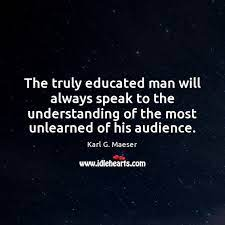
According to Noam Chomsky video, Truly educated means to be in a position to inquire and create on the basis of resources available, which can be appreciated and comprehended. A truly educated person is one who knows where to look, How to look, What to look, how to formulate serious questions. Truly educated has an ability to create constructively, independently without any external force/ control.

“It is not important what you cover in class but important is what you discover in class.”

Being truly educated means developing the knowledge and skill to look beyond the standard meaning to find the hidden complexity. Being educated doesn't mean certificate holders, diplomas holders, degree holders, and Doctorates. It is an aspect of growing thinking ability, practicality and power to be able to see all the aspects of a situation.


We see the literacy rate is counted as if one can write his/ her name then he/ she is literate, which is not an ample requirement of being educated. Being educated is an ability to read and understand absence, which is not told. Reading and writing are the tools to be educated. Knowing a language is not being educated. Real education is no amount of information or controversies one puts in the mind, it's about learning and understanding from the controversies. Learning about controversies is an appropriate way for students to learn about values. It provides a wide view of the situation and lets them read, have self- education about the right and wrong deed.


In short I would like to say, a truly educated person is one who develops not in class but outside the class also. he/ she has an ability to understand the surrounding, has multiple ways of looking at problems and has multiple solutions. He/ she might not have gained the marks but have an ability to fight in every real life fight. A truly educated person can read what is not even said, one might not fall in the silly traps, policies by any authority. The one who uses his practical knowledge is real life as well tries to help others share his knowledge. Other than bookish knowledge can be considered to be truly educated.


I hope you liked my blog and it was useful to you. I have shared my views on the assigned questions.

Thanks for visiting.

My Learnings from the National Workshop on Academic Writing (2026)

The National Workshop on Academic Writing  I recently had the opportunity to participate in the National Workshop on Academic Writing (2026)...