Sunday, 10 October 2021

Frankenstein - assignment

Hello everyone! This blog is our assignment task and in this blog I am answering some question from the Mary Shelley’s novel Frankenstein - The Modern Prometheus (1818) 
                                              

Que.-1 Why was Victor not able to accept his dream experiment and its result?
Frankenstein believes that by creating the Monster, he can discover the secrets of “life and death,” create a “new species,” and learn how to “renew life.” He is motivated to attempt these things by ambition. He wants to achieve something great, even if it comes at great cost. Frankenstein might be desperate to “renew life” because he was still grieving for his mother. One stormy night, after months of labor, Victor completes his creation. But when he brings it to life, its awful appearance horrifies him. He rushes to the next room and tries to sleep, but he is troubled by nightmares about Elizabeth and his mother’s corpse. He wakes to discover the monster looming over his bed with a grotesque smile and rushes out of the house. He spends the night pacing in his courtyard. The next morning, he goes walking in the town of Ingolstadt, avoiding a return to his now-haunted apartment. The two years of Victor’s labour resulted in an ugly, hideous, giant 8 feet tall and equally broad creature. The first appearance of the creature frightened Victor, Victor when started an experiment he was with an ambition and he wanted to achieve his dream but after the creature was ready it got a life the social human inside the Victor woke-up. He started realizing that the society won't accept such a giant creature along with its hideous look. Society might run away or get afraid of it. 

Along with, Victor must not have realized that creature is like a newborn child, a complete clean stale. As a child, they didn't know how to talk, read, stand, sit and walk. He also didn't know any of them. Creature was innocent, kind and humble like an infant but Victor felt that he might be monstrous mentally same as his physical appearance. Thinking of the society and society’s reaction he abandoned the creature and could not accept his dream experiment.


Que.-2 What made the creature a monster?
The monster is Victor Frankenstein’s creation, assembled from old body parts and strange chemicals, animated by a mysterious spark. He enters life eight feet tall and enormously strong but with the mind of a newborn. Abandoned by his creator and confused, he tries to integrate himself into society, only to be shunned universally. Looking in the mirror, he realizes his physical grotesqueness, an aspect of his persona that blinds society to his initially gentle, kind nature. The monster faces rejection and fear from his creator and society. The monster is the worst kind of scientific experiment gone awry. He does acquire humane characteristics, even compassion for his "adopted" family, the De Lacey's. The creature also begins to learn about himself and gains general knowledge through the books he reads and the conversations he hears from the De Lacey's. As depicted by Shelley, the monster is a sensitive, emotional creature whose only aim is to share his life with another sentient being like himself. From the beginning, the monster is rejected by everyone he meets. He realizes from the moment of his "birth" that even his own creator cannot stand the sight of him. The monster is a vegetarian. While speaking to Frankenstein, he tells him, "My food is not that of man; I do not destroy the lamb and the kid to glut my appetite; acorns and berries afford me sufficient nourishment...The picture I present to you is peaceful and human. "At the time the novel was written, argued that practicing vegetarianism was the morally right thing to do. The monster was equal to all human beings but yet he was not accepted by society only because of his look. And this again and again rejection also by his own creator frustrated the creature and the fire of revenge glowed inside him. Also when he demanded for a female mate, Victor destroyed it before giving life to the female mate. This made the creature angry that why should I (creature) spend his life in solitude and Victor enjoys his life. And in this anger he killed victor’s wife on wedding night. Seeking revenge on his creator, he kills Victor’s younger brother.

After Victor destroys his work on the female monster meant to ease the monster’s solitude, the monster murders Victor’s best friend and then his new wife. We can see in the Novel that at the end Victor is in the same position like a creature alone with no partner and living life moving in the jungles in search of a creature.


Que.- 3 Who is suffering from Deformity in the novel? What kind of deformity and disability is there? Who decides what deformity is?
The creation characterizes his physical appearance as a deformity because by the time this particular story is told in the larger scheme of the novel, he already has a firm grasp of language and comprehends conceptually aesthetic standards of corporeal beauty. As such, when the creation sees his reflection in the pool of water, he has an epiphany; he realizes he does not look even remotely similar to anyone else around him. Thus, such an observation on the part of the creation foreshadows the manner in which he is and will be received by others, as something instead of someone, thereby bestowing on him a nonhuman presence. A distinction like this further implies that he is more of a creation than a male human being, and as a result, he is considered inferior and misshapen. The creation seems to be an object of disgust and horror to all of those with whom he comes into contact, he develops a consciousness that he is ugly and it is this low esteem in regard to his appearance that becomes a disability.
According to the novel, as mentioned above, the physical deformity is shown in the character of the creature. But if we look at the things and sympathize with the creature we realize that the real deformity is in the mind of society. The mental deformity is perceived when we see the behavior of society towards creature only because of his physical appearance, no one tries to talk to him or tried to understand him or know him everyone started beating/ lynching him whenever they saw him in such a manner that creature started living in jungles. Their behavior towards the creature was only because of his looks. By the acceptance of the creature blind old man justifies that the creature was surely abandoned by everyone because of his looks. Through this we can easily say that in spite of the creature suffering from the deformity or disability the real deformity in the minds of society is judging people on their outer looks instead of inner beauty. As it is said- ‘never judge a book by its cover.’ 

What deformity is is decided by the majority of the same type of people. For example if there is an area where the people are without nose and ears and if a person enters there with nose and ears then that person becomes a deformed one for the people of that area. In the case of the creature, the society found the creature to be deformed as it was giant in comparison to them and had a lot of scars on its face which the society didn't have.

Que.-4 Can appearance overpower reality?
Appearance vs Reality is one of the most common themes used in literature to this day and has been explored in many ways. Phaedrus once stated, “Things are not always as they seem; the first appearance deceives many.” Appearances can deceive people because humans are so prejudiced against people that do not look, talk, walk, or act like them. Appearances and reality are two very distinct things, with one being a blindfold to one’s judgment and the other being a wake up call. In Novel Victor, a scientist; The monster, Victor’s creation; and Justine Moritz, who is accused of murder; all appear to be something they are not. Victor, Justine, and the creature are all examples of the struggle between appearances and reality.

Victor is scientist and his ambition shows the love for life and creature we love the character but creature get alive he abandon him and we see his negative side reality comes to us, same happens with the creature in the novel, he is always judged on his looks and no one accepts him despite he was kind, innocent and humble everyone judged him to be wild and monstrous sur to his looks. Also the character of Justine, she is accused for the murder of the William as belonging of William was found with her bur the reality was something else. This is how the appearance deceived the reality of these characters. Talking in context to appearance overpowering reality is seen in the character of the creature. The reality of monster was kind, innocent and humble he was like a child but the discrimination of society and human towards him, abandon by his own creator saddened him, he was disturbed by the behavior of society only based on his looks. After getting beaten by the DeLacey family he got frustrated and decided to take revenge for making his appearance hideous from his creator. Till that creature realized that he is ugly so one one is accepting him and thinking of him being a monster. The creature thought- if they are thinking me to be a monster then now I'll be a monster. And in power of being the monster he takes the revenge from his creator as mentioned in answer 2. Here we see that yes, appearance can overpower reality. And the example from the novel is the creature.


Que.-5 Who is the real villain in Frankenstein?
At first glance, the monster in Frankenstein is a symbol of evil, whose only desire is to ruin lives. He has been called A creature that wreaks havoc by destroying innocent lives often without remorse. The Monster is Frankenstein’s antagonist. He prevents Frankenstein’s goal both by what he does and what he is. Frankenstein’s ambition is to achieve something great, but the Monster’s terrifying appearance forces Frankenstein to recognize that not only has he not achieved something great, he may have done something terrible. Once the Monster starts killing everyone Frankenstein loves, Frankenstein can’t help but acknowledge that his creation has the potential for evil. After being thwarted in his desire to create something good, Frankenstein’s ambition requires him to destroy the Monster, but again the Monster thwarts him. Another possible antagonist is Frankenstein himself. Frankenstein directly thwarts the Monster’s goal of human connection by refusing to sympathize with the Monster himself and refusing to create a companion for him. The Monster initially sees Frankenstein as a father figure, but Frankenstein denies him a familial relationship. But after the novel is looked at on different levels, one becomes aware that the creature wasn't responsible for his actions, and was just a victim of circumstance. The real villain of Frankenstein isn't the creature, but rather his creator, Victor. As a romantic novel Victor is responsible, because he abandoned his creation. As an archetype novel, Victor is the villain, because he was trying to play god .When Victor created the creature, he didn't take responsibility for it. He abandoned it, and left it to fend for itself. It is unfair to bring something into the world, and then not teach it how to survive. The creature was miserable, and just wanted a friend or someone to talk to. Here if we see Victor as an antagonist then we should not miss that Victor is representing the human society in the Novel especially after the creation of the creature.

After the creature got alive the main thought what Victor got was keeping the society in the center he didn’t see his own dream coming true but thought as a normal human that creature won't be accepted by the society. So here we can say that Victor is a villain ultimately the society is the real villain.


[word count- 2073]
Thank you for the visit.
I hope this answers would have been helpful to you.
Any queries or suggestions please write in comment box.

Lockdown - Simon Armitage

Lockdown

English poet and novelist Simon Armitage has been awarded the Queen’s gold medal for poetry for his body of work “giving voice to those rarely admitted into poetry, and extending an arm around the unheard and the dispossessed”. The award, which was created by King George V in 1933 at the suggestion of the then poet laureate, John Masefield, is decided by a committee headed by the laureate – currently Carol Ann Duffy, in her final year in the role. 

Summing up the committee’s decision, Duffy praised Armitage as “boundary-breaking”, spinning “poems of emotional weight and musical grace from the fabric of our everyday lives”.


Simon Armitage has written a poem to a prevailing situation of Lockdown and Corona virus that is slowly being implemented across the UK. The story is beautifully weaved. It takes us to Eyam in the East and captures the beauty of the West. Here, the poem is talking about the two different dreams he had and that both dreams show that there was the same time which prevailed in the past and the people of society have gone through the hard times which we are going through in this Corona Pandemic. Both the dreams recollects the beautiful love- story in which one couple is separated by the Plague Pandemic and in the other a man is exiled by the king for neglecting his duties and a husband and wife are separated.

Alongwith, we see here an attempt by Simon Armitage to bring the feeling of togetherness by portraying the two different far ends, pointing the story of East and West together in the poem. Revealing the truth that the whole world is the same in the eyes of nature or God, the same situation prevails throughout the lands. All men are caged, nature is not separated by borders as the humans have separated the land. “the journey a ponderous one at times, long and slow but necessarily so.” This is the last line of the poem which says that the journey, the journey of the pandemic period or also we can say the journey of the poem is clumsy, long and slow but it is necessary, the pandemic journey has brought us to real sense and real world. We get so busy in our hectic schedule that we don’t even spare time for the heath. But this pandemic has just placed a temporary full stop to stop looking around, spare time with loved ones and to see how our nation is facing this difficult time. The situation was not same for all some were enjoying their time with family and some were longing for shelter, walking thousands of mile to their beloved once but as Simon Armitage said - “long and slow but necessary so”

And I couldn’t escape the waking dream

of infected fleas

in the warp and weft of soggy cloth

by the tailor’s hearth

in ye olde Eyam.

Then couldn’t un-see

the Boundary Stone,

that cock-eyed dice with its six dark holes,

thimbles brimming with vinegar wine

purging the plagued coins.

Which brought to mind the sorry story

of Emmott Syddall and Rowland Torre,

star-crossed lovers on either side

of the quarantine line

whose wordless courtship spanned the river

till she came no longer.


Here is the first half of the poem which exhibits the first dream of the Poet. The poet wakes with a dream of infected fleas, infected fleas were the cause of Plague pandemic which emerged from the rats. To portray the situation the dreadful Plague poet refers to the small English village Eyam. Villages were separated by the ‘boundary stone’ the stone was placed between villages as a boundary no people were allowed to cross that boundary stone in order to reduce contagious plague infection.they placed a vessel filled with Vinegar and while selling or sharing of things that placed the coins in vinegar. They used vinegar as we use the sanitizer today to clean and uninfect the products.


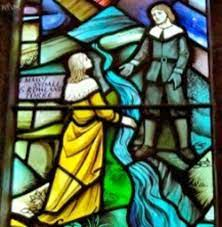
Also the story of star crossed lovers Emmott Syddall and Rowland Torre. A story of heartbreak concerning Emmott Sydell and Rowland Torre, separated from one another when the village of Eyam quarantined itself during an outbreak of the Plague, They both used to meet. The lovers would arrange to meet secretly but at a distance minimizing any risk of Rowland catching the disease. But suddenly Emmott stopped appearing to Rowland yet Rowland visited the place regularly with the hope of meeting. After the safe time was announced Rowland was the first one to re-enter Eyam but found that Emmott died in the plague. In the church of Eyam the glass paintings are present displaying this love story.


But slept again,

and dreamt this time

of the exiled yaksha sending word

to his lost wife on a passing cloud,

a cloud that followed an earthly map

of camel trails and cattle tracks,

streams like necklaces,

fan-tailed peacocks, painted elephants,

embroidered bedspreads

of meadows and hedges,

bamboo forests and snow-hatted peaks,

waterfalls, creeks,

the hieroglyphs of wide-winged cranes

and the glistening lotus flower after rain,

the air

hypnotically see-through, rare,

the journey a ponderous one at times, long and slow

but necessarily so.


It is the second half of the poem. In the first half the poet describes the plague situation and the Love story related to the East area. Now the poet carries further the poet with talking about the West region or area.  Here poet refers to the sanskrit poem of the one of the greatest sanskrit poets  ‘kalidas’ meghdoot’. Yaksha,  who had been banished by his master to a remote region for a year, asked a cloud to send a message of love to his wife. The port beautifully depicts the Eyam of Plague time and here he is considerably depicting the beauty of the West, the cloud which followed through the earthly maps. Cloud passed through the camel traits, cattle tracks, and stream of necklaces, looking at fan- tailed peacocks and painted elephants. Here the poet reveals the beauty of the West, Further talking about the geographical area of the West. Connecting beautifully the East and West in the same poem, the poet ends with saying that yes the journey is clumsy, slow and long but it's necessary.


The poem has great poetic rhythm ending with the rhyming words. It makes poems more interesting and enjoyable while reading. Comparing it to personal experience I can significantly relate my lockdown experience with the poem. We all were stucked and faced a time when we were constantly in the fear of getting infected. It was a time when we couldn't even talk to or meet our friends. In gujarati we have a saying ‘પહેલો સગો પાડોશી’- first and best relatives or our relation is with our neighbours, but it was a time when we were not even able to help our neighbours or friends. We were not able to be part of anyone’s happiness or sadness. The time came as the life long lesson to be learnt that i'd any difficult situation comes in life learn to face it alone stand alone. Also, it resulted in the best productive and creative time, best time when mind and body rested completely out of whole hectic schedules. On the other hand, it was the worst time for 50-60% of the world. We hope that as the situation of the pandemic is improving, things go on to a better part rather than getting the next wave.

[words count:1245]

Saturday, 9 October 2021

Movie Review - Frankenstein

 Frankenstein- The Modern Prometheus


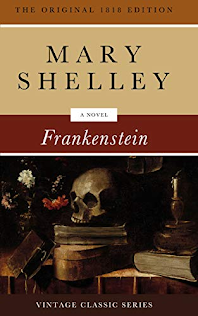
The Novel ‘Frankenstein- The Modern Prometheus’ is an 1818 novel written by English author Mary Shelley. Shelley started writing this novel when she was 18, and the first edition was published anonymously in London on 1 January 1818, when she was 20. Her name appeared in the second edition published in Paris in 1821. Lord Byron’s suggestion of a ghost story competition to while away their Swiss holiday inspired Shelley’s Frankenstein. She named the scientist Frankenstein, getting inspired from the ‘Frankenstein castle’ in Germany.

This Novel is dark it has lot of death and murder. The major theme of the novel is ‘Danger of pursuing knowledge.’


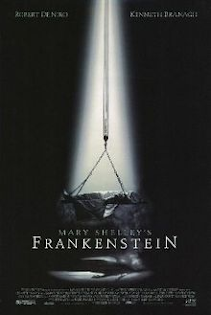
Mary Shelley’s novel ‘Frankenstein - The Modern Prometheus’ has inspired a number of films from 1910, The first adapted movie was ‘Frankenstein (1910)’ American short silent horror film produced by Edison studios and Directed by James Searle Dawley to ‘The Frankenstein Chronicles (2015)’ as a British television period crime drama series that was first aired on ITV encore. Among these, the movie which was most faithful and close to the novel is Frankenstein (1994) directed by Kenneth Branagh who stars as Victor Frankenstein, despite several differences and additions to the plot of the novel.  


Casting in the movie:

  • Robert De Niro- Creature
  • Kenneth Branagh - Victor Frankenstein
  • Tom Hulce- Henry Clerval
  • Helena Carter- Elizabeth Lavenza
  • Hannah Gordon- Young Elizabeth
  • Ian Holm- Alphonse Frankenstein
  • John Cleese - prof. Dr. Waldman 
  • Aidan Quinn - Robert Walton
  • Richard Briers-  blind grandfather
  • Robert Hardy - Professor Krempe
  • Trevyn McDowell - Justine Moritz
  • Celia Imrie - Mrs. Moritz
  • Cherie Lunghi- Caroline Frankenstein
  • Ryan Smith  -  William Frankenstein


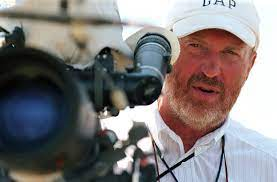
Roger Pratt was the cinematographer of the film. There is awesome heavy use of circular cameras where the camera is just walking around the subjects in multiple scenes. I think it was a little overused. It makes me nauseating sometimes. 


Victor Frankenstein and Elizabeth Lavenza, both very well played characters in the film. Here, the monster is very understated, Robert DeNiro plays pretty well, He gets the good makeup and stitches. The movie is extremely fast- pace we don’t get any breathing time to connect with the main characters. The movie has a much more dramatic direction than the book did.


Similarities in the original text and movie:


Frame of movie:

The Movie ‘Frankenstein (1994)’ is closest to the narrative of Mary Shelley’s Novel in comparison to many other movie adaptations as it has preserved the narrative of the novel. Most adaptations of this novel have entirely removed the subplot of Arctic explorer Robert Walton as an listenser of Frankenstein's memories as in the novel. While in ‘The curse of Frankenstein (1957)’  narrates his story to someone unfamiliar. However, ‘Frankenstein (1994)’ does not only retain Robert but performs the same role and also in the same setting - The Arctic.


Creature:

The presentation of the creature is also significantly laid out the same as in the Novel. In the original novel the creature educates himself and becomes fluent and intellectually sophisticated and similarly in the Novel. Many other adaptations instead present the creature as unclear and stupid.


Device of writing:

The Novel is related through an epistolary narrative structure, and there are frequent references to writing--the characters write each other letters, Frankenstein keeps records of his experiments, etc. shows the characters writing or using objects associated with writing, film too gives same emphasises on writing.


When Victor was departing to study at Ingolstadt, his father presented him with a gift from his late mother-a journal. The journal itself is blank, except for his mother's inscription noting that it is Victor Frankenstein's journal and will be filled with his deeds. In the same journal Victor writes about the creation of Creature which later helps Creature to know about his existence. The emphasis on the journal as a treasured gift also establishes the importance of writing to these characters, and it is one that is echoed throughout the film. After Victor brings the creature to life, he records his disappointment in his journal. Significantly, he also notes to himself that the journal will be destroyed to keep his experiment secret. This scene affirms the importance of writing. He may have stopped writing to his family, but that doesn't mean he stopped writing.


After Victor leaves for Ingolstadt, writing is used as a gauge of his mental health. Initially, he writes to his cousin and love interest, Elizabeth, as well as the rest of his family regularly. One scene shows Elizabeth reading aloud one of his letters to the other members of the household, as Victor recounts his friend Clerval's difficulties in passing anatomy. A separate, more intimate letter is included to her in which he fantasizes about their wedding night. She refuses to share this letter with the others. This scene emphasizes the importance of writing within the context of the film.


Victor and The Creature as Doubles:

In the Novel, the creature seeks revenge on Victor for creating him and abandoning him. He pursues Victor and then kills his younger brother. Toward the end, the situations have been reversed, and Victor is pursuing the creature to take revenge for Elizabeth's murder. 

These elements are present in the film adaptation, but the film makes this connection even more apparent in its presentation of the story. The scene where this doubling is most evident is after Elizabeth's death. Earlier, Victor had agreed to create a bride for the creature but realising the consequences he decided to destroy her instead. The creature swore vengeance and promised Victor that he would also be deprived of a wedding night. These elements are all present in the book.


Difference between film and Novel:

The film removes any reference to the Safie subplot from the novel. However, the film's most obvious changes are the portrayals of the deaths of both Justine and Elizabeth. In the original novel, both die. That is one significant difference between this film adaptation and many others- many films do not portray the women dying onscreen or even rewrite the plot so that the one or both of the female characters live. Mary Shelley's Frankenstein preserves the women's deaths. However, the details of their deaths in Branagh's film are quite different from the source text.


No time is given in the movie for any time of character development while we can clearly learn about the character’s in the novel. We don’t even get time to see how Victor is digesting the things that happened to him. We cannot  get closely connected to or empathize with the movie characters. The movie is relying more on music and is really little more sometime.


Creature:

In the book the creature is 8 feet tall but the monster in the movie is about the same height as Victor Frankenstein, He is not that menacing as pictured in the Novel. We don’t get insight into the monster in the movie as much we do in a book. A scene in a movie where creature comes alive and victor realises he made a mistake. In the movie there comes an awkward scene where Victor tries to get off two legs they slip and roll and finally chains it up and is just kind of nowhere to realise what he has done and says “What have I done! What have I done!” The novel does a better job here - putting over the head of the creature holds the creature and just realises how hideous and ugly it is and there is no way that anyone would accept him in the society and he is horrified by it.


Justine’s Death:
In the Novel, Justine is accused as the murderer of Victor's brother, William. However, the death occurs after a trial and is not described by witnesses. Indeed, Victor mentions the death and moves on. In the movie, Justine's hanging is graphically portrayed. Not only is the hanging viewed by the audience, but it is essentially a mob lynching with no trial to precede her demise.


Elizabeth’s death:

Elizabeth's corpse is briefly described in the original source text, but her actual death scene in which the creature strangles her is not narrated. In the film, however, her death is explicitly portrayed and is far more graphic than her fate in the book. In the film, the creature does not kill her by strangling her; instead, he rips out her heart. He then knocks her onto the floor, causing her to slam her face against a nightstand with a candle on it. As a result, her face and hair catch on fire. All of those actions are portrayed onscreen. Afterward, Victor takes her corpse home to reanimate her, it is clearly implied that Victor beheads her. The camera lingers on him stitching her head onto Justine's corpse. After her reanimation, the scars and after effects of his surgery and the injuries she sustained from the creature's attack are clearly depicted. She then burns herself, once Victor and the creature start fighting over her. The camera again lingers as she runs through the house, engulfed in flames, before plunging to her death. In the film, it is not enough that Elizabeth dies, she must die in a particularly graphic way, not even once but twice. 


References:

Mary Shelley's Frankenstein. Dir. Kenneth Branagh. Perf. Kenneth Branagh, Robert De Niro, and Helena Bonham Carter. TriStar Pictures, 1994. DVD. 

Shelley, Mary. Frankenstein; or The Modern Prometheus. 2nd ed. Ed. Susan Wolfson. 1818. New York: Pearson Longman, 2007. Print. 

Link to read The Novel 'Frankenstein - The Modern Prometheus' online

[words count: 1583]

Thursday, 30 September 2021

Visit to art gallery- Ajanta Exhibition

 ART GALLERY - AJANTA CAVES

I live in Bhavnagar, Gujarat, India. Bhavnagar is famous as a place of art and culture "કાલા અને સંસ્કૃતિની નગરી." It is said that a town or a city which has an Art gallery suggests that the citizens of a particular city or town are greatly interested in art and artists are respected in a particular city. Art galleries exhibit works by artists known by the general public; Exhibitions act as the catalyst of art and ideas to the public. Bhavnagar has one Art gallery named after the great artist Shri Khodidas Parmar.


SHRI KHODIDAS PARMAR
Shri Khodidas Parmar, a little- known artist of Gujarat who has greatly contributed to the fine arts. He has developed his own style of art, he was the one to introduce Saurashtra's Bhatigal style of art which is still kept alive by his students. He very significantly painted art and culture of Saurashtra and Kutch region of Gujarat. 


This youtube video is of Khodidas Parmar's student's, who is talking little about his life and it has some paintings of Shri Khodidas Parmar.


Khodidas Parmar has also tried his hands on Ajanta caves' paintings and to continue that idea and paying respect to their idol some of his students painted the caves' paintings and an exhibition was held on it. An exhibition took us towards two different eagernesses. One, to know more about Shri Khodidas Parmar and second, to know more about Ajanta Caves.

Shri Khodidas Parmar's Ajanta Painting
with his signature
                                                  
AJANTA CAVES
The current name of Ajanta is derived from a neighbouring village, the local pronunciation of which is 'Ajintha'. Approximately, 67 miles (107 km) to the north of Aurangabad in the Indhyadri range of Western Ghats lies the caves of Ajanta. The 30 caves, which are famous for their early Buddhist temple architecture and delicately drawn murals, are located in a 76 m high, horseshoe-shaped escarpment overlooking the Waghora (tiger) River. 


The caves were built in two phases, the first starting around the 2nd century BCE and the second occurring from 400 to 650 CE, according to older accounts, or in a brief period of 460–480 CE according to later scholarship. The 29 caves were excavated beginning around 200 BC, but they were abandoned in AD 650 in favour of Ellora. Five of the caves were temples and 24 were monasteries, thought to have been occupied by some 200 monks and artisans. The Ajanta Caves were gradually forgotten until their 'rediscovery' by a British tiger-hunting party in 1819.The site is a protected monument in the care of the Archeological Survey of India and since 1983, the Ajanta Caves have been a UNESCO World Heritage Site.


AJANTA HAS 30 CAVES - FIVE ARE CHAITYA (PRAYER HALL) 
& THE REST ARE VIHARA (MONASTERY).


PAINTINGS OF AJANTA
The Ajanta murals, owing to their inherent fragility and an abundance of destructive natural and maleficent human agents, have suffered considerable damage, often irrevocably so. Despite the depredations, the excellent craftsmanship (specifically in Caves 1, 2, 16, 17) shines through the defiled and blackened surfaces even today. The poise, poignant faces, and expressive gestures bear infinite significance. This includes those hand signals known as mudras which are core to yoga, meditation, and Indian dance drama.The carvings and sculptures at Ajanta wall are considered to be the beginning of classical Indian art. The caves also present paintings depicting the past lives and rebirths of the Buddha, pictorial tales from Aryasura's Jatakamala, and rock-cut sculptures of Buddhist deities. The great religious art of Ajanta through all its sincerity and refinement acts as crucial markers towards the journey within.


TECHNIQUE OF PAINTINGS
The technique used in Ajanta caves painting is 'FRESCO' technique. It would turn impossible to make paintings of the rugged walls of the Ajanta caves, to make the walls firm enough to hold colors the covering plaster was made, which was of ground ferruginous earth, rock grit, sand, vegetable fibres, paddy husk, and other fibrous materials of organic origin; Then a second layer of mud, ferruginous earth mixed with pulverised rock powder or sand and fine vegetable fibre helped to cover the whole interior of the cave. The surface was then treated with a thin coat of limewash over which pigments were applied.

Even the colors for murals were prepared with great care. Green color (glauconite) was obtained from the rocks present around; yellow, brown and of same shades were obtained from mud; blue color which is very rarely used was imported from Persia (lapis lazuli). Red ochre, yellow ochre, brown ochre, lamp black, white, and lapis were the main colours which were used; some say they were imported from Northern India, central Asia, and Persia. Paintings of Ajanta are mainly line paintings. 

In Ajanta murals the power of expression depends chiefly on the swiftness of its outlines. The bold, sweeping brush strokes portray an intimacy and sensitiveness that, even though the original lustrous colours have all but faded, reveal these to be works of adept minds and assured hands.

                                             
Cave 2 fresco above the right door

NATIVES, SOCIETY AND CULTURE IN THE ARTS AT AJANTA
The Ajanta cave arts are a window into the culture, society and religiosity of the native population of India of that time. Different scholars have variously interpreted them from the perspective of gender studies, history, sociology, and the anthropology of South Asia. The dress, the jewelry, the gender relations, the social activities depicted showcase at least a lifestyle of the royalty and elite, and also the costumes of the common man, monks and rishi depicted there. The Ajanta artworks provide a contrast between the spiritual life of monks who had given up all materialistic possessions versus the sensual life of those it considered materialistic, luxurious, symbols of wealth, leisurely and high fashion.


The early colonial era description of Ajanta caves was largely orientalist and critical, inconsistent with the Victorian values and stereotyping. According to William Dalrymple, the themes and arts in the Ajanta caves were puzzling to the 19th-century Orientalists. Lacking the Asian cultural heritage and framework that sees "nothing odd in the juxtaposition of monk and dancing girl", and with no knowledge of Jataka Tales or equivalent Indian fables, they could not comprehend it. The 19th-century views and interpretations of the Ajanta Caves were conditioned by ideas and assumptions in the colonial mind and saw what they wanted to see.

Spink states that Ajanta, "one of the most remarkable
 creative achievements in man's history".

Walter Spink: Spink's major contribution was to interpret the Ajanta Caves, He started studying the complex in the 1950s, and analysed the caves for over four decades in almost 100 publications. The culmination of his research was the Ajanta: History and Development series published by Brill in Leiden, Netherlands.

FOREIGNERS IN AJANTA PAINTINGS
The Ajanta Caves paintings are a significant source of socio-economic information in ancient India, particularly in relation to the interactions of India with foreign cultures at the time most of the paintings were made, in the 5th century CE. These foreigners may reflect the Sassanian merchants, visitors and the flourishing trade routes of the day.
                                                
                                                         Persian embassy scene

HINDU AND BUDDHIST
The Ajanta Caves were built in a period when both the Buddha and the Hindu gods were simultaneously revered in Indian culture. According to Spink and other scholars, the royal sponsors of the Ajanta Caves probably worshipped both Hindu and Buddhist gods.

That one could worship both the Buddha and the Hindu gods may well account for Varahadeva's participation here, just as it can explain why the emperor Harisena himself could sponsor the remarkable Cave 1, even though most scholars agree that he was certainly a Hindu, like earlier Vakataka kings.
— Walter Spink, Ajanta: History and Development, Cave by Cave

WINDING UP
The Ajanta paintings, or more likely the general style they come from, influenced painting in Tibet and Sri Lanka Some influences from Ajanta have also been suggested in the Kizil caves of the Tarsim Basin, in particular in early caves such as the Peacock cave.

The rediscovery of ancient Indian paintings at Ajanta provided Indian artists with examples from ancient India to follow. Nandalal Bose experimented with techniques to follow the ancient style which allowed him to develop his unique style. Abindranath Tagore and Syed Thajudeen also used the Ajanta paintings for inspiration. Painting of Ajanta caves turned into an inspiration for other artists in every form of art, many got inspired for Ballet, poem, writing etc. It became a great source of inspiration.


I support to a point that if the painters of the exhibited paintings would have visited Ajanta caves, examined the painting and if then painted the result might have been different. But still the work done by them is worth appreciating. Here, I am comparing two of the original paintings and exhibition paintings.


We can clearly see the changes in the brightness of colors. But it is astonishing to see how the natural colors used in Ajanta paintings are still alive after thousands of years. At present, Maharashtra Tourism Development Corporation (MTDC) is making replicas of the four main Ajanta caves in order to preserve the original caves. The paintings of the caves are being affected by the flash lights so in order to reduce tourism at original caves, replica caves are planned.

Here we see how one art exhibition took us to Maharashtra and we gained a lot of knowledge about it.
These are my outcomes; If you find any changes,your perspectives are accepted.
Thank you.

[words count- 1596; paragraphs- 18]

Monday, 27 September 2021

Francis Bacon- Prose writer of Elizabethan age

FRANCIS BACON

The Elizabethan age is called The Golden Age of English poetry and drama, it should also be regarded as a glorious age of English prose, for English prose was set on the track of glory by such great prose writers as Bacon, Richard Hokker, sir Philip Sidney, sir Walter Raleigh, John Fox, Camden, knox and Thomas North with Sir Philip Sidney on the forefront. almost all Elizabethan prose is the nearness of their prose to poetry. It is colorful, blazing, rhythmic, indirect, prolix, and convoluted. The Renaissance spirit of humanism, liberalism and romanticism found full play in the growth and development of English prose in the Elizabethan Age  .


About Bacon:
Francis Bacon was born on 22nd January 1561 at York House near Strand in London. He was the son of Sir Nicholas Bacon, Lord keeper of the seal and of the learned Ann Cook (second wife of Nicholas), sister-in-law of Lord Burleigh, greatest of the queen statesmen. 
Francis Bacon was an English Renaissance statesman and philosopher, best known for his promotion of the scientific method.
Francis Bacon had four idols and they are the four main fallacies or falsehoods that prevent people from gaining true knowledge and becoming the best versions of themselves. They consequently stop civilizational progress. These four idols are those of the Tribe, the Cave, the Marketplace, and the Theater. 
Bacon stated that he had three goals: to uncover truth, to serve his country, and to serve his church. Sir Francis Bacon is called the Father of Empiricism(the theory that all knowledge is based on experience derived from the senses). He believed in scientific knowledge that was based on experimentation and interaction rather than simple logical argumentation. He is, therefore, credited with developing the scientific method of study.

Bacon's education:
Biographers believe that Bacon was educated at home in his early years owing to poor health, which would plague him throughout his life. He received tuition from John Walsall, a graduate of Oxford with a strong leaning toward puritanism. He went to Trinity College, at the University of Cambridge at the age of 12, studying for three years he Came to the belief that the method and results of Science as then practiced were erroneous. His reverence for Aristotle conflicted with his rejection of Aristotle philosophy, which seemed to him barren, disputatious and wrong in its objectives.
It Was at Cambridge that Bacon first met Queen Elizabeth who was impressed by his precocious intellect and was accustomed to calling him “the young Lord keeper.” Next year in order to continue his education he accompanied the English Ambassador to France where he is said to have busied himself chiefly with the practical studies of statistics and diplomacy.

The sudden death of his father in February 1579 prompted Bacon to return to England. Sir Nicholas had laid up a considerable sum of money to purchase an estate for his youngest son but he died before doing so, and Francis was left with only a fifth of that money. Having borrowed money, Bacon got into debt. To support himself he took up his residence in law at Gray's Inn in 1579, his income being supplemented by the Grant from his mother.

Bacon in work:

Bacon stated that he had three goals: to uncover truth, to serve his country, and to serve his church. He sought to further these ends by seeking a prestigious post. In 1580, through his uncle, Lord Burghley, he applied for a post at court that might enable him to pursue a life of learning, but his application failed. Bacon then took up the study of law, and was admitted to the bar in 1582. That he had not lost his philosophy in the measures of the law. As a lawyer he became immediately successful; his knowledge and power of pleading became widely known. The publication of his essays added greatly to his Fame; but Bacon was not content. His head was buzzing with huge schemes - the pacification of unhappy Ireland, the simplification of English Law, the Reform of the church, the study of nature, the establishment of new philosophy, Meanwhile, sad to say, he played the game of politics for his personal advantage. He devoted himself to Essex, the young and dangerous favorite of the queen, won his friendship and then used him skillfully to better his own position.

During Elizabeth's reign Bacon head sought repeatedly for high office, but had been blocked by Burleigh and perhaps also by the Queen's own shrewdness in judging men. With the advent of James I one Bacon devoted himself to the new ruler and rose rapidly in favor. He was knighted. and soon afterwards obtained another object of his ambition in marrying a Rich wife. In 1613 he was made attorney-general, and speedily made Enemies by using the office to increase his personal ends. He justified himself in his course by his devotion to the king's cause and by the belief that the higher his position and the more ample his means the more he could do for science.

In 1617 he was appointed to his father's office, Lord keeper of the seal, and the next year to the high office of Lord chancellor.

End of Working:
Bacon did not long enjoy his Political Honors. The storm which had been long gathering against James’s government broke suddenly upon Bacon's head. When Parliament assembled in 1621, it vented its distrust of James and his favorite Villiers by striking unexpectedly at the chief advisor. Bacon was sternly accused of accepting bribes, and the evidence was so great that he confessed that there was much political corruption abroad in the land, that he was personally guilty of some of it, and he threw himself upon the mercy of his judges. Parliament at that time was in no mood for Mercy. Bacon was deprived of his office and was sentenced to pay the enormous fine of 40000 pounds, to be imprisoned during the king's pleasure, and thereafter to be banished forever from Parliament and court. Though the imprisonment lasted only a few days and the fine was largely remitted, Bacon’s hopes and schemes for Political Honors were ended; and it is at this point of appalling adversity that the nobility in the men's nature asserts itself strongly.

Bacon now withdrew permanently from public life and devoted his splendid ability to literary and scientific work.

Death:
In 1626, Sir Francis returned to England. It was a snowy day when Francis was on his way home when he suddenly thought of doing some experiments with the properties of snow. It was during this experiment that Sir Francis caught pneumonia and eventually died at Arundel mansion outside London on 9th April 1626.

Francis Bacon’s Works:
Francis through his work provided for a method of developing philosophy. In 'De Augmentis Scientiarum'(1623) (It is an enlarged translation into Latin of Bacon's The advancement of learning). Francis makes a distinction between the duty to community and duty to God. His famous work 'the Novum Organum' was published in 1620.

The title of Francis Bacon’s work is a reference to Organon, Aristotle’s work. In Novum Organum, Francis talks about a system of logic far more superior than the old methods of syllogism. This work shows the beginning of the Baconian(scientific) method. It can be therefore said that Bacon was one of the most intellectual and powerful mind ever possessed by a man.

Francis Bacon Essays:
Francis Bacon’s Essays is a collection of the essays written by the philosopher on a wide variety of subjects, such as mathematics, language, travel, history, truth, superstition, marriage and many more. He chose a vast range of topics in order to encourage people to think for deeply and analytically about everything. His essays cover a wide variety of topics and styles, ranging from individual to societal issues and from commonplace to existential. Bacon’s essays were received at the time with great praise, adoration, and reverence (Potter). From “Truth” to “Of Superstition” and “Marriage and Single Life”, Bacon covers a wide range of intriguing topics in order to challenge the human mind to think deeply; as he himself writes: “Read not to contradict and confute, nor to believe and take for granted, nor to find talk and discourse, but to weigh and consider”

Through his essays, Bacon not only provided a solid framework for the modern genre of the essay but also provided his readers with a standard code of living free from superstitions and wrong notions.

Conclusion:
Bacon, during the enlightenment era, now, and forever, is a symbol for science and rational thought. Bacon's work spread and inductive methods for scientific analysis became more prominent. These methods, known as Baconian method, were intended to replace the methods of Aristotle.


Some Quotes by Bacon:
  • Knowledge is power
  • Some books are to be tasted, others to be swallowed, and some few to be chewed and digested.
  • Money makes a good servant, but a bad master.
  • Hope is a good breakfast, but it is a bad supper.


[word count: 1502]

Thursday, 16 September 2021

Hindi Diwas- 14th Sept

HINDI DIWAS


हिन्दी दिवस प्रत्येक वर्ष 14 सितम्बर को मनाया जाता है। 14 सितम्बर 1949 को संविधान सभा ने यह निर्णय लिया कि हिन्दी केन्द्र सरकार की आधिकारिक भाषा होगी। क्योंकि भारत मे अधिकतर क्षेत्रों में ज्यादातर हिन्दी भाषा बोली जाती थी इसलिए हिन्दी को राजभाषा बनाने का निर्णय लिया और इसी निर्णय के महत्व को प्रतिपादित करने तथा हिन्दी को प्रत्येक क्षेत्र में प्रसारित करने के लिये वर्ष 1953 से पूरे भारत में 14 सितम्बर को प्रतिवर्ष हिन्दी-दिवस के रूप में मनाया जाता है। स्वतन्त्रता प्राप्ति के बाद हिन्दी को आधिकारिक भाषा के रूप में स्थापित करवाने के लिए काका कालेलकर, हजारीप्रसाद द्विवेदी, सेठ गोविन्ददास आदि साहित्यकारों को साथ लेकर व्यौहार राजेन्द्र सिंह ने अथक प्रयास किये।इसका मुख्य उद्देश्य वर्ष में एक दिन इस बात से लोगों को रूबरू कराना है कि जब तक वे हिन्दी का उपयोग पूरी तरह से नहीं करेंगे तब तक हिन्दी भाषा का विकास नहीं हो सकता है। इस एक दिन सभी सरकारी कार्यालयों में अंग्रेजी के स्थान पर हिन्दी का उपयोग करने की सलाह दी जाती है। इसके अलावा जो वर्ष भर हिन्दी में अच्छे विकास कार्य करता है और अपने कार्य में हिन्दी का अच्छी तरह से उपयोग करता है, उसे पुरस्कार द्वारा सम्मानित किया जाता है।

कई लोग अपने सामान्य बोलचाल में भी अंग्रेज़ी भाषा के शब्दों का या अंग्रेजी का उपयोग करते हैं, जिससे धीरे धीरे हिन्दी के अस्तित्व को खतरा पहुँच रहा है। जिस तरह से टेलीविजन से लेकर विद्यालयों तक और सोशल मीडिया से लेकर निजी तकनीकी संस्थानों एवं निजी दफ्तरों तक में अंग्रेजी का दबदबा कायम है । उससे लगता है कि अपनी मातृभाषा हिन्दी धीरे–धीरे कम और फिर दशकों बाद विलुप्त ना हो जाये। यदि शीघ्र ही हम छोटे–छोटे प्रयासों द्वारा अपनी मातृभाषा हिन्दी को अपने जीवन में एक अनिवार्य स्थान नहीं देंगे तो यह दूसरी भाषाओं से हो रही स्पर्धा में बहुत पीछे रह जायेगी । यहाँ तक कि वाराणसी में स्थित दुनिया में सबसे बड़ी हिन्दी संस्था आज बहुत ही खस्ता हाल में है। इस कारण इस दिन उन सभी से निवेदन किया जाता है कि वे अपने बोलचाल की भाषा में भी हिन्दी का ही उपयोग करें। इसके अलावा लोगों को अपने विचार आदि को हिन्दी में लिखने भी कहा जाता है। चूँकि हिन्दी भाषा में लिखने हेतु बहुत कम उपकरण के बारे में ही लोगों को पता है, इस कारण इस दिन हिन्दी भाषा में लिखने, जाँच करने और शब्दकोश के बारे में जानकारी दी जाती है। हिन्दी भाषा के विकास के लिए कुछ लोगों के द्वारा कार्य करने से कोई खास लाभ नहीं होगा। इसके लिए सभी को एक जुट होकर हिन्दी के विकास को नए आयाम तक पहुँचाना होगा। हिन्दी भाषा के विकास और विलुप्त होने से बचाने के लिए यह अनिवार्य है।


My Learnings from the National Workshop on Academic Writing (2026)

The National Workshop on Academic Writing  I recently had the opportunity to participate in the National Workshop on Academic Writing (2026)...