Showing posts with label video. Show all posts

Sunday, 25 August 2024

PhD Coursework Paper 1- Research Methodology

PhD Coursework
Paper-1
Research Methodology

AI in Literature Review: Enhancing Research Efficiency and Accuracy

This blog, developed as part of the PhD coursework for Paper 1: Research Methodology, delves into integrating AI tools in the literature review process. It provides a comprehensive overview of several AI-driven platforms that significantly enhance the efficiency and depth of literature reviews. Among the tools discussed are Research Rabbit, which aids in discovering relevant literature and visualizing connections between studies, and Elicit, an AI-powered assistant that streamlines the synthesis of research findings. The presentation also covers Consensus, a tool designed to summarize and provide a consensus on existing research, and ChatPDF along with Humata, which allows researchers to interact with academic papers conversationally, making key information more accessible. Additionally, Blackbox.ai is highlighted for its capabilities in managing large datasets and uncovering hidden patterns within the literature. This presentation is a valuable resource for researchers, academicians, and students looking to leverage AI to enhance their literature review process.


Here is the Presentation:


Here is the video presentation


Thanks for your visit. I hope it was helpful. 

Friday, 10 March 2023

Presentation 19: Paper no.: 209 Research methodology

 ACADEMIC INTEGRITY IN THE DIGITAL AGE


This is my presentation on Paper no. 209 Research Methodology


This is a video recording of  my presentation on Paper no. 209 Research Methodology


Thanks for visiting. I hope it is useful.

Presentation 16: Paper no.: 206 African Literature

Gabriel Okara's Postcolonial Vision: 'You Laughed and Laughed and Laughed' and 'The Piano and The Drums'


This is my presentation on Paper no. 206 African Literature


This is a video recording of my presentation on Paper no. 206 African Literature


Thanks for visiting. I hope it is helpful. 

Wednesday, 8 February 2023

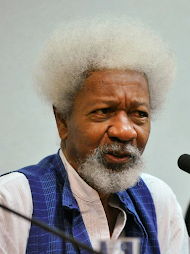
A Dance of the Forest- Wole Soyinka

Hello! This blog is a response to a task assigned by Yesha Bhatt ma’am. This blog deals with Wole Soyinka’s play A Dance of the Forest, we are assigned a few questions, and among them, this blog will talk about the 3. Narrative technique of the play - A Dance of the Forests.

A DANCE OF THE FOREST
WOLE SOYINKA

About Writer:
Wole Soyinka is a Nigerian playwright, poet, and Nobel Prize winner in Literature. Born on July 13, 1934, in Abeokuta, Nigeria, Soyinka is considered one of Africa's most influential cultural figures. He has written over 20 plays, including "Death and the King's Horseman," "The Lion and the Jewel," and "A Dance of the Forests," as well as several books of poetry, essays, and memoirs. He was imprisoned for 22 months during Nigeria's military dictatorship, which inspired some of his works. In 1986, Soyinka became the first African to receive the Nobel Prize in Literature, recognizing his work as a "fierce critic of colonialism and champion of the freedoms of the individual."


Wole Soyinka has used his works to address political and social issues in Nigeria, such as corruption, human rights, and the struggle for democracy. He is also a human rights activist and has been involved in various political and cultural organizations. He is a strong advocate for freedom of expression and has spoken out against censorship and repression of artists. Soyinka has received numerous awards and honors for his contributions to literature and activism and is considered a role model for artists and intellectuals in Africa and around the world. He continues to write and speak out on important issues, using his voice and platform to promote peace, justice, and human dignity.

About Play:
"A Dance of the Forests" is a play written by Wole Soyinka, first performed in 1960. It is a satirical work that critiques the cultural and political conditions of post-independence Nigeria. The play explores the theme of tradition versus modernity and the impact of colonialism on African societies. The central plot revolves around the preparations for an independence day celebration, which includes a dance competition in the forest. The play uses various characters, including ancestral spirits, to comment on the cultural changes that have taken place since colonialism and to question the wisdom of blindly embracing Western values. Through humor and allegory, "A Dance of the Forests" challenges the audience to consider the future of African cultures and the importance of preserving tradition. The play remains one of Soyinka's most well-known works and is widely regarded as a classic of modern African theater.


It is considered one of Soyinka's most complex and multi-layered works, incorporating elements of Yoruba mythology, African folklore, and contemporary political satire. The play's themes are timeless and relevant to the contemporary world, including the tension between tradition and modernization, the dangers of political corruption, and the importance of preserving cultural heritage. It has been widely performed in Africa and around the world and has been interpreted in many different ways by different directors and audiences. In addition to its artistic and cultural significance, "A Dance of the Forests" is also notable for its innovative use of language and form. Soyinka's use of Yoruba myths, oral storytelling traditions, and musical elements creates a rich and dynamic theatrical experience that engages the audience on multiple levels. The play remains a powerful and thought-provoking work of theater that continues to inspire new generations of artists and audiences.

This video is a group task assigned by Yesha madam. This video deals with the part III of the play


Narrative Technique:
Narrative technique refers to the various methods and devices that an author uses to construct a story and convey its themes and meanings to the reader. It encompasses elements such as point of view, voice, tone, characterization, dialogue, imagery, and structure. The effective narrative technique helps to create a compelling and memorable reading experience and can be used to achieve a wide range of effects, from psychological depth to suspense and humor.


For example, the use of a first-person point of view can create an intimate relationship between the reader and the protagonist, as seen in novels such as "The Catcher in the Rye" by J.D. Salinger. The third-person omniscient point of view, on the other hand, allows the author to delve into the thoughts and emotions of multiple characters, as in Jane Austen's "Pride and Prejudice."

The use of imagery can also be a powerful tool in narrative technique, helping to bring a story to life and create vivid, memorable scenes in the reader's mind. For example, Gabriel Garcia Marquez uses rich, imaginative imagery in his works to convey a dreamlike quality, as in the opening lines of "One Hundred Years of Solitude": "Many years later, as he faced the firing squad, Colonel Aureliano Buendía was to remember that distant afternoon when his father took him to discover ice." Another important aspect of the narrative technique is structure, which can help to shape the meaning and impact of a story. The use of flashbacks, for instance, can add depth and complexity to a narrative, as seen in William Faulkner's "The Sound and the Fury." Similarly, non-linear structures can.


Narrative technique of the play - A Dance of the Forests
"A Dance of the Forests" by Wole Soyinka is an intricate and multi-layered play that employs a range of narrative techniques to convey its themes and meanings. Some of the key narrative techniques used in the play include

Mythology: Soyinka incorporates elements of Yoruba mythology into the play, using traditional myths and legends to comment on contemporary issues. For example, the figure of Esu, the trickster deity, is used to satirize political corruption and the abuse of power.
Ritual: The play is structured around a series of rituals and ceremonies, including a forest dance and a celebration of new beginnings. These rituals serve as a backdrop for the play's themes and offer a lens through which to view the characters and their actions.
Music and Song: The play is heavily infused with musical elements, including songs and choral chanting, which help to create a rich and immersive atmosphere. The music serves as a commentary on the action, and also helps to establish the cultural context of the play.
Satire: The play is a sharp and witty critique of contemporary society, using humor and irony to highlight the absurdity of political corruption and the dangers of neglecting cultural heritage. The characters and their actions are often used to satirize real-life figures and events.
Imagery: Soyinka makes use of vivid and evocative imagery throughout the play, creating memorable and atmospheric scenes that help to bring the story to life. For example, the forest is depicted as a place of mystery and magic and is used to symbolize the hidden aspects of reality that are often overlooked.

"A Dance of the Forests" is a play that showcases Soyinka's mastery of narrative technique. By combining elements of mythology, ritual, music, satire, and imagery, he creates a rich and multi-layered theatrical experience that engages the audience on multiple levels. The play remains a powerful and thought-provoking work that continues to inspire new generations of artists and audiences.

Conclusion:
"A Dance of the Forests" by Wole Soyinka is a multi-layered play that uses a range of narrative techniques to deliver its themes. It incorporates elements of Yoruba mythology, ritual, music and song, satire, and vivid imagery to create a rich and immersive theatrical experience. The play uses humor and irony to criticize contemporary society and the dangers of neglecting cultural heritage. Soyinka's mastery of narrative technique is evident in this powerful and thought-provoking play that continues to inspire new generations of artists and audiences.


I hope this blog is useful. Thanks for visiting.

[words: 1207
Images:4
videos:2]

Thursday, 12 January 2023

Class Presentation/ Learning Outcome - Gun Island by Amitav Ghosh

GUN ISLAND
Amitav Ghosh

As a group assignment for a classroom presentation, we (Emisha Ravani, Divya Parmar, Himanshi Parmar, Dhruvita Dhameliya, and myself) discussed Gun Island (2019), a book by Amitav Ghosh. The novel is a modern retelling of a Bengali myth about Manasa Devi and The Gun Merchant that focuses mostly on mass migration and climate change. I finished reading the entire thing, and it was a very fantastic experience. This presentation deals with Amitav Ghosh's Cli-fi novel Gun Island. It was a group presentation presented in M.A. sem 4 in the Department of English, MKBU. It deals with crucial facts, about the text and author, characters, plot overview, themes, and Articles related to the novel.


Here is our video recording


Here is our presentation 


Here are a few lines from the novel that I found to be insightful and provided me a deeper understanding of life (learning outcome from the novel).

‘Don’t set yourself up to fail, yet again.’
‘Do you think that people elsewhere don’t believe in such things?’
‘People think that knowing the future can help you prepare for what is to come – but often it only makes you powerless’
‘It’s always a mistake, to do the easy thing, just out of habit.’
‘Impossible is nothing’ – ‘Just do it!’
‘Time itself is in ecstasy.’


I hope this is useful. Thank you.

Sunday, 25 December 2022

Shifting Centers and Emerging Margins: Translation and the shaping of Modernist Poetic Discourse in Indian Poetry. E.V. Ramakrishnan

This blog is a response to a task assigned by Dr. Dilip Barad Sir. The syllabus of the Department of English, MKBU includes paper no.- 208 Comparative Literature and Translation studies which include around 9 articles. We (students) are assigned a task of classroom presentation of assigned articles in a pair. In this blog, we are supposed to write abstracts, key points/arguments, and concluding remarks on all two articles of Unit 4 of the paper Comparative Literatures and Translation Studies. It also includes the recording of class presentations presented by respective students. Blogger and her partner have made a presentation on the third article, presentation and a video of a particular article is embedded (as per the task).


ARTICLE 2
Shifting Centers and Emerging Margins: Translation and the Shaping of Modernist Poetic Discourse in Indian Poetry.
E.V. Ramakrishnan

This chapter examines the role played by translation in shaping a modernist poetic sensibility in some of the major literary traditions of India in the twentieth century, between 1950 and 1970. The chapter will study examples from Bengali, Malayalam, and Marathi, to understand how such translations of modern Western poets were used to breach the hegemony of prevailing literary sensibilities and poetic modes. Translations during the early phase of modernism in major Indian languages appeared in little magazines that played a critical role in opening up the poetic discourse. Apart from providing alternative models of thinking and imagining the world, these translations also legitimized experimental writing styles that became a defining feature of modernist Indian poetry. Translation enacted a critical act of evaluation, a creative act of intervention, and a performative act of legitimation, in evolving a new poetic style during the modernist phase of Indian poetry. Modernist writers were responding to the internal dynamics of their own traditions by selectively assimilating an alien poetic that could be regressive or subversive depending on the context and the content.

It may be broadly stated that 'modernity' designates an epochal period of wide-ranging transformations brought about by the advent of colonialism, capitalist economy, industrial mode of production, Western models of education, assimilation of rationalist temper, the resurgence of nationalist spirit and the emergence of social, political, legal, juridical and educational institutions that constituted a normative subjectivity embodied with cosmopolitan and individualist world views. The modernist revolt in India was a response to the disruptions brought about by colonial modernity. As Dilip Chitre observes, 'what took nearly a century and a half to happen in England, happened within a hurried half century' in Indian literature. Modernist sensibility, as it appeared in Indian languages, was essentially oppositional in content. It countered the prevailing ideology of nationalism. Experimental writings of the modernist period range from the anarchist/avant-garde to the formalist/conventional.

While the modernism that emerged in Indian literature shared many of these defining features, it's political affiliations and ideological orientations were markedly different. Due to its postcolonial location, Indian modernism did not share the imperial or metropolitan aspirations of its European counterpart. The emerging problem will have to contend with issues of ideological differences between Western modernism and Indian one, the different trajectories they traversed as a result of the difference in socio-political terrains, and the dynamics of the relations between the past and the present in the subcontinent.

In the context of Bengali, as Amiya Dev has observed, 'It was not because they imbibed modernism that the adhunik [modernist] Bengali writers turned away from Rabindranath. The presence of a father figure, like that of Tagore in Bengali, is a fact that is not relevant to the development of Kannada or Malayalam modernism.

Translation enables us to delineate the complex artistic and ideological undercurrents that shaped the course of modernism in Indian literature. The translation is central to the modernist poetic as it unfolded in these literary traditions. Each of these three authors was bilingual and wrote essays in English as well as their own languages, outlining their new poetry, thus preparing the reader for new poetic modes. Their profound understanding of Western philosophy and artistic/literary traditions equipped these three writers with the critical capacity to see the significance and limitations of the West. All of them wrote critical studies validating the emergence of new poetry.

Sudhindranath Dutta believes that 'only the poetic mind, whatever its norm, can intuit associations where reason faces a void. Dutta was a formalist committed to a hermetic aesthetic. He constantly invokes the progressive role of the writer in society and underlines the role played by the masses in the creation of a literary tradition. the complex contradictions that beset Indian modernists: their pursuit of cosmopolitan and universal values could not be at the cost of a complete disjunction from tradition. As a modernist poem, "The Camel-Bird' moves beyond the personal by embodying the condition of inertia that a colonized community is condemned to.

B. S. Mardhekar transformed Marathi poetry and its direction and dynamics in terms of its vision, form, and content. Mardhekar intervened in Marathi literary tradition as an insider who had mastered the insights given by an alien tradition. He had to invent a language to articulate this fragmentation. The existential angst, psychological disorientation, and political disillusionment he experienced in the urban turbulence of Bombay may have superficial parallels with what the metropolitan modernists underwent in the West, but Mardhekar's case was more complex. In Mardhekar, both irony and self-reflexivity are ways of constituting a new reader by freeing him or her from his or her habits of viewing the world. Mardhekar points to their blind search for survival in a hostile world. The surreal image in the line, 'sadness has poisonous eyes made of glass', sums up the opaqueness of their vision and the toxic nature of their condemned existence unrelieved by any sense of benign order of life. The human and the mechanical/artificial intermingle in the subsequent lines suggesting a loss of the human in the urban landscape.

Ayyappa Paniker also began as a Romantic but transformed himself into a modernist with a long poetic sequence titled Kurukshetram published in 1960. Paniker argued that a writer has to integrate his or her personal and public selves into an emotional apprehension of the totality of relative truths about the world bound by time and space. In a seminal essay on modern Malayalam poetry, he argued that the ideology of the poet is embodied in the syntactic structure of the poem. The Romantic poets had made a shift from Sanskritic traditions to folk meters, which was a movement towards open forms. The experimental poetry of the modernists, on the other hand, opened up poetic forms further, by using imagist, a suggestive free verse that affirmed that each poem has its authentic form which cannot be approximated to a meter that functions independently of content. The image of the apocalypse, which animates the poem from the beginning, seems to be held at bay at the end through this desire to redeem oneself through imagination.

It is important to understand the indigenous roots/routes of modernity and modernism in all three writers discussed above. they had access to the intellectual resources of alternative traditions of modernity that were bred in the native context. They translate' modernity/ modernism through the optics of postcolonial 'modernity'. The act of translation answers something deep within their ambivalent existence, as it embodies their complex relationship with a fragmented society. Translation allows them to be 'within' their speech community and 'without' it, at the same time. Their bilingual sensibility demanded a mode of expression that could transition between native and alien traditions. The modernist subject was fragmented and fractured in the Indian context, but not for reasons that constituted fragmented selves in the Western context. Translation enabled the displaced self of modernity to locate itself in a language that was intimately private and, also, outspokenly public. The idiom of their expression afforded the possibility of self-knowledge through epiphanies that brought 'momentary stay against confusion' The self-reflexive mo(ve)ment was also made possible by the carrying across of not content or form, but an interior mode of being that questioned the prevailing limits of freedom.

Video recording of this article's presentation, presented by my classmates Khushbu Makwana and Nehal Gohil.

Presentation of the article by Khushbu Makwana and Nehal Gohil.


It is common to find it challenging to read original articles and summarize them. As a result, I have simplified this article through my understanding and with the help of ChatGPT. Simplifying articles is helpful in achieving a better and clearer understanding of the concept, which will make reading the original article easier. The main aim is to help students or readers understand the concept so that they can read the original article with ease. CLICK HERE FOR A LAYMANISED ARTICLE.

I hope this blog is useful.
[words- 1200]

Saturday, 24 December 2022

SITING TRANSLATION- Tejaswini Niranjana

This blog is a response to a task assigned by Dr. Dilip Barad Sir. The syllabus of the Department of English, MKBU includes paper no.- 208 Comparative Literature and Translation studies which includes around 9 articles. We (students) are assigned a task of classroom presentation of assigned articles in a pair. In this blog we are supposed to write abstract, key points / arguments and concluding remarks on all two articles of Unit 4 of paper Comparative Literatures and Translation Studies. It also includes the recording of class presentations presented by respective students. Blogger and her partner have made a presentation on the third article, presentation and a video of a particular article is embedded (as per the task).

ARTICLE 1
SITING TRANSLATION
History, Post- Structuralism and The Colonial Content
Tejaswini Niranjana

This article is an Introduction chapter of Tejaswanini’s book Siting Translation. It is divided into three parts:
  1. Situating Translation
  2. Translation as Interpellation
  3. The Question of “History”
SITUATING TRANSLATION
In a post-colonial context the problematic of translation becomes a significant site for raising questions of representation, power, and historicity, the asymmetry and inequality of relations between peoples, races, languages. Conventionally, translation depends on the Western philosophical notions of reality, representation, and knowledge. Reality is seen as something unproblematic, "out there"; knowledge involves a representation of this reality; and representation provides direct, unmediated access to a transparent reality.

Jacques Derrida suggests-
They come out of and circulate through various discourses in several registers, providing a "conceptual network in which philosophy itself has been constituted." In forming a certain kind of subject, in presenting particular versions of the colonized, translation brings into being overarching concepts of reality and representation.

Translation functions as a transparent presentation of something that already exists, although the "original" is actually brought into being through translation. Paradoxically, translation also provides a place in "history" for the colonized. Tejaswini’s concern here is to explore the place of translation in contemporary Euro-American literary theory through a set of interrelated readings. She argues that the deployment of "translation" in the colonial and post-colonial contexts shows us a way of questioning some of the theoretical emphases of post-structuralism. the larger context of the “crisis" in "English'' that is a consequence of the impact of structuralism and post-structuralism on literary studies in a rapidly decolonizing world.

Tejaswini proposes to make a modest beginning by examining the “uses” of translation. The rethinking of translation becomes an important task in a context where it has been used since the European Enlightenment to underwrite practices of subjectification, especially for colonized peoples.

In my writing, translation refers to
(a) the problematic of translation that authorizes and is authorized by certain classical notions of representation and reality; and
(b) the problematic opened up by the post-structuralist critique of the earlier one, and that makes translation always the "more," or the supplement, in Derrida's sense.

This study of translation explores the positioning of the obsessions and desires of translation, and describes the economies within which the sign of translation circulates . The concern is to probe the absence, lack, or repression of an awareness of asymmetry and historicity in several kinds of writing on translation. A representation thus does not represent an "original"; rather, it re-presents that which is always already represented.

Aspect of post-structuralism is a rethinking of translation is its critique of historicism, which shows the genetic and teleological nature of traditional historiography. The essay questions the withholding of reciprocity and the essentializing of “difference”.


TRANSLATION AS INTERPELLATION
In the projects of William jones- who arrived in India in 1783 to take his place on the bench of the Supreme Court in Calcutta- that translation would serve “to domestic the Orient and thereby turn it into a province of European Learning.” He came to India, declared that his ambition was "to know India better than any other European ever knew it.” The main concern in examining the texts of Jones is not necessarily to compare his translation of Sakuntala or Manu's Dharmasastra with the so-called originals. Rather, what Tejaswini proposes to do is to examine the "outwork" of Jones's translations.

The most significant nodes of Jones's work are
The need for translation by the Europeans, since the natives are unreliable interpreters of their own laws and culture.
The desire to ba lawgiver, to give the Indians their “own” laws; and
The desire to “purify” Indian culture and speak on its behalf.

In Jones's construction of the "Hindus," they appear as a submissive, indolent nation unable to appreciate the fruits of freedom, desirous of being ruled by an absolute power, and sunk deeply in the mythology of an ancient religion. In a letter, he points out that the Hindus are "incapable of civil liberty," for "few of them have an idea of it, and those, who have, do not wish it".

As a Supreme Court judge in India, Jones took on, as one of his most important projects, the task of translating the ancient text of Hindu law, Manu's Dharmasastra. In fact, he began to learn Sanskrit primarily so that he could verify the interpretations of Hindu law given by his pandits. In a letter, he wrote of the difficulty of checking and controlling native interpreters of several codes, saying: "Pure Integrity is hardly to be found among the Pandits [Hindu learned men] and

Maulavis [Muslim learned men], few of whom give opinions without a culpable bias". Even before coming to India, Jones had formulated a solution for the problem of the translation of Indian law. Writing to Lord Cornwallis in 1788, he mentions once again the deceiving native lawyers and the unreliability of their opinions. This obvious remedy is the substitution of British translators for Indian ones.

Apart from the fact that giving the Indians their own laws would lead in Jones's logic to greater efficiency and therefore to greater profit for England, there is perhaps also another reason for employing Indian law. This kind of deployment of translation, colludes with or enables the construction of a teleological and hierarchical model of cultures that places Europe at the pinnacle of civilization, and thus also provides a position, for the colonized.

Two main kinds of translators of Indian literature existed in the late eighteenth and early nineteenth centuries: administrators like William Jones and Christian missionaries like the Serampore Baptists William Carey and William Ward. The latter were among the first to translate Indian religious texts into European languages. Often these were works they had themselves textualized, by preparing "standard versions" based on classical Western notions of unity and coherence. Their only salvation, the missionaries would then claim, lay in conversion to the more evolved religion of the West.

Grant contended that only education in English would free the minds of the Hindus from their priests' tyranny and allow them to develop individual consciences. The function of anglicized education was "to form a class who may be interpreters between us and the millions whom we govern; a class of persons, Indian in blood and color, but English in taste, in opinions, in morals, and in intellect." Macaulay's brother-in-law, Charles Trevelyan, wrote about how the influence of the indigenous elite would secure the "permanence" of the change wrought by Western education: "Our subjects have set out on a new career of improvement: they are about to have a new character imprinted on them."

As Gauri Viswanathan has pointed out, the introduction of English education can be seen as "an embattled response to historical and political pressures: to tensions between the English Parliament and the East India Company, between Parliament and the missionaries, between the East India Company and the native elite classes.

Translation is overdetermined, so is the "subject" under colonialism, overdetermined in the sense that it is produced by multiple discourses on multiple sites, and gives rise to a multiplicity of practices. European missionaries were the first to prepare Western-style dictionaries for most of the Indian languages, participating thereby in the enormous project of collection and codification on which colonial power was based.


THE QUESTION OF “HISTORY”
Foucault declares, "effective history affirms knowledge as perspective"; it may be seen as a radical kind of "presentism," which we may be able to work from. Louis Althusser's critique of historicism, which leads him, in Jameson's words, to formulate the notion that "history is a process without a telos or a subject," "a repudiation of ... master narratives and their twin categories of narrative closure and of character.

Derrida is claiming that there is no primordial "presence" that is then re-presented. The "re-" does not befall the original. "History," in the texts of post-structuralism, is a repressive force that obliterates differences in a chain that includes meaning, truth, presence, and logos. He has indicated more than once that translation perhaps escapes "the orbit of representation" and is therefore an "exemplary question." If representation stands for the appropriation of presence, translation emerges as the sign for what Derrida would call “dissemination”.

Since it is part of my argument that the problematics of translation and the writing of history are inextricably bound together. Derrida's double writing can help us challenge the practices of "subjectification" and domination evident in colonial histories and translations. Hybridity can be seen, therefore, as the sign of a post-colonial theory that subverts essentialist models of reading while it points toward a new practice of translation.

Video recording of this article's presentation, presented by my classmates Bhavna Sosa, Dhvani Rajyaguru and Hina Sarvaiya

Presentation of the article by Bhavna Sosa, Dhvani Rajyaguru and Hina Sarvaiya


I hope this blog is useful.
[words- 1440]

Friday, 16 December 2022

On Translating a Tamil Poem -A.K. Ramanujan

This blog is a response to a task assigned by Dr. Dilip Barad Sir. The syllabus of the Department of English, MKBU includes paper no.- 208 Comparative Literature and Translation studies which includes around 9 articles. We (students) are assigned a task of classroom presentation of assigned articles in a pair. In this blog we are supposed to write abstract, key points / arguments and concluding remarks on all two articles of Unit 3 of paper Comparative Literatures and Translation Studies. It also includes the recording of class presentations presented by respective students. Blogger and her partner have made a presentation on the third article, presentation and a video of a particular article is embedded (as per the task).


ARTICLE 2
On Translating a Tamil Poem
-A.K. Ramanujan
(From collected essays of A.K Ramanujan ed. Vijay Dharwadkar)

The article is divided into three parts and its trajectory moves from the history of Tamil Literature to its attempts of translation, problems of translation and also gives solutions for it.

Part I
Ramanujan begins his article with a question: How does one translate a poem from another time, another culture, another language? Over two thousand Tamil poems of different lengths, by over four hundred poets, arranged in nine anthologies, have survived through politics, wars, poverty, nature and all dangers. The subject of this paper is translation, the transport of poems from classical Tamil to modem English.
The chief difficulty of translation is its impossibility. Frost once even identified poetry as that which is lost in translation. Once we accept that as a premise of this art, we can proceed to practice it, or learn.

Ramanujan questions: How shall we divide up and translate this poem? What are the units of Translation?

He begins with sound. The sound system of Tamil is very different from English.
E.g.: Old Tamil has 6 nasal Consonants while English has 3.
Tamils have long and short vowels while English has diphthongs and glides. Etc
It is impossible to translate the phonology of one language into another even if it is a culturally related language. If we try and even partially succeed in mimicking the sounds we may lose everything else, the syntax, meanings, and the poem itself.

Further he talks about metre, as metre is a second-order organization of the sound system of a language. Tamil metre depends on the presence of long vowels and double consonants, and on closed and open syllables defined by such vowels and consonants.
For instance, in The first word of the above poem, annay, the first syllable is heavy because it is closed (an-), the second is heavy because it has a long vowel (-nay). English has a long tradition of end-rhymes-but Tamil has a long tradition of second syllable consonant-rhymes.

Looking at the Grammar briefly, Tamil has no copula verbs for equational sentences in the present tense, as in English, e.g., 'Tom is a teacher'; no degrees of adjectives as in English, e.g., 'sweet, sweeter, sweetest’;
no articles like 'a, an, the': and So on.
Tamil expresses the semantic equivalents of these grammatical devices by various other means. The lies and ambiguities of one language are not those of another.

No translation can be 'literal,' or 'word for word'. That is where the impossibility lies. The only possible translation is a 'free' one.

Remarkably, Tamil syntax is mostly left- branching. English syntax is, by and large, rightward. Even a date like 'the 19th of June, 1988,' when translated into Tamil, would look like '1988, June, 19.' The Tamil sentence is the mirror image of the English one and will also be true for English Languages. Postpositions instead of prepositions, adjectival clauses before nominal phrases, verbs at the end rather than in the middle of sentences.

What is everyday in one language must be translated by what is everyday in the 'target' language also, and what is eccentric must find equally eccentric equivalents. If Poetry is made out of, among other things, 'the best words in the best order', and the best orders of the two languages are the mirror images of each other, what is a translator to do?

The most obvious parts of language cited frequently for their utter untranslatability are the lexicon and the semantics of words. For lexicon are culture-specific. Terms for fauna, flora, caste distinctions, kinship systems, body parts, even the words that denote numbers, are culturally Loaded. Even when the elements of a system may be similar in two languages, like father. mother, brother, mother-in-law, etc. In kinship, the system of relations and the feelings traditionally encouraged other each relative are culturally sensitive and therefore part of the expressive repertoire of poets and novelists.

Add to this the entire poetic tradition, its rhetoric. the ordering of different[ genres with different Functions in the culture, which by its system of differences, distinguishes this particular poem.

The classical Tamil poetic tradition uses an entire taxonomy. A classification of reality, The five landscapes of the Tamil area, characterized by hills. seashores, agricultural areas, wastelands, and pastoral fields; each with its forms of life, both natural and cultural. trees, animals, tribes, customs. arts and instruments- all these become part of the symbolic code for the poetry. Every landscape, with all its contents, is associated with a mood or phase of love or war. The landscapes provide the signifiers. The five real landscapes of the Tamil country become, through this system, the interior landscapes of Tamil poetry. The five landscapes with all their contents signifying moods, and the themes and motifs of love and war.

Thus a language within a language becomes the second language of Tamil poetry. When one translates, one is translating not only Tamil, its phonology, grammar and semantics, but this entire intertextual web, this intricate yet lucid second language of landscapes which holds together natural forms with cultural ones in a code, a grammar, a rhetoric, and a poetics.


Part II
Ramanujan takes a closer look at the original of Kapilar's poem, Ainkurunuru 203, 'What She Said', and his translation, quoted earlier in this essay. The word annay (in spoken Tamil, ammo), literally 'mother', is a familiar term of address for any woman, here a 'girlfriend'. So he have translated it as 'friend', to make clear that the poem is not addressed to a mother (as some other poems are) but to a girl friend.

Note the long, crucial, left-branching phrase in Tamil: '. . . hisland's / [in- leaf-holes low /animals- having- drunk- / and]- leftover, muddied water’(in a piece-by-piece translation). In his English, it becomes 'the leftover water in his land, low in the water holes / covered with leaves and muddied by animals.' His phrase order in English tries to preserve the order and syntax of : themes, not of single words: (I) his land's waler, followed by (2) leaf– covered waterholes, and (3) muddied by animals.

The poem is a kurinci piece, about the lovers' first union, set in the hillside landscape. My title ('What she said to her girl friend, when she returned from the hills') summarizes the whole context (speaker, listener, occasion) from the old colophon that accompanies the poem. The progression is lost if we do not preserve the order of themes so naturally carried by the left-branching syntax of Tamil. More could be said about it from the point of view of the old commentaries.

The love poems get parodied, subverted and played with in comic poems about poems. In a few Centuries, both the love poems and the war poems provide models and motives for religious poems. God like Krsna the are both lovers and Warriors.


Thus any single poem is part of a set, a family of sets, a landscape, a genre. The intertextuality is concentric on a pattern of membership as well as neighborhoods of likenesses and unlikenesses. Somehow a translator has to translate each poem in ways that suggest these interest, dialogue and network.


Part III
If attempting a translation means attempting an impossibly intricate task, foredoomed to failure. what makes it possible at all'? At least four things-

1.Universals-
If there were no Universals in which languages participate and of which all particular languages were selections and combinations, no language learning, translation, comparative studies or cross-cultural understanding of even the most meager kind would be possible. if such universals did not exist we would have had to invent them

2.Interiorised contexts-
Poems interiorize the entire culture. Indeed we know the culture of the ancient Tamils only through a careful study of these poems. Later colophons and commentaries explore and explicate this knowledge carried by the poems setting them in context using them to make lexicons and charming the fauna and flora of landscape .

3. Systematicity-
Systematicity of such bodies of poetry, the way figures, genres, personae etc., intermesh in a master-code, is a great help in entering this intricate yet world of words. Even if one chooses not to translate all the poems, one chooses poems that cluster together, that illuminate one another so that allusions, contrasts and collective designs are suggested, of their world, re-presenting it. Here intertextuality is not the problem, but the solution .

4. Structural mimicry-
In translating poems the structures of individual poems, the unique figures they make out of all the given codes of their language, rhetoric and poetics, become the points of entry. The poetry and the significance reside in these figures and structures as much as in untranslatable verbal textures. So one attempts a structural mimicry, to translate relations, not items- not single words but phrases, sequences, sentences; not metrical units but rhythms; not morphology but syntactic patterns.

To translate is to 'metaphor', to 'carry across'. Translations are transpositions, re-enactments, interpretations. One can often convey a sense of the original rhythm, but not the language-bound metre: one can mimic levels of diction, but not the actual sound of the original words. Textures are harder to translate than structures, linear order more difficult than syntax, lines more difficult than larger patterns. Poetry is made at all these levels- and so is translation.

The translation must not only represent, but re-present, the original. loyalty. A translator is an 'artist on oath'. Sometimes one may succeed only in re-presenting a poem, not in closely representing it.

With the anecdote of Chinese emperor, Ramanujan say even if the representation in another language is not close enough, but still succeeds in 'carrying' the poem in some sense, we will have two poems instead of one.


Video recording of this article's presentation, presented by my classmates Himanshi Parmar and Nirav Amreliya

Presentation of the article by Himanshi Parmar and Nirav Amreliya


It is common to find it challenging to read original articles and summarize them. As a result, I have simplified this article through my understanding and with the help of ChatGPT. Simplifying articles is helpful in achieving a better and clearer understanding of the concept, which will make reading the original article easier. The main aim is to help students or readers understand the concept so that they can read the original article with ease. CLICK HERE FOR A LAYMANISED ARTICLE.

I hope this blog is useful.
[words- 1600]

Thursday, 15 December 2022

Translation and Literary History: An Indian View- Ganesh Devy

This blog is a response to a task assigned by Dr. Dilip Barad Sir. The syllabus of the Department of English, MKBU includes paper no.- 208 Comparative Literature and Translation studies which includes around 9 articles. We (students) are assigned a task of classroom presentation of assigned articles in a pair. In this blog we are supposed to write abstract, key points / arguments and concluding remarks on all two articles of Unit 3 of paper Comparative Literatures and Translation Studies. It also includes the recording of class presentations presented by respective students. Blogger and her partner have made a presentation on the third article, presentation and a video of a particular article is embedded (as per the task).

ARTICLE 1
“Translation and Literary History: An Indian View”
Ganesh Devy
[This article is taken from ‘Postcolonial Translation: Theory and Practice
(Ed. Susan Bassnett and Harish Trivedi)]


J. Hillis Miller says:
‘Translation is the wandering existence of a text in a perpetual exile,’.

In Western metaphysics translation is an exile, a fall from the origin; and the mythical exile is a metaphoric translation, a post-Babel crisis. Given this metaphysical precondition of Western aesthetics, it is not surprising that literary translations are not accorded the same status as original works. Western literary criticism provides for the guilt of translations for coming into being after the original; the temporal sequentially is held as a proof of diminution of literary authenticity of translations. The strong sense of individuality given to Western individuals through systematic philosophy and the logic of social history makes them view translation as an intrusion of ‘the other’ (sometimes pleasurable).
The philosophy of individualism and the metaphysics of guilt, however, render European literary historiography incapable of grasping the origins of literary traditions. One of the most revolutionary events in the history of English style has been the authorized translation of the Bible.

During the last two centuries the role of translation in communicating literary movements across linguistic borders has become very important. the tradition of Anglo-Irish literature – branched out of the practice of translating Irish works into English initiated by Macpherson towards the end of the eighteenth century.

Translations are popularly perceived as unoriginal, not much thought has been devoted to the aesthetics of translation. No critic has taken any well-defined position about the exact placement of translations in literary history. This ontological uncertainty which haunts translations has rendered translation study a haphazard activity which devotes too much energy discussing problems of conveying the original meaning in the altered structure.

Roman Jakobson in his essay on the linguistics of translation proposed a threefold classification of translations:
(a) those from one verbal order to another verbal order within the same language system,
(b) those from one language system to another language system, and
(c) those from a verbal order to another system of signs .

As he considers a complete semantic equivalence as the final objective of a translation act – which is not possible – he asserts that poetry is untranslatable.

Linguistic changes within a single language are predominantly of a semantic nature, the linguistic differences between two closely related languages are predominantly phonetic. Technically speaking, then, if synonymy within one language is a near impossibility, it is not so when we consider two related languages together.

Structural linguistics considers language as a system of signs, arbitrarily developed, that tries to cover the entire range of significance available to the culture of that language. The signs do not mean anything by or in themselves; they acquire significance by virtue of their relation to the entire system to which they belong. If translation is defined as some kind of communication of significance, and if we accept the structuralist principle that communication becomes possible because of the nature of signs and their entire system, it follows that translation is a merger of sign systems. Such a merger is possible because systems of signs are open and vulnerable. The translating consciousness exploits the potential openness of language systems; and as it shifts significance from a given verbal form to a corresponding but different verbal form it also brings closer the materially different sign systems. If we take a lead from phenomenology and conceptualize a whole community of ‘translating consciousness’ it should be possible to develop a theory of interlingual synonymy as well as a more perceptive literary historiography.

The concept of a ‘translating consciousness’ and communities of people possessing it are no mere notions. In most Third World countries, where a dominating colonial language has acquired a privileged place, such communities do exist. The use of two or more different languages in translation activity cannot be understood properly through studies of foreign-language acquisition. Owing to the structuralist unwillingness to acknowledge the existence of any non-systemic or extra- systemic core of significance, the concept of synonymy in the West has remained inadequate to explain translation activity. And in the absence of a linguistic theory based on a multilingual perspective or on translation practice, the translation thought in the West overstates the validity of the concept of synonymy.

J.C. Catford presents a comprehensive statement of theoretical formulation about the linguistics of translation in A Linguistic Theory of Translation, in which he seeks to isolate various linguistic levels of translation.

‘Translation is an operation performed on languages: 
a process of substituting a text in one language for 
a text in another; clearly, then, any theory of translation 
must draw upon a theory of language – a general linguistic theory’

During the nineteenth century, Europe had distributed various fields of humanistic knowledge into a threefold hierarchy: comparative studies for Europe, Orientalism for the Orient, and anthropology for the rest of the world. After the ‘discovery’ of Sanskrit by Sir William Jones, historical linguistics in Europe depended heavily on Orientalism. Translation can be seen as an attempt to bring a given language system in its entirety as close as possible to the areas of significance that it shares with another given language or languages. All translations operate within this shared area of significance. Such a notion may help us distinguish synonymy within one language and the shared significance between two related languages.

The translation problem is not just a linguistic problem. It is an aesthetic and ideological problem with an important bearing on the question of literary history. Literary translation is not just a replication of a text in another verbal system of signs. It is a replication of an ordered sub-system of signs within a given language in another corresponding ordered sub-system of signs within a related language. After the act of translation is over, the original work still remains in its original position. Translation is rather an attempted revitalization of the original in another verbal order and temporal space.

The problems in translation study are very much like those in literary history. They are the problems of the relationship between origins and sequentially. And as in translation study so in literary history, the problem of origin has not been tackled satisfactorily. The point that needs to be made is that probably the question of origins of literary traditions will have to be viewed differently by literary communities with ‘translating consciousness’.

In conclusion alluding to Indian metaphysics, Indian metaphysics believes in an unhindered migration of the soul from one body to another. Repeated birth is the very substance of all animated creations. When the soul passes from one body to another, it does not lose any of its essential significance. Elements of plot, stories, characters, can be used again and again by new generations of writers because Indian literary theory does not lay undue emphasis on originality. If originality were made a criterion of literary excellence, a majority of Indian classics would fail the test. The true test is the writer’s capacity to transform, to translate, to restate, to revitalize the original. And in that sense Indian literary traditions are essentially traditions of translation.


Video recording of this article's presentation, presented by my classmates Emisha Ravani and Nilay Rathod


Presentation of the article by Emisha Ravani and Nilay Rathod

It is common to find it challenging to read original articles and summarize them. As a result, I have simplified this article through my understanding and with the help of ChatGPT. Simplifying articles is helpful in achieving a better and clearer understanding of the concept, which will make reading the original article easier. The main aim is to help students or readers understand the concept so that they can read the original article with ease. CLICK HERE FOR A LAYMANISED ARTICLE.

-A.K. Ramanujan
(From collected essays of A.K Ramanujan ed. Vijay Dharwadkar)


I hope this blog is useful.
[words- 1167]

My Learnings from the National Workshop on Academic Writing (2026)

The National Workshop on Academic Writing  I recently had the opportunity to participate in the National Workshop on Academic Writing (2026)...