Showing posts with label the only story. Show all posts

Wednesday, 15 February 2023

The Only Story- Julian Barnes (Worksheet 3)

Hello! Welcome to my blog where I will be sharing my experience solving worksheets assigned by Dr. Dilip Barad. In this blog post, I will discuss the various worksheets that were assigned to us in class and how I used ChatGPT to solve them.

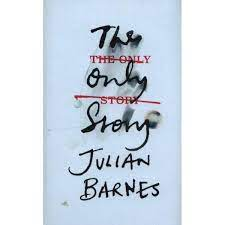
THE ONLY STORY
Julian Barnes

WORKSHEET 3

1. Analyze the context of the following quote: "Why do you cheat at crosswords?"

a. Who is the speaker and to whom is this question addressed? Paul to Joan

b. What is the response given by the recipient? (Using ChatGPT- by giving it a textual paragraph)
Paul asked Joan why she cheats at crosswords, to which Joan replied that she has come to the realization that nothing in life matters, including cheating in crosswords. She stated that she has already experienced a version of hell, so filling in incorrect answers in a crossword wouldn't make a difference. However, Paul pointed out that the answers are readily available in the back of the book.

c. Is the reference to "cheating at crosswords" repeated in the novel? Twice

d. What inferences can be drawn from this reference? (Using ChatGPT)
The reference to crosswords in Julian Barnes's "The Only Story" can be interpreted in a few different ways. It can be seen as a symbol of the character's state of mind and their approach to life. Joan's attitude towards crosswords reflects her belief that nothing in life matters, and that she has lost a sense of purpose or meaning. By cheating at crosswords, she may be expressing her disregard for rules and conventions.
At the same time, crosswords can also be seen as a form of escapism for Joan, a way to distract herself from the reality of her life and the emotions she is feeling.

In addition, the crossword puzzle serves as a reminder of the disconnect between the characters and the world around them. Joan and Paul are both agings, and as they reflect on their lives, they may be struggling to find a sense of purpose or fulfillment. The crossword can be seen as a symbol of the gap between the world they inhabit and the world they once imagined for themselves.

Ultimately, the reference to crosswords in "The Only Story" provides insight into the characters' emotional state and the themes of the novel, including aging, loss, and the search for meaning.

2. Investigate the symbolic significance of ‘crosswords’ in the novel "The Only Story." (Using ChatGPT)
In Julian Barnes' novel "The Only Story," crosswords play a symbolic role in the relationship between the protagonist, Paul, and his partner, Susan. Crosswords serve as a representation of the connection and communication between the two characters.

Throughout the novel, Paul and Susan bond over their shared love of solving crosswords together. This shared activity becomes a symbol of their intellectual and emotional connection, as well as a way for them to spend time together and communicate in a unique way.

However, as their relationship progresses, crosswords also become a symbol of their growing disconnection. As Paul and Susan face challenges in their relationship, they struggle to solve crosswords together, and their ability to communicate and understand each other is diminished.

In this way, crosswords serve as a metaphor for the ups and downs of a relationship, and how communication and understanding can strengthen or break a connection. The symbolic significance of crosswords in "The Only Story" highlights the importance of communication in relationships and the ways in which it can deepen or erode a bond.

Answer after referring-
  • The desire to make the chaos of the universe comprehensible through crosswords.
  • A means of avoiding questions about love, which is deemed important in life.
  • The belief that everything in life can be solved.
  • The belief is that solving something once gives assurance of maturity and wisdom.
  • The false confirmation of intelligence through the ludic activity of crosswords.
  • The hope is that crosswords can keep existential pain at bay.
  • The hope is that crosswords can distract from the boredom of life.
3. Analyze the following quote in the context of the novel: "The point of the story is 'safe and capable.'"

a. Identify the speaker and the person to whom the quote is addressed. Susan to Paul

b. Describe the significance of this quote within the context of the story. (Using ChatGPT- After giving textual reference)
The quote "The point of the story is 'safe and capable'" refers to the idea that Jack, the father of E.P., trusted and had faith in Susan to take care of his son after he was gone. This trust was based on the belief that Susan was safe and capable of handling the challenges that might come her way. Jack expressed this sentiment to Susan on his deathbed, just before he passed away, after being given enough morphine to put him to sleep.

In this context, the phrase "safe and capable" refers to the idea of being secure and competent, both emotionally and practically. Jack's words indicate that he saw Susan as being emotionally stable and capable of handling difficult situations, including the challenges of being with someone like Gordon (E.P.).

The phrase is meant to be a central theme in the story, emphasizing the importance of trust, faith, and confidence in relationships. It highlights the idea that when people believe in one another, they can overcome obstacles and be there for one another, even in times of need.

In conclusion, the phrase "The point of the story is 'safe and capable'" is a reminder of the power of trust and confidence in relationships, and it underscores the idea that love and connection can be a source of strength and resilience, even in the face of adversity.

Self-written
Safe and capable- the idea of being secure and competent both emotionally stable and capable of handling difficult situations. The idea is that when people believe in one another, they can overcome obstacles and be there for one another, even in times of need.

Correct answer
This line conveys that Susan will never leave Gordon Macleod, as Jack has described her as a safe and capable partner for him, highlighting the positive aspects of Susan's character. However, we may also infer that Susan's commitment to Gordon reflects her desire to avoid potential conflicts and challenges that might arise in a less stable relationship, suggesting a tendency towards escapism.

Evaluate the use of the phrase "moviemaker's bromide" in the novel "The Only Story."
a. How many times is the phrase used in the novel? twice

b. What is the situation when this phrase appears in the novel?
Paul has visited the mental health department of a local hospital. This phrase appears when Pau is reflecting on his emotions when is met Susan the last time before she died and wonders if he should kiss Susan goodbye or uncover her elegant ears covered with ears.

c. What does it signify within the context of the story? (Using ChatGPT- after giving textual reference)

The passage describes a man who is visiting a woman, Susan, who is in a hospital bed. The man is feeling conflicted and uncertain about what he should do and how he should react to her current state. He reaches out to touch her hair but then pulls back his hand, unsure of his motivations. He reflects on his feelings towards death, redemption, and closure, and concludes that he does not believe in the comforting narratives that some people find necessary.

The man also wonders if he should kiss Susan goodbye, but he recognizes that this would be a cliche borrowed from a movie. He imagines a scene in which Susan stirs slightly in response to his kiss and offers a faint smile. However, he knows that in reality, this is not likely to happen and he is left with the reality of her current condition. The man's inner thoughts highlight his struggles with sentimentality and the temptation to romanticize the situation, which he resists as he sees it as artificial and unrealistic.

In conclusion, the passage portrays the man's struggle with his emotions as he grapples with the reality of the situation and the expectations placed on him. Through his reflections on death, redemption, and closure, the author highlights the theme of the limitations of language and the difficulties in finding comfort in difficult moments.

I hope it's useful. Thanks for visiting. 

The Only Story- Julian Barnes (Worksheet 2)

Hello! Welcome to my blog where I will be sharing my experience solving worksheets assigned by Dr. Dilip Barad. In this blog post, I will discuss the various worksheets that were assigned to us in class and how I used ChatGPT to solve them.

THE ONLY STORY
Julian Barnes


WORKSHEET 2

Explain the quotation from Julain Barnes’s novel ‘The Only Story. (Using ChatGPT)

“Would you rather love the more, and suffer the more; or 
love the less, and suffer the less? That is, I think, finally, 
the only real question. You may point out – correctly – 
that it isn’t a real question. Because we don’t have a 
choice. If we had the choice, then there would be a 
question. But we don’t, so there isn’t. Who can control
how much they love? If you can control it, then it isn’t 
love. I don’t know what you call it instead, but it isn’t love.”

The quotation from Julian Barnes's novel The Only Story is a reflection on the nature of love and the unavoidable connection between love and suffering. The speaker presents a supposed choice between two alternatives: either loving deeply and experiencing intense suffering or loving less and experiencing less suffering. This framing of the situation is meant to suggest that there is a trade-off between the intensity of love and the amount of suffering one experiences.

However, the speaker then goes on to argue that this supposed choice is not a real one. The reason for this is that one cannot control the amount of love they feel, and therefore the amount of suffering they will experience as a result. If love could be controlled or regulated, then it wouldn't truly be love at all. The speaker notes that there may be a different word to describe a controlled or regulated emotion, but it wouldn't be love.

In this way, the speaker is making the point that love is a complex and often unpredictable force, one that cannot be controlled or regulated. The connection between love and suffering is a fundamental aspect of the experience of love, and it is an inescapable part of the human condition. The speaker is suggesting that, ultimately, the only real question is not whether to love more or less but to simply accept the inevitable connection between love and suffering and embrace it for what it is.

Who is Uncle Humphrey? How / why is this minor character significant in the novel? (Using ChatGPT)
Uncle Humphrey is a minor character in Julian Barnes's novel The Only Story. From the passage you provided, it can be inferred that Uncle Humphrey is a relative of the narrator, who is depicted as abusive and sexually assaulting the narrator during her childhood. The significance of Uncle Humphrey in the novel is that he serves as a representation of the harm and trauma that can be inflicted by those in positions of power and trust.

Through the portrayal of Uncle Humphrey's actions, the novel highlights the devastating impact of sexual abuse and its long-lasting effects on the victim. The speaker's wish that she had bitten his tongue off is a powerful expression of the anger and frustration she feels as a result of the abuse. Uncle Humphrey's actions are depicted as reprehensible and are symbolic of the wider societal issues surrounding sexual violence and abuse.

In this sense, Uncle Humphrey serves as a reminder of the devastating impact that abusive individuals can have on the lives of their victims. Through the character of Uncle Humphrey, the novel highlights the importance of acknowledging and addressing the harm caused by those in positions of power and the need for greater accountability and justice for victims of abuse.

While applying Gerard Genet’s tool of ‘Duration’ in narratology, how can we explain the narrative time and discourse time in Julian Barnes’s ‘The Only Story’? (Using ChatGPT)
In narratology, Gerard Genette's tool of 'Duration' is used to explain the relationship between narrative time and discourse time. In Julian Barnes's novel "The Only Story," the narrative time refers to the time elapsed in the story world, while the discourse time refers to the time it takes for the events of the story to be related to the reader.

For example, in "The Only Story," the narrative time covers several decades, but the discourse time may be compressed to a single moment in which the protagonist recounts the events to the reader. This compression of discourse time can create a sense of immediacy and can affect the reader's experience of the story.

In summary, the concept of Duration in narratology helps to analyze the relationship between the time in which the events of a story occur (narrative time) and the time it takes to narrate those events (discourse time) in Julian Barnes's "The Only Story."

Answer: Discourse time 19/ 20 years of age to 69/ 70 years of age
Narrative time is not specified

Write a brief note on the narrative pattern with its thematic & postmodernist significance.

(Using ChatGPT)
The narrative pattern of "The Only Story" by Julian Barnes is non-linear, with the narrator reflecting on his past experiences from old age. The book explores themes of love, loss, the passage of time, and the limitations of memory. The thematic significance of the book is the portrayal of a universal human experience of the fragility of youth, love, and the inevitability of aging and death.

From a postmodernist perspective, the non-linear structure of the narrative challenges the conventional notions of chronology and linearity. The fragmented and fragmented narrative style emphasizes the unreliability of memory, and the subjectivity of the narrator's perspective, emphasizing the idea that all narratives are subjective constructs. The themes of love and loss are explored from a postmodernist perspective that questions the stability and reliability of human emotions, and the idea that truth is often elusive and subjective.

In "The Only Story" by Julian Barnes, the narrative time follows Gerard Genette's concept of "analepsis" or flashbacks, as the narrator reflects on his past experiences and memories. The story moves back and forth in time, switching between the narrator's present and past experiences, providing insights into the events that shaped his life. This technique adds depth to the narrative and creates a sense of nostalgia and regret. Overall, the narrative time in "The Only Story" exemplifies Genette's idea of a complex, layered structure that interweaves the past and present to create a rich, multi-faceted tale.

Self-written

Sr. No

Significant Point in Narrative Pattern

Thematic & Postmodernist Significance

1

Along classical line

Use of the classical definition of the novel from Johnson’s definition; small and of love; address to the reader. 

2

Retrospective

Woven into wrap and weft; story women in the weft

3

Unreliable narrator

Conversational side; doubt in habit of writing a diary; incomplete stories e.g.: the case of eric. 

4

Drifting narration

Change in point of view/ narration; drifting away from love; shattering self-reliance. 


Is Julian Barnes’s ‘The Only Story’ more on suffering than on love? Explain with the help of the Greek etymological meaning of ‘passion’ which means ‘suffering’.
(Using ChatGPT)
"The Only Story" by Julian Barnes is a novel that explores the themes of love and suffering, but it could be argued that suffering is more prominent in the narrative. The Greek word "pathos" (πάθος), from which "passion" is derived, does indeed mean suffering. This is because the ancient Greeks believed that strong emotions, especially those associated with love, could lead to great suffering.

In "The Only Story," the narrator Paul reflects on his life and his love affair with an older woman, Susan, who is also married. The relationship is tumultuous and filled with difficulties, including societal disapproval, Susan's health problems, and the eventual breakdown of their love. Throughout the novel, Paul grapples with the pain and heartache of their relationship, which can be seen as a representation of the suffering that often accompanies passionate love.

However, it is important to note that the novel also explores the positive aspects of love, such as happiness and connection, and the idea that even though love can cause suffering, it is still worth pursuing. Ultimately, "The Only Story" presents a nuanced and complex view of love and suffering, and the relationship between the two.

Self-written
Patior (Latin etymology)= passion. Passionate attraction towards Susan Macleod turns into suffering. The understanding of love at age 19 to 70 changes, it's not fantasies and cinema; it comes with duty and responsibilities and more understanding.

How would you prove that Julian Barnes’s ‘The Only Story’ is a memory novel?
To prove that Julian Barnes's "The Only Story" is a memory novel, one could examine the narrative structure and themes present in the book.
First, the novel is structured as a series of memories, with the narrator reflecting on events from his past. The story jumps back and forth in time, showing how the narrator's memories have evolved over the years.
Second, the theme of memory and its fallibility is a central concern of the novel. The narrator grapples with how his experiences and perspectives have changed over time, and how his memories may have become distorted or altered.
Additionally, the novel also explores the idea that memories shape our identity and that they can both preserve and erase our experiences. These themes and elements all contribute to the argument that "The Only Story" is a memory novel.

Self-written

Sr. no

Imp point in the trajectory

Illustrations from the novel

1

Memory as personal history

Diary and various episodes from the novel e.g. Eric, Max Verstappen

2

Trauma is memory

The trauma of Susan with Humphrey unce; Trauma of unknown in the bar (his love left him)

3

Memory and morality

Paul’s friend Eric was beaten in four and Paul ran away with the excuse

4

Memory prioritizes 

We remember the happy and pastime things more and of self-interest. Paul failing and coming out of love. 


How do you explain ‘rescue fantasy’? [Browse the novel with this keyword. Read and explain] (Using ChatGPT)
Rescue fantasy refers to a recurring daydream or fantasy scenario where a person imagines being saved or rescued from a difficult or dangerous situation by a strong, powerful, or heroic figure. This type of fantasy often provides a sense of comfort and security, as it allows the person to imagine a solution to their problems and a way out of difficult circumstances. It can also tap into deeper emotional needs and desires for protection, love, and support.
A rescue fantasy is a recurring daydream or fantasy scenario where a person imagines being saved from a difficult situation by a strong, powerful, or heroic figure.

"The Only Story" by Julian Barnes is a novel that explores themes of love, aging, and the passage of time. The concept of "rescue fantasy" is not explicitly referred to in the book. However, the main character, Paul, is depicted as having feelings of loneliness and isolation, and he finds solace in a romantic relationship with an older woman, Susan. This relationship could be seen as a form of "rescue" for Paul, in which he finds comfort and companionship in the face of his own emotional struggles.

Self-written
Paul thought that at 19, Susan was like a Rescue fantasy to him but it was the contrary case. Daydream or fantasy scenario where a person imagines being saved from a difficult situation by a strong, powerful, or heroic figure.

I hope it's useful. Thanks for visiting. 
The Only Story- Julian Barnes (Worksheet 1)

Hello! Welcome to my blog where I will be sharing my experience solving worksheets assigned by Dr. Dilip Barad. In this blog post, I will discuss the various worksheets that were assigned to us in class and how I used ChatGPT to solve them.

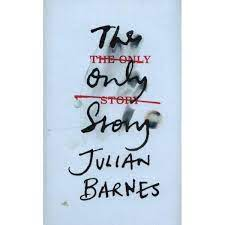
THE ONLY STORY
Julian Barnes


WORKSHEET 1

Brief Summary of Julian Barnes ‘The Only Story’. (Using ChatGPT)
"The Only Story" by Julian Barnes is a novel about the relationship between an older man and a younger woman. The story takes place in England during the 1960s and 1970s and explores themes of love, loneliness, and regret. The narrator reflects on his past experiences as he recounts his love affair with a woman named Susan and the events that shaped their relationship. Through the story, Barnes examines the complexities of love and the impact it can have on a person's life.

Character Analysis (Using ChatGPT
"The Only Story" by Julian Barnes features two main characters: the narrator and Susan.

The narrator is an older man who looks back on his life and recounts his love affair with Susan. He is depicted as a melancholic, introspective character who is haunted by memories of his past and regret over the choices he made. Throughout the novel, he reflects on his experiences with Susan and their relationship and examines the impact it has had on his life.

Susan is a younger woman who the narrator meets and falls in love with. She is portrayed as a free-spirited and spontaneous individual, in contrast to the narrator's reserved and introspective personality. Despite their differences, the two form a close relationship, and the narrator is deeply affected by Susan's presence in his life.

Both characters are complex and multifaceted, and their relationship is central to the themes explored in the novel. Through their experiences, Barnes examines the nature of love and its impact on the lives of those involved.

Themes analysis (Using ChatGPT)
"The Only Story" by Julian Barnes is a novel that explores several major themes including:
  • Love and Romance: The novel focuses on the relationship between the protagonist and a woman much older than him, and the difficulties and challenges they face as a result.
  • Time and Aging: The novel reflects on the impact of time on love, relationships, and human life as a whole, and the inevitability of aging and its effects.
  • Regret and Loss: The protagonist reflects on his life and choices and grapples with feelings of regret and loss.
  • Class and Society: The novel touches on the social and cultural differences between the protagonist and his love interest, and the impact of their different social status on their relationship.
  • Memory and Reflection: The protagonist reflects on his life and past experiences, and grapples with the way memory shapes our perceptions and understanding of the past.
Symbolism analysis (Using ChatGPT)
The Only Story" by Julian Barnes uses symbolism to explore its central themes and add depth to its characters and their experiences. Some of the symbols used in the novel include:
  • Golf: Golf is used as a symbol for the transience of life, as well as a metaphor for the protagonist's relationship with his father.
  • The House: The house that the protagonist and his love interest live in symbolizes their relationship, and its state of repair reflects the state of their relationship.
  • Nature: The descriptions of nature, such as the changing seasons, serve as a reminder of the passage of time and the inevitability of aging.
  • Letters: The letters exchanged between the protagonist and his love interest symbolize their connection, as well as their separation.
  • Memories: The protagonist's memories serve as a symbol of the power of the past and its impact on the present, as well as a reminder of the power of nostalgia.
These symbols serve to enhance the themes of the novel and offer a deeper understanding of the characters and their experiences.

Plot analysis (Using ChatGPT)
The plot of "The Only Story" by Julian Barnes follows the protagonist's recollections of his love affair with an older woman, Susan, over the course of several decades. The novel is structured around a series of flashbacks and reflections as the protagonist reflects on his life and the choices he has made.

The plot of the novel can be divided into three key parts:
  • The Beginning: A protagonist is a young man who is introduced to Susan and they begin their relationship. This section sets the stage for the rest of the novel, establishing the characters and their relationship, as well as exploring the protagonist's motivations and desires.
  • The Middle: This section of the novel focuses on the development of the protagonist and Susan's relationship and the difficulties and challenges they face as a result. Key events in this section include the protagonist's realization of the social and cultural differences between him and Susan, as well as the impact of their relationship on their families and friends.
  • The End: This section of the novel focuses on the end of the protagonist and Susan's relationship, as well as the protagonist's reflections on his life and his feelings of regret and loss. Key events in this section include the protagonist's discovery of the letters that Susan wrote to him, as well as his ultimate realization of the transience of life and the power of memory.
Throughout the novel, key events and turning points play an important role in the development of the plot and the exploration of its themes. The relationship between the protagonist and Susan serves as the backbone of the novel, and the events of their relationship serve to highlight the novel's central themes of love, aging, and the human experience.

I hope it's useful. Thanks for visiting. 

My Learnings from the National Workshop on Academic Writing (2026)

The National Workshop on Academic Writing  I recently had the opportunity to participate in the National Workshop on Academic Writing (2026)...