Showing posts with label globalization. Show all posts

Thursday, 10 November 2022

CONCLUSION: THE FUTURE OF POSTCOLONIAL STUDIES

Hello! This blog is a response to the task assigned by Dr. Dilip Barad. In this blog I am going to summarize two articles from Ania Loomba's book "Colonialism and Postcolonialism" about postcolonial studies, Conclusion: Globalization and the future of postcolonial studies and Conclusion: The future of postcolonial studies.

Globalization, Environment and Postcolonialism

What is Post- Colonial Studies?
Postcolonial studies is the critical analysis of the history, culture, Literature and modes of discourse that are specific to the former colonies of England, France, Spain and other European imperial powers. Postcolonial studies have focused on the third world countries in Caribbean Islands, Asia, South America and Africa.

CONCLUSION: THE FUTURE OF POSTCOLONIAL STUDIES

Dipesh Chakrabarty finds that all his ‘reading in theories of globalization, Marxist analysis of capital, subaltern studies, and postcolonial criticism over the last twenty- five years’ have not prepared him for the task of analyzing the ‘planetary crisis of climate change’.

This video aptly shows how the human world is encroaching nature.


The environmental activist Vandana Shiva has exposed the connection between colonialism and the destruction of environmental diversity. She argues that growth of capitalism and today of trans- national corporations, exacerbated (make worse) the dynamic begun under colonialism which has destroyed sustainable local cultures.

Many feminist environmentalists agree that questions of ecology and human culture are intricately linked. Especially in third world countries, where saving the environment cannot be talked about while ignoring the needs of human lives and communities.

Rob Nixon further noting about the wilderness obsession of Americans celebrated in American literature as well as in natural history says-
'There is a durable tradition … of erasing the history of colonized peoples through the myth of the empty lands. … a prodigious amount of American environmental writing and criticism makes expansive gestures while remaining amnesiac towards non-American geographies that vanish over the intellectual skyline' (Nixon 2005: 236).

Nixon suggests such 'spatial amnesia' is one reason why 'postcolonial criticism' has been suspicious of earth-first 'green criticism' and therefore has not engaged with questions relating to the environment .

Such engagement is particularly necessary given the battles all over the third world between environmental activists and big multinational companies, acting in concert with the nation-state, despoiling land and destroying communities.

Jodi A. Byrd and Michael Rothberg suggest that this is the result of 'indigenous people's sense of living under ongoing colonial projects-and not just colonial legacies and from postcolonial studies' over-reliance on models of colonialism in South Asia and Africa that do not necessarily speak to the settler colonies of the Americas, Australia and New Zealand'.

The displacement of indigenous communities and the theft of their land are also defining features of many spaces that have been privileged in postcolonial studies, such as South Asia and Africa, as is evident from environmental struggles there.

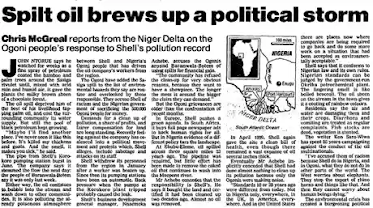
Ken Saro Wiwa led MOSOP, or the Movement for the Survival of the Ogoni People, an indigenous group in southeast Nigeria, whose oil-rich homelands were targeted for drilling by multinationals, leading to their large-scale displacement and to wide-scale environmental destruction.


Shell Oil finally admitted that it had collaborated with the Nigerian military dictatorship in the execution of Saro Wiwa in 1995.


In India, the Narmada Bachao Andolan (NBA; Save the Narmada River Movement) led widespread protests against a project, funded by multinational as well as indigenous capital, to build scores of large dams across central India. The protests highlighted not just the ecological damage but the displacement of thousands of tribal peoples all across the Narmada valley.


Chittaroopa Palit, one of the leaders of the NBA talking about her valuable lesson from this protest says,
Though international political factors, such as the character of the governments involved, the existence of able support groups in the North that play an important part, they cannot supplant the role of a mass movement struggling on the ground. Soon after the SPD government in Berlin refused a guarantee to Siemens, the German multinational, for building the dam in Maheshwar, it agreed to underwrite the company's involvement in the Tehri dam in the Himalayas and the catastrophic Three Gorges Dam in China-both just as destructive as the Narmada project; but in neither instance were there strong mass struggles on the ground.

In sharp contrast is the resistance to the plunder of the forests in Central India by iron and bauxite mining companies. The movement here is led by Maoist guerrillas who have taken control of large swathes of territory and are being hunted by the police and the army.

Roy writes that the constitution of free India 'ratified colonial policy and made the State custodian of tribal homelands. Overnight, it turned the entire tribal population into squatters on their own land. It denied them their traditional rights to forest produce, it criminalized a whole way of life'. Roy and many others have documented how the Indian State is acting in the interests of large iron and steel or bauxite and aluminum producing conglomerates, which are simultaneously national and global.

Karl Marx explained,
The enclosure of the commons was crucial to the birth of capitalism. He described the process in England: beginning at the end of the fifteenth century, the forcible usurpation of communal property occurred first 'by means of individual acts of violence and later through the Parliamentary Acts for Enclosures of the Commons. Along with slavery and colonialism, the takeover of the commons and the conversion of various forms of collective property rights into private property involved dis possessing large sections of the population, both in the colonising and colonised countries, so that wealth would be accumulated by a few. It also turned those dispossessed people into landless laborers and forced them into a cash economy; their work was thus 'commodified.

Luxemburg’s ideas which are important even today are- she alerts us to the deep historical connection between trade and colonialism. She reminds us that accumulation is a constant process rather than a past event.

Amitav Ghosh’s recent book, The River of Smoke offers a deeply compelling fictional account of this process by looking at the opium trade and wars in China.

David Harvey redefining Primitive accumulation points out that-
All the features of primitive accumulation that Marx mentions have remained powerfully present with capitalism's historical geography until now. Displacement of peasant populations and the formation of a landless proletariat has accelerated in countries such as Mexico and India in the last three decades, many formerly common property resources, such as water, have been privatized (often at World Bank insistence) alternative (indigenous and even, in the case of the United States, petty commodity) forms of production and consumption have been suppressed. Nationalized industries have been privatized. Family farming has been taken over by agribusiness. And slavery has not disappeared (particularly in the sex trade).

Water, land and air or 'the environmental commons' are now battlegrounds in many areas of the world.

Swapna Bannerjee-Guha argues that accumulation by dispossession is at the very heart of neoliberal development, concluding that it involves not just dispossession from land but 'losing rights over nature, livelihood practices, related knowledge,even culture-all that capital needs to appropriate for its expansion and increasing profit'. Such dispossession is widespread in Asia, Africa and Latin America, but it is also evident in Europe and North America.

Paula Chakravartty and Denise Ferreira da Silva asking who is the most vulnerable to dispossession, note that

the question [is one] that Harvey does not even consider, one that he also seems to see as already asked and answered by the subprime mortgages themselves and their securitization, which is: what is it about blackness and Latinidad that turns one's house (roof, protection, and aspiration) and shelter into a death trap?... How could anyone expect to profit from unpayable loans without debtors who were already marked by their racial/cultural difference ensuring that at least some among them would not be able to pay? This is precisely what makes 'high-risk' securities profitable.

Dipesh Chakrabarty writes that historians had previously assumed that the environment changed so slowly as to be a negligible factor in human history, we have now reached 'a tipping point' where it is clear that human beings have become 'geological agents' in a much more drastic and immediately palpable way.

He gave the word Anthropocene which denotes the current geological age, viewed as the period during which human activity has been the dominant influence on climate and the environment.

He conceded that-
Climate change, refracted through global capital, will no doubt accentuate the logic of inequality that runs through the rule of capital; some people will no doubt gain temporarily at the expense of others. But the whole crisis cannot be reduced to a story of capitalism. Unlike in the crises of capitalism, there are no lifeboats here for the rich and the privileged (witness the drought in Australia or recent fires in the wealthy neighborhoods of California).

In a response, Ian Baucom observes that a 'new universalism: the universalism of species thinking'. He rightly suggests that concern with our plantory condition must be less distanced, less empyrean and less stratospheric; having caught that catastrophic glimpse from above' we need not ask 'postcolonial studies to abandon recorded history' but to engage with key moments that help us understand 'this unfolding of catastrophes'.

For this, Baucom proposes that we return to
the history of the commonwealth... to that sixteenth and seventeenth century moment in which the political was separated out from the natural and set in conceptual opposition to it. And we need to do so not only in order to discover in this moment the deep origins of the Anthropocene, but as importantly, to find in our habits of critique, in our interpretative strategies, the ability to imagine a counter concept of the commons and of the commonwealth through which we might be able to find a way out of the anthropogenic catastrophe gathering around us.


As Susie O'Brien and Imre Szeman note,
'no other critical practice has foregrounded the links between cultural forms and geopolitics to the degree that postcolonial studies has over the past four decades'.

But postcolonial studies must engage more deeply in historical work in order to amplify these connections between culture and geopolitics; moreover, a narrow presentism obscures our view of the world we live in and postcolonial studies needs to understand pre-colonial histories precisely in order to approach the present with even greater sophistication).

Extending the time-frame of our self-understanding' as Baucom puts it, should lead, not to despair, which he detects in Chakrabarty's analysis, but to a deeper commitment to ‘enhancing conditions under which not just human life, but life itself can continue through the deep future of the planet'.

In the conclusion of the article Ania Loomba indicates new directions of post- colonial studies. The four areas: the environment; the history and present of indigenous peoples and societies; premodern histories and cultures; and the ongoing colonization of territories, labor and peoples by global capitalism. All of these demand fresh thinking about colonial history, the shape of freedom, racial hierarchies, gender dynamics, and community.

Many commentators have suggested that postcolonial studies should not be thought of as a discrete field so much as an approach that has been honed by work on colonial dynamics and legacies in several disciplines; nevertheless, it is also a formation within the academy, shaped largely within English departments.


SOME EXAMPLE OF ECOCRITICISM AND POSTCOLONIALISM
These examples explain in detail how globalization is affecting the environment and the new field of postcolonialism is emerging.

Real incidents

(Photo clicked by me)


Victoria park, Bhavnagar
(Photo by: Amul Parmar)


(Photo is hyperlinked)


(Photo is hyperlinked)

Shatrunjay Mountain range, Palitana


Examples from cinema


The movie has a fight for Jal, Jameen and Jungle. CLICK HERE

In this movie we see how the private company owners are happy and decide to let meteor fall as it may provide minerals.


The blog is quite lengthy, I have tried to give the overall idea presented in the essay. I hope it will be useful. Thank you.

[Words- 2045]

Conclusion: Globalization and the Future of Postcolonial Studies

Hello! This blog is a response to the task assigned by Dr. Dilip Barad. In this blog I am going to summarize two articles from Ania Loomba's book "Colonialism and Postcolonialism" about postcolonial studies, Conclusion: Globalization and the future of postcolonial studies and Conclusion: The future of postcolonial studies.

Globalization and Postcolonialism

What is Post- Colonial Studies?
Postcolonial studies is the critical analysis of the history, culture, Literature and modes of discourse that are specific to the former colonies of England, France, Spain and other European imperial powers. Postcolonial studies have focused on the third world countries in Caribbean Islands, Asia, South America and Africa.

CONCLUSION: GLOBALIZATION AND THE FUTURE OF POSTCOLONIAL STUDIES

The Article begins with the description of the events of 11 September 2001 ( 9/11), the so-called Global War on terror and the US invasion of Afghanistan and Iraq. li which makes it harder to see our world as post colonial, at the same time these all events can be considered as a part of globalization.

Globalization seems to have transformed the world so radically that many of its advocates and critics suggest that there is no longer need to have a critical and analytical perspective which takes the history and Legacy of European colonialism at the focal point. Globalization cannot be analyzed using the concept of margin and centers today it is better to be described in the term of transnational network, regional and international flows and The dissolution of Geographic and cultural borders, paradigm which are familiar to post colonial critic but we can now invoked to suggest a radical break with the narratives of colonialism and anti colonialism.

Book argues that the contemporary Global order has produced a new form of sovereignty which should be called ‘Empire' but which is best understood in contrast to European umpires.

In contrast to imperialism, the Empire establishes no territorial center of power and does not rely on fixed boundaries or barriers. It is a decentralized and deterritorializing apparatus of rule that progressively incorporates the entire global realm within its open, expanding frontiers. Empire manages hybrid identities, flexible hierarchies, and plural exchanges through modulating networks of command. The distinct national colors of the imperial map of the world have merged and blended in the imperial global rainbow.
(Hardt and Negri 2000: xiii-xii)


Hardt and Negri, do not identify the United States as this new power, they argue that the Empire is born through the global expansion of the internal US constitutional project- a project which sought to include and incorporate minorities into mainstream rather than simply expel and exclude them.

Hardt and Negari suggested the new Empire is better compared to the Roman empire rather than to European colonialism, Imperial Rome also loosely incorporated subject state rather than controlling them directly.

The controversy about the Empire is shaped by a wider and ongoing debate about the nature and effects of globalization. Tim Brennan observes that the Empire has almost nothing to say about the actual peoples and histories that the Empire left behind… The colonization of today is given little place in a book’s sprawling thesis about multitudes, biopolitical control and the creation of alternative value.

The Global mobility of capital, industry, workers, goods and consumers dissolves earlier hierarchies and inequities, democratizes nation and the relations between nations, and creates new opportunities which percolate down in some form or another to every section of society.

Lists down ‘multiple locations’ and new hybridities, new forms of communication, new foods, new clothes and new patterns of consumption are offered as evidence for both the newness and the benefits of globalization.

Simon Gikandi in his work "Globalization and the claim of Postcoloniality" observes that despite the fact that globalization is so often seem to have made redundant the terms of postcolonial critique, the radical newness of globalization is in fact asserted by appropriating key terms of postcolonial studies such as ‘hybridity’ and ‘difference’.


Etienne Balibar connects neo- racism to the anti- semitism. According to Baibar, the new racial ideologies are not less rigid simply because they invoke culture instead of nature. Phobai about Arabs carries with it at image of Islam as a ‘conception of the world’ which is incompatible with Europeanness. Thus Muslims are regarded as people who can never successfully assimilate into western societies, or who are culturally conditioned to be violent, ideas that dominated the media coverage of Islam after the attacks on the WTC and the Pentagon in the US on 11 September 2001.

Some forms of post colonial critique have already detached culture from its social and economic moorings, and these tendencies are exaggerated in accounts of endlessly mobile and hybrid Global identities. but it is also worth remembering that on the whole no other critical practice has foregrounded the link between cultural forms and geopolitics to the degree that postcolonial studies has over the past four decades. It is not an accident that Muslims are regarded as barbaric and given to acts of violence and Asians are seen as diligent but attached to their own rules of Business and family, both modes of being we are seen as differently in relation with the western world. These views were not only applicable in the older colonial views about Muslims as despotic and intractable and Asian as incredible and hard working but speak to contemporary Global economic and political libraries.


Conflicts are we supposed to read in literature as postcolonialism critics in the times of 'Capitalize controlled Globalization'?
Postcolonialism scholarship must engage with new socio-economic realities and thus, it is necessary to keep pace with newer developments 'without being in thrall to the cultural kaleidoscope of contemporary world capitalism'. None of the traditional or modern or postmodern conflicts in literature will help us in identifying the dynamics of 'Capitalist controlled Globalization'.


- Man vs Market Fundamentalism (which is even more dangerous than Religious Fundamentalisms)
-Man vs Nexus between Private Corporations and Democratically Elected Politicians
- Man vs Private Companies
-Man vs Multinational Companies (MNCs)

Critics of globalization have not denied fact or doubt the transformative power of the phenomenon of globalization or the ways in which it marks a departure from the old world order. But they oppose its supposedly democratizing effects or radical potential and point out that treating contemporary globalization as if it does not have any history is unfair. There is no doubt that globalization has made Information and Technology more widely available and has brought economic prosperity to new sections of the world.

P. Sainath observes that the mobility of capital far from fostering ideological openness has resulted in its own fundamentalism (strict adherence to the basic principle of any subject or discipline).

‘Market fundamentalism destroys more human life than any other simply because it cuts across all national, cultural, Geography, religious, and other boundaries.It's as much at home in Moscow as in Mumbai or Minnesota, based on the premise that the market is the solution to all the problems of the human race, it is, too a very religious fundamentalism. it has its own Gospel: the Gospel of St. growth of, St. choice…’

Globalization carries an overwhelming connotation of cosmopolitanism (belief that all people are entitled to equal respect and consideration), of The dissolution of national boundaries, of the free flow of capital labor and benefits across the confines of locally vested interest.

Indian Research group has recently argued that
The great range of actual measures carried on under the label of globalization .. were not those of integration and development. Rather they were the processes of imposition, disintegration, underdevelopment and appropriation. They were of continued extraction of debt servicing payments of the third world; depression of the prices of raw materials exported by the same countries; removal of tariff protection for their vulnerable productive sectors; removal of restraints on foreign direct investment, allowing giant foreign corporations to grab larger sectors of the third world's economies; removal of restraints on the entry and exit of massive flows of speculative international capital, allowing their movements to dictate economic life; reduction of State spending on productive activity, development and welfare; privatization of activities, assets and natural resources, sharp increases in the cost of essential services and goods such as electricity, fuel, health care, education, transport, and food (accompanied by the harsher depression of women's consumption within each family's declining consumption); withdrawal of subsidized credit earlier directed to starved sectors; dismantling of workers' security of employment; reduction of the share of wages in the social product; suppression of domestic industry in the third world and closures of manufacturing firms on a massive scale; ruination of independent small industries; ruination of the handicrafts/handloom sector; replacement of subsistence crops with cash crops; destruction of food security.

(Research Unit for Political Economy, 2003: n.p.)

If the earlier period of colonial globalization, integrated the world into a single economic system and divided it more deeply into the haves and the have nots. The new Empire both facilitates global connections and creates new opportunities and entrenches disparities and new divisions.

the World bank statistics concedes that the number of poor worldwide has grown during the 1990s. A third of the world's labor force is unemployed and underemployed.

“Globalization is just another name for submission and domination” (Nicanor Apaza, 46, an unemployed minor)


Joseph E. Stiglitz, Nobel laureate and once Chief Economist at the World Bank, uses phrase ‘market fundamentalism’ in his critique of globalization as it has been imposed upon the world by institutions like the World Bank and the IMF:

‘The international financial institutions have pushed a particular ideology- market fundamentalism- that is both bad economics and bad politics.’

Stiglitz connects these developments to colonialism, suggesting that ‘the IMF’s approach to developing countries has the feels of a colonial ruler’, and that developing countries dealing with the IMF have been forced to ask ‘a very disturbing question: Had things really changed since the ‘official’ ending of colonialism a half century ago?”

Hardt and Negri’s suggestion that United States acts as an Imperial power ‘not as a function of his own motives but in the name of global right’. as the worldwide protest against the war have made it clear, neither people at large not even most Nation States have given the US the right to act on their behalf and they certainly regard the US as simultaneously ultra-nationalist and imperialist

It is clear that US nationalism and National interest remain at least as important as the interest of particular multinational corporations in shaping these and other conflicts around the globe. Instead of countposing the new global order against nation and nationalist ideologies it is better to see them as both forming new alliances and also engaging in new conflict.

North Korea and India's nuclear program were developed in disobedience to the US, but nuclear proliferation can hardly be seen as a progressive in any way. At the same time India state is repressive towards its own subjects especially in Kashmir and North Eastern states and it collaborates with multinationals whenever it can. religious, linguistic or ethnic nationalism have also escalated in the last decades. They can also fuel assistance movements against multinational as well as movements which may be anti us but are politically socially and ideological backward.


Is radical change at all possible? According to Hardt and Negri, the Empire can be challenged from multiple sites and is vulnerable to all manner of rebellion. resistance is more than the simple effect of dominate. The resistance of globalization takes a very local shape and involves the struggle against the national authorities as that is an example of the case of Narmada Bachao Andolan (NBA) in India.


Narmada Bachao Andolan was a protest against project Narmada Valley development, to build large dams across central India, Dams which were not only unsustainable in themselves but which could cause the displacement of thousands of tribal people all across the Narmada Valley. The project was funded by multinational as well as indigenous capital following a long and systematic struggle led by the NBA, the World bank pulled out of the project in 1993. Palit discusses the way in which and they developed new forms of resistance by drawing on a rich experience of the local people and their knowledge of the let there practice the methods of Gandhian anti-colonial struggle and gather enormous effort from the women's group, Trade Union and left parties in the countries and from diverse movements internationally. Although at this point and be has not managed to stop the building of the terms it has politicized and galvanized millions of people and exposed one signal instance of the Nexus of local and global economic and political power.

ROLE OF UNIVERSITIES
The new imperialism directly implicates educational institutions. Niall Fergusson suggested that the US must learn from Britain and send its best and the brightest students from its leading universities on the Imperial mission. but how will the best students be prepared to do so?

In the report called Defending Civilization: How Our Universities are Failing America and What Can be Done About it, the American Council of Trustees and Alumni (ACTA) suggests that universities are not up to this task because, unlike the rest of the country, large numbers of American academics and students are critical of US policies. On US campuses, it has become commonplace to suggest that Western civilization is the primary source of the world's ills even though it gave us the ideals of democracy, human rights, individual liberty, and mutual tolerance'. After 9/11, the report went on to complain, instead of ensuring that students understand the unique contributions of America and Western civilization-the civilization under attack-universities are rushing to add courses on Islamic and Asian cultures'

Those who do teach Western history and literature are not exempt from critique; in an earlier report, ACTA had complained not only that Shakespeare was being dropped from required courses but that Shakespeare and Renaissance classes were being polluted by a focus on social issues such as poverty and sexuality.

The core premise of postcolonial theory is that it is immoral for a scholar to put his knowledge of foreign languages and Cultures at the service of American power.

If universities are to remain sites of dissent and free intellectual inquiry, if scholarship is not to be at the service of America Or any other power, critiques of the past and ongoing empires are going to be more necessary than ever.


SOME EXAMPLES OF GLOBALIZATION

Looking at the contemporary examples of Globalization, we get a strike of reliance companies. Which has turned into a threat to various other companies like Vodafone, Idea, Airtel etc. There was a time where BSNL was considered to be the best but this globalization and privatization failed BSNL. Recently, Vodafone and Idea had to merge together for their existence. Vodafone-Idea merger: A telecom giant is born amid Reliance Jio threat


Examples from the Bollywood

Ghayal Once Again

the conflict of youngsters who witnessed Murder of RTI activist against multi-business owner Bansal (represents Ambani's)

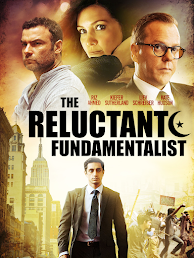
Reluctant Fundamentalist


the conflict between market fundamentalism and religious fundamentalism in the aftermath of 9/11

Zee5 Original Web-movie 'Tigers'


based on a Pakistani salesman's conflict with giant MNC Nestle

Madaari

The conflict between common man (father whose child died in bridge crash) and nexus between construction company and politicians

Sonali Cable
conflict between a girl who runs local tv/internet cable service vs giant company 'Shining' which started providing broadband

Rang De Basanti

A nexus between politician and businessman vs young college boys (one them has to murder his own father who was corrupt businessman before murdering the politician)

Real incidents


The NestlĂ© boycott can be seen as special in a sense that it linked human rights regulations and humanitarian activism with corporate responsibility and market capitalism. Consumers were basically acting as global citizens by aiding people in need outside their close communities – mothers in developing countries –, “using the marketplace not as a way of generating revenue, but rather as a space for protest”.


But in 2015, Maggi was also at the center of a massive food safety scandal, during which the noodles allegedly tested positive for high lead content, and the Food Safety and Standards Authority of India issued a brief, nationwide ban on all Maggi products.


Pesticide residue was 24 times above limits set by the Bureau of Indian Standards in 57 samples tested, the report said. In one bottle of Coca-Cola bought in Calcutta, the level of the carcinogenic pesticide Lindane exceeded the bureau's standards by 140 times.


The blog is quite lengthy, I have tried to give the overall idea presented in the essay. I hope it will be useful. Thank you.

[Words- 2700]

My Learnings from the National Workshop on Academic Writing (2026)

The National Workshop on Academic Writing  I recently had the opportunity to participate in the National Workshop on Academic Writing (2026)...