Showing posts with label adaptation. Show all posts

Thursday, 20 April 2023

Movie Review: Gandhi Godse- Ek Yudh

Hello readers! This blog reviews the recent movie ‘Gandhi Godse- Ek Yudh’ directed by Rajkumar Santoshi and inspired by Asghar Wajahat’s play ‘Godse@gandhi.com’.

GANDHI Vs GODSE

Asghar Wajahat is a well-known storyteller and playwright in India who writes about social and political issues. He challenges society's norms and beliefs by asking tough questions through his writings. In his play, Gandhi and Godse, the story begins with Gandhi and Godse both in jail on charges of treason. Godse had tried to kill Gandhi. The play explores the idea of dialogue and how it can help us understand one another.


The play shows how Gandhi wanted to understand Godse's hatred towards him and the conflicts within Godse's mind. He believed that through dialogue, he could achieve this understanding. Despite the seriousness and length of their conversations, Gandhi's dialogue with Godse is easy to understand and connects deeply with the readers. The play does not promote any violence or extreme beliefs. Gandhi and Godse both value the Gita, but their interpretations of it are very different. The play highlights the dangers of ideologies like Hindutva, which divides people and causes communal tensions. It also raises important issues like democracy and development in India.

In today's socio-political context, where communalism and divisive politics are still prevalent, the play's message is relevant. It encourages people to engage in dialogue and debate to understand each other's perspectives and build a more united and inclusive society. The play talks about important issues that are relevant to our society today, like communal problems, development, and democracy. The story mainly revolves around a conversation between Gandhi and Godse. Godse had tried to kill Gandhi, but he survived and decides to visit Godse in prison. The play is all about their dialogue, and how it is important to have conversations to achieve something. Gandhi wants to know why Godse hates him and hopes that Godse will listen to him too. The play also shows that Hindutva and Hinduism are not the same things.

It's fascinating to think about how two individuals can have such opposing views despite reading the same book. The play also highlights how divisive ideologies like Hindutva only serve to create animosity and division among people. It encourages us to engage in healthy debates and discussions to find solutions to issues such as communalism and communal elections, which we should strive to eliminate from our society.


Gandhi Godse – Ek Yudh is a recent Indian-Hindi history film that explores the fascinating possibility of what might have happened if Mahatma Gandhi had survived his assassination attempt and subsequently decided to forgive his attacker, Nathuram Godse. The film, written and directed by Rajkumar Santoshi, and produced by Manila Santoshi, stars Deepak Antani (Mahatma Gandhi) and Chinmay Mandlekar (Nathuram Godse) in the lead roles.

However, the system highlights Godse's writing and manipulates public sentiment against Gandhi, who is seen as causing disruptions within the government. This leads to Gandhi's arrest, which he insists on serving with Godse. During their time in prison, the two engage in multiple debates, arguments, and even confrontations. The film explores whether this "war of ideologies" between Gandhi and Godse can resolve their differences.


Controversy surrounded the film's context, and Rajkumar Santoshi reportedly received threats, leading him to seek police protection. Nonetheless, the film offers a thought-provoking exploration of what could have happened if Gandhi had lived and how that might have impacted the history of India. The movie begins with the India-Pakistan Partition and the communal violence that ensued. It quickly establishes the Hindu and Sikh populations’ gripe against Gandhi for their suffering. Hindu Nationalist Nathuram Godse’s anger and Bapu’s assassination also follow soon enough. However, the film’s pace dips after that, based on prominent Hindi scholar Asghar Wajahat’s play, and the narrative drags all of the first halves to set the context. It covers some crucial events, such as Gandhi’s fast unto death for Hindu-Muslim peace and the conditions to end it.

The film explores the ideas and actions of its protagonists, but their debates and arguments may not be exciting enough for some viewers. The story also touches upon social issues like untouchability, casteism, and economic exploitation, and shows how narratives can be manipulated to influence public opinion.

Rajkumar Santoshi's film is releasing around the same time as Shah Rukh Khan's comeback movie, Pathaan, and it faces several challenges. The film imagines a world where Mahatma Gandhi forgives his assassin, Nathuram Godse, and engages in an ideological war with him. While the film tries to counter Godse's extremist beliefs, it doesn't fully address his ideology. The movie portrays Godse as immature and gullible, willing to believe anything about Muslims to justify his hatred of Gandhi.

Review
The film Gandhi vs Godse is a noteworthy adaptation of a theater play penned by Asghar Wajahat. With Louis Gianetti's adaptation approach, the movie can be regarded as a faithful representation of the play, as it has made necessary changes while adapting the story to the screen. The play commences with Gandhi being released from the hospital and expressing his desire to visit Godse in prison, while the movie opens with the communal riots that followed the nation's partition and Independence.

In contrast to the play, the film provides a historical context leading up to Gandhi's assassination, which sets the stage for the second half of the movie, which narrates a fictional account of the actual events. The movie delves into the aftermath of the partition, where Gandhi was widely held accountable for the division of the nation. Additionally, the film depicts Gandhi's 'Fast unto death' for peace in the nation, under specific conditions. Overall, the movie successfully captures the essence of the play while making changes necessary for cinematic storytelling. The added historical context and fictional narrative provide a broader understanding of the events leading up to Gandhi's assassination and the political climate of the time.

In addition to being a faithful adaptation of the play, Gandhi vs Godse includes added characters such as Ambedkar and Bose, who were only mentioned by name in the original script. These characters play a significant role in the movie and contribute to the overarching themes and messages of the film. The movie portrays Ambedkar as an advocate for equality between the upper and lower classes and prioritizing the Constitution over religious texts. This characterization provides an additional layer of depth to the movie's exploration of social and political issues. Furthermore, the film also adds a scene in detail that was not present in the play. For instance, the movie depicts the conflict between the government's plan to cut down forests for industrial and road development, which Gandhi opposes. This conflict highlights Gandhi's commitment to ‘Gram Swaraj’, or village self-rule, as opposed to centralized government control.


The play Gandhi vs Godse primarily centers around the clash of two opposing ideologies - that of Gandhi and Godse. The play primarily focuses on the conversations between the two and juxtaposes them with the story of Shushma and Naveen, which is intertwined with Gandhi's celibacy ideology. The play critically examines Gandhi's celibacy doctrine and portrays it as flawed. However, the movie also touches upon this theme, but the storyline of Sushma and Nirav is relatively underdeveloped compared to the play. On the other hand, the movie delves into several other concepts like neo-colonialism, women's colonialism, and eco-criticism. These themes are not as prominent in the play and provide the movie with a broader canvas to explore the political and social issues of the time. Moreover, when Gandhi talks about dissolving the Congress party in the movie, his ideas are lucid and well-defined, which adds to the movie's overall clarity of messaging.


Gandhi's ideology was centered around the empowerment of the citizens of the nation, especially those in rural areas. He believed in helping people rather than ruling them, and this is evident in his establishment of Gram Swaraj in a village in Bihar. The movie "Gandhi vs Godse" effectively portrays Gandhi's vision of empowering the people, with several scenes showing him helping villagers and standing up against the upper-class people who held lower-class individuals in contempt.

Moreover, the movie goes beyond just the ideological battle between Gandhi and Godse and provides historical context to India's situation during the partition. The film accurately captures the main themes of the play, while also adding several detailed scenes that help viewers better understand the historical vision of India during this time.

Both the play and movie present the thoughts and ideologies of Gandhi and Godse, without taking a stance toward either. The end is hopeful and open, allowing the audience to form their own views. Throughout the story, we witness Gandhi's stubbornness and egoism in his philosophy. However, when Godse shows him a mirror, Gandhi realizes the need for change and begins to do so. Similarly, Godse also tries to understand the truth behind Gandhi's every step and decision are taken for the nation. Although there are no monologues that suggest their changes, their actions and expressions, coupled with the use of silence in the movie, effectively express the change in characters.

In the movie, after Godse, three upper-class people from a working congress committee are appointed to kill Gandhi. However, in the end, Godse saves Gandhi. This addition is not from the play but from the director's own creativity. Both the play and movie end with Gandhi and Godse, after coming out of jail, moving away from the troops, and going together in a different direction. This suggests that although Gandhi and Godse had differing ideologies, they were both clear about their beliefs and stuck to them.


As the film progresses, it becomes clear that Gandhi and Godse are used as metaphors to initiate a dialogue on the idea of India that was diminished during the country's partition. The film aims to experiment with the bitter truths of the divide rather than brush it under the carpet of euphemisms. It seeks to find a middle ground rather than taking sides. In this parallel universe, the film attempts to humanize and critique Gandhi, a figure often placed on a pedestal. While it also challenges Godse's Islamophobia and raises questions about Gandhi's celibacy, it flattens their contrasting political positions into a mere difference of temperament that could be solved through dialogue.

However, this approach undermines the frightening persistence of the ideology at stake. To suggest that after spending time together in a jail cell, Godse would go as far as saving Gandhi from another assassination attempt is a naive belief that violence is a part of human nature, which can easily be reformed. This ignores how oppression operates on a systematic level, and how it can only be eradicated through structural change. While the film encourages dialogue and understanding, it must also acknowledge the complexities and realities of the situation. Gandhi and Godse cannot simply be reduced to individual beliefs or temperaments but must be understood within the context of their times and the systemic issues they represent. Only then can a meaningful dialogue be initiated, and real change be achieved.

In an interview with INDIA TODAY the director said that highlighting the version of Nathuram Godse does not mean he approves of his deed which still holds importance in today’s history. “No, I don’t approve of any of that. But I think the incident took place in 1948 and now it is nearly 75 years. Still, I feel we are scared to hear his point of view. And if this happens, then something is definitely wrong. I think, if you ask the younger generation, they would all like to know. And from Godse’s point of view, we see history as to what kind of equation he had in 1948.

When asked whether he is trying to justify the act of Nsthuram Godse. The director replied, “No, why to justify it? The judge did not justify and did not agree with Godse. He was sentenced and hanged. So why will I justify it today? I am only bringing the truth about what Godse spoke.

Does any one of them win in the end? It is more like they figure out each other’s flaws, and learn about themselves better. In the film, Gandhi is no Mahatma and Godse is no villain, they are rather humanized with their own virtues and flaws. However, the biggest issue that comes from a treatment like this is that the plot is oversimplified, and the movie turns rather preachy and bland. try to prove their ideas by emphasizing the same thing again and again. The former wants peace, the latter a Hindu Rashtra. To think that deep-rooted ideologies, that could prompt a man to take a step as big as attempting to assassinate a national figure or another to sit for indefinite fasts, could be changed in a matter of few days with discussions and eye rolls implies too much dilution and naivety. The conviction required to pull off a film of this stature was also missing.

In my personal opinion, the view presented in the film was most needed in the contemporary period when there is an attempt to villainize Gandhi and upgrade the ideologies of Godse and Hindu Rashtra. It is essential to read and understand history before sharing any idea. Gandhi was stubborn, and he was forced to take certain actions, but if not for him, then who would have taken such brave steps against the Britishers? He was an educated intellectual and was respected by the Englishmen. This indicates that he had something significant in him. However, he was also human, and everyone has their share of bad deeds. As an audience, while reading the play and watching the movie, I felt that Gandhi had deep roots in his ideologies, whereas Godse was stuck only to one idea of Hindu Rashtra. However, I must acknowledge that I have not read any history books, so my opinion may not be entirely accurate.


Today, we still witness slogans like 'Go to Pakistan' and the blame game surrounding Gandhi, along with an extremist idea of Hindu Rashtra. Therefore, R. Santoshi's film was made at the right time when there was a need for clarification of thoughts and doctrines. It is necessary to understand the complexities of history and not reduce individuals to mere stereotypes or symbols. Only then can we initiate meaningful dialogue and move towards progress and change.


Here are some reviews of the movie.


Friday, 10 March 2023

Assignment 210(A): Research project Writing (Dissertation Writing)

Conclusion of my dissertation titled 
Through the Lens: A Critical Examination of the Cinematic Adaptation of Midnight's Children and The White Tiger

Name: Jheel Barad
Roll No.: 12
Enrollment No.: 4069206420210003
Paper no: 210 (A)
Paper code: 22417
Paper name: Research project Writing (Dissertation Writing)
Sem.: 4 (Batch 2021- 2023)
Submitted to: Smt S.B. Gardi Department of English, M.K. Bhavnagar University


Adaptation is an age-old practice that has been prevalent in both life and art since time immemorial. As the famous adage goes, "change is the law of nature," and adaptation is an essential process that facilitates change and evolution. From ancient Greek plays to Shakespeare's works, numerous examples abound in history where stories have been adapted to different mediums to cater to new audiences and gain creative and economic benefits. The process of adapting a story to a new medium involves a delicate balance of preserving the essence of the original while creating an independent form of art that can stand on its own. Creative satisfaction is a significant driving force behind the adaptation, as artists strive to retell stories that they find interesting and engaging. However, economic reasons cannot be overlooked, as production houses seek to capitalize on the popularity of famous and well-received stories to attract viewers and generate revenue.


It is essential to understand that when a work of art is adapted into a different medium, it becomes an independent entity, with its own unique qualities and characteristics. The original text and its adapted counterpart are rarely equivalent, and each must be evaluated on its own merits. The interdependence of the two forms is inevitable, and researchers must approach their work with a nuanced understanding of the differences that set them apart. Adapting a novel into a film, for instance, requires a different set of skills and techniques than writing a book. The cinematic medium demands specific narrative techniques, performances, and visual elements that can shape the way a text is presented. To adapt a story successfully, the artist must navigate these demands while staying true to the original story's spirit. By adapting stories to different mediums, artists can create new forms of art that cater to different audiences and capture the imagination of people across generations. However, it is vital to recognize that each adaptation is an independent entity with its own unique qualities and characteristics, and must be evaluated on its own merits. Ultimately, it is through adaptation that art can continue to evolve and thrive, reflecting the ever-changing world around us.

The topic of cinematic adaptations of novels has long been a subject of scrutiny and debate, owing to the widespread popularity of film as a medium across the globe. Transforming a novel into a film is a challenging process, given the distinct structures of these two art forms. Filmmakers often look to literature as a source of inspiration for their stories, with novels providing rich and complex source material for cinematic adaptations. However, the fidelity of these adaptations to the original source material has been a point of contention and discussion among scholars and critics. Many critics have argued that film adaptations are inferior to the literary texts they are based on. They have pointed out that the changes and omissions that are sometimes necessary in order to adapt a novel to the screen have been criticized by some as errors or shortcomings. The visual nature of the film has also been criticized for robbing a novel of its charm, leaving too much open-ended for viewers. The literary complexity of a novel can be a powerful tool for readers to imagine characters, objects, and places in their own way, which can be lost in the translation to film.

However, the debate around cinematic adaptations has recently shifted to a discussion of intertextuality. It has been acknowledged that a work of adaptation does not have to blend all the elements of a novel into a film in order to be successful. Adaptation is a work of art in its own right, and filmmakers have the freedom to create an independent interpretation of the original source material. Ultimately, the success of a film adaptation depends on its ability to capture the essence of the novel it is based on. The screenplay is not simply a reproduction of the original novel, but rather a new rendition of it that may include deviations, changes, omissions, and additions. While some viewers may have different perceptions of how characters, objects, and places should look, a good adaptation should still resonate with the original source material and evoke its key themes and ideas. As such, the relationship between literature and film adaptations remains a complex and ongoing subject of debate and analysis.

The world of literature is a realm of infinite possibilities, where words come to life and take on their own meaning. When an author crafts a novel, they pour their heart and soul into it, weaving their style and perspective into the piece of art. The result is a literary work that can be a pleasure to read, transport the reader to different worlds, and stimulate their imagination. A good novel has the potential to create a vivid imagination that can be a highly overwhelming yet a senses calming experience. The way elements are perceived in the minds of the readers may vary, leading them into areas unexplored before. The beauty of literature lies in its ability to evoke different interpretations and emotions in different readers, each experience unique to the individual. Words are fascinating, nimble, delicate, and yet very powerful. They can create vivid imagery that can be both overwhelming and calming. The process of reading a literary work can be a highly emotional experience that can leave a lasting impact on the reader. A work of literature can lead one into a world completely unknown, and the meanings and inferences that arise from it can be multitudinous.

The text may describe a lot, but there is often much left for the reader to interpret and discover on their own. The gaps in the author's description leave room for the reader's imagination to fill in the blanks, creating a personal interpretation of the text. This personal interpretation is what makes literature unique and allows it to transcend time and space. It is this universal quality of literature that makes it a powerful tool for communication and understanding. When a literary work is adapted to another medium, such as a movie or TV show, it provides an opportunity to see how the creative mind of a filmmaker interprets the author's work. The process of adaptation offers a unique opportunity for artistic collaboration, where two creative minds from different disciplines can merge to create a new form of art. It is fascinating to witness how gaps in imagination are filled by the filmmaker's vision and to observe how cinema fans respond to such adaptations. A film adaptation is a unique and dynamic product that results from the convergence of multiple authors, cultures, and audiences. It can be viewed as a hybrid creation that blends the original literary work with the filmmaker's creative vision, as well as the cultural and social contexts in which it is produced and consumed. This interactive process between the various elements involved results in a distinct and vibrant adaptation that is distinct from its source material.

Despite the shift in medium, the adapted work remains independent, yet interconnected with the original literary work. The essence of the original work remains intact, but it is transformed into a new form of art that can be appreciated in its own right. The adaptation process can bring the literary work to a wider audience, exposing new readers to the author's unique perspective and style. One of the most interesting aspects of literary adaptation is the different interpretations that can arise from the same work. A film adaptation of a novel can bring to life the characters and settings in a way that the written word cannot, but it also provides an opportunity for the filmmaker to inject their own interpretation of the text. This can lead to a divergence in interpretation between the original work and the adaptation, creating a new layer of meaning for the audience to discover.


According to critics, faithfully preserving the complexity and individuality of literary works in movie adaptations is a challenging task. This is because transforming literature into cinema is not a straightforward process, given the vast differences in dimensions and techniques between these two art forms. Adapting a literary work into a film is a complex task that involves a range of factors, from selecting the appropriate novel to adapt, to capturing the right milieu, casting the perfect actors, and staying true to the essence of the original work. Despite the difficulties involved, successful adaptations can result in a new and compelling interpretation of the source material that engages audiences in exciting new ways.

This research work, The study of film adaptations of Midnight's Children and The White Tiger challenged the assumption that transferring a novel to film is a simple process. It was observed that while the adaptations stayed true to the original text, they also made necessary changes to suit the visual medium. Such changes both enhanced and detracted from the themes and messages of the novels, and the adaptations effectively utilized visual storytelling techniques to convey the narrative and character development. By infusing the stories with unique techniques of the cinematic medium, the film adaptations transformed the texts into new, visually compelling experiences. This analysis underscores the complexity involved in adapting a novel to film and highlights the importance of careful consideration and creativity to bring the essence of the original text to life on the screen.

The film Midnight’s Children by Deepa Mehta is a loose adaptation of Salman Rushdie's novel of the same name. While the film does contain many of the major themes and events of the novel, Mehta takes significant liberties with the source material in terms of characterization, plot, and structure. For example, Mehta condenses and rearranges some of the novel's major events, changes the personalities and motivations of some of the characters and adds some new elements that are not present in the book. "Midnight's Children" takes significant liberties with the source material, it remains a powerful and compelling adaptation that captures the essence of Rushdie's novel while also exploring new themes and ideas.

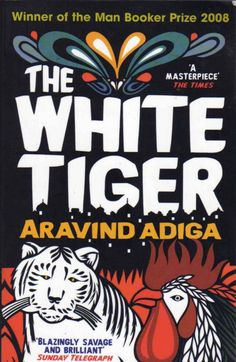
"The White Tiger" is a film by Ramin Baharani, an adaptation of the novel of the same name by Aravind Adiga. In terms of how faithful the adaptation is to the source material, it can be classified as a loose adaptation. While the film captures the essence of the novel and follows the main plot points, there are some notable differences between the two. For example, the film omits several scenes and characters from the book, and some of the events are presented differently. Additionally, the film makes some changes to the character's personalities and motivations, which can be seen as departures from the source material. Therefore, it can be said that "The White Tiger" is a loose adaptation that balances fidelity to the source material with creative changes that make it a compelling film in its own right.

When considering the form of a text, whether it be a novel or a film, it becomes evident that the change in medium does not diminish the inherent meaning of the original text. However, it is important to note that adapting a text to a new form does require some alterations to be made.

While a text can be easily reproduced in a new medium, it is important to recognize that the medium itself brings its own unique set of tools and elements to the table. For instance, a film director relies on visual and auditory elements such as lighting, music, and sound effects to enhance the storytelling. These elements, in turn, contribute their own meanings and nuances to the final product. Rather than viewing the limitations of a new form in adapting a source text, it is crucial to consider how the new form can offer a fresh perspective on the text. The new medium can be seen as an arrangement of elements that provide the potential for interpreting the text in a new and exciting way. In short, the form of a medium should not be seen as a hindrance in adapting a source text, but rather as an opportunity for exploration and interpretation. By embracing the unique qualities of a new medium, one can uncover new layers of meaning in a text and create a work of art that stands on its own.

When Midnight’s Children is Adapted into a film by Deepa Mehta. The novel and the film have some similarities in terms of their form, but also some differences. Both share a nonlinear narrative structure and magical realism, blending fantasy and real-world events. However, the novel is narrated in first-person by Saleem Sinai, allowing for a deeper exploration of his thoughts and feelings, while the film uses a third-person perspective that creates more distance between the audience and the characters. Additionally, the novel describes characters in detail, exploring their motivations and emotions, whereas the film relies more on visual cues to convey personality and motivation. These differences in form impact the audience's experience and understanding of the story. Despite these variations, both the novel and film of "Midnight's Children" offer a captivating story that blends history, fantasy, and human experience.

"The White Tiger" film adaptation by Ramin Baharani shares similarities and differences with the novel in terms of narrative structure and style. While both versions follow Balram Halwai's rise from servant to entrepreneur, the film uses a frame story of Balram writing emails to his former employer, offering a more contemporary form of storytelling. Nevertheless, both versions offer commentary on social inequalities and corruption in India. The film and novel share common themes of class struggle, social mobility, and corruption. Both versions have well-developed and complex characters, including Balram and his employers, who offer insights into the nature of power and corruption. The film introduces unique symbols and adapts certain events in a non-chronological order, commenting on the fragmented nature of modern life. The lighting and camera work captures the tone and mood of the novel, adding an extra layer of meaning. Overall, the film adaptation offers a unique interpretation that is faithful to the original work, reflecting contemporary Indian society. It offers a fresh perspective on the novel's themes and issues, making it an important contribution to Indian literature and film.


Narration is a fundamental element of storytelling, whether it is in a novel or a film. Although the forms of these media are distinct, they both revolve around the art of narration. When a filmmaker adapts a novel into a film, they often seek to differentiate themselves from the original text by employing different narrative techniques. The resulting change in the narrative style can offer a fresh perspective on the story, but it may also be met with resistance from fans of the original text. Narrative techniques are essential in conveying meaning to an audience. Filmmakers and novelists both use these techniques to create a narrative that resonates with their audience. However, filmmaking as a visual medium requires a different set of tools and techniques to create meaning compared to novel writing. As such, a filmmaker may choose to use different techniques to convey the same message as a novelist.

The point of view is an important aspect of the narrative technique. Filmmakers or novelists must decide how they want to convey their message to their audience, whether it be through a first-person, second-person, omniscient narrator, or an interior monologue. Each point of view has its own qualities, and the choice of point of view can fundamentally alter the angle of the story. Furthermore, the lighting, color, sound, and music of a film all contribute to the narrative. These elements can emphasize the emotions, the atmosphere, and the overall tone of the story. They can also influence the audience's understanding of the narrative and create a particular mood or feeling. Michael Ryan states in his book, An Introduction to Criticism Literature/ Film/ Culture, "Narrative filmmakers tell stories with meaning, much as novel writers do. But filmmaking is different because it is a visual medium that requires very different tools and techniques for creating meaning."

Narration is a powerful tool in fiction, and its strength can make or break a story. If the narrative of the original text is compelling, a filmmaker may choose to implement the same technique or use another technique of equal strength. Social, historical, and cultural contexts also influence the way a narrative is conveyed, adding another layer of complexity to the art of storytelling. The narrative technique is a vital component of storytelling, whether it is in a novel or a film. It is the tool that creators use to tell stories and convey meaning to their audience. While different media have distinct tools and techniques, the fundamental importance of narration remains the same.

One of the most significant changes in narrative style between the novel and the film, Midnight’s Children, is the use of voiceover narration. In the novel, the story is told entirely from Saleem's point of view, and his voice is the only one that we hear. This allows Rushdie to create a rich and complex inner world for Saleem, and to explore his thoughts, feelings, and memories in great detail. In the film, however, Mehta uses a variety of different narrative techniques to tell Saleem's story. While there is still some voiceover narration from Saleem i.e. Third person Omniscient narration, the film also includes scenes that are entirely visual, as well as dialogue between characters that are not directly related to Saleem's inner life. The novel uses a nonlinear narrative structure, jumping back and forth in time to create a more impressionistic and dreamlike atmosphere. In the film, however, Saleem's story is told chronologically, with occasional digressions into his memories of the past.

A notable change in the narrative style of The White Tiger, between the novel and the film, is the use of a framing device. In the novel, Balram tells his story in a series of letters addressed to the Chinese Premier, who is visiting India. In the film, this framing device is removed, and Balram's story is told in a more straightforward manner. Another significant change is the use of voiceover narration. In the novel, Balram's voice is the only one we hear, and he tells his story in a confessional and introspective tone. In the film, Balram's voiceover narration is more sparse, and other characters are given more dialogue and screen time to express their own perspectives.

Time is an essential characteristic of any literary text, and it can take on many different forms. In a novel, time can be one-dimensional, poly-dimensional, dynamic, or static. It can also be compressed or prolonged within the text, allowing the author to manipulate the narrative flow as desired. Unlike real-time, which flows linearly, literary time can be changed and manipulated by the narrator. This can be accomplished through techniques such as foreshadowing and flashbacks, which allow the narrator to move back and forth in time to tell the story. One of the key features of literary time is its temporal orientation. In a novel, time can change course, and events can be described in the past or present tense. Foreshadowing can also be used to give readers a glimpse of what is to come, adding an element of suspense and anticipation to the story. In many cases, the use of these techniques can create a sense of timelessness in the narrative, as events seem to occur simultaneously or out of order.

Continuation and direction are two essential features of literary time. The idea of before and after is central to our understanding of time, and these concepts are often used by authors to structure their narratives. By moving back and forth in time, or by compressing years of events into a few lines, authors can create a sense of continuity and direction that drives the story forward. In films, time and space are handled differently than in novels. Filmic time and space are recorded on celluloid and edited together to create a coherent narrative. Special effects and editing software can be used to manipulate time and space in ways that are impossible in a novel. However, the basic categories of philosophy, aesthetics, psychology, linguistics, and art still apply to both mediums. Ultimately, the manipulation of time and space is a key element of both literature and film. By controlling the pace of the narrative and creating a sense of continuity, authors and filmmakers can craft stories that are engaging and compelling. Whether compressing years of events into a few lines or using flashbacks to reveal important details, the manipulation of time is an essential tool in the writer's toolbox.

In both time and space between the novel "Midnight's Children" by Salman Rushdie and the film adaptation directed by Deepa Mehta, there are some changes. In terms of time, the novel covers a span of several decades, from Kashmir 1915 capturing the family background of protagonist Saleen Sinai the story of his grandparents to 14th August 1977. Hoevotably follows the same time in the novel but definitely neglects some of the events and focuses on a period of Saleem's life, primarily the events leading up to and following India's independence in 1977. Similarly, in terms of space, the novel and film both take place primarily in India, with significant portions set in Pakistan and Bangladesh.

When comparing the novel "The White Tiger" with its film adaptation, it is evident that there are some differences in the representation of time and space. In the novel, there is no specific time frame other than the year 2010 when Balram Halwai achieved success as an entrepreneur. However, Balram provides time references at the beginning or end of his letters, giving a sense of the passing of time. On the other hand, the film adaptation opens with a clear indication of time and place - "Delhi 2007" - providing a specific point of reference for the audience. Unlike the novel, the time references in the letters are not included in the film, which instead relies on visual cues to convey the passage of time. Regarding space, both the novel and film are set primarily in India, with Balram's journey from his rural village to the city of Delhi forming a significant part of the story. The film remains faithful to the novel in its depiction of India, with its bustling streets, crowded markets, and stark class divisions. Bahrani's film captures the essence of India's culture, traditions, and societal inequalities, much like Adiga's novel.

Sunday, 21 August 2022

Midnight's Children- Salman Rushdie (Part I)

MIDNIGHT'S CHILDREN (PART-1)

Writer:


Sir Ahmed Salman Rushdie (born 19 June 1947) is an Indian-born British-American novelist. His work often combines magic realism with historical fiction and primarily deals with connections, disruptions, and migrations between Eastern and Western civilizations, typically set on the Indian Subcontinent.

Recently, Salman Rushdie was attacked in New York on 12 August 2022, based on a fatwa issued on Feb. 12, 1989 for his work ‘The Satanic Verses’ (1988). Read the new in detail CLICK HERE


Novel:


Midnight’s Children is a Second novel of Salman Rushdie. Midnight's Children sold over one million copies in the UK alone and won the Booker Prize and James Tait Black Memorial Prize in 1981. It was awarded the "Booker of Bookers" Prize and the best all-time prize winners in 1993 and 2008 to celebrate the Booker Prize 25th and 40th anniversary. In 2003 the novel appeared at number 100 on the BBC's The Big Read poll which determined the UK's "best-loved novels" of all time.

The novel basically is from Kashmir in 1917 to Bombay 1977, it brings us through the ending of British rule, the birth of a nation, the Partition of India and Pakistan, later the war of independence of Bangladesh, and finally, the Emergency under the government of Indira Gandhi.

Amidst the torrents of history emerges the main character Saleem Sinai. The film begins with his grandfather Dr. Aziz (Rajat Kapoor) in Kashmir, examining his patient and future wife Naseem (Shabana Azmi) through a perforated sheet. Then comes the next generation of Saleem’s parents Amina (Shahana Goshwami) and her husband Ahmed Sinai (Ronit Roy), moving to Bombay, giving birth to a baby boy at the stroke of midnight, the dawn of India’s independence on August 14, 1947. But baby Saleem is a changeling with another baby born at the same time, Shiva, by the hands of Mary (Seema Biswas) the nurse.


Narrative technique in Midnight’s Children

S. Rushdie’s Midnight's Children uses a unique and innovative style of narration which is completely different from traditional narrative techniques and makes his work challenging for readers. We find fragmentation and non- linearity in the narration. It uses varied elements like first person narration, oriental and western texts, magic realism.

William Walsh rightly praised Rushdie's technique, 
"combining the elements of magic and Fantasy, the grimmest realism, extravagant force, multi- mirrored analogy, and a potent symbolic structure, Salman Rushdie has captured the astonishing energy of the novel unprecedented in scope, manner and achievement in the hundred and fifty- years old tradition of the India novel in English"

Author Salman Rushdie asserts his authority in condensing 533 pages into 148 minutes of screen time, offering us a concise rendition of an epic story spanning four generations.

“It was an exercise in discovering the essence of the book,” Rushdie said in an interview on CBC radio.

Firstly let us discuss the change in narration in adaptation. In film the narrator is directly speaking to viewers while the Novel has a traditional India (eastern) way of telling story, narrator Saleem tells his story to Padma as the reader eavesdrops, Similar to Nat and Sutra Dhar i.e, India Oral Narratological method.


In classic texts it is not necessary what is told but how it is told is important and Rushdie in his novel has brought a new set of literary terms. He broke grammatical rules and brought a significant relation between prose and cinema. Midnight's Children is rich in allusions to Indian history, literature, and mythology. Casting his unreliable first-person narrator, Saleem Sinai, in the mold of the traditional Indian story-teller.

Midnight’s Children open up as box- in- box stories, story within story the metaphor for this can be used are Russian Dolls and a Chinese box.


Narrative devices used in this novel are similar to the story method in Panchatantra, kathasarit sagar etc warriors stories. There is always a story and within stories are told or narrated to the listener as Saleem is telling stories to Padma and readers are provided with a variety of stories.

As in Panchatantra, there are the stories of animals (Fables) to teach the princes of the King Sudarshan or Amarshakti’s three sons named Bahushakti, Ugrashakti and Shakti.

Vishnu Sharma (Brahmin) knew that these three cannot be taught in conventional means so through stories of animals he gave them morals lessons and we got various stories. This story is frame within the frame.

Singhasen battisi where the 32 dolls on the sinhasan of Vikramaditya tells 32 stories to king Bhoj.In the frame story, the 11th century king Bhoj discovers the throne of the legendary ancient king Vikramaditya (also known as Bikramjit). The throne has 32 statues, who are actually apsaras that had been turned into stone due to a curse. Each of the apsaras tells Bhoja a story about the life and adventures of Vikramaditya, in order to convince him that he is not deserving of Vikramaditya's throne.

Similarly, we find a variety of Indian stories which are frame in frame, a conversation between narrator and listeners and readers get a variety of stories. E.g.- Alif Laila – Arabian Nights, Baital Pachisi, Kathasaritsagara, Shahrazad, and Shahryar. Adding to it also our epics Ramayana and Mahabharata and not forgetting Girish Karnard’s Hayavadana.

Western Postmodernist Devices

Eastern narratological devices

Unreliable narrator

Sutradhar- Nati

Social Realism

Magical realism/ Fantasy

Historical events

Counter Historiography

Framed narration

Framed Story telling

Mythical technique- for the sake of universalization

Parodic treatment


Rushdie adopts the device of Magic realism in Midnight's children. characteristics of this new style were identified as the mingling of the realistic and fantastic, natural and supernatural, skillful time shifts, use of dreams, myths, fantasy and fairy tales. While reading Midnight's Children we find that the whole novel is a perfect combination of reality and imagination between the real and the unreal. There are many places in Midnight's Children where Rushdie used the device of magic realism for the framework of the novel. When we go through the novel, we find that Saleem Sinai, the protagonist, has the gift of having an incredible sense of smell which allows him to determine other's thoughts and emotions. With a sneeze, he could call a conference of all the midnight’s children and call off the conference also. Rushdie's use of magic realism and his exuberant prose, which features extensive use of symbolism and hyperbole, led many critics to compare his style with that of Gabriel Garcia Marquez.

Rushdie also added a pinch of Bollywood, Bombay cinema. Melodramatic elements like changing of children in the hospital, real- parents, and step-parents' behavior over truth. Also, the alter- egos of Saleem and Shiva come up as Heroes and villains in the story.

We find the use of Hindi and Urdu in the English novel which can be considered as a chutnification of language. The words like 'ekdum', 'angrez', 'nasbandi', 'dhoban', 'firangee', 'rakshasas', 'garam masala', 'baba', 'badmash', 'goondas', 'sarpanch', 'paan', 'khichari', 'gur' etc. are used in flawless English. Also expressions and phrases such as 'baap-re-baap', 'hai-hai', 'sab kuch', 'chi-chi', pyar kiyadarna kya', 'ooper-niche', 'bhai-bhai', 'nimbu-pani' etc.

The narrative style used by Rushdie makes it a unique, wonderful, and mind-blowing novel.


Characters in the novel and in the movie.

Midnight’s children is a heavy book of more than 600 pages and it is difficult to bring such a magnificent book into the film of two and a half hours. As we discussed in the style of narration has a variety of stories in it, like a Russian doll it opens into a new story. So to bring such a large and fragmented tale into a movie is a difficult task. It is possible if a web series is prepared on it the OTT platform according to today’s trend then perhaps the director can conclude and have the essence of the whole novel Midnight’s Children.

We find a whole Wikipedia page on the list of characters in Midnight’s children. CLICK HERE to visit it.


The film adaptation has taken very few important main characters from the novel which has completely changed its narrative. The important character in the Novel Padma who is the listener of narrator Saleem is not adapted or excluded in the film.

Character in the movie are:
Saleem Sinai
Parvati
Shiva
Ghani
Naseem
Young Naseem
Mary
William Methwold
Wee Willie Winkie
Aadam Aziz
Jamila
Zulfikar
Emerald
Amina
Joseph D'Costa
Ahmed Sinai
Picture Singh
Alia
Nadir Khan
Indira Gandhi
Hardy
Governor
Laurel
Field Marshal
Astrologer
Rajesh Khera
Salman Rushdie, the narrator

The original book consists of more than 89 characters and in the film, only 26 characters are included. If we watch a movie without any previous reading about the text and historical background it becomes difficult for us to understand the movie or storyline. As a Novel, film adaptation also seems to be fragmented. We realize that the novel has told a variety of stories that can not be bound in a limited time.

In the movie, some small parts are symbolically talked about. The novel has a glimpse of Kawas Manekshaw Nanavati (Rustom Pavri)’s case, Commander Sabarmati, and Laila Sabarmati’s case, which brings out the idea of a mother’s extramarital effect. And to bring this idea to the novel Rushdie used the poster of Mother India movie.


There are many such things or events from the novel told symbolically or excluded. We can understand the difficulty to bring so many stories into one movie but still somehow Rushdie's Film adaptation has tried to bring the essence of the novel. But definitely, we don't get the whole idea of a novel through movies. While watching Pride and Prejudice film adaptation 98% of the novel’s storyline and plot idea can be known but it's not the case with this Novel and Movie, so if one is interested in it he/ she must read the novel.


My Learnings from the National Workshop on Academic Writing (2026)

The National Workshop on Academic Writing  I recently had the opportunity to participate in the National Workshop on Academic Writing (2026)...