Metafiction in J.M. Coetzee’s Foe
Name – Jheel Barad
Roll No.: 12
Enrollment No.: 4069206420210003
Paper no: 203
Paper code: 22408
Paper name: The Post- Colonial Studies
Sem.: 3 (Batch 2021- 2023)
Submitted to: Smt S.B. Gardi Department of English, M.K. Bhavnagar University
E-mail- jheelbarad@gmail.com
Introduction to Metafiction:
Metafiction is a form of fiction which emphasizes its own contractedness in a way that continually reminds the audience to be aware they are reading or viewing a fictional work. Metafiction is self-conscious about language, literary form, and story-telling, and works of metafiction directly or indirectly draw attention to their status as artifacts. Metafiction is frequently used as a form of parody or a tool to undermine literary conventions and explore the relationship between literature and reality, life, and art.
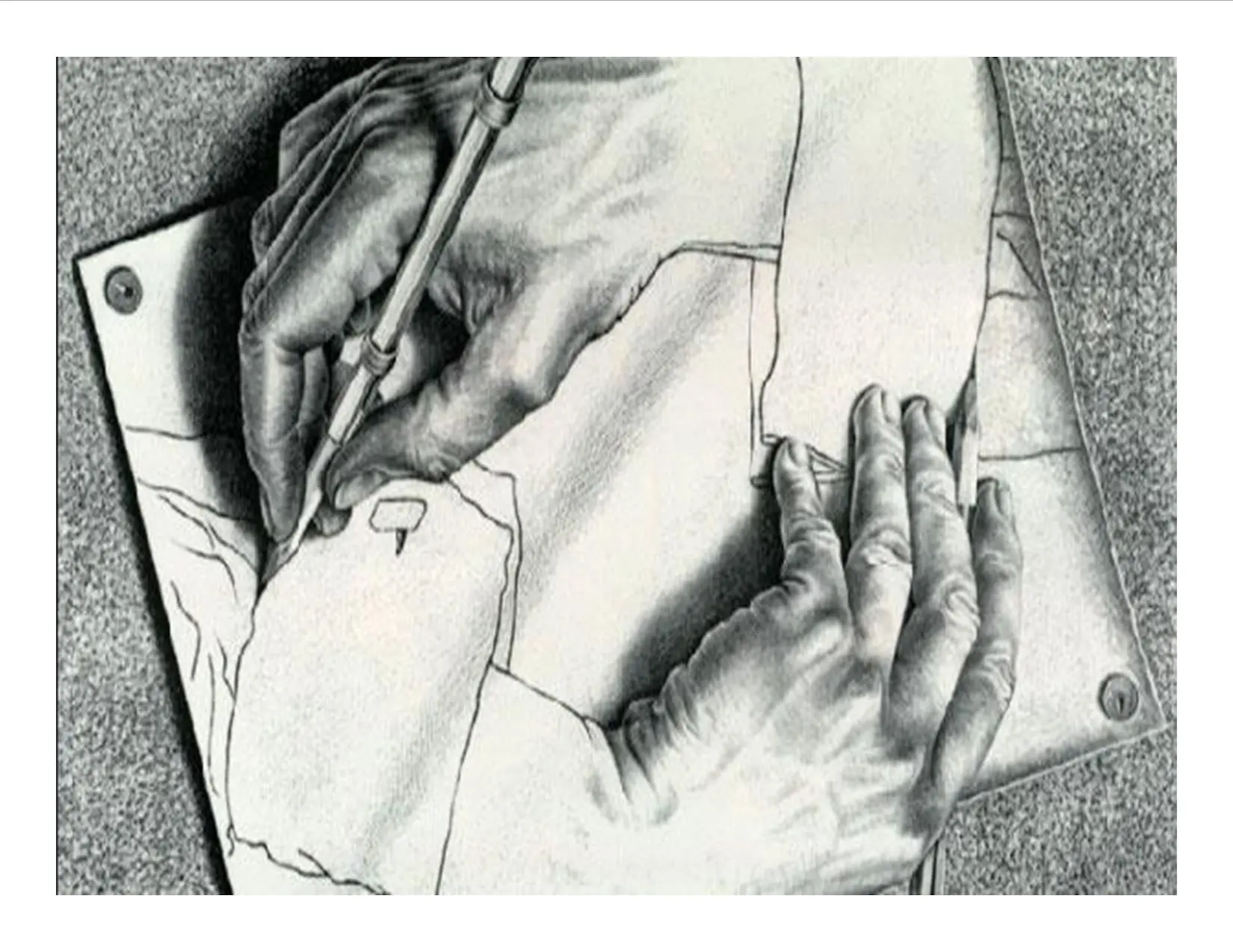
Metafiction occurs in fictional stories when the story examines the elements of fiction itself. For example, a story that explores how stories are made by commenting on character types, how plots are formed, or other aspects of storytelling is engaged in an example of metafiction. Metafiction can be playful or dramatic, but it always forces the reader to think about the nature of storytelling itself and how fictional stories are made.
Metafiction is a type of fiction which self-consciously addresses the device of fiction. It is the term given to fictional writing which self- consciously and systematically draws attention to its status as an artifact in order to pose questions about the relationship between fiction and reality. It usually involves irony and is self reflective.
Metafiction is primarily associated with modernist and postmodernist literature but can be found at least as far back as Cervantes’ ‘Don Quixote’ and even Chaucer's 14th century ``Canterbury Tales’. It came to prominence in the early 1960 through such authors as John Barth, Robert Coover and William H. Gass.
Some common metafictive devices include:
A novel about a person writing a novel.
A novel about a person reading a novel.
A story that addresses the specific conventions of the story, such as title, paragraphing or plots.
A non- linear novel, which can be read in some order other than beginning to end.
Narrative footnotes, which continue the story will comment on it.
A novel in which the author is a character.
A story that anticipates the reader’s reaction to the story.
Characters who do things because of those actions and what they would expect from characters in a story.
Characters who Express awareness that they are in a work of fiction (also known as Breaking the fourth wall)
A work of fiction within a fiction.
The term 'metafiction' was coined in 1970 by William H. Gass in his book Fiction and the Figures of Life. Gass describes the increasing use of metafiction at the time as a result of authors developing a better understanding of the medium.
Differentiated metafiction:
According to Werner Wolf, metafiction can be differentiated into four pairs of forms that can be combined with each other.
Explicit/ Implicit metafiction
Explicit metafiction is identifiable through its use of clear metafictional elements on the surface of a text. It comments on its own artificiality and is quotable. Explicit metafiction is described as a mode of telling. An example would be a narrator explaining the process of creating the story they are telling.
Rather than commenting on the text, implicit metafiction foregrounds the medium or its status as an artifact through various, for example disruptive, techniques such as metalepsis. It relies more than other forms of metafiction on the reader's ability to recognize these devices in order to evoke a metafictional reading. Implicit metafiction is described as a mode of showing.
Direct/ Indirect metafiction
Direct metafiction establishes a reference within the text one is just reading. In contrast to this, indirect metafiction consists in metareferences external to this text, such as reflections on other specific literary works or genres (as in parodies) and general discussions of aesthetic issues. Since there is always a relationship between the text in which indirect metafiction occurs and the referenced external texts or issues, indirect metafiction always impacts the text one is reading, albeit in an indirect way.
Critical/ non- Critical Metafiction
Critical metafiction aims to find the artificiality or fictionality of a text in some critical way, which is frequently done in postmodernist fiction. Non-critical metafiction does not criticize or undermine the artificiality or fictionality of a text and can, for example, be used to "suggest that the story one is reading is authentic".
Generally media-centered/truth- or fiction-centered metafiction
While all metafiction somehow deals with the medial quality of fiction or narrative and is thus generally media-centered, in some cases there is an additional focus on the truthfulness or inventiveness (fictionality) of a text, which merits mention as a specific form. The suggestion of a story being authentic (a device frequently used in realistic fiction) would be an example of (non-critical) truth-centered metafiction.
J.M. Coetzee
John Maxwell Coetzee (born 9 February 1940) is a South African–Australian novelist, essayist, linguist, translator and recipient of the 2003 Nobel Prize in Literature. He is one of the most critically acclaimed and decorated authors in theEnglish Language. He has won the Booker Prize (twice), the CNA Prize (thrice), the Jerusalem Prize, the Prix Femina Etranger , and The Irish Times International Fiction Prize, and holds a number of other awards and Honorary Doctorates

Coetzee moved to Australia in 2002 and became an Australian citizen in 2006. He lives in Adelaide.
Metafiction in J.M. Coetzee’s Foe
Postmodernism challenges the idea of the author as source and center of the text, author figures, paradoxically, have become pervasive in postmodern fiction where they often function as a means to articulate a text’s metafictional reflection. J. M. Coetzee is seen by critics as “a self conscious postmodernist,” “a writer’s writer” whose central preoccupation is the nature of authorship, the writer’s authority over his subject, as well as the broader issue of the cultural authority to which fiction written within the Western tradition can lay claim.
In the novel Foe, Coetzee has revisited authors of the past: Foe features Daniel Defoe and rewrites Robinson Crusoe (1719) from the female castaway’s point of view. In Foe Coetzee revisits and subverts the source text by inserting into the original plot the character of Susan Barton, a female castaway on Cruso’s [sic] island. Rescued by an English ship, Susan and Friday finally return to London, yet Cruso dies on the voyage back to England. Out of the four sections of the novel only the first (and the shortest) one - Susan’s account of the island episode - offers a narrative which can claim to be a version of the Robinson Crusoe story. The remainder of the novel dramatizes Susan’s efforts to tell the island story first through and then over and against the writer Daniel Foe.

Foe is both a metafictional and political allegory questioning the assumptions of race, class and gender underlying the works of the Western literary canon; it has been described by Dominic Head as a “textual decolonization.” In particular, Coetzee’s novel narrativized the exclusion practices which operate in the construction of a literary canon and reveals that “storytellers can certainly silence, exclude, and absent certain past events - and people”
In Coetzee’s novel, there is a continuing debate as to who determines the boundaries of the story and, as a result, controls and owns the narrative. Susan shared the island experience with Cruso and Friday, can she claim the island story as her own? Or is she only telling Cruso’s story in his absence? And what are Friday’s rights in this regard? While Susan wants to recount the island episode, she realizes that she is not equipped to do it and needs Foe’s experience and established reputation as a professional writer. Yet, Susan’s views as to where her story begins and ends are very different from those of Foe. This differing point of view about the limits of the story and especially about who has the right to set those limits, contains elements of a power-struggle. The metafictional discourse here closely parallels the novel’s exploration of power relationships.
Coetzee further problematizes the question of the ownership of stories by highlighting the polysemantic nature of the author’s name. In other words, just as the author generates texts, texts generate the author. Revealed to be a discursive construct, the author is dispossessed of his work; the authoritative and controlling role of the author is called into question and the author’s exclusive right over his own texts is problematized.
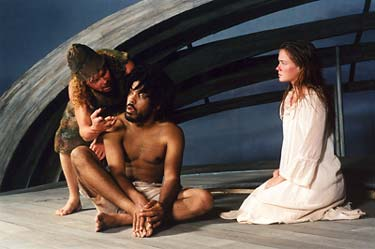
In the final section of the novel Susan’s first-person narration is replaced by that of an unidentified first-person narrator, destabilizing the narrative further both in temporal and fictional terms. This new unnamed and unidentified narrator enters a London property and finds Susan and Foe, presumably dead, in a bed and Friday bricked up alive in an alcove. Pressing his ear close to the door, the narrator hears some strange noises flowing from behind it: “From his mouth, without a breath, issue the sounds of the island”. On the other hand, the whole metafictional reflection which this part of the novel articulates may be understood as being aimed at disrupting the traditional power relations implicit in the dichotomy author-reader and rejecting a linear epistemology according to which the left-hand term is seen as superior and dominant.
Works Cited
Frank, Joseph. “Uncanny authors, ambiguous tales: metafictional discourse in J. M. Coetzee's Novels Foe and The Master of Petersburg.” CORE, https://core.ac.uk/download/pdf/288120322.pdf. Accessed 5 November 2022.
Head, Dominic. The Cambridge Introduction to J. M. Coetzee. Cambridge University Press, 2009. Accessed 5 November 2022.
Schörkhuber, Verena. Metafiction in J.M. Coetzee's 'Foe'. GRIN Verlag, 2007.
Sonderegger, Melba. “Metafiction. The Theory and Practice of Self-Conscious Fiction.” Academia.edu, https://www.academia.edu/3626028/Metafiction_The_Theory_and_Practice_of_Self_Conscious_Fiction. Accessed 5 November 2022.
Wolf, Werner, et al., editors. Metareference Across Media: Theory and Case Studies. Rodopi, 2009. Accessed 5 November 2022.


