Thursday, 17 March 2022

Climate Change and Our Roles- Excel Expression

Hello visitors!

I Participated in Excel Expression Competition Organised by Sumitomo Chemical India Ltd. They have been organising this event since 25 years. In this event, various competitions were held in which I participated in PowerPoint Presentation Competition. Later the company organise a Winner's show in which the best performers, the one who secure first prize are given a opportunity to perform live in an auditorium. And this year I have Gold Medal in PowerPoint Presentation competition.


They live streamed their winner's Show To Watch full show CLICK HERE.

Watch my presentation on What can we do about Climate Change Our roles.  


These are slides of my Presentation.


I hope this will be helpful to you. Thank you for visit.

Monday, 14 March 2022

Flip Learning- Existentialism (pre- learning task)

This blog is a response to Dr. Dilip barad sir’s Task. Do visit his blog to understand in detail about Flip learning and Existentialism. CLICK HERE. [ to learn About existentialism visit ‘examples of FLN/FLE’ ; 'sem-3 existentialism and waiting for Godot'; 'this blog' or CLICK HERE]

In this blog We were given a task to skim through the video and understand them. Further, we have to write our thoughts which impressed us the most in the video, the video we liked the most with a reason and ask 5 questions in the class which are also written below.

Flip learning-


Flip learning is the modern form of education. And it's the complete opposite of the traditional learning process. In this class work is done as homework and home work is done as classroom. This process is accepted in order to engage a number of students in the discussion happening. IN flip learning students carry out the research by their own or under the task allotment and discuss with teacher or ask doubts about in the classroom. It provides freedom to students to select their own atmosphere to study. [CLICK HERE to understand in detail]

EXISTENTIALISM

Existentialism:

a philosophical theory or approach which emphasises the existence of the individual person as a free and responsible agent determining their own development through acts of the will.- અસ્તિત્વવાદ


I request viewers to go through the video for understanding, here I have just shared the thoughts which impressed me.

Video 1:


This video began with the basic introduction of Existentialism and gave three sides of existentialism; freedom, passion and individuality. Existentialism is the theory which came up after war so it came from meaninglessness of life, absurdity. According to Albert Camu one should embrace and understand absurdity rather than start believing in god. Believing is god means escaping from the real situations and leaving everything in god. This is Philosophical suicide. For the first time I came across this out of the box idea, the idea of Philosophical suicide.

Video 2:


This video talks about the Myth of Sisyphus- Sisyphus teaches us to never give in to circumstantial disappointments or try to escape from the failures, rather accept failures the same way we accept our achievements. Along with it Absurd reasoning is talking about in relation to suicide. Absurd is illogical, the understanding which I got from this video is when one is feeling low and absurd things of no worth and finds no meaning in life is driven towards suicide. and all this reasoning before suicide in Absurd reasoning. Through the myth of Sisyphus the moral i learnt is to accept what you got like achievements and search for hope.

Movie ‘STAY’ also talks- ‘suicide is divorce between man and this life’ . embracing the truth, compromising, understanding are better than divorce.

Video 3:


Idea I love the most in this video is that one needs to confront problems which are leading one to absurdity . When you confront a problem and try to fight it; there will be the total absence of hope, continuous rejection and dissatisfaction but all this is not equal to despair, renunciation and immature unrest. Camu has denied being an existentialist because existentialists suggest having faith in God while Camu suggests embracing absurdity.

‘Seeking what is true is not seeking what is desirable’

Video 4:


The video brought me to the realization that after every world war people are so much in despair and in a negative approach towards life that it brings new theories. This video talks briefly about the three theories of Dadaism, nihilism, and existentialism. Dadaism emerged after WW I which questioned every traditional value and tried to destroy its base. It was a quest for change and Existentialism came into existence after WWII which was trying to awaken people and make them understand their own worth and individuality.

Video 5:


Please video clarify the doubt which I had; existentialism theory says to be individual and understand yourself which can also be read as ‘self love '. So can it be read similar to narcissist theory. but this video clarified that existentialism is not a narcissist philosophy it talks about ‘become, who you are’ not love yourself. This video clarified that it to be a gloomy philosophy because it pulls anxiety, despair, absurdity, depressing/ frightening thoughts into life. One needs to have these feelings in life to understand one's own existence. Also existentialism came as a cure of meaninglessness, emptiness and disappear/ despair

Video 6:


This video explains that Existentialism and Nihilism are not the same things. Every existentialist has fought against nihilism in one or another way.

Video 7:


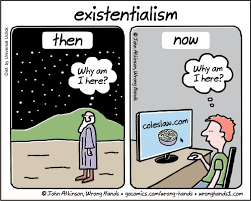
Why am I here?
What does it mean to be human?
How should I live my life?

This video gives the difference between Existentialism and Nihilism. It says existentialism is not a psychological system or set of rules, it is a movement.


This video enlightened me with a new thought - Religion has been always giving the answers of life but we are humans we don't need answers from divine perspective but from human perspective ‘Human, all too human” - Nietzsche

Also, It's becoming difficult to understand ‘existence precedes essence’ or ‘essence precedes existence’. This confusion continues even after reading Aristotle’s argument-

Aristotle agrees to goal oriented life with an example of Seed which has the essence of turning into a tree. Similarly humans act in full accordance with reason, they can choose to act according to nature but are not free to choose their essence because humans are not watch, light, TV or any materialistic element. This thought greatly attracts my attention.

Video 8:

 This video talks about Eric Dodson’s personal experience being existentialist. He likes existentialism because it appeals to our mind, heart and soul. He shares that if one keeps on looking at things rationally then life takes away the magic of things/ life.
Honesty in existentialism- it removes the shyness of accepting the negative aspects of life.
Holism: It provides the power of acceptance, acceptance of strength and weakness of life.
The idea I got impressed from was it helps us to understand our own suffering, and this suffering helps to be more love and compassionate. Yes it does not eliminate others suffering but teaches to live life with suffering and to open to oneself.


Questions I raised in Class
  1. Theory of existentialism took birth post- war when everyone was in despair and had meaninglessness in life. It forces one to have deep insight in own self. How can we believe that individuality, self understanding will always bring positive outcomes? It can also result in one thinking himself to be less worthier?
  2. Embracing absurdity is asking us to just flow with whatever is happening? If it is then it indirectly means to keep faith in nature.
  3. ‘Existence precedes essence’ does it mean- we are born accidentally now have to do something so need to find essence?
  4. Camu (1905- 1960) ‘there is nothing beyond reason’ and ‘Existence precedes essence’ by sartre (1905-1980) This seems to be contradictory.
  5. Is existentialism pointing us to be an atheist? As Camu is not supporting Soren Kierkegaard ‘faith is solution to Absurd’.
  6. Theory of Existentialism might not be accepted as per Indian philosophies as it talks about family first and adjustments to balance and having good relations.Indian philosophies like ‘matrudevo bhav; pitrudev bhav’ forces us to follow family traditions. Nietzsche ‘no universal moralities governs us all’

Feedback/ reflection on the process-

I would like to share how the idea about existentialism changed for me. At first listening to a word I thought it to be the study of the existence of all living beings on this earth and how this living world inspired the existence of literature and its characters. But after reading its dictionary meaning I got an idea about its Philosophical meaning; development of an individual through his own deeds and will. Which is a very basic idea. But after skimming through all the videos of flip learning it provided a broader way of Existentialism.

Existentialism is not doing what one wants to but taking some decisions for one's own life being in rules. E.g.; there is rule to drive vehicle on left hand, we can't say i’m existentialist and i want to drive on right side so i will; we can decide our vehicle, its speed, road we want to go on but can't change the rules. Following rules are necessary. ‘Be what you are’ take personal decisions for yourself rather than following in the footsteps of others. Existentialism is a way of life; it helps to enjoy a ride of boring life.

It also said that if ‘essence precedes existence’ then we are choiceless. And it leads to nihilism. If I am not going to get anything, whatever I do or not, I will get what is decided then why should I work. And nihilism leads to laziness.

In short, existentialism is harsh individualism, which breaks the marriage institution of being ‘ardhangini’. The world we got is already working with rules so we need to follow them. Life is full of conflict which leads to suffering but working against external forces is necessary to be an existentialist. Be yourself, be with everyone.

[words- 1500]

Sunday, 13 March 2022

Theory of Archetypes

Here I am with an interesting topic, Archetypes. This blog is a response to the assigned task By Dr. Dilip Barad sir. In simple words, Archetypal literary criticism is a theory that interprets a text by focusing on recurring myths and archetypes in the narrative and symbols, images and character types in a literary work. Let us try to understand in depth. In this blog I Am going to answer the questions which will help you for better understanding.

ARCHETYPAL CRITICISM

I have taken the reference of the essay The Archetypes of Literature by Northrop Frye.

Northrop Frye:


Herman Northrop Frye (July 14, 1912 – January 23, 1991) was a Canadian literary critic and literary theorist, considered one of the most influential of the 20th century. Frye was named a national historic person in 2018. Read more about him.

Archetypal criticism peaked in popularity in the 1940s and 1950s, largely due to the work of Canadian literary critic Northrop Frye (1912-1991). Archetypal literary criticism is a type of analytical theory that interprets a text by focusing on recurring myths, and archetypes (from the Greek archē, "beginning", and typos, "imprint") in the narrative, symbols, image and character types in literary works.

What is Archetypal Criticism?
In the beginning let us take archetype as a pattern. Reality is complex and to understand reality stories, myths were used. From This story archetypes emerged. Archetypes are perhaps earliest/ ancient patterns. Archetypes are shared across various cultures in different timelines, even to cultures not connected or known.

Carl Jung took analysis in a different direction instead of looking into individual people to understand human behavior. He looked at human imagination and shared experience to explain behavior. Freud gave the unconscious as a storehouse for repressed desire and emotions, Jung believed that it had a second layer. This one is a deeper, more universal shared memory, common to the whole human race. He called this the collective unconscious. Jung uses the Greek work archetype to explain this content. Our psychic archetypes are recurring patterns of images, symbols, themes and stories that help us to make our lives. According to Jung, wisdom, creativity, and good health are present only when we are in harmony with the archetypes and universal symbols in the collective unconscious. We are able to reveal essential archetypes and symbols in dreams and myths. While dreams are personal manifestations of the individual unconscious, myths are societal manifestations of the collective unconscious. Since ancient times people have turned to stories to help them understand and cope with life. Myths are similar over cultures and eras. Myths are dramatic representations of deep instinctual life of humankind.

Northrop Frye proposed the idea that the main appeal of literature was its connection to primitive story formulas. He claimed literature is a kind of displaced mythology that constantly reverts to the same patterns that we see in Ancient myths.

In literature we can often identify archetypal geography like garden of Eden or wasteland, character types, heroes and villains and themes like good vs evil.

What does the archetypal critic do?
An archetypal critic tries to analyze a pattern in symbols, myth, ritual or stories in literary works to identify the specific pattern.


What is Frye trying to prove by giving an analogy of ' Physics to Nature' and 'Criticism to Literature'?
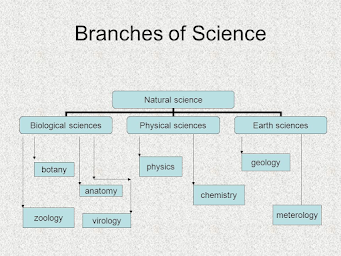
Frye starts his essay with ideas about progressive study of every organized body of knowledge. Using an analogy of Physics to nature he says that Physics, a branch of science, is an organized body of knowledge about nature, a student says he is learning physics not nature.


Similarly, art (literature) like nature is subject of systematic study, where physics is like Criticism.

Many times language students are supposed to write creative works and have fluent speaking of language but this is not what is taught in language or literature class. It is impossible to ‘learn literature’ . What one learns is ‘criticism of literature’. So, literature is an organized body of knowledge and criticism is a systematic studying part of this body.


Criticism as we find it in learned journals and scholarly monographs has every characteristic of a science. Evidence is examined scientifically; previous authorities are used scientifically; fields are investigated scientifically; texts are edited scientifically. Prosody is scientific in structure; so is phonetics; so is philology.


Thus, Physics as literature and nature as Criticism. As the physics students study, read, learn Nature and call it Physics. Similarly, literature students do not ‘learn literature’ they learn to criticize, ‘learn to read’ literature.

Share your views of Criticism as an organized body of knowledge. Mention relation of literature with history and philosophy.

Literature is the central division of Humanities and Criticism turns out to be a subdivision of Literature. So for the systematic understanding of the subject student have to study the conceptual framework of the historian for events and philosophers of the ideas.


Comparing with the study of the science (organized body of knowledge), eg. If a human body is to be understood a student or doctor will look at the body based on their field. A neurologist will study the brain, a cardiologist will study the heart, Pulmonologist will study the respiratory system, etc. Similarly when one reads studies specific literary work a feminist critic will criticize feminist view, a queer theorist will criticize through queer theory, an existentialist will criticize existential point of view, etc. Which shows Criticism/ Literature is also an organized body of knowledge.

On the basic idea literature is majorly stories and we read these stories with various perspectives. How are these stories created? The two pillars for this in history and philosophy. Historical events provide the plot of the story and philosophy provides ideas and wisdom we read in characters. So before reading any literary work framework reading of history and philosophy becomes necessary to understand the setting, meaning, and contemporary time of the work.

Briefly explain the inductive method with illustration of Shakespeare's Hamlet's Grave Digger's scene.

Frye has used inductive and deductive methodology in Archetypal criticism.


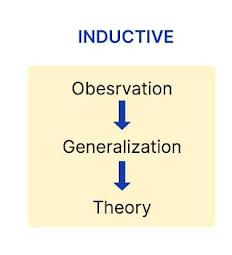
In simple language, an inductive method can be defined as ‘particular to general’. It is used to describe reasoning that involves using specific observations, such as observed patterns, to make a general conclusion.

Let us try to understand, by an indicative method, the Archetype ‘LIEBESTOD’ through the Grave Digger scene from Shakespeare’s play Hamlet. Liebestod is a German word which means love- death. The scene begins with the puns; from puns to soliloquy, images of corruption and decay, psychological relation between digger and price; declaration of Hamlet's love for Ophelia and Hamlet and brother (Laertes)- sister. All this collectively comes to particular archetype liebestod.


Laertes was angry at Hamlet and if He came out he would definitely be murdered but still he comes out in love for Ophelia which his readiness to die for love and which is Leibestod.

Briefly explain deductive methods with reference to an analogy to Music, Painting, rhythm and pattern. Give examples of the outcome of deductive methods.

Frye has used inductive and deductive methodology in Archetypal criticism.


In simple words, the deductive method is ‘from general to particular’. It is a method of reasoning by which concrete applications or consequences are deduced from general principles or theorems are deduced from definitions and postulates.

Art like music moves with time; we require time to understand, listen and feel to music. And art like painting is like space; hundreds of years on earth is like seconds in space. Looking and enjoying painting requires no time, it can be enjoyed in a blink. Music (time) and painting (space) both recur in rhythm (when it is temporal) and pattern (when it is spatial) respectively. In this we come to the general deduction that literature is intermediate between music and painting. Its words form rhythms which approach a musical sequence of sounds at one of its boundaries, and from patterns which approach the hieroglyphic or pictorial image at the other.

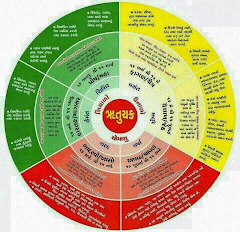
Refer to the Indian seasonal grid . If you can, please read a small Gujarati or Hindi or English poem from the archetypal approach and apply Indian seasonal grid in the interpretation.


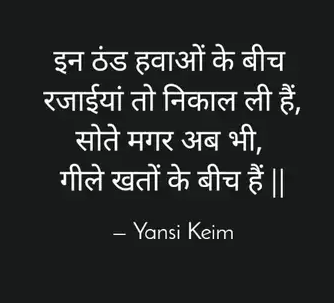
In this poem a poet is calling her beloved to come as ‘vasant’ season which is beginning of summer a season of romance according to mythos grid.


These lines indicate the winter season, ‘gile khato’ indicates sadness of the writer. So here winter season can be read as irony.

I Hope this blog was helpful to you. Thanks for visiting.

Friday, 11 March 2022

Movie Screening- The Great Gatsby

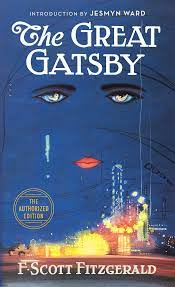
Hello readers, this blog is a response to the task assigned by Dr. Dilip Barad sir. This blog deals with the various questions allotted based on the novel The Great Gatsby F. Scott Fitzgerald published in 1925 and The Great Gatsby movie by Baz Luhrmann in 2013.  

THE GREAT GATSBY


The Great Gatsby by Baz Luhrman is much faithful to The Fitzgerald's The Great Gatsby. Movie has used modern narration techniques but has certain loopholes in it compared to the novel. Cinematography and editing of the Movie is extraordinary. Watching this movie gives the best scenario of 20th century America and its culture. We belong to a completely opposite culture (eastern Culture) so it becomes difficult to understand some satires of western culture for e.g. Tom’s comment on Gatsby for weaning Pink suit. Now let us discuss some questions With reference to the screening of film


How did the film capture the Jazz Age - the Roaring Twenties of America in the 1920s?


The western had the worst experiences in the first world war and after it the generation is known as the ‘lost generation’. There was great  technological, economical and cultural evolution in the 20th century in America. It was moving towards prosperity that is gaining more and more economy. Fitzgerald explores the major developments of the Roaring Twenties, including the birth of jazz, the women’s suffrage movement, economic prosperity, and the rapid growth of Manhattan as a cosmopolitan city.


This period of roaring twenties is also famous as Jazz age, this term was also coined by Fitzgerald in his collection of short stories Tales of the Jazz Age (1922). Jazz music was very popular in that period. It was very popular among Black people, it was initiated by African American. So the whites considered it to be music of black or lower status they heard and enjoyed but never socialized with the blacks. 


FitzGerald has explored jazz age greatly in the Novel. Baz Luhrman’s movie has very faithfully captured Jazz age/ music. The contemporary soundtrack in the movie features songs by Bryan Ferry, Jay-Z, and Florence and the Machine. 

From the beginning of the movie we do find the loud music which lightly indicates the madness of the jazz in that period. 

People danced and bounced on the jazz music in Gatsby's parties. They seemed to be a lost society, careless people and rich class society. 

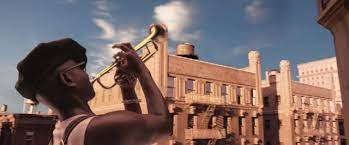
When Tom was having an apartment party which revealed his cheating over Daisy, which is mirroring inferiority of ‘Roaring Twenties’ was also indicated by the loud jazz music. The man was playing a loud trumpet in the scene. 

Next, when Gatsby went to an underground bar from the barber’s shop, the bar had a Jazz group playing jazz music which also indicated the negative side of 20th century America.


How did the film help in understanding the characters of the novel?


Baz Luhrman’s 2013 film is immensely faithful to Fitzgerald’s novel. Thomas Doherty writes in his movie review Luhrmann “remain[s] faithful to the spine and spirit of the novel while giving himself plenty of room to move”.  Although he was faithful to the novel he has made many alterations and characters are minimized accordingly. Here are some examples of change in characters.


  • Gatsby’s character is well developed throughout the movie. The mysticism around his character is greatly managed by Luhrman. 
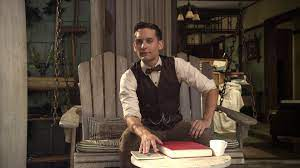
  • Nick is problematic as a narrator. In the novel we find that Nick is not talking about incidents in which he is not present which are Gatsby’s and Myrtle’s murder scene. But in the movie both these scenes are narrated by him. For eg. first we were shown the Myrtle’s murder scene later it was shown in flashback when Gatsby’s narrated truth of murder to him. 
  • Nick and Jordan are a couple in the novel while in the movie we don't find any major role of Jordan in the movie. It seems she is just to deliver a message about Daisy to be invited for tea. Audiences could find Nick- Jordan Chemistry in Movie only if they have read the novel.
  • Nick’s character is also flattened in the movie. Throughout the movie he shared his views of Gatsby's life but no light was thrown on his personal life.
  • In the novel daisy is not only smart and lovely but “her face was sad and lovely with bright things in it, bright eyes and a bright passionate mouth” and she had “an excitement in her voice that men who had cared for her found difficult to forget” while in movie she is stupid blonde girl who doesn't understand the world. While her recklessness and carelessness is held flawlessly
  • Luhrmann has managed to downsize all the characters and their personalities but the characters seem to be interesting because the movie had heavy focus on visuals, effects and ivory of 20th century America.  


How did the film help in understanding the symbolic significance of 'The Valley of Ashes', 'The Eyes of Dr. T J Eckleberg' and 'The Green Light'?


The Valley of Ashes:


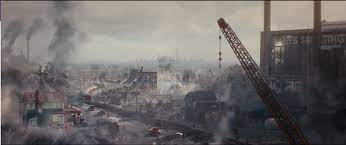
The Valley of Ashes is a stretch between west egg and New York. This valley had a colour scheme of gray in Luhrmann's movie. The movie is successfully capturing the bizarreness that is described in Fitzgerald’s Novel. Valley of ashes is dumping of industries, it is as important a scene of the movie as the glamorous part. Valley of ashes also shows the failure of the American Dream. The American dream of becoming economically strong is bringing a spiritual drought. It's a failure for America because America is growing but is failing to balance, the rich are getting richer and the poor are becoming poor. Valley shows how the rich are disconnected from the source of their wealth.


The Eyes of Dr. T J Eckleberg 


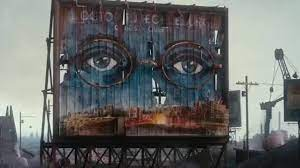
The Valley of Ashes is watched by the gigantic blue eyes of Doctor T.J. Eckleburg,in the middle of a strange, gray landscape. This giant billboard without a face which are the eyes of Doctor T.J. Eckleburg is an ad of optometrist. The billboard is dirty and faded which can be interpreted that the billboard is watching the moral failures, America as a moral wasteland and meaninglessness of the world for a long period of time. As the camera says more than words, the camera moves over the billboard to tell something hidden. When Daisy and friends were going for lunch to New York the billboard was shown which is interpreted as something terrible is going to happen. George Wilson also considered it to be the eyes of God’s who is watching everything.


Today This billboard with eyes which is watching everything can be said to be replaced with a CCTV camera. ‘ you are under surveillance’ 


The Green Light


Green light seems to be always shining on Daisy’s dock. Gatsby had a mansion on the opposite back of the sea. He used to watch this light everyday which symbolizes hopes and dreams of Gatsby to have Daisy in his life and the American dream. It can also be interpreted as the shine and glamour of inherited wealthy people and their intolerance and unacceptable to new rich society.


How did the film capture the theme of racism and sexism?


Racism


In the Great Gatsby the theme of racism and sexism is not prominent but we find them in dialogues and ideology of Tom Buchanan. Tom had an regressive mentality he felt white’s to be a dominant class, he could expect back or other then white turning rich because if it happened they would start ruling, according to tom. Tom Buchanan declares The Rise of the Colored Empires a prophetic book that admonishes whites to “watch out or these other races will have control of things,” Nick sees a Limousine “driven by a white chauffeur, in which sat three modish negroes, two bucks and a girl.” And he announces that “Anything can happen now that we’ve slid over this bridge.” All these minor incidents show racism in movies.


Sexism


Sexism is discrimination, typically against women, on the basis of sex. In the movie we find three complete opposite female characters, Daisy, Jordan and Myrtle. Daisy is the most important one,Daisy belonged to a wealthy family but was dominated by Tom. Tom had a mistress but when Daisy started loving Gatsby she was forced to choose any one. Similarly, Myrtle was an ambitious woman who wanted materials and her husband couldn't achieve her dream and so he had relations with Tom. Here we compare Gatsby and Myrtle- when Gatsby achieved material wealth through bootlegging it was the American dream and for Myrtle the question was raised directly on her. Jordan belonged to Flapper society, a new women group towards whom the society saw with discrimination, considered to be immoral and dishonorable


Nick Carraway as a narrator. [Click here for source video]


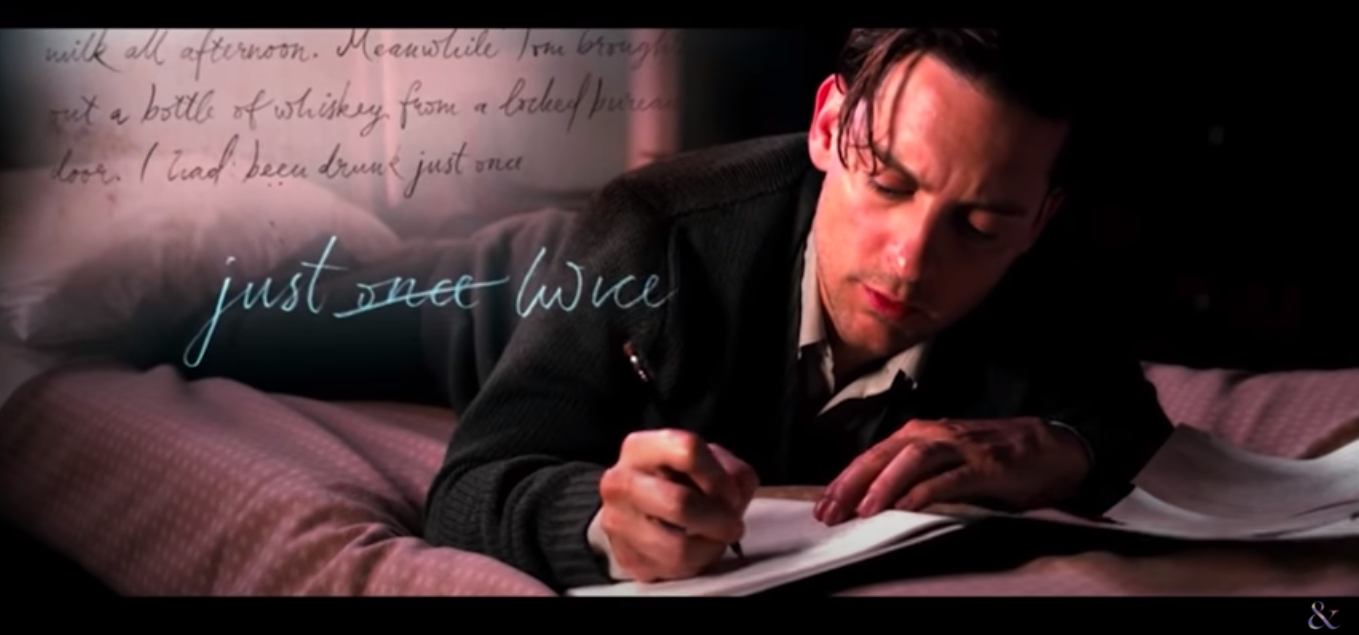
Luhrmen is using a framing device which is different from the book, Nick is committed to sanitarium for morbidly alcoholic, anxiety, insomnia and it is the catharsis process he writes the Great Gatsby. And this is root for him being an unreliable narrator. The major question arises that how trustworthy can a narrator who is suffering from a morbid alcoholic psyche issue.

Apartment party scenes, when Nick was drunken, were also smoothly narrated by Nick which are also questionable . Because a drunk person could rarely see or remember the acts he/ she has done or seen.


At another instance we find that when Nick is writing about his depression we find haste, cancelling of words and rewriting to what extent we can think of him narrating everything perfecting even when he is not able to write perfectly.

In the scene like myrtle murder scene and Gatsby’s Murder scene, Nick is absent still he is narrating both the scene which is also contradictory to novel. It's like a prophecy, neither being present nor knowing about the plan yet able to describe the happening.


Psychoanalytical study of Jay Gatsby. [Source video psychoanalytical study and Character study]

American dream, a dream in which a man works for nothing but to be Richer and Richer than God themselves. Gatsby from the Great Gatsby can be seen as an allegory of America. Gatsby is a fascinating insight into American people; during the second world war when it was devastated. Transition from carefree naivety to hard hitting reality. Obsessiveness in the Gatsby work as a poison and brings downfall to him is his obsessiveness was to be rich, be on his legs and have Daisy in his life. To complete his obsessive wishes he learnt to act a respectful life from the Sailor and became rich by the business of illegal alcohol. It is obsessive nature which forces him to have a house on the other edge of the river and through which he feels in closure to Daisy. This forced him to throw lavish parties that showed his excessiveness. We also see excessiveness in the American people by buying unnecessary things because they are affordable and cheap because of mass production. excessiveness is seen in Gatsby's life when he throws the unnecessarily lavish parties to show off his wealth and with the hope that Daisy will visit the party and he will get a chance to meet her. His excessiveness is compensating for lost time he would have had with Daisy. He dreamt to be richer, he lived away from the people in his Mansion in a bubble like he is the perfect man. He had a dream to have a perfect life with Daisy. When he and Daisy were together it was a dream to them. They knew that after this quality time between them they had to come to the world and face the reality of life. Valley of Ashes turns out to be a symbol of reality hitting. in the movie that no rules applied to the Gatsby because he was a richer person he could over speed his vehicle but in the valley of Ashes when his car made an accident with Myrtle. The reality hits him there was no one with him in the hard times, only everyone present around him was supporting him when he was throwing parties.

Through Analytical study of the Gatsby we find that his character was filled with the two primary emotions that word shame and guilt. No one had the power to challenge his fire. Everyone has a natural attraction towards wealth, money and glamor and that was the reason why everyone attended his lavish parties. We find shame in Gatsby, the shame of belonging to the small town, lower class, esteemed of belonging to the small farmer family which was unsuccessful. so he created a fake Persona he changed his name and gave all other fake identities of gaining medals in the war, being an Oxford man. He gave a great answer to his shame by being richer. He gained through bootlegging and showed us how ashamed he was of being poor. The feeling of guilt in, guilt is about doing something Immoral or breaking of the moral law. Since childhood he has wished to be a richer, wealthier person. He wanted Daisy because he feel felt that Daisy was an ideal person and he didn't want to have a with Daisy by doing anything wrong became wealthier by breaking the law of moral but he did want Break any moral law to have Daisy so he forced daisy to break her marriage with Tom.


I hope this blog was helpful to you. Thanks for visiting.

[Words- 2200]

Research paper- Envirocentric Approach to Hard Times by Charles Dickens and William Wordsworth’s selected Poems

Research Felicitation Center of M. K. Bhavnagar University managed by prof. J.P Majmudar sir and Paras Sheth organised research paper competition for the first time to motivate and spread awareness among the students regarding research field. Various subjects were divided into four categories Language, Natural science, Social science and Medicine & ranks are to be announced differently for PG students and PhD scholars. In language category our department had highest number of participants in PG section. We submitted our research paper earlier and today we presented our paper. My topic for paper is 'Envirocentric Approach to Hard Times by Charles Dickens and William Wordsworth's selected Poems'.


Envirocentric Approach to Hard Times by Charles Dickens and William Wordsworth's selected Poems

Abstract:

This paper attempts to view the Environment in selected literary text. In recent years the human and environment connection has provided a vast area for research. Environment is an inseparable part of human’s world but personal greed has increased the depletion of nature. Dickens in Hard Times have done great service unknowingly by projecting imagery of industrial town and imparted serious teaching of Environment. William Wordsworth is nature poet and so in this paper also makes efforts to read his poems as envirocentric literature. Every literary work constitutes an environment in the background, reading it allows us to understand its problem in contemporary time. This paper attempts to read the environment in selected literary works.

Keywords: Envirocentrism, Hard Times, Charles Dickens, The Tables Turned, The
World is Too Much With Us, William Wordsworth, Eco criticism, Nature.

Discussion:

Literature has capabilities to influence readers and their minds. It ignites the capability to see the world with an entirely different perspective. In literary works, history plays an important role in shaping it; It brings the political and cultural reality of that period, and comes up with critical eyesight towards various social norms. Literature aims for social, political and cultural refinement along with expanding our field of vision towards the environment.


If one analyses several literary texts one finds numerous environmental concerns in it, it might not be the chief affair of the text but definitely the subordinate one. The text which deals with the environment is Envirocentric Literature and This multidisciplinary study of literature and environment is identified as Envirocentricism / Ecocriticism.

The concept of envirocentric literature/ ecocriticism was specified by Joseph Meeker as an idea called ‘Literary ecology’ in his ‘The Comedy of Survival: Studies in Literary Ecology’ (1972) and later the term ‘Ecocriticism’ was coined by William Rueckert in his essay ‘Literature and Ecology: An Experiment in Ecocriticism’ in 1978.

There was no specific organised movement to study ecocriticism/ envirocentric literature like we do have Romantic period in English Literature, was at its peak in 19th century in the span of 1800- 1850, began with publication of Lyrical Ballad (1798). It was disintegrated with various titles like Pastoralism, human ecology, regionalism etc.

Later in the 1980s, collective work began under this genre by the efforts of Western Literature Association. It set up ASLE at a Conference in Reno with a motive of "sharing of facts, ideas, and texts concerning the study of literature and the environment," in 1992 . Ecocriticism is associated with ‘Association for the study of Literature and Environment’ (ASLE- United States), founded in 1992 which organises a conference for the scholars of Environmental studies in literature and Environmental Humanities in general and later in publishes a journal, a quarterly published by Oxford University Press, ‘Interdisciplinary Studies in Literature and Environment’ (ISLE).

Cheryll Glotfelty defined Envirocentricism/ ecocriticism in ‘The Ecocriticism Reader’
(1996) "ecocriticism is the study of the relationship between literature and the physical environment".

The second wave of ecocriticism/ envirocentric literature turned up in the 2000s. Its
representative work is Environmental Justice Reader: Politics, Poetics, and Pedagogy (2002) by Joni Adamson, Mei Mei Evans, and Rachel Stein (Eds.). According to Lawrence Buell, promoter of ecocriticism expresses that the second wave envirocentric literature deals with public health environmentalism, considering
sociocentric point of view rather than ecocentric. It doesn't only think about rural landscapes but also started including Urban and industrial transformation which one can define as human wildness.

According to Simon Estok -
"ecocriticism has distinguished itself, debates notwithstanding, firstly by the ethical stand it takes, its commitment to the natural world as an important thing rather than simply as an object of thematic study, and, secondly, by its commitment to making connections".

Camilo Gomides offered a comprehensive definition in reply to the questions about What ecocriticism is or should be with his article "Putting a New Definition of Ecocriticism to the Test: The Case of The Burning Season, a Film (Mal)Adaptation" in 2006.

"The field of enquiry that analyses and promotes works of art which raise moral questions about human interactions with nature, while also motivating audiences to live within a limit that will be binding over generations".

The second wave envirocentric literature was inspired by the writers like Charles Dickens who wrote about society in the Victorian era and its concern with increasing industrialisation.

Let us see ‘Hard Times: For These Times’ (1854) by Charles Dickens as an Envirocentric Literature. What one generally sees is when we read any text from an environmental view one finds presence of environment in every text. The only muddle is one reads the environment as a background but for enviro- criticism the environment plays an active role.

Thematically ‘Hard Times’ portrays the reality of Victorian society. The harsh reality of its education system, money- minded society and futility in concern for humans, Dickens criticises the modernisation. All these social and economical areas play an active role in the novel ‘Hard Times’. Besides all this Dickens very prominently presents wilderness of humans towards nature.

In the Novel, the narrative of the Imaginary town Coketowm shows the immense disturbance in Dickens seeing the neglecting nature of humans towards the environment. The narrative of Mr. Gradgrind in the novel easily suggests that hard times have already begun.

Presenting the picture of Coketown which didn't look natural. “It was a town of red brick, or of brick that would have been red if the smoke and ashes had allowed it...”

The images like ‘savage’, ‘elephant’, and ‘serpents’ show the human attitude towards nature.

“ ...it was a town of unnatural red and black like the painted face of a savage. It was a town of machinery and tall chimneys, out of which interminable serpents of smoke trailed themselves...”

An imaginary town of Dickens is painted red and black which seems like ‘savage’ something which is violent or uncontrollable which aptly indicates that the town is developing hastily, it has lost its naturalness and now it cannot be controlled. ‘Serpents’ are poisonous and the smokes coming out of tall chimneys are visualized poisonous for humans. Through this one can suggest the atmosphere of Coketown is toxic.

“... the piston of the steam-engine worked monotonously up and down, like the head of an elephant in a state of melancholy madness.”

The imagery of ‘elephant’ is significant. As the mad elephant destroys its own living similarly here man who is acting like a machine ‘piston of steam- engine’ like a mad is destroying his own livelihood.

“...had a black canal in it, and a river that ran purple with ill-smelling dye....”

Water is life and the above indicates the containment of water. Industrialisation implanted its dirt in nature.

Along with all these features of Coketown putting forward envirocentrism in the ‘Hard Times’. The structure of the Novel is very significant, it is divided into three sections with agricultural titles “ Sowing,” “Reaping,” and “Garnering”. It is ironic as the novel’s overall focus is on industrialisation

Judging Hard Times with Envirocentric idea pushes us in wonders, How magnificently Dickens portrays Novel with its reading of Envirocentric Literature. William Wordsworth (1770- 1850) , a pioneer of romanticism, celebrated as a ‘poet of nature’, ‘worshiper of nature’. He supported the idea that nature and man are interconnected and both need to maintain their harmony. He always held up upon the idea of man’s dependence on nature. Bate, an eco- critic in his book ‘Romantic Ecology:

Wordsworth and the Environmental Imagination’ writes, romantics to be the ‘first ecologists’ as in a way they turned to be the prominent in challenging the idea of ‘capitalism’. He used simple language and described the nature/ landscape, he had his own nature, his world in his mind. He belonged to the middle class and studied in Cambridge and brought out new versions of nature poems. He was a pastoral person and so believed in the strong relation of nature and humans.

Bate is supporting the idea of Wordsworth but he doesn't mean to separate material and natural world, but both human and non- human world needs to walk hand-in-hand. Bate in his ‘Romantic Ecology: Wordsworth and the Environmental Imagination’ explains psychology of romantic poets, “a respect for the earth and scepticism as to the orthodoxy that economic growth and material production are the be-all and end-all of human society”

Above explanation of Bate can be aptly justifies by the Wordsworth's poem “The World is Too Much With Us”, written in 1802 and published in 1807

The world is too much with us; late and soon,
Getting and spending, we lay waste our powers:
Little we see in Nature that is ours;
We have given our hearts away, a sordid boon!

Wordsworth poem “The Tables Turned” (1798), is the best example of nature’s power. The poem has a prominent voice that the knowledge acquired from nature is more powerful than the knowledge acquired by books, human knowledge.

Up! up! my friend, and quit your books;
Or surely you’ll grow double:...

Books! ’tis a dull an endless strife:
Come, and hear the woodland linnet,
How sweet his music! on my life,
There’s more of wisdom in it

Not only for the knowledge, mental power but depicts nature to be the ultimate source of health, cheerfulness and wealth also i.e. physical power.

One impulse from a vernal wood
May teach you more of man,
Of moral evil and of good,
Than all the sages can.

Wordsworth always paid great attention to the physical world around him, ‘Nature is a teacher'. Somewhere we do find him subjective in his works but he also describes nature objectively. Reading Wordsworth’s poem as an envirocentric one can easily find Wordsworth's disappointment with the effect of industrialisation and one can easily find ecological and environmental concerns in his poems. Going through the poem we realise that it was an attempt done by the poet to awaken the society for the welfare of nature and the environment. we can interpret that the world was moving so fast towards the materialism and industrialisation that they were losing the physical world around them, they were not enjoying the nature on the other hand they were destroying the nature for their own benefits.

Every literary work portrays environment and every text seems to be envirocentric it depends on the reader how he reads it. The theory of ecocriticism is a recent theory of the 20th century but we find that the literary writers used to write about the environment in the past also. We have a habit of reading the work based on the current situation. For example, today we are reading various poems like Wasteland by T.S. Eliot with the pandemic lens. Similarly today when we are facing environmental problems like climate change, snow melting etc , we read various texts and poems from the environmental point of view. Sometimes we find that literary writers are also playing the role of historians. Whenever we read a literary text we get an idea of an historical event through it. so it is a duty of literary writers to portrait contemporary Society of their time in their work today we're facing use issue of Climate Change and the popular writer of today, Amitav Ghosh is writing his various text like The Hungry tide (2004), the Great Derangement (2016), Gun Island (2019) depict the environmental issue of contemporary time. In this paper I have dealt with one novel Hard Times by Charles Dickens and two poems of William Wordsworth through which we can identify the environment of their period and also understand how the society of that period was looking towards the environment.

Today, the ratio of envirocentric literature is greatly focused, as our current problem is climate change. Many novels very briefly illustrate the environment but those are the fresh images. After analysing the above envirocentric works we can trace human society’s role is depleting environment and environment’s superiority. It is necessary to portray the environment in works as it provides eyesight to the importance of human and nature relationship. And ecocriticism/ Envirocentric literature helps us to criticise the mannerism of society in treatment of nature.

Work Cited:

Barzinji, Mariwan. “Nature and Environment in William Wordsworth's Selected
Poems: An Eco-Critical Approach.” International Journal of Social and Educational Innovation (IJSEIro), January 1, 2020.
https://www.academia.edu/44009821/Nature_and_Environment_in_William_Wordsworths_Selected_Poems_An_Eco_critical_Approach.

Bate, Jonathan. “Romantic Ecology (Routledge Revivals): Wordsworth and the Environmental Tradition.” Routledge & CRC Press. Accessed February 21,2022.
https://www.routledge.com/Romantic-Ecology-Routledge-Revivals-Wordsworth-and-the-Environmental/Bate/p/book/9780415856652.

Batra, Jagdish. “Ecological Consciousness in Recent Indian English Fiction,” May 11, 2020.

Debrabant, Mary. “Smoke or No Smoke? Questions of Perspective in North and South.” Cahiers Victoriens et Édouardiens, no. 71 Printemps (June 18, 2010): 75–88. https://doi.org/10.4000/cve.2828.

Dickens, Charles. Hard Times. CreateSpace Independent Publishing Platform, 2017.

Estok, Simon. “Ecocriticism in an Age of Terror.” CLCWeb: Comparative Literature
and Culture 15, no. 1 (March 1, 2013). https://doi.org/10.7771/1481-4374.2182.

Faraday, Michael. “The Great Stink.” Accessed February 21, 2022.
http://www.choleraandthethames.co.uk/cholera-in-london/the-great-stink/.

Gladwin, Derek. “Ecocriticism.” obo. Accessed February 21, 2022.
https://www.oxfordbibliographies.com/view/document/obo-9780190221911/obo 9780190221911-0014.xml.

Glotfelty, Cheryll. “The Ecocriticism Reader.” Georgia Press (blog). Accessed February 21, 2022. https://ugapress.org/book/9780820317816/the-ecocriticism-reader.

Hall, Clark. “The Development of Leisure in Britain, 1700-1850.” Accessed February 21, 2022. https://victorianweb.org/history/leisure1.html.

meeker, Joseph. “Amazon.Com: The Comedy of Survival: Literary Ecology and a Play Ethic: 9780816516865: Meeker, Joseph W.: Books.” Accessed February 21, 2022.
https://www.amazon.com/Comedy-Survival-Literary-Ecology-Ethic/dp/0816516863.

Ramazani, Abolfazl, and Elmira Bazregarzadeh. “An Ecocritical Reading of William
Wordsworth’s Selected Poems.” English Language and Literature Studies 4, no. 1 (February 20, 2014): p1. https://doi.org/10.5539/ells.v4n1p1.

Swami, Raj Kumar. “Ecological Harmony in William Wordsworth’s Selected Poems,”n.d., 5.

Taylor, Jesse Oak, Isobel Armstrong, Jonathan Bate, Tobias Boes, Kate Marshall,

Dan Brayton, Lynne Bruckner, et al., eds. “WHERE IS VICTORIAN ECOCRITICISM?” Victorian Literature and Culture 43, no. 4 (2015): 877–94.

Vikash.S. “Hard Times as a Reflection of Victorian Society.” SMART MOVES JOURNAL IJELLH 9, no. 5 (May 31, 2021): 1–12.
https://doi.org/10.24113/ijellh.v9i5.11024.

Wordsworth, William. “The Tables Turned by William Wordsworth.” Text/html. Poetry Foundation. Poetry Foundation, February 20, 2022.
Https://www.poetryfoundation.org/.
https://www.poetryfoundation.org/poems/45557/the-tables-turned.

———. “The World Is Too Much With Us by William Wordsworth.” Text/html. Poetry Foundation. Poetry Foundation, February 19, 2022.
Https://www.poetryfoundation.org/.
https://www.poetryfoundation.org/poems/45564/the-world-is-too-much-with-us.

This is presentation, prepared for paper presentation.


This is my first research paper that might have mistakes if you have any suggestions please write in the Comments. Thank you.

My Learnings from the National Workshop on Academic Writing (2026)

The National Workshop on Academic Writing  I recently had the opportunity to participate in the National Workshop on Academic Writing (2026)...